Phone
Consular Issues
Phone
Embassy messages
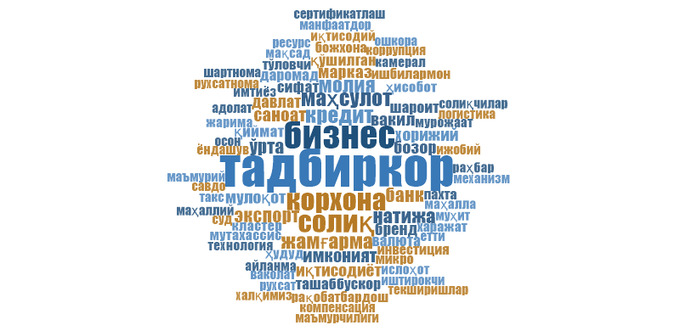
Reforms and Active Dialogue in Entrepreneurship: The President's 6th Open Dialogue as a Catalyst for New Economic Growth
The current and future development of Uzbekistan's economy is directly determined by the freedom of the private sector, equal and favorable opportunities created for businesses, and robust legal protections. The Open Dialogue between the Head of State and entrepreneurs, which has become a solid tradition in our country, is not merely another routine event. Instead, it serves as the primary mechanism of a direct, pragmatic, and highly effective strategic alliance between business and government. This direct platform enhances the country's investment attractiveness while playing a crucial role in supporting national businesses and unlocking new opportunities.
Practical Results and Benefits
Direct, face-to-face interaction with the President has emerged as the most powerful driver for fundamentally improving the country's business climate. The systemic decisions made and incentives granted within this platform have delivered tangible, practical benefits to business entities rather than remaining on paper. Below are select outcomes demonstrating the impact of these strategic initiatives:
Transformation of the Financial and Credit System
The government optimized the direct financing procedures for large state-owned enterprises, shifting the focus toward directing banking resources to private sector projects. The Business Development Bank, microfinance institutions and banks, factoring services, venture capital funds, and industrial support funds were established. A state guarantee system for entrepreneurs' bank deposits was also introduced.
Land, Property, and Infrastructure Reform
Land parcels and real estate were transformed into full-fledged economic assets. Taxes on land acquired through auctions were adjusted, payment installment periods were extended, and incorporating land into charter capital was permitted. Changing the intended use of land was simplified via a unified classifier. Energy limits were regulated, and private capital was attracted to the development of mineral deposits and subsoil resources.
Foreign Trade, Logistics, and Exports
The economy pivoted toward WTO accession and integration into global supply chains. Monopoly and exclusive rights in foundational sectors such as metallurgy, chemicals, and energy were abolished. Subsidies for pre-export financing, logistics, and international certification were expanded. The "E-logistika" platform was launched to ensure transparent distribution of transport permits, and the VAT refund mechanism for export operations was simplified.
IT, Services, and Innovation
The state implemented joint-equity co-financing models and patent fee reimbursement mechanisms to boost IT sector development, artificial intelligence, and startups. A VAT cashback mechanism and corporate income tax reductions were introduced for the catering, tourism, and hospitality sectors. Certification and consulting services in construction and tourism were transitioned to the private sector.
Liberalization of Tax and Oversight Systems
Tax administration was enhanced: the VAT "tax-gap" coefficient was abolished, and a transparent rating system for compliant businesses was introduced. A moratorium was declared on the application of new penalties. Commercial banks were prohibited from forcing collateral into unauthorized liquidation and unlawfully suspending business activities.
Legal Protection and Local Manufacturing
The authority of state bodies to confiscate property without a court order or cancel land allocation decisions was restricted. The statute of limitations for tax disputes was reduced to three years. To support domestic manufacturers, a "local content" requirement in public procurement and a system of long-term guaranteed orders were established.
Representatives of the business community feel the real impact of the platform in their daily operations.
Shavkat Kholboev, head of the "AslCab" enterprise, states: "Based on proposals submitted during last year's Open Dialogue, an automated electronic VAT refund system for exports was launched. Consequently, our enterprise recovered approximately 10 to 12 billion UZS in working capital within a short period, channeling these funds into purchasing raw materials and expanding our export footprint."
Firat Deniz, a foreign investor and owner of a major textile enterprise, emphasizes: "The Open Dialogue with the President is one of the most effective platforms globally for directly hearing and protecting investor interests. My proposal to create additional opportunities for enterprises exporting over $50 million annually was immediately supported and implemented."
Preparations for the 6th Open Dialogue: Numbers and Analysis
In preparation for the upcoming 6th Open Dialogue, a Republican Headquarters comprising representatives from over 50 ministries and agencies was established on May 15, operating around the clock (24/7). Nearly 6,000 inquiries have been received via call centers and official bots. As part of the processing efforts, over 4,200 inquiries were resolved positively, while approximately 1,800 remain under review.
By topic, the inquiries include: over 940 regarding strengthening legal protections for entrepreneurs, over 910 on banking issues, over 750 on production space allocation, nearly 680 on simplifying business regulations, over 660 on infrastructure provision, nearly 530 on tax system improvements, and over 480 on financial support for business. Regionally, the highest volume of inquiries originated from Kashkadarya region, Tashkent city, Samarkand region, and Fergana region.
Additionally, responsible organizations conducted over 750 meetings attended by more than 8,800 entrepreneurs, raising over 3,500 proposals and issues. Furthermore, over 130 meetings organized by the Business Ombudsman and the Chamber of Commerce and Industry brought together more than 5,700 entrepreneurs who raised nearly 1,500 issues. Expert groups are analyzing 300 systemic problems identified during these sessions, the majority of which cover: simplifying business regulation (nearly 70), improving the tax system (60), and foreign economic activity and investment (over 50). Proposals are being developed in collaboration with relevant ministries and agencies to address these issues fundamentally and improve current legislation.
Abdumannop Buriev, Business Ombudsman under the President of the Republic of Uzbekistan for the Protection of Rights and Lawful Interests of Entrepreneurs, highlighted priority areas in the sector: "We focus primary attention on building a preventive system that averts issues before they arise and protects entrepreneurs' rights early on. Through extensive digitization and the integration of electronic resources into a unified network, potential risks are eliminated in advance. The live dialogues held ahead of the main event create a solid foundation for modern tools that protect business from both legal and digital standpoints."
Davron Vakhabov, Chairman of the Chamber of Commerce and Industry of Uzbekistan, emphasized the positive momentum: "Today, the private sector has become the primary driving force of our national economy. Regular open dialogues and the systemic decisions arising from them offer invaluable opportunities for entrepreneurs to expand their operational scale, increase export capacity, and strengthen competitiveness in international markets."
Preparations for the President's upcoming Open Dialogue are entering their final stage. Every submitted proposal and inquiry serves to further improve the business environment in our country. We invite all entrepreneurs and investors to actively participate in shaping the agenda for the upcoming high-level dialogue. Inquiries and proposals are accepted 24/7 via phone numbers 1100 and 1094, web platforms business.gov.uz and my.chamber.uz/ochiq_muloqot/oz, as well as Telegram communication channels @biznesombudsmanrasmiy_bot and @ochiqmuloqot2026_bot.
📅 06.08.2026
Embassy messages
The Ministry of Foreign Affairs of the Republic of Uzbekistan has launched the “Consular Services” mobile application
Consular Services Reception Procedure at the Embassy of Uzbekistan in Latvia
Узбекистан и страны Балтии объединяют усилия в борьбе с коррупцией
Uzbek specialists study Latvia’s best practices in veterinary and livestock sectors
Uzbekistan and Finland discussed prospects for cooperation in the field of entrepreneurship support
A holiday of unity: Navruz celebration connects nations in Riga
Trade union delegation of Uzbekistan discusses in Latvia issues of protecting the rights of compatriots – labor migrants
Ambassador of Uzbekistan presented his credentials to the President of Lithuania
Uzbekistan and Finland are preparing for the next meeting of the intergovernmental commission and a business forum within its framework
Discussions on potential areas of cooperation with the Association of European Chambers of Commerce and Industry were held in Riga
Uzbekistan and Latvia agreed to prepare a bilateral agreement on cooperation in the field of labor migration
Uzbekistan and Latvia ready for permanent dialogue in the field of labor migration
Торговый дом Узбекистана в Латвии провел онлайн-тренинг для хокимов и экспортеров Сырдарьинской области
Uzbek delegation studied Finland's experience in preventing violence against children
A festive evening for compatriots was organized in Estonia
Latvia widely celebrated the anniversary of the adoption of the Basic Law of Uzbekistan
Возможности медицинского туризма в Узбекистане презентованы в Риге
New contracts worth over $4 million signed as part of Uzbek exporters' business mission to Latvia
A roundtable discussion on the topic "Mirzo Ulugbek: a great encyclopedist and a famous statesman" was held in Riga
СМИ Латвии: Явка на выборах в Узбекистане составила 74,72%
Досрочное голосование по выборам в Законодательную палату Олий Мажлиса Узбекистана проходит в Латвии
В Латвии и Литве обсуждаются ключевые аспекты предстоящих парламентских выборов в Узбекистане
Issues related to the development of cooperation between Uzbekistan and Latvia in the field of combating crime discussed in Riga
A round table was held in Latvia on the upcoming elections in Uzbekistan to the Legislative Chamber of the Oliy Majlis and Kengashes of People's Deputies
Uzbek exporters familiarized with requirements for import of Uzbek products to Latvian and European markets
Export of agricultural products from Uzbekistan to the Latvian market increases
ЭЪЛОН!
Uzbek ambassador meets Latvian Saeima speaker to discuss prospects for boosting inter-parliamentary cooperation
Diplomats of Uzbekistan held a visiting reception of fellow citizens living in Estonia and Finland
Ambassador of Uzbekistan presents credentials to President of Latvia

-
 Ministry of Foreign Affairs of the Republic of Uzbekistan
 -
 Diplomatic Service of the Ministry of Foreign Affairs
 -
 State Committee for Tourism Development
 -
Ministry of Investments and Foreign Trade of the Republic of Uzbekistan
-
 invest.gov.uz
 -
-

-

-
-
-

-

of Uzbekistan in the Republic
of Latvia
When using the information, a link to www.uzembassy.lv
must be provided.
All rights reserved
Address
Address: Riga c., LV-1010. 11-11 Elizabetes Str., Latvia
Phone: 37167322424
Fax: 37167322306
Email: embassy@uzbekistan.lv
Useful links
HomeIssuance of biometric passport for departure abroad
Certificate to return to Uzbekistan
Withdrawal of citizenship
Loss of citizenship