Phone
Consular Issues
Phone
Embassy messages
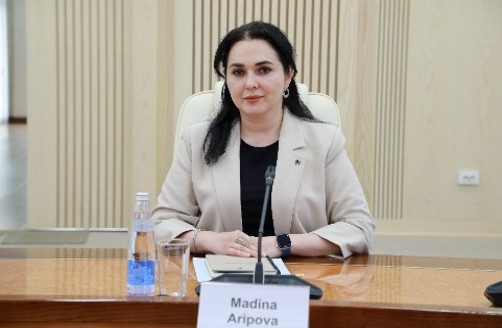
Uzbekistan’s Role in the SCO: Economy, Security and Regional Cooperation
This year, the Shanghai Cooperation Organization (SCO) is celebrating its 25th anniversary. Over the past quarter-century, it has undergone a profound institutional transformation – from a mechanism for building cross-border trust within the “Shanghai Five” format to one of the most influential platforms for multilateral cooperation in Eurasia.
Over these years, the SCO has significantly expanded its membership. While in 2001 it was founded by six states (China, Russia, Kazakhstan, Kyrgyzstan, Tajikistan, and Uzbekistan), today the Organization brings together 10 member states, 15 dialogue partners, and 2 observer states.
At the same time, interest in the Organization’s activities continues to grow steadily. According to SCO Secretary-General Nurlan Yermekbayev, approximately 20 countries have expressed interest in joining the structure in one capacity or another.
Uzbekistan, as one of the founding members of the SCO, makes a significant practical contribution to its activities. The country has held the SCO chairmanship four times and successfully hosted the SCO Heads of State Summits in Tashkent (2004, 2010, and 2016) and Samarkand (2022).
At the present stage, Uzbekistan actively participates in shaping the Organization’s current agenda, focusing on security issues, trade and economic cooperation, industrial and technological partnership, cultural and humanitarian ties, and regional connectivity.
Economy and Transport Connectivity
Economic cooperation is one of the key areas of Uzbekistan’s participation in the SCO. For Tashkent, the Organization is of practical interest primarily as an effective platform for expanding trade, attracting investment, developing industrial cooperation, and establishing reliable transport and logistics links.
Uzbekistan’s trade ties with SCO member states have already reached a significant scale. In 2025, the country’s foreign trade turnover amounted to $81.2 billion, an increase of 20.7% over the previous year. China, Russia, and Kazakhstan remain Uzbekistan’s largest trading partners, accounting for around 43% of the country’s total foreign trade turnover.
The SCO’s economic potential is constrained by differences in customs procedures, technical standards, and market-access rules. To remove these barriers, Uzbekistan is calling for the signing of a Trade Facilitation Agreement, the harmonization of customs and technical standards to launch “green corridors,” the development of cross-border e-commerce, the wider use of national currencies in settlements, and the creation of investment mechanisms to provide independent financing for joint projects.
Uzbekistan’s strategic goal is to transition from simple trade to deep industrial cooperation, the production of high-value-added goods, and the integration of national enterprises into global value chains. Significant opportunities in this regard are opened up by cooperation in the energy sector, digitalization, green technologies, and the processing of critical minerals.
A practical continuation of this approach was the initiatives put forward by Uzbekistan at the SCO Summit in Tianjin. These include the establishment of a Regional Centre for Critical Materials and the SCO Energy Consortium, the development of venture mechanisms to support innovative projects, and the formation of a unified electronic portal for direct business contacts and investment attraction.
The deepening of trade and industrial cooperation is directly linked to the development of transport infrastructure. For Uzbekistan, as a landlocked country, expanding the geography of routes is a key condition for sustainable economic growth. The China–Kyrgyzstan–Uzbekistan railway, currently under construction, is of particular importance. In the future, its alignment with the Trans-Afghan Corridor (Termez–Mazar-i-Sharif–Kabul–Peshawar) could create a new transport route connecting China, Central Asia, and South Asia.
Tashkent also supports the concept of establishing a “Single SCO Transport Space” based on the development of new multimodal networks, the digitalization of transport, and the creation of seamless “green corridors.” Expanding access to the markets of China, Russia, the Caspian region countries, Iran, and South Asia creates additional opportunities to diversify foreign trade and strengthen regional connectivity.
Security: From Traditional Threats to a Comprehensive Approach
Alongside economic partnership, cooperation in the field of security remains a top priority for Uzbekistan within the SCO. Over the years of operation within the Organization, an effective system has been established to combat the "three evils" (terrorism, separatism, and extremism), organized crime, and drug trafficking, with the Executive Committee of the SCO Regional Anti-Terrorist Structure (RATS) in Tashkent serving as its key link.
At the same time, the expanding spectrum of challenges and threats brings new tasks to the forefront: ensuring cybersecurity, protecting critical infrastructure, countering the use of information technologies for unlawful purposes, and enhancing preparedness for environmental and technological risks.
In light of these new realities, Uzbekistan actively supports the profound modernization of SCO mechanisms. As part of the institutional reform, the Executive Committee of the RATS is being transformed into the Universal Center for Countering Security Challenges and Threats. The architecture of the updated system will be complemented by the SCO Center for Combating Organized Crime in Bishkek and the SCO Anti-Drug Center in Dushanbe, which will ensure a comprehensive and targeted response to cross-border threats.
Alongside institutional improvement, Uzbekistan promotes substantive initiatives in three main areas.
First, strengthening trust and strategic dialogue. In 2022, the Samarkand Solidarity Initiative for Common Security and Prosperity was put forward; in 2023, a proposal was made to develop the SCO Code of Good-Neighborliness, Trust, and Cross-Border Partnership; and in 2025, Tashkent initiated the adoption of the SCO Declaration on Nuclear Security.
Second, ensuring the security and resilience of the digital space. Uzbekistan advocates for deepening cooperation in cybersecurity and shaping common approaches to new technologies. The implementation of this course is reflected in a consistent chain of initiatives by Tashkent within the SCO framework.
In particular, at the Dushanbe Summit (2021), Uzbekistan put forward an initiative to establish the Expert Forum on Information Security to develop mechanisms for responding to cyber threats and exchanging experience. In 2023, the Uzbek side called for accelerating the adoption of the Agreement on Combating IT Crime and the Program for Countering Internet Extremism, and at the Tianjin Summit (2025), it proposed the creation of the International Expert Council on AI to develop unified standards for ethics, cybersecurity, and protection against deepfakes.
Third, promoting the stability and development of Afghanistan. Tashkent views this country as an integral part of Central Asia and proceeds from the need to combine security issues with the objectives of economic recovery, infrastructure development, and the integration of Kabul into regional ties.
In this regard, Uzbekistan advocates for the resumption of the work of the “SCO–Afghanistan” Contact Group, which could serve as a mechanism for coordinating efforts toward the country’s socio-economic development and its inclusion in major infrastructure projects.
Regional Cooperation: Climate, Food Security, and the Humanitarian Vector
The expanding understanding of security naturally brings to the forefront issues of climate and food resilience. For Central Asia, this agenda is of particular importance: over the past 30 years, the average temperature in the region has risen by 1.5 °C, which is twice the global average rate. According to World Bank estimates, land degradation, melting glaciers, and increasing water scarcity threaten to cause a 30% drop in agricultural yields.
In response to these challenges, Tashkent has built a consistent chain of systemic initiatives within the Organization: from the adoption of the SCO “Green Belt” Program (2019) and the creation of the Climate Council (2022) to the opening of the Center for Innovative Climate Solutions in Tashkent (2024) and the launch of the Regional Platform for Adaptation, Decarbonization, and the Use of Artificial Intelligence for Predicting Environmental Risks (2025).
The climate agenda is directly linked to food security. Here, the common task is the formation of sustainable agri-food systems. In this vein, Tashkent proposes to develop “smart” agriculture, introduce resource- and water-saving technologies, and establish agro-logistics centers and “green corridors” for the cross-border movement of agricultural products. Uzbekistan also proposes to launch the “SCO Food Security Atlas” platform to monitor agricultural potential and promote supply chain resilience.
Practical cooperation within the SCO is not limited to issues of economy, security, and climate; its long-term viability directly depends on the development of direct contacts between the societies of the member states. Uzbekistan consistently advocates for expanding humanitarian dialogue through festivals, forums, and exhibitions that popularize the rich heritage of the SCO “multinational family” and strengthen the foundation of mutual understanding and good-neighborliness.
Tourism serves as one of the practical tools for fostering closer humanitarian ties. In this field, Uzbekistan has proposed a comprehensive set of practical measures, including the launch of the “SCO Tourism and Cultural Capital” program, the creation of “SCO Silk Road” routes, and the establishment of the SCO Medical Tourism Alliance. The implementation of these initiatives helps to form a unified tourist space, attract investment in infrastructure, and stimulate job creation.
Overall, over a quarter-century of participation in the SCO, Uzbekistan has solidified its status as one of the key architects of the regional agenda, helping to transform the Organization from a platform for dialogue into an effective mechanism for practical partnership. The initiatives put forward by Tashkent are practical in nature and invariably align with the core interests of all member states.
Tashkent’s principled position is that the SCO must maintain its openness, avoid political confrontation, and remain guided by the principles of the “Shanghai Spirit.” It is precisely this course that enables the consistent transformation of the Eurasian space into a zone of long-term stability, trust, and sustainable development.
Madina Aripova, Chief Research Fellow at the Institute for Strategic and Regional Studies under the President of the Republic of Uzbekistan
📅 29.08.2026
Embassy messages
The Ministry of Foreign Affairs of the Republic of Uzbekistan has launched the “Consular Services” mobile application
Consular Services Reception Procedure at the Embassy of Uzbekistan in Latvia
Узбекистан и страны Балтии объединяют усилия в борьбе с коррупцией
Uzbek specialists study Latvia’s best practices in veterinary and livestock sectors
Uzbekistan and Finland discussed prospects for cooperation in the field of entrepreneurship support
A holiday of unity: Navruz celebration connects nations in Riga
Trade union delegation of Uzbekistan discusses in Latvia issues of protecting the rights of compatriots – labor migrants
Ambassador of Uzbekistan presented his credentials to the President of Lithuania
Uzbekistan and Finland are preparing for the next meeting of the intergovernmental commission and a business forum within its framework
Discussions on potential areas of cooperation with the Association of European Chambers of Commerce and Industry were held in Riga
Uzbekistan and Latvia agreed to prepare a bilateral agreement on cooperation in the field of labor migration
Uzbekistan and Latvia ready for permanent dialogue in the field of labor migration
Торговый дом Узбекистана в Латвии провел онлайн-тренинг для хокимов и экспортеров Сырдарьинской области
Uzbek delegation studied Finland's experience in preventing violence against children
A festive evening for compatriots was organized in Estonia
Latvia widely celebrated the anniversary of the adoption of the Basic Law of Uzbekistan
Возможности медицинского туризма в Узбекистане презентованы в Риге
New contracts worth over $4 million signed as part of Uzbek exporters' business mission to Latvia
A roundtable discussion on the topic "Mirzo Ulugbek: a great encyclopedist and a famous statesman" was held in Riga
СМИ Латвии: Явка на выборах в Узбекистане составила 74,72%
Досрочное голосование по выборам в Законодательную палату Олий Мажлиса Узбекистана проходит в Латвии
В Латвии и Литве обсуждаются ключевые аспекты предстоящих парламентских выборов в Узбекистане
Issues related to the development of cooperation between Uzbekistan and Latvia in the field of combating crime discussed in Riga
A round table was held in Latvia on the upcoming elections in Uzbekistan to the Legislative Chamber of the Oliy Majlis and Kengashes of People's Deputies
Uzbek exporters familiarized with requirements for import of Uzbek products to Latvian and European markets
Export of agricultural products from Uzbekistan to the Latvian market increases
ЭЪЛОН!
Uzbek ambassador meets Latvian Saeima speaker to discuss prospects for boosting inter-parliamentary cooperation
Diplomats of Uzbekistan held a visiting reception of fellow citizens living in Estonia and Finland
Ambassador of Uzbekistan presents credentials to President of Latvia

-
 Ministry of Foreign Affairs of the Republic of Uzbekistan
 -
 Diplomatic Service of the Ministry of Foreign Affairs
 -
 State Committee for Tourism Development
 -
Ministry of Investments and Foreign Trade of the Republic of Uzbekistan
-
 invest.gov.uz
 -
-

-

-

-
-

-

of Uzbekistan in the Republic
of Latvia
When using the information, a link to www.uzembassy.lv
must be provided.
All rights reserved
Address
Address: Riga c., LV-1010. 11-11 Elizabetes Str., Latvia
Phone: 37167322424
Fax: 37167322306
Email: embassy@uzbekistan.lv
Useful links
HomeIssuance of biometric passport for departure abroad
Certificate to return to Uzbekistan
Withdrawal of citizenship
Loss of citizenship