Phone
Consular Issues
Phone
Embassy messages
Inaugural Central Asia – Republic of Korea Summit at the highest level opens in Seoul
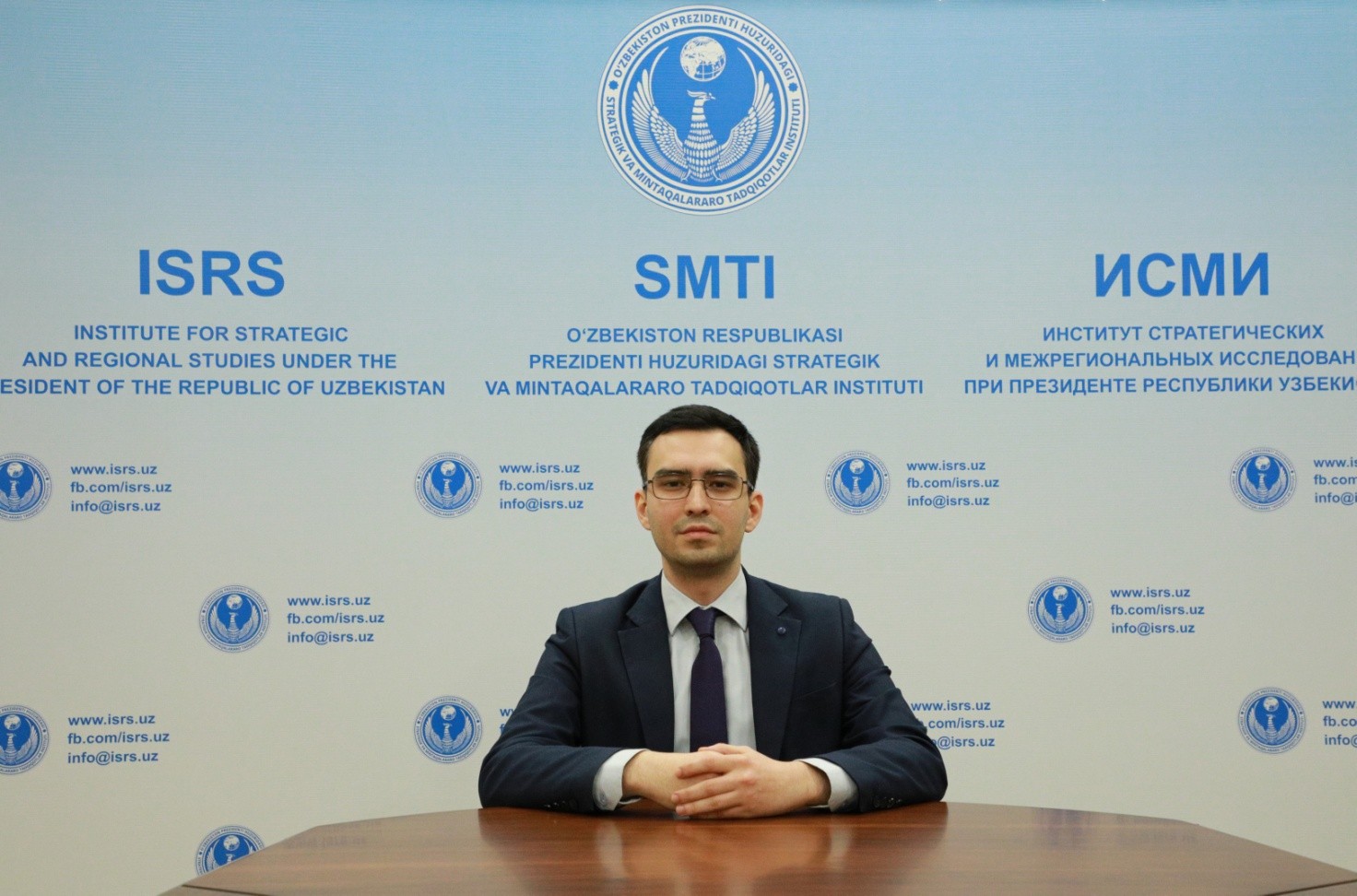
Ahead of the upcoming “Central Asia–Republic of Korea” Summit, which will be held for the first time in a Heads-of-State format in the coming days, Bekzod Normatov, Leading Research Fellow at the Institute for Strategic and Regional Studies under the President of the Republic of Uzbekistan (ISRS), noted in a commentary for Dunyo that the new format opens up opportunities to take regional cooperation to a qualitatively new level.
According to his assessment, of particular significance are the development of technological partnership, localization of manufacturing, deep processing of raw materials, implementation of regional projects and the training of engineering personnel.
The inaugural “Central Asia – Republic of Korea” Summit should be viewed as a significant milestone in the institutionalization of relations between the region and one of its most technologically advanced and proven partners.
To date, a multi-level system of contacts encompassing political, economic, parliamentary, business and humanitarian spheres has been established. In particular, “Republic of Korea – Central Asia” Cooperation Forum was established in 2007, followed by the creation of the Permanent Secretariat of the Forum in 2017. The Economic Council has been operational since 2020, the meeting format for parliamentary speakers was established in 2023 and the inaugural Think Tank Forum was convened in 2024.
The very fact of transitioning from long-standing cooperation at the ministerial level to the format of heads of state demonstrates that former mechanisms no longer fully correspond to the scale of accumulated interaction and new objectives. South Korean side also directly attributes the summit to the growing strategic significance of Central Asia and the intention to elevate cooperation to a new level in the spheres of trade, investment, energy, critical minerals and supply chain resilience.
“In my view, it is of fundamental importance that today the objective interests of the two sides are becoming increasingly complementary. The Republic of Korea has advanced technologies, capital and expertise, while Central Asia offers significant resource potential, expanding markets and opportunities for access to new high-tech markets”, expert noted.
The expert emphasized that cooperation in critical minerals could become one of the most promising areas. The region possesses substantial reserves of critical minerals, while the Republic of Korea has advanced technologies for their processing and industrial application.
Establishment of a regular mechanism for meetings of the ministers of industry within the “C5+K” format is already under discussion, while bilateral efforts with Uzbekistan focus particularly on artificial intelligence in industry, investments and concrete projects.
At the same time, the expert believes that it is crucial here not to reduce the new format predominantly to the supply of raw materials from Central Asia to South Korea. For the states of the region, a model where cooperation encompasses the entire production chain – from geological exploration and extraction to the deep processing of raw materials and the manufacturing of components and finished goods – would be far more promising.
Localization of manufacturing, technology transfer, training of engineers, and joint entry into third markets are capable of making this partnership long-term and truly mutually beneficial.
Second important emphasis is the regional nature of the projects. Today, practically all Central Asian nations are interested in industrial modernization, the development of transport connectivity, digitalization, as well as increasing water and energy efficiency. Therefore, it is preferable to utilize the “Central Asia – Korea” format not merely as the sum of five bilateral tracks, but as a mechanism for implementing projects that unite multiple states of the region. This could pertain to cross-border production chains, digital logistics, energy infrastructure, water-saving technologies and personnel training.
Technological partnership appears to be an exceptionally promising direction. Korea possesses strong competencies in electronics, automotive manufacturing, battery technologies, artificial intelligence, power engineering, medicine, water resource management and the digitalization of industry.
Central Asia, for its part, offers a growing market, a favourable demographic profile, significant resource potential and an increasingly developed industrial base. The combination of these advantages can forge a completely new quality of economic cooperation.
ISRS expert specifically highlighted the issue of resilience. The current international situation demonstrates how vulnerable global transport, energy, and production chains have become. Therefore, Central Asia is interested not merely in attracting investment, but in creating its own internal capacities – alternative routes, localized manufacturing, technological competencies, and qualified personnel. The Republic of Korea could become one of the key partners in fostering such resilience.
In practical terms, expert notes that it would be advisable to focus on several key areas: formulating a joint portfolio of projects for the deep processing of critical minerals; establishing a mechanism for the preparation and financing of regional projects; developing cooperation in the field of artificial intelligence and the digitalization of industry; launching joint programs on water-saving technologies and significantly expanding the training of engineering and technical personnel.
In this sense, the primary outcome of the upcoming summit should be measured not by the number of signed documents, but by whether it succeeds in transitioning relations from predominantly trade and investment toward joint manufacturing, technology, and human capital.
For Uzbekistan, this format holds particular significance. Our relations with the Republic of Korea already bear the character of a special strategic partnership and possess a substantial practical foundation. Therefore, Tashkent can act as one of the initiators to ensure that successful bilateral experience gradually acquires a regional dimension.
Ultimately, the promising formula for cooperation appears quite clear: the resources, markets and strategic geographic position of Central Asia, combined with the technology, capital and expertise of the Republic of Korea, should be transformed into high-value-added products jointly produced within our region.
“Such an approach will make it possible to infuse the “Central Asia – Republic of Korea” format with concrete substance and enhance its practical returns for the nations of the region”, the expert concluded.
Dunyo IA
📅 15.09.2026
Embassy messages
The Ministry of Foreign Affairs of the Republic of Uzbekistan has launched the “Consular Services” mobile application
Consular Services Reception Procedure at the Embassy of Uzbekistan in Latvia
Узбекистан и страны Балтии объединяют усилия в борьбе с коррупцией
Uzbek specialists study Latvia’s best practices in veterinary and livestock sectors
Uzbekistan and Finland discussed prospects for cooperation in the field of entrepreneurship support
A holiday of unity: Navruz celebration connects nations in Riga
Trade union delegation of Uzbekistan discusses in Latvia issues of protecting the rights of compatriots – labor migrants
Ambassador of Uzbekistan presented his credentials to the President of Lithuania
Uzbekistan and Finland are preparing for the next meeting of the intergovernmental commission and a business forum within its framework
Discussions on potential areas of cooperation with the Association of European Chambers of Commerce and Industry were held in Riga
Uzbekistan and Latvia agreed to prepare a bilateral agreement on cooperation in the field of labor migration
Uzbekistan and Latvia ready for permanent dialogue in the field of labor migration
Торговый дом Узбекистана в Латвии провел онлайн-тренинг для хокимов и экспортеров Сырдарьинской области
Uzbek delegation studied Finland's experience in preventing violence against children
A festive evening for compatriots was organized in Estonia
Latvia widely celebrated the anniversary of the adoption of the Basic Law of Uzbekistan
Возможности медицинского туризма в Узбекистане презентованы в Риге
New contracts worth over $4 million signed as part of Uzbek exporters' business mission to Latvia
A roundtable discussion on the topic "Mirzo Ulugbek: a great encyclopedist and a famous statesman" was held in Riga
СМИ Латвии: Явка на выборах в Узбекистане составила 74,72%
Досрочное голосование по выборам в Законодательную палату Олий Мажлиса Узбекистана проходит в Латвии
В Латвии и Литве обсуждаются ключевые аспекты предстоящих парламентских выборов в Узбекистане
Issues related to the development of cooperation between Uzbekistan and Latvia in the field of combating crime discussed in Riga
A round table was held in Latvia on the upcoming elections in Uzbekistan to the Legislative Chamber of the Oliy Majlis and Kengashes of People's Deputies
Uzbek exporters familiarized with requirements for import of Uzbek products to Latvian and European markets
Export of agricultural products from Uzbekistan to the Latvian market increases
ЭЪЛОН!
Uzbek ambassador meets Latvian Saeima speaker to discuss prospects for boosting inter-parliamentary cooperation
Diplomats of Uzbekistan held a visiting reception of fellow citizens living in Estonia and Finland
Ambassador of Uzbekistan presents credentials to President of Latvia

-
 Ministry of Foreign Affairs of the Republic of Uzbekistan
 -
 Diplomatic Service of the Ministry of Foreign Affairs
 -
 State Committee for Tourism Development
 -
Ministry of Investments and Foreign Trade of the Republic of Uzbekistan
-
 invest.gov.uz
 -
-

-

-
-
-

-

of Uzbekistan in the Republic
of Latvia
When using the information, a link to www.uzembassy.lv
must be provided.
All rights reserved
Address
Address: Riga c., LV-1010. 11-11 Elizabetes Str., Latvia
Phone: 37167322424
Fax: 37167322306
Email: embassy@uzbekistan.lv
Useful links
HomeIssuance of biometric passport for departure abroad
Certificate to return to Uzbekistan
Withdrawal of citizenship
Loss of citizenship