Phone
Consular Issues
Phone
Embassy messages
Changing economic priorities of Uzbekistan reshape its engagement with the CIS
For Uzbekistan, Commonwealth of Independent States primarily represent a set of practical mechanisms, including the free trade regime, mutual recognition of documents and standards, visa-free movement of citizens, and agreements on transit and transportation. These mechanisms have a direct, everyday impact on business operations and household incomes.
Speaking at the CIS Summit in Dushanbe in October 2025, President Shavkat Mirziyoyev described the member states as “our natural partners.” In this context, cooperation within the CIS is not viewed as an alternative to other foreign policy priorities, but rather as one of the pillars of the country’s economic diplomacy.
In 2025, Uzbekistan’s GDP grew by 7.7%, while exports reached $33.8 billion, an increase of 24%. CIS countries accounted for approximately one-third of Uzbekistan’s foreign trade. This share has remained broadly unchanged for several years, despite the rapid expansion of economic ties with other regions.
In October 2024, trade turnover within the Commonwealth was reported to have increased by 16%. By the end of the year, it had grown by a further 11%. In 2025, it reached $27.4 billion, representing an increase of more than 20%.
This stability is driven not by the inertia of established ties, but by rational economic considerations. CIS markets are familiar to Uzbek businesses: standards are broadly comparable, language barriers are limited, logistics networks are well established, and goods enjoy duty-free access. With a combined population of approximately 250 million, the Commonwealth generates sustained demand for fruit and vegetables, textiles, automobiles, electrical equipment, chemicals and services. For companies entering foreign markets for the first time, the CIS represents the least risky destination.
This is precisely why the Commonwealth serves as a launchpad for Uzbek businesses. Having gained export experience in neighbouring countries, companies are better positioned to enter more complex markets. Russia and Kazakhstan remain Uzbekistan’s principal partners within the CIS, followed by Kyrgyzstan, Tajikistan, Turkmenistan and Belarus. At the same time, China - which has become Uzbekistan’s largest trading partner - Türkiye and the Republic of Korea are also among the country’s top five trading partners, confirming the multi-vector nature of Uzbekistan’s foreign economic policy.
Importantly, Uzbekistan ceased to be a passive participant in the Commonwealth long ago. Since 2017, it has restored its active presence within CIS institutions, joined more than twenty sectoral bodies and signed 24 multilateral agreements.
This policy culminated in Uzbekistan’s first chairmanship of the CIS in 2020. The guiding objective established at the time to “gradually advance cooperation to a qualitatively new level” - has shaped the country’s subsequent engagement within the Commonwealth.
At CIS summits, the President of Uzbekistan has put forward more than one hundred initiatives, most of them designed to address specific barriers. Tashkent has consistently advocated the operation of the free trade area “without exemptions or restrictions,” the expansion of green corridors, the development of e-commerce and broader access to public procurement.
In 2025, the President stressed that “it is important to expand mutual market access in our countries.” He proposed establishing a rapid-response mechanism under the CIS Economic Council to address changes in market conditions and called for the accelerated removal of technical barriers.
This is directly linked to Uzbekistan’s national objective of increasing exports to $67 billion by 2030. Harmonised requirements, digital document exchange, mutual recognition of certificates and faster border clearance can transform geographical proximity into a sustainable competitive advantage for Uzbek goods. This is particularly important for small businesses, for which the cost of administrative procedures often exceeds the tariffs themselves.
The significance of the Commonwealth, however, extends beyond trade flows to include labour migration. Remittances, which amounted to approximately $18.9 billion in 2025, account for a substantial share of household incomes. Their geographical distribution is becoming more diversified: between 2022 and 2025, remittances from Kazakhstan increased by 24.5%, from the United States by 50%, from the Republic of Korea by 2.1 times, from Türkiye by 2.5 times and from the European Union by 2.4 times. As a result, migration-related income is becoming more resilient to fluctuations in individual labour markets.
The quality of this process depends on an effective legal framework. As early as 2020, Shavkat Mirziyoyev proposed creating a unified mechanism for recognising migrant workers’ documents and developing a programme for their social and legal protection. The economic rationale is clear: recognised qualifications and transparent employment arrangements increase workers’ earnings and allow them to bring accumulated skills and expertise back into the national economy.
These efforts are complemented by humanitarian cooperation, which helps build the human capital required for future development. In 2025, Uzbekistan initiated a new agreement on the recognition of diplomas and proposed holding a CIS Youth Forum in Khiva, together with the establishment of a Youth Innovation Laboratory. For a country where the average age of the population is approximately 30 and the population increases by around 750,000 people annually, access to educational and professional opportunities has direct economic significance.
The physical connectivity of markets is equally important. Uzbekistan is landlocked and separated from seaports by the territory of at least two countries. Logistics costs therefore have a direct impact on the competitiveness of its exports. Since most traditional transport routes pass through CIS countries, simplifying transit and harmonising customs procedures is not a matter of protocol, but a practical necessity measured in delivery times and production costs.
This issue has been a consistent feature of Tashkent’s proposals since 2020. In 2025, the President proposed establishing information and logistics centres integrated with all modes of transport, called for greater private investment in infrastructure and suggested holding a CIS Conference on Public-Private Partnerships in Transport in Uzbekistan.
The benefits of these measures extend beyond transit revenues. Linking the North–South and East–West corridors and securing access to ports on the Baltic, Black and Caspian seas would diversify transport routes and transform Uzbekistan into a connecting hub between Eurasian markets.
Reliable logistics also attracts warehouses, dry ports and export-oriented production facilities along major transport routes, thereby contributing to the development of the country’s regions.
Energy cooperation also deserves particular attention. CIS countries are connected through shared gas and electricity networks. For an economy with rapidly growing demand, this provides greater energy security and access to infrastructure whose reconstruction from scratch would require enormous investment. Uzbekistan is implementing programmes with its partners in conventional and renewable power generation, including the construction of a nuclear power plant. In 2025, it also proposed a Programme for the Innovative Development of the CIS Energy Sector. Similar considerations apply to food security, as a common market helps mitigate seasonal fluctuations in supply.
The existing foundation creates opportunities for more advanced forms of cooperation. The principal source of future growth lies in moving beyond a predominantly trade-based model towards deeper industrial cooperation, since Uzbekistan’s exports to CIS countries still largely consist of primary processed goods.
The objective of the next stage is to create greater added value within Uzbekistan—that is, to transform the nature of economic relations. Several of Tashkent’s proposals serve this purpose, including a Comprehensive Programme of Industrial Cooperation, the idea of placing joint production at the centre of the Commonwealth’s agenda, measures to encourage mutual investment, and a CIS Innovative Industry Forum to be held alongside INNOPROM. The President of Uzbekistan has noted the existence of “numerous examples of successful industrial cooperation.” The main task now is to replicate these successes on a broader scale.
Several promising areas are already apparent.
First, the agro-industrial sector: deep processing of fruit and vegetables, storage facilities, and cooperation in seed production and veterinary services. Uzbekistan possesses a substantial raw material base, while its partners have processing and packaging technologies that can increase the final value of products.
Second, mechanical engineering, electrical equipment and construction materials. Uzbekistan is interested not so much in importing finished products as in establishing highly localised joint ventures. This format facilitates technology transfer, engineering skills development and job creation—benefits that cannot be achieved through conventional supply arrangements alone. Promising areas include components for transport equipment and agricultural machinery, pharmaceuticals, chemicals and advanced materials.
Third, digital solutions and payment infrastructure capable of reducing the costs of cross-border trade. Following the Artificial Intelligence Forum held in Samarkand in August 2025, Uzbekistan proposed an action plan to deepen cooperation on digitalisation and establish a CIS Venture Platform.
The necessary financial resources are available. According to the CIS Executive Committee, citing UNCTAD data, foreign direct investment inflows into CIS countries amounted to $23.2 billion in 2023, while outward investment reached almost $32.5 billion. To channel these resources into production, Uzbekistan proposed a roadmap to support special economic and industrial zones, along with measures to facilitate industrial cooperation projects. The interregional level is particularly promising, as it allows the practical needs of businesses to be identified more quickly.
It is also important that such projects extend beyond the bilateral dimension. Uzbekistan is located at the heart of Central Asia and maintains well-established ties with all its neighbours. A joint venture based in Uzbekistan gains direct access to a rapidly growing regional market of approximately 85 million people—a compelling argument in favour of localising production in the country.
Such cooperation is becoming a natural driver of the objectives set out in the Uzbekistan–2030 Strategy: accelerated industrialisation, export growth and higher household incomes. The Commonwealth remains one of the practical instruments for achieving these goals—not the only one, but one that is operational and well established. As Uzbekistan’s economy becomes more sophisticated, its expectations of the CIS are also evolving—from basic market access to the development of integrated production chains.
This transition represents the principal opportunity for future cooperation. Dynamic economic growth, an expanding domestic market and an active investment policy provide a solid foundation for a new quality of engagement. As President of Uzbekistan Shavkat Mirziyoyev has emphasised, the decisions being taken should serve “the well-being and prosperity of our countries and peoples.” This remains the key measure of the effectiveness of multilateral partnership.
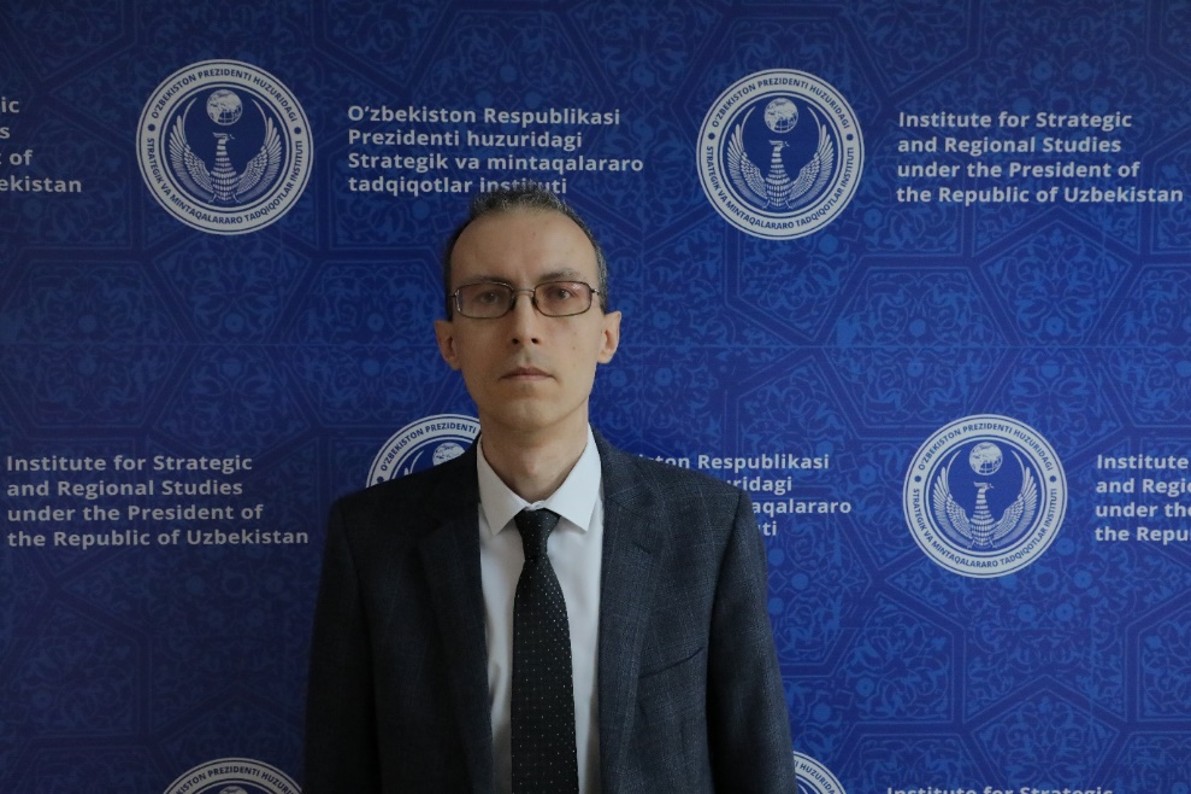
Alexey Kustov,
Chief Research Fellow
Institute for Strategic and Regional Studies
under the President of the Republic of Uzbekistan
📅 22.09.2026
Embassy messages
The Ministry of Foreign Affairs of the Republic of Uzbekistan has launched the “Consular Services” mobile application
Consular Services Reception Procedure at the Embassy of Uzbekistan in Latvia
Узбекистан и страны Балтии объединяют усилия в борьбе с коррупцией
Uzbek specialists study Latvia’s best practices in veterinary and livestock sectors
Uzbekistan and Finland discussed prospects for cooperation in the field of entrepreneurship support
A holiday of unity: Navruz celebration connects nations in Riga
Trade union delegation of Uzbekistan discusses in Latvia issues of protecting the rights of compatriots – labor migrants
Ambassador of Uzbekistan presented his credentials to the President of Lithuania
Uzbekistan and Finland are preparing for the next meeting of the intergovernmental commission and a business forum within its framework
Discussions on potential areas of cooperation with the Association of European Chambers of Commerce and Industry were held in Riga
Uzbekistan and Latvia agreed to prepare a bilateral agreement on cooperation in the field of labor migration
Uzbekistan and Latvia ready for permanent dialogue in the field of labor migration
Торговый дом Узбекистана в Латвии провел онлайн-тренинг для хокимов и экспортеров Сырдарьинской области
Uzbek delegation studied Finland's experience in preventing violence against children
A festive evening for compatriots was organized in Estonia
Latvia widely celebrated the anniversary of the adoption of the Basic Law of Uzbekistan
Возможности медицинского туризма в Узбекистане презентованы в Риге
New contracts worth over $4 million signed as part of Uzbek exporters' business mission to Latvia
A roundtable discussion on the topic "Mirzo Ulugbek: a great encyclopedist and a famous statesman" was held in Riga
СМИ Латвии: Явка на выборах в Узбекистане составила 74,72%
Досрочное голосование по выборам в Законодательную палату Олий Мажлиса Узбекистана проходит в Латвии
В Латвии и Литве обсуждаются ключевые аспекты предстоящих парламентских выборов в Узбекистане
Issues related to the development of cooperation between Uzbekistan and Latvia in the field of combating crime discussed in Riga
A round table was held in Latvia on the upcoming elections in Uzbekistan to the Legislative Chamber of the Oliy Majlis and Kengashes of People's Deputies
Uzbek exporters familiarized with requirements for import of Uzbek products to Latvian and European markets
Export of agricultural products from Uzbekistan to the Latvian market increases
ЭЪЛОН!
Uzbek ambassador meets Latvian Saeima speaker to discuss prospects for boosting inter-parliamentary cooperation
Diplomats of Uzbekistan held a visiting reception of fellow citizens living in Estonia and Finland
Ambassador of Uzbekistan presents credentials to President of Latvia

-
 Ministry of Foreign Affairs of the Republic of Uzbekistan
 -
 Diplomatic Service of the Ministry of Foreign Affairs
 -
 State Committee for Tourism Development
 -
Ministry of Investments and Foreign Trade of the Republic of Uzbekistan
-
 invest.gov.uz
 -

-

-

-

-

-

-


of Uzbekistan in the Republic
of Latvia
When using the information, a link to www.uzembassy.lv
must be provided.
All rights reserved
Address
Address: Riga c., LV-1010. 11-11 Elizabetes Str., Latvia
Phone: 37167322424
Fax: 37167322306
Email: embassy@uzbekistan.lv
Useful links
HomeIssuance of biometric passport for departure abroad
Certificate to return to Uzbekistan
Withdrawal of citizenship
Loss of citizenship