Phone
Consular Issues
Phone
Embassy messages
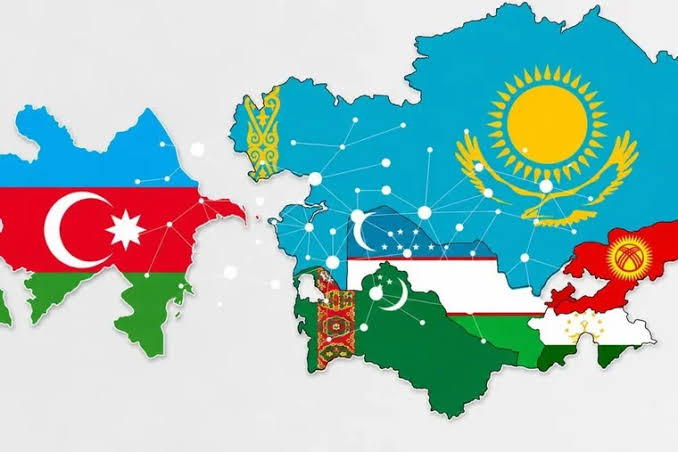
Initiatives of Uzbekistan aimed at Economic Results for the Countries of Central Asia and Azerbaijan
On October 8–9th, President Shavkat Mirziyoyev will attend the 8th Consultative Meeting of the Heads of State of Central Asia and Azerbaijan, as well as a meeting of the CIS Council of Heads of State.
The consultative meetings stem from an initiative put forward by the President of Uzbekistan in 2017. The first meeting took place in Astana in March 2018. This framework allows countries to work together on transit, infrastructure use, border procedures and industrial cooperation where the involvement of several countries is required.
At the seventh meeting, held in Tashkent on November 16, 2025, participants agreed to Azerbaijan’s full participation. This creates opportunities to coordinate industrial development in Central Asia with transport infrastructure in the South Caucasus and routes to markets in Türkiye and Europe.
For businesses, transport arrangements need to be coordinated along the entire route. Faster customs clearance in one country will have limited benefits if cargo is held up at the next border or port. Joint ventures also need coordinated arrangements for raw material supplies, certification and financing. Expanding the group of participants therefore makes multilateral coordination more useful in practice.
Expanding Trade and the Regional Market
According to the Center for Economic Research and Reforms (CERR), Uzbekistan’s trade with Central Asian countries grew 3.1-fold between 2017 and 2025, reaching $8.3 billion. In 2025, trade with Kazakhstan totaled $5 billion, with Kyrgyzstan and Turkmenistan $1.2 billion each, and with Tajikistan $912.3 million.
In January–August 2026, trade with the four neighboring countries reached $6.14 billion, up 26.2% from the same period a year earlier. Uzbekistan’s exports rose 37.5% to $2.36 billion, while imports increased 20.1% to $3.78 billion. Trade grew with every partner: Kazakhstan by 23.4%, Kyrgyzstan by 51.2%, Tajikistan by 45.7% and Turkmenistan by 5.7%.
Trade with Azerbaijan grew 9.5-fold between 2017 and 2025, reaching $307.3 million. In 2025, Uzbekistan’s exports totaled $227.3 million and imports $80 million. Established trade in machinery, textiles, food and metals provides a basis for greater specialization among businesses and joint efforts to promote their products. Long-term contracts, well-developed distribution networks and equipment servicing in the partner country can support more sustained growth.
Investment and Production Links
Between 2017 and 2025, Uzbekistan attracted $2.5 billion in foreign direct investment and loans from Central Asian countries, including $1.3 billion in 2025. The corresponding figures for Azerbaijan were $318.6 million and $173.7 million. As of August 2026, Uzbekistan had 2,538 operating companies with investment from Central Asian countries and 503 with Azerbaijani investment.
The Azerbaijan–Uzbekistan Investment Company supports joint projects and has charter capital of $500 million. Joint investment institutions also operate in Central Asia, including Uzbek–Kyrgyz and Uzbek–Tajik institutions. They enable partners to finance projects together and share risks.
Practical Steps Since the Tashkent Meeting
On November 17, 2025, Uzbekistan and Turkmenistan launched the Shavat–Dashoguz border trade zone. It houses trading and warehousing facilities, customs, quarantine and other inspection services. Government services are to be provided through a single-window system.
On March 26, 2026, Uzbekistan and Tajikistan launched ten joint projects in furniture, leather and textile production, household appliances and other industries. At the same time, facilities were launched to produce dairy products in Andijan Region, and fruit juices and metal briquettes in Surkhandarya Region.
During Uzbek–Kyrgyz talks on July 30, 2026, the two sides agreed to establish an Interstate Council. A package of trade contracts and investment agreements was put together at the preceding business forum. They also reached agreements on developing border, trade and logistics infrastructure along the China–Kyrgyzstan–Uzbekistan railway and digitizing permit procedures.
On July 31, 2026, the leaders of Central Asia and Azerbaijan held an informal meeting at Issyk-Kul. The President of Uzbekistan called for further work on industrial and technological production chains, shared digital services and investment platforms.
On August 23, 2026, Uzbekistan and Azerbaijan signed a program to increase trade to $1 billion by 2030, along with an action plan for investment and trade. The third meeting of the Supreme Interstate Council also launched joint projects in finance, building materials, oil and gas, mining, agriculture and other sectors.
Industrial Cooperation and Access to New Markets
CERR estimates that replacing some imports from third countries with supplies from within the region could increase intraregional trade by approximately $11.4 billion. Realizing this potential will depend on whether regional suppliers can compete. This requires matching imported products with what regional producers can offer and identifying barriers to concluding contracts.
Developing the Middle Corridor through the Caspian Sea and the South Caucasus could expand Uzbekistan’s opportunities to supply markets to the west. The route’s competitiveness depends on the total cost of delivery, regular departures and transit times along each section. This requires coordination among railways, ports, carriers and customs services.
Joint preparations for the Kambarata-1 hydropower plant and work on Uzbek–Tajik hydropower projects require agreement on financing, water use arrangements and electricity supply terms. Investment decisions need to reflect growing industrial demand and businesses’ need for reliable energy supplies.
An interagency working group has also been established to prepare joint green energy projects involving Uzbekistan, Kazakhstan and Azerbaijan.
Priorities for the Upcoming Meeting
The upcoming meeting in Avaza offers an opportunity to advance joint projects by addressing trade barriers, coordinating transport arrangements and securing financing. Moving beyond separate bilateral projects to align business conditions across the expanded group of participating countries could help advance these efforts.
Projects backed by proven demand, competitive production and reliable logistics can deliver the most tangible economic benefits. The regional mechanisms proposed by Uzbekistan could support these projects by removing trade barriers, coordinating infrastructure development and improving investment conditions. Under these conditions, growth in trade within the region would be accompanied by more value added within the region and a stronger position for its producers in international markets.
Edvard Romanov
Center for Economic Research and Reforms
📅 06.10.2026
Embassy messages
The Ministry of Foreign Affairs of the Republic of Uzbekistan has launched the “Consular Services” mobile application
Consular Services Reception Procedure at the Embassy of Uzbekistan in Latvia
Узбекистан и страны Балтии объединяют усилия в борьбе с коррупцией
Uzbek specialists study Latvia’s best practices in veterinary and livestock sectors
Uzbekistan and Finland discussed prospects for cooperation in the field of entrepreneurship support
A holiday of unity: Navruz celebration connects nations in Riga
Trade union delegation of Uzbekistan discusses in Latvia issues of protecting the rights of compatriots – labor migrants
Ambassador of Uzbekistan presented his credentials to the President of Lithuania
Uzbekistan and Finland are preparing for the next meeting of the intergovernmental commission and a business forum within its framework
Discussions on potential areas of cooperation with the Association of European Chambers of Commerce and Industry were held in Riga
Uzbekistan and Latvia agreed to prepare a bilateral agreement on cooperation in the field of labor migration
Uzbekistan and Latvia ready for permanent dialogue in the field of labor migration
Торговый дом Узбекистана в Латвии провел онлайн-тренинг для хокимов и экспортеров Сырдарьинской области
Uzbek delegation studied Finland's experience in preventing violence against children
A festive evening for compatriots was organized in Estonia
Latvia widely celebrated the anniversary of the adoption of the Basic Law of Uzbekistan
Возможности медицинского туризма в Узбекистане презентованы в Риге
New contracts worth over $4 million signed as part of Uzbek exporters' business mission to Latvia
A roundtable discussion on the topic "Mirzo Ulugbek: a great encyclopedist and a famous statesman" was held in Riga
СМИ Латвии: Явка на выборах в Узбекистане составила 74,72%
Досрочное голосование по выборам в Законодательную палату Олий Мажлиса Узбекистана проходит в Латвии
В Латвии и Литве обсуждаются ключевые аспекты предстоящих парламентских выборов в Узбекистане
Issues related to the development of cooperation between Uzbekistan and Latvia in the field of combating crime discussed in Riga
A round table was held in Latvia on the upcoming elections in Uzbekistan to the Legislative Chamber of the Oliy Majlis and Kengashes of People's Deputies
Uzbek exporters familiarized with requirements for import of Uzbek products to Latvian and European markets
Export of agricultural products from Uzbekistan to the Latvian market increases
ЭЪЛОН!
Uzbek ambassador meets Latvian Saeima speaker to discuss prospects for boosting inter-parliamentary cooperation
Diplomats of Uzbekistan held a visiting reception of fellow citizens living in Estonia and Finland
Ambassador of Uzbekistan presents credentials to President of Latvia

-
 Ministry of Foreign Affairs of the Republic of Uzbekistan
 -
 Diplomatic Service of the Ministry of Foreign Affairs
 -
 State Committee for Tourism Development
 -
Ministry of Investments and Foreign Trade of the Republic of Uzbekistan
-
 invest.gov.uz
 -

-

-

-

-

-

-

of Uzbekistan in the Republic
of Latvia
When using the information, a link to www.uzembassy.lv
must be provided.
All rights reserved
Address
Address: Riga c., LV-1010. 11-11 Elizabetes Str., Latvia
Phone: 37167322424
Fax: 37167322306
Email: embassy@uzbekistan.lv
Useful links
HomeIssuance of biometric passport for departure abroad
Certificate to return to Uzbekistan
Withdrawal of citizenship
Loss of citizenship