Phone
Consular Issues
Phone
Embassy messages
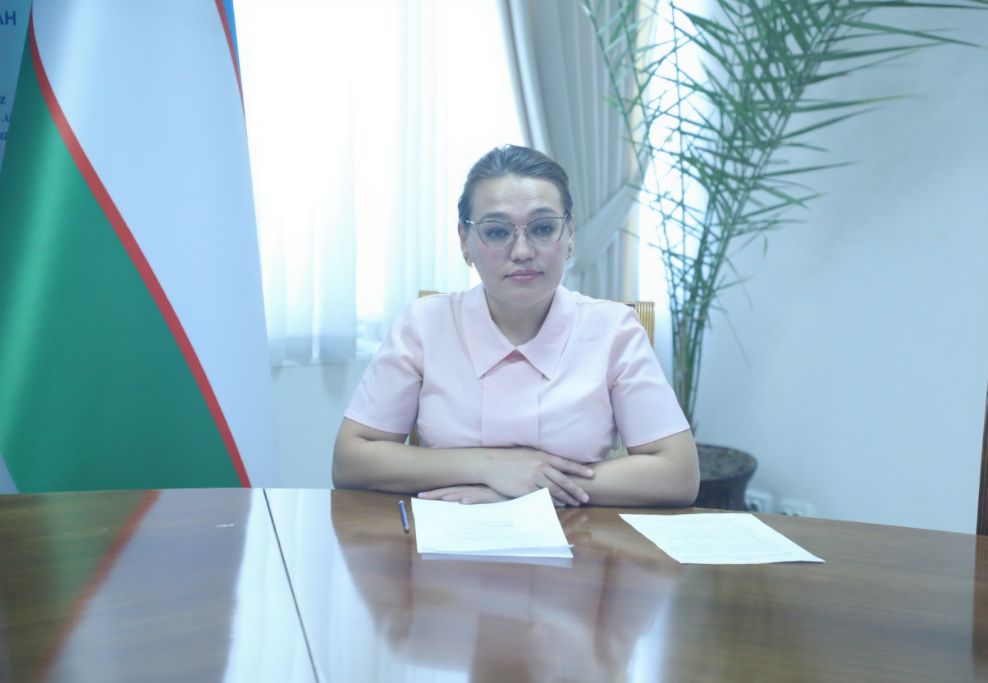
Uzbekistan–Oman: A New Era and Opportunities for Cooperation
Amid rapid geopolitical and geoeconomic change, mutually beneficial cooperation between the countries of Central Asia and the Arabian Peninsula is becoming increasingly important. Expanding trade and economic ties, developing new transport corridors, strengthening investment cooperation and implementing joint projects are creating favourable conditions for a stronger partnership between the two regions.
Against this backdrop, relations between the Republic of Uzbekistan and the Sultanate of Oman are entering a new phase, marked by a shift from traditional diplomatic dialogue to practical cooperation across a broad range of areas.
The policy of openness and economic modernisation pursued under President Shavkat Mirziyoyev provides a solid foundation for this rapprochement. In turn, Oman Vision 2040, implemented under Sultan Haitham bin Tariq Al Said, seeks to advance industry, logistics and tourism and attract foreign investment, reflecting the two countries’ shared approach to sustainable development.
In this context, Uzbekistan could become an important economic partner for Oman in Central Asia, while Oman could become a promising logistics partner for Uzbekistan in the Gulf region. Further potential exists in food security, pharmaceuticals, education, information technology and workforce training.
Under these circumstances, a key priority is to translate political agreements and investment intentions into concrete projects that deliver tangible results. The joint Intergovernmental Commission serves as the main driver and coordinator of this process. This mechanism is intended to connect diplomacy with business, ensuring that agreements are implemented and that both countries’ potential is used effectively.
The talks held in Muscat in September 2026 were a practical step in this direction. The two sides discussed preparations for the sixth meeting of the Intergovernmental Commission, the establishment of a bilateral business council and the organisation of a joint business forum. Particular attention was paid to identifying priority projects and establishing clear mechanisms to monitor their implementation.
The strategic complementarity of the two economies is becoming a major factor bringing the countries closer together. Uzbekistan has considerable industrial and agricultural capacity, a substantial workforce and a strong resource base, while Oman offers well-developed port infrastructure, financial resources and access to international maritime trade routes.
Political dialogue as a foundation for a lasting partnership
Uzbekistan and Oman are developing relations based on mutual respect, trust, equality and consideration for each other’s national interests. Regular high-level and intergovernmental contacts demonstrate both sides’ interest in adding new substance to bilateral ties. The Central Asia–Gulf Cooperation Council dialogue offers further opportunities.
In early 2025, President Shavkat Mirziyoyev received Oman’s Minister of Foreign Affairs, Badr bin Hamad Al Busaidi, who conveyed a personal message from Sultan Haitham bin Tariq Al Said. The two sides discussed trade, economic, investment and financial cooperation, interparliamentary ties, cultural and people-to-people exchanges, and prospects for launching direct air services.
In mid-2025, the President of Uzbekistan met with Oman’s Minister of Commerce, Industry and Investment Promotion, Qais bin Mohammed Al Yousef, on the sidelines of the Tashkent International Investment Forum. Particular attention was paid to joint projects in energy, geology, the food, textile and chemical industries, transport and finance.
A year later, in June 2026, President Shavkat Mirziyoyev received an Omani delegation led by Minister of Economy Khamis bin Saif Al Jabri. The meeting addressed cooperation in transport, logistics, geology, e-commerce and digital infrastructure. Following the talks, the two sides agreed to hold the next meeting of the joint Intergovernmental Commission in Muscat.
As a result, political dialogue has steadily become more substantive, with a focus on specific investment projects, transport routes and mechanisms for expanding trade.
Trade and economic cooperation: significant potential for growth
Bilateral trade has been growing. Nevertheless, despite the favourable political environment, its scale does not yet reflect the economic potential of the two countries.
Uzbekistan can supply the Omani market with textiles, food products, chemicals, electrical goods and agricultural produce. Oman, in turn, can offer petrochemical products, industrial materials and equipment, as well as participation in joint production chains.
Particular importance lies in moving beyond trade transactions to establish manufacturing operations that generate high added value. This would help increase trade and enable companies from both countries to establish a lasting presence in the markets of Central Asia and the Middle East.
In late September 2026, the two sides discussed a proposed preferential trade agreement and an update to the agreement on the promotion and protection of investments. They also considered simplifying certification and customs procedures and establishing joint ventures. Oman’s free economic zones could provide an effective means of putting these plans into practice. This would open up substantial opportunities for Uzbek companies to establish export-oriented production facilities and enter promising markets in the Gulf countries, East Africa and South Asia.
Investment partnership as a key driver of bilateral relations
To attract Omani investment into Uzbekistan’s economy, an Uzbek delegation held talks in Muscat in 2025 with major companies and financial institutions. These included the Oman Investment Authority, Suhail Bahwan Group, Sohar International Bank, Oman Cables, Asyad Group and MB Holding. Projects were also presented in petrochemicals, energy, mining, machinery manufacturing, agriculture, logistics and tourism.
The Uzbek-Oman Investment Company (UzOman) plays an important role, having financed more than ten projects across various sectors of the economy.
Investment cooperation is gradually becoming more systematic, encompassing financing, technology transfer, the establishment of production facilities and specialist training. A notable example is the agri-food technology centre operated by Atyab International Services, a leading Omani testing, inspection and certification body, which has been active in Uzbekistan for two years.
Transport and logistics: new opportunities to access global markets
For landlocked Uzbekistan, diversifying transport routes is strategically important. Oman could become a promising logistics partner for Uzbekistan, providing additional access to international routes through the Arabian Sea and the Indian Ocean.
The Uzbekistan–Turkmenistan–Iran–Oman corridor, which envisages multimodal links between Central Asia and the port infrastructure of the Arabian Peninsula, is particularly significant.
On 16 February 2026, representatives of the two countries’ transport authorities discussed cooperation under the Ashgabat Agreement, increasing cargo flows through the ports of Salalah, Sohar and Duqm, and developing multimodal routes. According to the U.S. International Trade Administration, these three deep-water ports connect to 86 ports in 40 countries.
However, putting these transport initiatives into practice will require coordination of transit tariffs, improvements to customs procedures, the digitalisation of transport operations and stronger links between logistics operators.
The strategic objective is to establish Oman as a maritime trade and logistics hub serving Uzbekistan, and Uzbekistan as a link between Oman and Central Asia.
Direct air services as an important step towards closer ties
In the middle of this year, Tashkent International Airport welcomed the first scheduled Oman Air flight on the Muscat–Tashkent route. The service was introduced with three flights per week. Direct air connectivity facilitates business travel, tourism exchanges and contacts between entrepreneurs. It could stimulate Omani interest in Uzbekistan’s historic cities and provide more opportunities for Uzbek citizens to visit Oman.
Direct air services provide an important infrastructure foundation for expanding economic and people-to-people ties.
New horizons for industrial cooperation and the green economy
Uzbekistan is implementing reforms to develop renewable energy, improve energy efficiency and introduce resource-saving technologies. Similar objectives also feature prominently in Oman Vision 2040.
At the beginning of this year, Oman unveiled its Five-Year Development Plan for 2026–2030, which sets a target for average annual economic growth of around 4% and envisages a transition to a low-carbon economy.
In this context, promising areas of cooperation include solar and wind energy, water-saving technologies, environmentally friendly industry, waste recycling and sustainable agriculture. Investment in energy infrastructure, energy storage systems and efficient water use is important for Uzbekistan.
The green economy could become a new area of strategic cooperation, bringing together investment resources, industrial potential and a shared interest in sustainable development. This environmental focus is complemented by a digital agenda encompassing e-commerce, payment systems and logistics platforms.
Cultural and people-to-people ties as a foundation for friendship
Cultural and people-to-people cooperation draws on the rich spiritual heritage and historical contacts between the peoples of Central Asia and the Arabian Peninsula. These traditions provide a favourable basis for expanding cooperation in education, science, culture and tourism.
Pilgrimage and cultural tourism hold particular promise. Samarkand, Bukhara, Khiva and Termez are attractive destinations thanks to their architectural monuments and scholarly heritage. Oman, in turn, offers historic forts, natural attractions and a distinctive culture.
Alongside tourism, people-to-people cooperation is also expanding, with a focus on academic exchanges, joint educational programmes, scientific conferences and contacts between cultural institutions. Last year, 30 women entrepreneurs from Uzbekistan took part in a business forum in Muscat for the first time, broadening business ties between the two countries.
Overall, relations between Uzbekistan and Oman are entering a new stage of development, opening up opportunities to deepen political dialogue, expand economic cooperation and strengthen people-to-people ties. The complementarity of their economic potential and the convergence of their strategic interests are central to success, enabling joint initiatives to strengthen connectivity between Central Asia and the Arabian Peninsula.
Uzbekistan and Oman therefore have all the necessary foundations for a long-term, mutually beneficial and multifaceted partnership that serves the interests of both peoples.
Dilorom Mamatkulova
Leading Research Fellow
Institute for Strategic and Regional Studies
under the President of the Republic of Uzbekistan
📅 11.11.2026
Embassy messages
How is global climate change reshaping Uzbekistan’s riverside ecosystems?
The Ministry of Foreign Affairs of the Republic of Uzbekistan has launched the “Consular Services” mobile application
Consular Services Reception Procedure at the Embassy of Uzbekistan in Latvia
Узбекистан и страны Балтии объединяют усилия в борьбе с коррупцией
Uzbek specialists study Latvia’s best practices in veterinary and livestock sectors
Uzbekistan and Finland discussed prospects for cooperation in the field of entrepreneurship support
A holiday of unity: Navruz celebration connects nations in Riga
Trade union delegation of Uzbekistan discusses in Latvia issues of protecting the rights of compatriots – labor migrants
Ambassador of Uzbekistan presented his credentials to the President of Lithuania
Uzbekistan and Finland are preparing for the next meeting of the intergovernmental commission and a business forum within its framework
Discussions on potential areas of cooperation with the Association of European Chambers of Commerce and Industry were held in Riga
Uzbekistan and Latvia agreed to prepare a bilateral agreement on cooperation in the field of labor migration
Uzbekistan and Latvia ready for permanent dialogue in the field of labor migration
Торговый дом Узбекистана в Латвии провел онлайн-тренинг для хокимов и экспортеров Сырдарьинской области
Uzbek delegation studied Finland's experience in preventing violence against children
A festive evening for compatriots was organized in Estonia
Latvia widely celebrated the anniversary of the adoption of the Basic Law of Uzbekistan
Возможности медицинского туризма в Узбекистане презентованы в Риге
New contracts worth over $4 million signed as part of Uzbek exporters' business mission to Latvia
A roundtable discussion on the topic "Mirzo Ulugbek: a great encyclopedist and a famous statesman" was held in Riga
СМИ Латвии: Явка на выборах в Узбекистане составила 74,72%
Досрочное голосование по выборам в Законодательную палату Олий Мажлиса Узбекистана проходит в Латвии
В Латвии и Литве обсуждаются ключевые аспекты предстоящих парламентских выборов в Узбекистане
Issues related to the development of cooperation between Uzbekistan and Latvia in the field of combating crime discussed in Riga
A round table was held in Latvia on the upcoming elections in Uzbekistan to the Legislative Chamber of the Oliy Majlis and Kengashes of People's Deputies
Uzbek exporters familiarized with requirements for import of Uzbek products to Latvian and European markets
Export of agricultural products from Uzbekistan to the Latvian market increases
ЭЪЛОН!
Uzbek ambassador meets Latvian Saeima speaker to discuss prospects for boosting inter-parliamentary cooperation
Diplomats of Uzbekistan held a visiting reception of fellow citizens living in Estonia and Finland

-
 Ministry of Foreign Affairs of the Republic of Uzbekistan
-
 Diplomatic Service of the Ministry of Foreign Affairs
-
 State Committee for Tourism Development
-
Ministry of Investments and Foreign Trade of the Republic of Uzbekistan
-
 invest.gov.uz
-

-

-

-

-

-

-


of Uzbekistan in the Republic
of Latvia
When using the information, a link to www.uzembassy.lv
must be provided.
All rights reserved
Address
Address: Riga c., LV-1010. 11-11 Elizabetes Str., Latvia
Phone: 37167322424
Fax: 37167322306
Email: embassy@uzbekistan.lv
Useful links
HomeIssuance of biometric passport for departure abroad
Certificate to return to Uzbekistan
Withdrawal of citizenship
Loss of citizenship