Phone
Consular Issues
Phone
Uzbekistan news
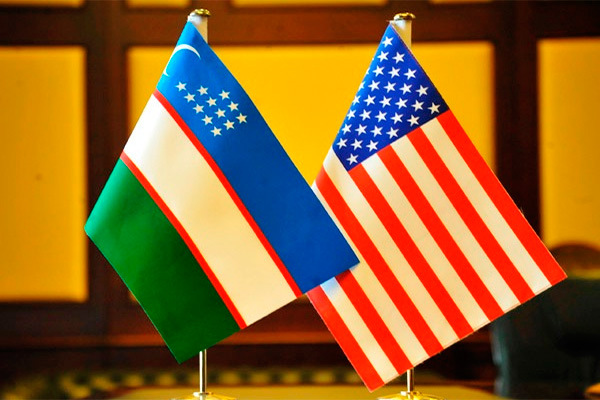
Ecological cooperation between Uzbekistan and the United States elevated to the level of a strategic partnership
Today, environmental challenges such as climate change, desertification, biodiversity loss and air pollution are driving countries around the world toward closer cooperation. Uzbekistan has likewise identified environmental protection and climate change adaptation as key priorities of its state policy. In this context, the development of international partnerships, particularly with the United States, is of special importance.
At present, experts and representatives from both countries actively engage on various international platforms. In particular, the National Committee on Ecology and Climate Change of the Republic of Uzbekistan regularly participates in meetings of the Environment and Energy Working Groups within the C5+1 framework. This dialogue platform enables the countries of Central Asia and the United States to exchange expertise on environmental issues and advance new initiatives.
In recent years, bilateral cooperation has gained significant momentum. Uzbek delegations have taken part in international forums, educational programs, and professional development initiatives hosted in the United States. Participation in sessions of the United Nations Forum on Forests, visits organized through cooperation with the United States Geological Survey (USGS) and educational exchanges on environmental topics under the U.S. Congress’s Open World Program have all contributed to strengthening professional expertise and promoting the exchange of knowledge and best practices.
In 2024, a meeting between Uzbekistan’s Minister of Ecology, Environmental Protection and Climate Change, Aziz Abdukhakimov, and U.S. Presidential Advisor Sara Minkara underscored the importance of integrating social considerations into the environmental agenda. The parties discussed the impact of climate change on persons with disabilities and reached an agreement to foster cooperation between higher education institutions in the two countries.
Significant progress is also being made in scientific collaboration.
A memorandum signed in 2025 between Green University in Tashkent and the Center for Sustainable Development at Columbia University is expected to elevate research in the fields of ecology and climate change to a new level. A practical outcome of this partnership was the visit to Uzbekistan by world-renowned economist and sustainable development expert Jeffrey Sachs.
Looking ahead, there are broad opportunities to further expand environmental cooperation between Uzbekistan and the United States. One particularly promising area is the study of U.S. experience in forest management. Approximately one-third of the United States is covered by forests and the country has developed advanced forest management and monitoring systems that may offer valuable insights for Uzbekistan.
Considerable potential also exists in the fields of biodiversity conservation and protected area management. In the United States, millions of hectares of land are managed for conservation purposes and this experience could contribute to the further development of Uzbekistan’s protected area system.
Particular attention should also be given to cooperation in education and science. Establishing partnerships between Green University and leading global institutions such as the University of California, Berkeley, Stanford University, Harvard University and Yale University would not only enhance the quality of scientific research but also help prepare a new generation of specialists in ecology and climate science.
In addition, the United States’ advanced experience in sustainable urban development and «green» infrastructure is of considerable interest for Uzbekistan’s cities. Cities such as Portland and Seattle have successfully implemented projects involving «green» streets, cycling infrastructure, modern waste management systems and air quality monitoring technologies. Studying these practices could support the advancement of green city initiatives across Uzbekistan.
The hosting of the Eighth Assembly of the Global Environment Facility (GEF) in Samarkand in 2026 further strengthened Uzbekistan’s international standing in the field of environmental cooperation. The participation of U.S. representatives in Eco Expo Central Asia 2026, organized as part of this landmark event, has the potential to elevate environmental partnership between the two countries to a qualitatively new level.
Today, environmental cooperation between Uzbekistan and the United States extends beyond individual projects and events, increasingly taking on the character of a long-term strategic partnership. At a time when climate change and environmental security are becoming ever more pressing global concerns, such cooperation will contribute to sustainable development not only in both countries, but across the wider region as well.
📅 26.06.2026
Uzbekistan news
Ecological cooperation between Uzbekistan and the United States elevated to the level of a strategic partnership
Cooperation Between Uzbekistan and Georgia in Strengthening Connectivity in Central Asia and the South Caucasus
Uzbekistan as an Operational Hub for Technology Companies: Key Figures, Conditions, and Advantages
“O'zbek futboli” – A Documentary Chronicle of a Century-Long Journey Toward the Nation’s Greatest Football Dream
GENDER POLICY IN UZBEKISTAN
Uzbekistan launches a brand new media bankfeaturing high-quality photo and video materials
Building Effective Transport Connectivity in the Context of Global Change
Uzbekistan as a Driver of Regional Connectivity: The Significance of the Termez Dialogue
A SHARED GENETIC CODE: THE REVIVAL OF THE CULTURAL AND CIVILISATIONAL HERITAGE OF CENTRAL AND SOUTH ASIA
The Termez Dialogue Sets the Course for Economic Integration with South Asia
Termez platform – dialogue for ensuring security and stability in Central and South Asia
The Termez Dialogue: Afghanistan as a Connecting Bridge Between Central and South Asia
Tashkent to Host Second Meeting of Termez Dialogue on Connectivity Between Central and South Asia on June 4–6
The “Uzbek Model” of Rehabilitation: Seven Years of “Mehr” Humanitarian Operations
Uzbekistan offers a deeply thought-out philosophy of integration to the international community
Uzbekistan and the EAEU: deepening practical cooperation amid global economic changes
ORGANIZATION OF TURKIC STATES: DYNAMICS OF DEVELOPMENT, ECONOMIC POTENTIAL AND STRATEGIC OPPORTUNITIES
TIIF-2026: Shaping a New Investment Architecture for Central Asia
Economic connectivity between Central and South Asia: a foundation for stability and sustainable development of the macroregion
The Termez Dialogue: A New Regional Architecture of Connectivity between Central and South Asia
The Termez Dialogue: From Connectivity to Shared Climate Resilience Dinara Ravilevna Ziganshina, SIC ICWC
TERMEZ DIALOGUE: FROM CULTURAL-HUMANITARIAN TIES TO BUILDING A SUSTAINABLE REGIONAL ARCHITECTURE
Smart Cities: How Uzbekistan and Azerbaijan Are Rethinking Urban Development
Central Asia’s Shared Experience of Compromise Is Increasingly in Demand Globally as a Practical Model for Preventive Diplomacy
The Termez Dialogue: From Connectivity to Shared Climate Resilience
TERMEZ DIALOGUE: FROM CULTURAL-HUMANITARIAN TIES TO BUILDING A SUSTAINABLE REGIONAL ARCHITECTURE
Nearly all initiatives put forward by the President of Uzbekistan at the OTS summit in Turkestan were practical in nature
The Termez Dialogue: A New Regional Architecture of Connectivity between Central and South Asia
Cities of the Future and the Strategy of New Uzbekista
Baku – WUF-13: Everyone deserves adequate housing and living in safe and sustainable cities

-
 Ministry of Foreign Affairs of the Republic of Uzbekistan
 -
 Diplomatic Service of the Ministry of Foreign Affairs
 -
 State Committee for Tourism Development
 -
Ministry of Investments and Foreign Trade of the Republic of Uzbekistan
-
 invest.gov.uz
 -

-

-

-

-

-

-

of Uzbekistan in the Republic
of Latvia
When using the information, a link to www.uzembassy.lv
must be provided.
All rights reserved
Address
Address: Riga c., LV-1010. 11-11 Elizabetes Str., Latvia
Phone: 37167322424
Fax: 37167322306
Email: embassy@uzbekistan.lv
Useful links
HomeIssuance of biometric passport for departure abroad
Certificate to return to Uzbekistan
Withdrawal of citizenship
Loss of citizenship