Phone
Consular Issues
Phone
Uzbekistan news
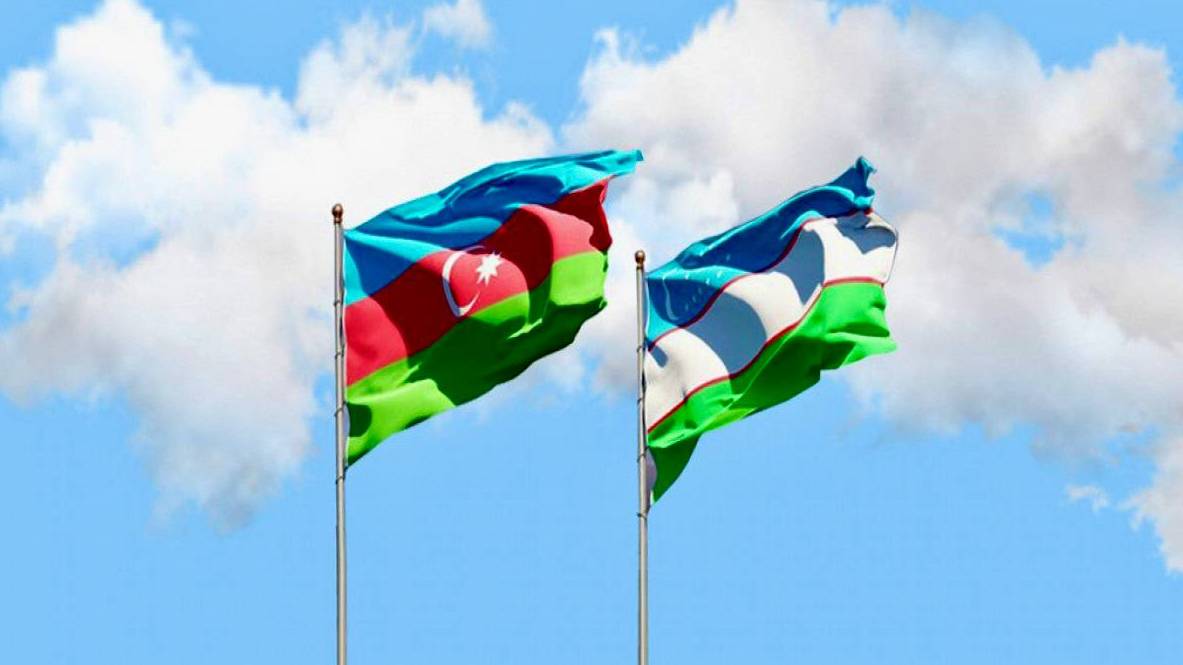
Uzbekistan–Azerbaijan: Environmental cooperation emerges as a key pillar of the strategic partnership
Today, environmental protection and climate change have become one of the most promising and dynamic areas of strategic cooperation between Uzbekistan and Azerbaijan. Both countries have identified the transition to a green economy, climate change mitigation, biodiversity conservation, and the achievement of the Sustainable Development Goals as key priorities of their national development agendas. Consequently, environmental cooperation between the two countries has expanded steadily in recent years, not only at the bilateral level but also within regional and international frameworks.
Environmental cooperation between Uzbekistan and Azerbaijan is based on the Agreement on Cooperation in the Field of Environmental Protection, signed in Baku on 11 September 2008. To elevate bilateral cooperation to a new qualitative level, the two sides are currently drafting a new intergovernmental agreement on cooperation in the field of environmental protection. The agreement is expected to provide a solid institutional framework for harmonizing the environmental policies of both countries and facilitating the implementation of long-term joint initiatives.
In recent years, Uzbekistan and Azerbaijan have significantly strengthened cooperation through environmental diplomacy. In December 2023, during a meeting of ministers from the member states of the Economic Cooperation Organization (ECO), held on the sidelines of COP28 in Dubai, participants discussed the efficient use of natural resources, sustainable development, and the circular economy. The meeting marked an important milestone in advancing dialogue between the environmental authorities of the two countries.
A major step forward in bilateral environmental cooperation came in 2024 during COP29 in Baku. The first-ever meeting of environment ministers from the member states of the Organization of Turkic States was held at the Uzbekistan National Pavilion. The meeting concluded with the adoption of a declaration aimed at strengthening cooperation in the fields of ecology and environmental protection.
During COP29, the Asian Development Bank launched the regional From Glaciers to Farms programme. The initiative is designed to mitigate the impacts of glacier melt across Central Asia, the South Caucasus, and Pakistan, promote integrated water resources management, and enhance the resilience of agriculture and social infrastructure. The programme envisages mobilizing USD 3.5 billion in investments over the period 2025–2034.
Environmental cooperation extends well beyond intergovernmental dialogue. During 2023–2024, young environmental activists from Azerbaijan actively participated in the International Eco Camp held in Samarkand. The initiative promotes environmental awareness among young people, facilitates the exchange of experience and strengthens regional cooperation.
In 2024, a delegation from the Press Service of the Ministry of Ecology and Natural Resources of Azerbaijan visited Uzbekistan to learn about the work of the Press Service of the National Committee on Ecology and Climate Change. The visit took place within the framework of the First Uzbekistan–Azerbaijan Media Forum and contributed to the exchange of best practices in environmental communications.
In 2025, Mukhtar Babayev, Special Representative of the President of Azerbaijan and President of COP29, was among the first distinguished participants in the international conference "Central Asia in the Face of Global Climate Threats: Solidarity for Shared Prosperity," held in Samarkand. In 2026, a delegation from the National Committee on Ecology and Climate Change of Uzbekistan participated in a regional seminar organized in Baku by the United Nations Industrial Development Organization (UNIDO).
According to experts, several promising avenues exist for further deepening environmental cooperation between the two countries.
First, Azerbaijan has accumulated significant experience in air quality monitoring and the development of green infrastructure. Therefore, exchanging expertise in green urban development, improving ambient air quality and environmental monitoring would be mutually beneficial.
Second, expanding joint scientific research through Green University and promoting exchanges of faculty members and young researchers would further strengthen scientific capacity in the field of ecology and sustainable development.
Third, sharing best practices in the management of protected natural areas and national parks would facilitate the introduction of modern approaches to biodiversity conservation.
Fourth, the signing of a new intergovernmental agreement on environmental cooperation, together with the establishment of a joint working group to coordinate its implementation, would provide a systematic framework for further expanding bilateral cooperation.
Fifth, Azerbaijan's accession to the Convention on the Conservation of Migratory Species of Wild Animals would significantly strengthen regional cooperation in biodiversity conservation and the protection of migratory routes.
Environmental cooperation between Uzbekistan and Azerbaijan is gradually evolving into a comprehensive strategic partnership encompassing climate diplomacy, the green economy, environmental education, scientific research and regional initiatives. The anticipated signing of a new intergovernmental agreement, the expansion of scientific cooperation through Green University and the implementation of joint projects in green urban development, air quality monitoring and the management of protected natural areas are expected to elevate bilateral cooperation to a new level.
This partnership will make a meaningful contribution not only to strengthening the environmental security of Uzbekistan and Azerbaijan, but also to promoting sustainable development across the Turkic world and the wider regions of Central Asia and the South Caucasus.
📅 28.07.2026
Uzbekistan news
Uzbekistan and Kyrgyzstan: A New Stage and Future Prospects for Environmental Cooperation
Uzbekistan–Azerbaijan: Environmental cooperation emerges as a key pillar of the strategic partnership
Samarkand hosted an international scientific and practical conference on “Brother Cities: A New Model for Sustainable Development and Public Diplomacy”
Uzbekistan and Kyrgyzstan: Strategic Partnership, Institutionalization, and Mechanisms of Cooperation
Uzbekistan–Kyrgyzstan: From Border Neighbourhood to Long-Term Economic Cooperation
Uzbekistan and Kyrgyzstan: Transitioning to Joint Value Chains
Towards a Unified Intellectual Space of the Turkic World: A New Era of Scientific Integration in the Renaissance Age
Uzbekistan – Kyrgyzstan: Prospects for Cooperation on Water Resources
Central Asia and Azerbaijan: Prospects for a Common Transport Area
Central Asia and Azerbaijan Are Emerging as a Shared Hub for Startups, Investors, and Talent
Uzbekistan - Azerbaijan: economy of trust, routes and joint projects
Uzbekistan - Kyrgyzstan: from border neighborhood to long-term economic cooperation
Central Asia and Azerbaijan: Strategic Partners Building a Green Energy Hub Together
Through the Caspian to New Markets
Uzbekistan embraces the language of international law and becomes part of the global financial system
On July 24–25, Samarkand Will Bring Together Global Sister Cities at International Forum
Uzbekistan: An Open and Safe Destination Recognized by the International Community
Green Economy, Social Sustainability, and Transparent Governance: Uzbekistan’s New Development Formula
The text of the appeal of the participants of the first international forum of Islamic civilization to the head of State
Declaration adopted by the participants of the First International Islamic Civilization Forum
Uzbekistan–Belarus economic cooperation: promising projects in the Agri-food sector
Uzbekistan and Belarus: Stable Partnership and Strategic Development Prospects
Uzbekistan and Belarus strengthen multifaceted partnership based on mutual trust and pragmatic cooperation
Areas of Cooperation between Belarus and Uzbekistan in Strengthening Sustainable Transport Corridors in Eurasia
Uzbekistan–Belarus economic cooperation: promising projects in the Agri-food sector
Uzbekistan and Georgia: From historical friendship to a strategic partnership
Uzbekistan–Georgia Relations: Contemporary Priorities for Bilateral Development
Ecological cooperation between Uzbekistan and the United States elevated to the level of a strategic partnership
Cooperation Between Uzbekistan and Georgia in Strengthening Connectivity in Central Asia and the South Caucasus
Uzbekistan as an Operational Hub for Technology Companies: Key Figures, Conditions, and Advantages

-
 Ministry of Foreign Affairs of the Republic of Uzbekistan
 -
 Diplomatic Service of the Ministry of Foreign Affairs
 -
 State Committee for Tourism Development
 -
Ministry of Investments and Foreign Trade of the Republic of Uzbekistan
-
 invest.gov.uz
 -

-

-

-

-

-

-

of Uzbekistan in the Republic
of Latvia
When using the information, a link to www.uzembassy.lv
must be provided.
All rights reserved
Address
Address: Riga c., LV-1010. 11-11 Elizabetes Str., Latvia
Phone: 37167322424
Fax: 37167322306
Email: embassy@uzbekistan.lv
Useful links
HomeIssuance of biometric passport for departure abroad
Certificate to return to Uzbekistan
Withdrawal of citizenship
Loss of citizenship