Phone
Consular Issues
Phone
Uzbekistan news
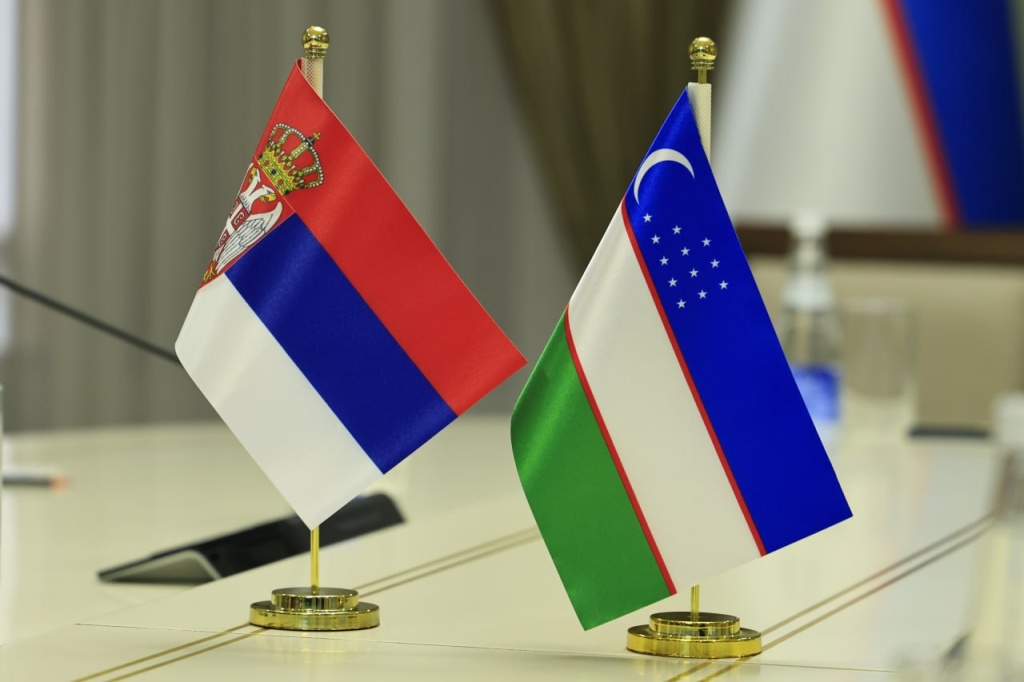
Uzbekistan and Serbia: From Labour Mobility to a Strategic Partnership in Human Capital
As Serbia’s economy continues to develop and demand for skilled workers grows across a number of sectors, an emerging model of cooperation with Uzbekistan could offer a solution built on legality, orderly mobility and institutional oversight by both countries.
This is not simply about sending workers from one country to another. The new approach is based on identifying the specific needs of the Serbian labour market, selecting and preparing the required specialists in Uzbekistan, directly involving employers in the process, and ensuring that employment takes place under conditions that safeguard workers’ rights.
In this context, a new and promising dimension is emerging in relations between Tashkent and Belgrade — a partnership in orderly labour mobility and human capital.
From political trust to a practical mechanism
The political foundation for this process was laid in October 2025.
The official visit of President of the Republic of Serbia Aleksandar Vučić to Uzbekistan marked a historic milestone in relations between the two countries. Following talks between Presidents Shavkat Mirziyoyev and Aleksandar Vučić, a Joint Declaration was adopted and a package of agreements covering the economy, investment, education, technology, tourism and other areas was signed.
Among them was a Memorandum of Understanding on cooperation in the field of labour migration.
Orderly labour migration thus became one of the practical areas of high-level political dialogue between the two countries.
Seven months later, those political agreements began to take concrete institutional form.
On 18–19 May 2026, Tashkent hosted the International Migration Forum, attended by a Serbian delegation headed by Minister of Labour, Employment, Veteran and Social Affairs Milica Đurđević Stamenkovski.
One fact is particularly significant for the Serbian audience: according to the official information of the Government of Serbia, this is the first agreement of its kind on labour mobility that Serbia has begun negotiating with a foreign country. Uzbekistan was chosen as its first partner.
Legal, safe and regulated mobility
Serbia’s approach to this cooperation was clearly articulated by Minister Milica Đurđević Stamenkovski during her visit to Tashkent.
According to the Minister, the future agreement is intended to establish an effective mechanism ensuring that labour mobility takes place exclusively within a legal, safe and regulated framework, based on clear rules and full institutional oversight by the state.
As she stressed, responsible states do not leave migration flows unmanaged; rather, they manage them in the interests of their citizens, their economies and national security.
This position is closely aligned with the new model that Uzbekistan has been developing in recent years.
For Uzbekistan, the objective is likewise no longer simply to direct a citizen towards an available job abroad. The new model begins by identifying an employer’s needs, selecting suitable candidates, providing professional and language training where necessary, establishing employment conditions in advance and only then facilitating employment through legal and organised channels.
Cooperation is not starting from scratch
Uzbekistan and Serbia already have practical experience of cooperation in the employment sector.
According to Uzbekistan’s Migration Agency, 435 Uzbek citizens in 2022, 135 in 2024 and 215 in 2025 were sent to Serbia through organised channels for temporary employment in agriculture. During the first seven months of 2026, another nine citizens began working in Serbia through the same mechanism.
Today, three cooperation agreements are in place between Uzbekistan’s Migration Agency and Serbian companies for the recruitment of Uzbek citizens for temporary employment.
In 2026, cooperation began expanding beyond agriculture.
In February, Serbian partners reported demand for approximately 200 seasonal workers in selected sectors of the economy. In June, a Serbian recruitment company identified a need for another 50 specialists for façade works.
The clearest practical example of the emerging model, however, came in July.
A Serbian employer selects workers directly in Uzbekistan
From 6 to 10 July 2026, Serbian company M Enterijer Gradnja doo Beograd–Voždovac conducted direct recruitment in Uzbekistan for 120 positions in the construction sector.
The vacancies included 50 reinforcement workers, 50 carpenters, five civil engineers, five crane operators and ten special-equipment operators.
Monthly salaries were set at €1,000–€1,500. The employer covers the costs of visas and work permits, transportation, accommodation, two meals a day and medical insurance.
One hundred Uzbek citizens expressed interest in the vacancies. Of these, 74 were admitted to interviews and practical assessments. Following the selection process, 43 specialists successfully passed the recruitment process, and their documents were submitted to the Serbian employer for further processing.
This experience illustrates the essence of the emerging model.
Rather than assessing candidates solely on the basis of their CVs, the Serbian employer can evaluate their professional skills directly in Uzbekistan. Candidates, meanwhile, know before travelling to Serbia where they will work, what their duties will be, how much they will earn and what employment and living conditions will be provided.
This reduces uncertainty for both sides.
Training first, employment second
Another important change in Uzbekistan’s approach to labour mobility is that a foreign employer’s request is no longer viewed merely as a vacancy, but as a specific requirement for workforce preparation.
In May 2026, the INTIL International Centre for Foreign Language and Vocational Training opened in Tashkent. At its initial stage, the centre provides training in eight foreign languages and 12 professions, hosts international examinations and offers advisory services related to visas and documentation.
In the future, this infrastructure can also be used to prepare specialists specifically for the needs of Serbian companies.
For example, if a Serbian employer requires a certain number of welders, construction specialists, drivers or workers in other occupations, candidates can be selected in Uzbekistan, their skills upgraded to meet the employer’s requirements, and initial language training provided before departure.
This aspect is also important to the Serbian side.
Milica Đurđević Stamenkovski positively assessed Uzbekistan’s readiness to prepare citizens before they travel to Serbia for temporary employment, including by introducing them to the Serbian language. Such preparation could help workers adapt more quickly to both their workplace and everyday life in Serbia.
The prospective model of cooperation can therefore be expressed in a simple formula:
Serbia identifies the demand — Uzbekistan selects and prepares the workforce — the employer assesses their qualifications — and state institutions ensure that the process remains legal and transparent.
People at the centre
Any labour mobility model can only be sustainable if people remain at its centre.
For Uzbekistan, protecting the labour rights of citizens temporarily employed abroad, ensuring the timely payment of wages, decent living conditions and access to legal protection are therefore just as important as securing the job itself.
Dialogue with Serbia in this area is not new.
As early as 2022, an Uzbek delegation held talks with Serbia’s competent labour authorities, the Chamber of Commerce and Industry, representatives of the agriculture, construction and hospitality sectors, employers, and the International Organization for Migration’s office in Serbia. Direct meetings were also held with Uzbek citizens working in Serbia to assess their employment and living conditions.
There is now an opportunity to transform this experience into a permanent institutional mechanism between the two states.
Here again, the two sides share a common principle: labour mobility should be legal, safe and orderly.
Another step towards greater mobility
Practical steps are also being taken to facilitate movement between the two countries.
Since late April 2026, Serbia has been issuing Uzbek citizens category “C” electronic visas, allowing a single entry for stays of up to 30 days.
Looking ahead, there is scope to explore more convenient mechanisms for seasonal employment, simplify visa procedures for other categories of work, and strengthen direct cooperation between Uzbekistan’s Migration Agency and Serbia’s National Employment Service in the field of organised employment.
Importantly, this relationship is not one-way.
Serbian citizens are also legally employed in Uzbekistan. In particular, relevant work authorisations were issued to 53 Serbian citizens in 2022, 48 in 2023 and 32 in 2024.
The issue, therefore, is much broader than “sending workers from Uzbekistan to Serbia”. It is about orderly labour mobility between two countries.
Why Uzbekistan?
For a Serbian audience, this is a natural question.
The Government of Serbia itself has addressed it: Uzbekistan’s selection as Serbia’s first foreign partner for such a labour mobility agreement was linked to the country’s dynamic economic development and the rapid deepening of bilateral relations towards a strategic partnership.
Uzbekistan, for its part, has a large and young workforce while simultaneously developing a system for preparing citizens according to the specific requirements of international labour markets.
This is where the interests of the two countries complement one another: Serbia’s demand for workers and Uzbekistan’s capacity to select and prepare them.
In the future, this also creates an opportunity to expand cooperation beyond seasonal agriculture and construction. Based on the actual needs of the Serbian economy, specialists could be trained specifically for other sectors as well.
A new bridge between Tashkent and Belgrade
During the first summit between Presidents Shavkat Mirziyoyev and Aleksandar Vučić in October 2025, the importance of developing new transport corridors between Central Asia and the Balkans was highlighted.
Yet one of the most important bridges between the two regions may be built not only through railways or highways, but through human capital.
For Serbia, orderly labour mobility offers an opportunity to attract pre-selected and trained workers who match the real needs of its economy through transparent and legal mechanisms.
For Uzbekistan, it offers an opportunity to open new legal labour markets for its citizens, strengthen their professional skills and earning potential, while ensuring state-level protection of their rights and interests abroad.
For this reason, it would be too narrow to view the process now unfolding between Tashkent and Belgrade simply as another labour migration project.
Its potential is considerably broader: to build a long-term partnership model based on targeted workforce preparation, direct employer participation, legal and safe labour mobility, and investment in human capital.
Speaking in Tashkent, Serbia’s Minister of Labour, Employment, Veteran and Social Affairs Milica Đurđević Stamenkovski said that relations between Uzbekistan and Serbia were entering a “new historical phase”, with the goal of elevating ties between the two friendly countries to the level of a strategic partnership.
The practical steps taken in the field of labour mobility in recent months show that this vision is already acquiring tangible substance.
High-level political trust is in place. The legal framework is taking shape. Direct links between employers and potential employees have already begun.
The task now is to transform this opportunity into a sustainable system that serves the economies of both Serbia and Uzbekistan — and, above all, the people of both countries.
📅 25.08.2026
Uzbekistan news
Uzbekistan and Serbia: From Labour Mobility to a Strategic Partnership in Human Capital
Prospects for Uzbekistan–Serbia Cooperation in the ICT Sector
Prospects for Cooperation between the Republic of Uzbekistan and the Republic of Korea within the Framework of the Central Asia–Republic of Korea Cooperation Forum
THE SCO’S NEW FINANCIAL ARCHITECTURE: FROM COORDINATION TO PRACTICAL DEVELOPMENT MECHANISMS
INFORMATION NOTE ON COOPERATION WITH SERBIA
On September 8–10th, Tashkent to gather International Textile Industry Professionals
The Seoul Summit: Uzbekistan in the New Industrial Architecture of C5+1
New Opportunities to Expand Cooperation Between Uzbekistan and Serbia
Uzbekistan and Azerbaijan: Turning Political Alignment into Economic Growth
BRIGHT PROSPECTS FOR MUTUALLY BENEFICIAL PARTNERSHIP
Transport and Logistics Connectivity of the SCO Amid Geopolitical Turbulence: New Opportunities for the Regions
Business in Uzbekistan are moving from digitalization to technological modernization
Uzbekistan and Serbia expand prospects for cooperation in ecology and environmental protection
SCO AND WATER DIPLOMACY: IN PURSUIT OF COMMON INTERESTS
TASHKENT-DELHI: A NEW STAGE OF STRATEGIC PARTNERSHIP
On September 4–6th, Samarkand will host XII Inter-Parliamentary Union Global Conference of Young Parliamentarians
The Infrastructure Already Linking Uzbekistan and Korea What Korea Has Already Built Inside Uzbekistan's Digital Economy From Fiber Optics to AI: The Scope of Uzbek-Korean Digital Cooperation The Digital Bridge Already Built Between Uzbekistan and South Korea
On September 8–10th, Tashkent to gather International Textile Industry Professionals
New Uzbekistan: A Builder of Peace and Trust
‘Mustaqillik’ Generation: New Navigators of the Silk Road
GLOBAL COMPETITION AND NEW PEACE DIPLOMACY: THE VOICE OF ENLIGHTENMENT OF NEW UZBEKISTAN IN THE GLOBAL ARENA
SCO AND WATER DIPLOMACY: IN PURSUIT OF COMMON INTERESTS
Uzbekistan’s Dialogue with Business: Five Years of Change
ON THE STATUS OF THE HOST COUNTRY AND A NEW PHASE OF INTERNATIONAL CULTURAL COOPERATION
Transport and Logistics Cooperation Between Uzbekistan and the US: A New Stage of Strategic Partnership
Reforms and Active Dialogue in Entrepreneurship: The President's 6th Open Dialogue as a Catalyst for New Economic Growth
How China–Kyrgyzstan–Uzbekistan railway is redrawing the economic map of the continent
G20 and Uzbekistan: Investment, Industry and Trade in a New Economic Reality
CULTURE — THE TREE OF A NATION'S TRUST UZBEKISTAN — THE UNITED STATES
Uzbekistan and Kyrgyzstan: A New Stage and Future Prospects for Environmental Cooperation

-
 Ministry of Foreign Affairs of the Republic of Uzbekistan
 -
 Diplomatic Service of the Ministry of Foreign Affairs
 -
 State Committee for Tourism Development
 -
Ministry of Investments and Foreign Trade of the Republic of Uzbekistan
-
 invest.gov.uz
 -
-

-

-

-

-

-

of Uzbekistan in the Republic
of Latvia
When using the information, a link to www.uzembassy.lv
must be provided.
All rights reserved
Address
Address: Riga c., LV-1010. 11-11 Elizabetes Str., Latvia
Phone: 37167322424
Fax: 37167322306
Email: embassy@uzbekistan.lv
Useful links
HomeIssuance of biometric passport for departure abroad
Certificate to return to Uzbekistan
Withdrawal of citizenship
Loss of citizenship