Phone
Consular Issues
Phone
Uzbekistan news
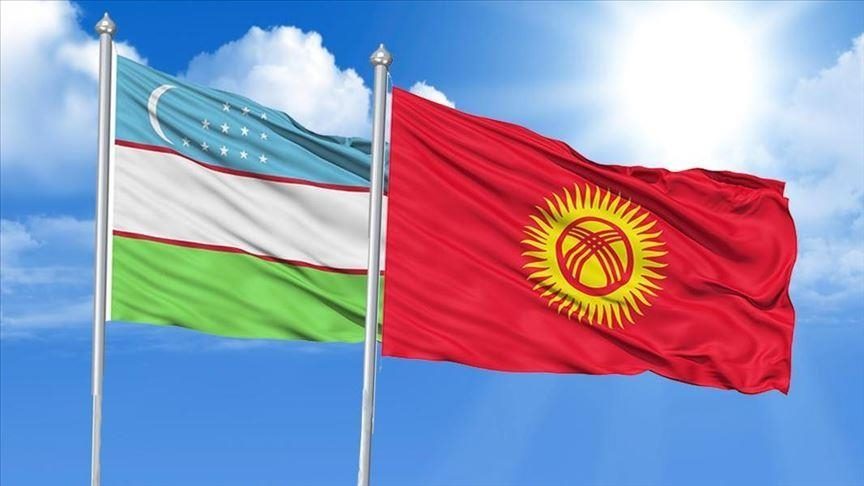
Tourism: A new dimension of Uzbekistan-Kyrgyzstan partnership
Tourism is taking on an increasingly prominent role in cooperation between Uzbekistan and Kyrgyzstan. The geographic proximity of the two countries, the intensity of mutual travel, and growing interest in Central Asia are creating the conditions for a shift from traditional tourism exchange toward closer cooperation — developing cross-border tourism, creating combined travel routes, and jointly promoting the region on the international market.
Over the first seven months of 2026, the flow of tourists from Kyrgyzstan has continued to grow, reflecting the expanding scale of tourism ties and the steady development of bilateral cooperation. This positive momentum is laying the groundwork for the next stage — creating conditions that make travel between the neighboring countries easier, while allowing the tourism potential of both states to complement one another.
Major international events are drawing additional attention to Central Asia. In 2026, Bishkek is hosting the Sixth World Nomad Games, giving the region an opportunity to showcase its national culture, traditions, and tourism potential to an international audience.
Against this backdrop, the initiative put forward by President of the Republic of Uzbekistan Shavkat Mirziyoyev to create a "Central Asian Tourism Ring" takes on particular significance. The proposal, unveiled in May 2026 at the annual meeting of the Board of Governors of the Asian Development Bank, envisions a more interconnected tourism space across the region and the creation of routes linking several countries. For Uzbekistan and Kyrgyzstan, this approach opens up further opportunities to develop combined travel itineraries and attract tourists from third countries.
A certain foundation for this has already been laid. The two countries are developing joint tourism products such as "Journeys Along the Silk Road" and "Journeys Through the Natural Landmarks of Uzbekistan and Kyrgyzstan," and are conducting mutual familiarization tours, visits by tourism industry representatives and media, and presentations of regional tourism potential.
At the same time, the further development of combined travel routes depends directly on the ease of movement between the two countries. One option under consideration is introducing an expedited border-crossing mechanism at the "Dustlik" checkpoint in Andijan region and the "Uchkurgan–Kensai" checkpoint in Namangan region. This measure is intended to create more comfortable conditions for tourist groups and to support the development of cross-border routes.
Consideration is also being given to granting international status to a number of other checkpoints. This would expand opportunities for foreign tourists to travel to areas with potential for ecological, health, mountain, and adventure tourism.
Cooperation between Uzbekistan and Kyrgyzstan in tourism is gradually taking on a broader regional dimension as well. The Shanghai Cooperation Organisation has become one of the platforms for this work. In April 2026, a meeting of the heads of tourism administrations of SCO member states held in Bishkek addressed the development of transport logistics, the streamlining of visa regimes, the promotion of joint routes and tours, and the expansion of cooperation between tourism organizations.
Of particular importance is the joint initiative by Uzbekistan and Kyrgyzstan to establish a tourism hub for SCO member states. At the Bishkek meeting, the parties backed further work on the concept and agreed to merge the draft concepts of the "Tourism Hub" and the "SCO Tourism Corridor" into a single, coordinated document. In this way, bilateral cooperation between the two countries is being extended to the level of one of the world's largest organizations.
The prospects of this approach extend beyond mutual travel by residents of Uzbekistan and Kyrgyzstan. The next step could be to more actively attract travelers from third countries by developing combined routes. This direction can be strengthened through joint expeditions by tourism companies, the creation of new cross-border tourism products, and their promotion in foreign markets. This would make travel across Uzbekistan and Kyrgyzstan more diverse while broadening the international audience for both destinations.
Major international events, the development of cross-border routes, and new initiatives within the SCO are creating additional opportunities for further convergence of the tourism spaces of Uzbekistan and Kyrgyzstan. The next step is not simply to increase the number of mutual trips, but to create conditions in which tourists can move more easily between the two countries, combine them in a single journey, and discover different destinations across Central Asia. It is precisely in this that tourism is acquiring the significance of an independent and promising dimension of partnership between the two neighboring states.
📅 29.08.2026
Uzbekistan news
The SCO Bishkek Summit: The Economic Agenda of a New Stage of Cooperation
Tourism: A new dimension of Uzbekistan-Kyrgyzstan partnership
Uzbekistan’s Role in the SCO: Economy, Security and Regional Cooperation
Economic Cooperation of Uzbekistan within the SCO at a New Stage of Development
Uzbekistan and Serbia: From Labour Mobility to a Strategic Partnership in Human Capital
Prospects for Uzbekistan–Serbia Cooperation in the ICT Sector
Prospects for Cooperation between the Republic of Uzbekistan and the Republic of Korea within the Framework of the Central Asia–Republic of Korea Cooperation Forum
THE SCO’S NEW FINANCIAL ARCHITECTURE: FROM COORDINATION TO PRACTICAL DEVELOPMENT MECHANISMS
INFORMATION NOTE ON COOPERATION WITH SERBIA
On September 8–10th, Tashkent to gather International Textile Industry Professionals
The Seoul Summit: Uzbekistan in the New Industrial Architecture of C5+1
New Opportunities to Expand Cooperation Between Uzbekistan and Serbia
Uzbekistan and Azerbaijan: Turning Political Alignment into Economic Growth
BRIGHT PROSPECTS FOR MUTUALLY BENEFICIAL PARTNERSHIP
Transport and Logistics Connectivity of the SCO Amid Geopolitical Turbulence: New Opportunities for the Regions
Business in Uzbekistan are moving from digitalization to technological modernization
Uzbekistan and Serbia expand prospects for cooperation in ecology and environmental protection
SCO AND WATER DIPLOMACY: IN PURSUIT OF COMMON INTERESTS
TASHKENT-DELHI: A NEW STAGE OF STRATEGIC PARTNERSHIP
On September 4–6th, Samarkand will host XII Inter-Parliamentary Union Global Conference of Young Parliamentarians
The Infrastructure Already Linking Uzbekistan and Korea What Korea Has Already Built Inside Uzbekistan's Digital Economy From Fiber Optics to AI: The Scope of Uzbek-Korean Digital Cooperation The Digital Bridge Already Built Between Uzbekistan and South Korea
On September 8–10th, Tashkent to gather International Textile Industry Professionals
New Uzbekistan: A Builder of Peace and Trust
‘Mustaqillik’ Generation: New Navigators of the Silk Road
GLOBAL COMPETITION AND NEW PEACE DIPLOMACY: THE VOICE OF ENLIGHTENMENT OF NEW UZBEKISTAN IN THE GLOBAL ARENA
SCO AND WATER DIPLOMACY: IN PURSUIT OF COMMON INTERESTS
Uzbekistan’s Dialogue with Business: Five Years of Change
ON THE STATUS OF THE HOST COUNTRY AND A NEW PHASE OF INTERNATIONAL CULTURAL COOPERATION
Transport and Logistics Cooperation Between Uzbekistan and the US: A New Stage of Strategic Partnership
Reforms and Active Dialogue in Entrepreneurship: The President's 6th Open Dialogue as a Catalyst for New Economic Growth

-
 Ministry of Foreign Affairs of the Republic of Uzbekistan
 -
 Diplomatic Service of the Ministry of Foreign Affairs
 -
 State Committee for Tourism Development
 -
Ministry of Investments and Foreign Trade of the Republic of Uzbekistan
-
 invest.gov.uz
 -
-

-

-

-
-

-

of Uzbekistan in the Republic
of Latvia
When using the information, a link to www.uzembassy.lv
must be provided.
All rights reserved
Address
Address: Riga c., LV-1010. 11-11 Elizabetes Str., Latvia
Phone: 37167322424
Fax: 37167322306
Email: embassy@uzbekistan.lv
Useful links
HomeIssuance of biometric passport for departure abroad
Certificate to return to Uzbekistan
Withdrawal of citizenship
Loss of citizenship