Phone
Consular Issues
Phone
Madaniyat va Turizm sohasida hamkorlik
We recommend
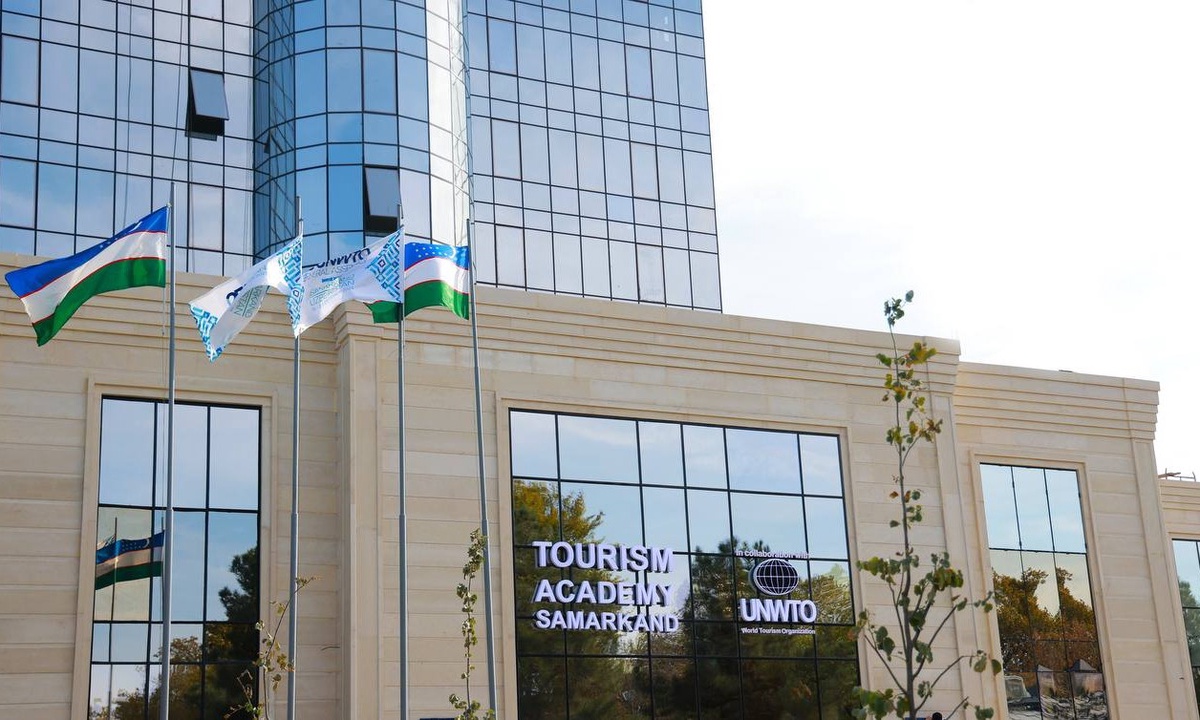
Establishment of the Samarkand Campus of the International Tourism Academy
📅 14.12.2025
On 20 November of the current year, the President of the Republic of Uzbekistan adopted Resolution No. PQ-350 entitled “On the Establishment and Organization of the Activities of the Samarkand Campus of the International Tourism Academy under the Auspices of the World Tourism Organization (UN Tourism)”.
In accordance with the Resolution, the following key performance objectives have been defined for the activities of the Samarkand Campus of the International Tourism Academy (hereinafter referred to as the Academy), established under the auspices of the World Tourism Organization of the United Nations, including:
-
establishing cooperation with one of the world’s top-10 ranked educational institutions and launching the training of highly qualified specialists;
-
organizing professional development courses of up to one month and retraining programs of up to eight months.
The Academy shall operate within the structure of the “Silk Road” International University of Tourism and Cultural Heritage. Educational activities at the Academy shall be carried out in accordance with the education formats applicable in the Republic of Uzbekistan and shall be conducted in Uzbek, Russian, and English.
Starting from 1 December 2025:
-
specialists of tourism sector entities shall undergo retraining and professional development on a contractual basis;
-
annually, 100 talented specialists from member states of the World Tourism Organization shall be awarded special grants to pursue retraining and professional development programs at the Academy.
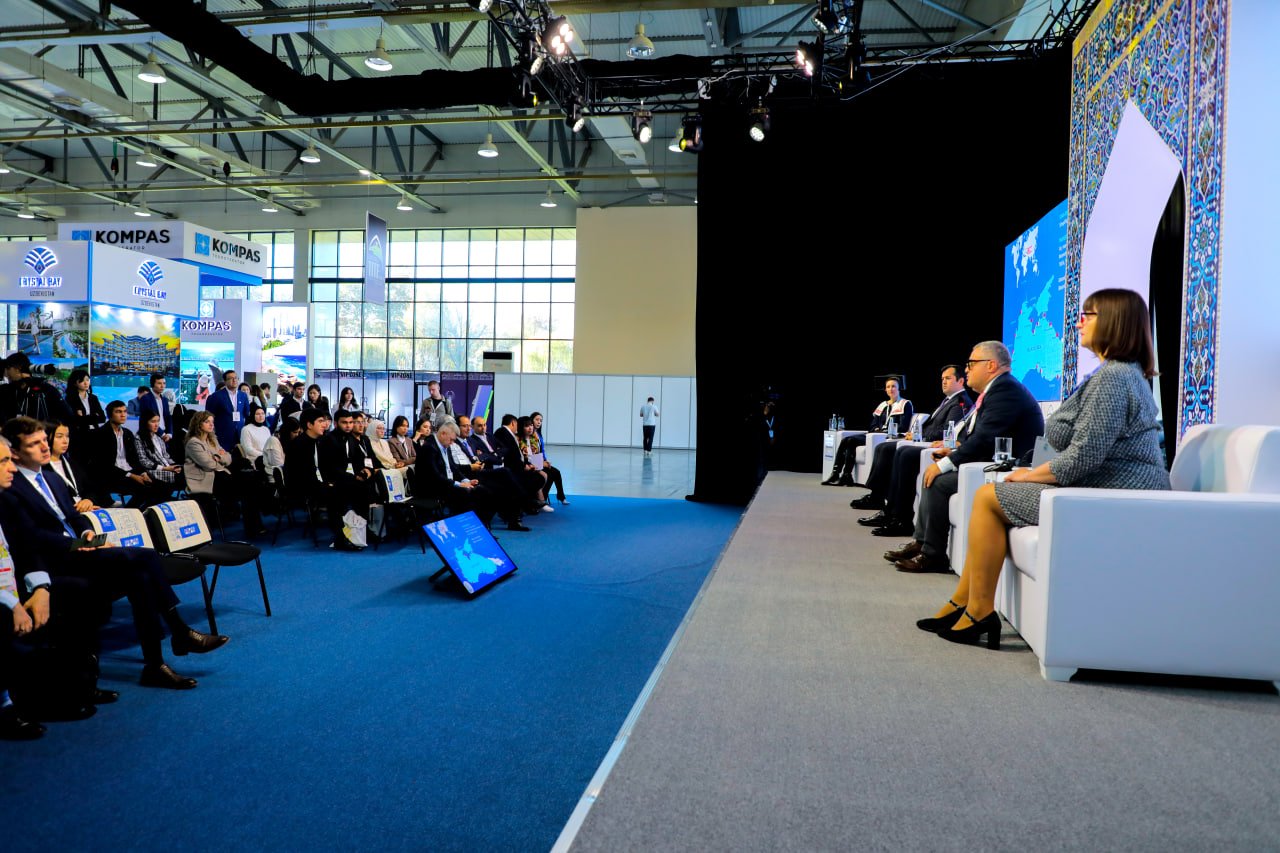
Tashkent International Tourism Fair 2024 (TITF 2024) "Tourism on the silk road" invites you to a world of limitless possibilities!
📅 03.07.2024
21-23 November, 2024 Tashkent, Uzbekistan – The Central Asian Expo International Exhibition Complex (CAEx) will become a center of attraction for travel enthusiasts and travel industry professionals from all over the world.
Tashkent International Tourism Fair (TITF) "Tourism on the silk road" – is a large scale event that gathers leading experts in the tourism sector from all over the world. It hosts presentations of tourism opportunities from dozens of countries, meetings and business negotiations of hundreds of professionals, as well as international conferences on key issues of tourism development.
Since 1995, TITF, supported by the United Nations World Tourism Organization (UNWTO), has become an important event in the world tourism calendar and takes place annually in the capital of Uzbekistan.
This year the fair will please the participants:
• Presentations of the tourism opportunities of dozens of countries: Discover new destinations, get acquainted with unique cultures and create unforgettable travel routes.
• Meetings and business negotiations: Establish useful contacts, find new partners and implement promising projects in the field of tourism.
• International conferences: Discuss current issues of industry development, promising trends and innovative solutions.
Last year's fair was marked by the signing of more than 8 thousand agreements and the holding of more than 20 thousand negotiations between representatives of the tourism industry. Impressive figures, indicating the importance of TITF as a catalyst for the development of tourism.
Participation in the Tashkent International Tourism Fair (TITF) "Tourism on the silk road" provides many advantages for both tourism industry professionals and travel enthusiasts:
• Conducting business transactions
• Search for new partners
• Support for industry development
• Popularization of tourism products
• Familiarization with new trends
• Conducting marketing research
Join the Tashkent International Tourism Fair (TITF) "Tourism on the silk road" and book stands to develop your brand in the world of tourism!
Additional information:
Website: www.titf.uz
Instagram: titf_uz
Contact: +998 55 515 05 66
E-mail: titf@nationalprcentre.com
Uzbekistan: high legal awareness and legal culture are the key to development
📅 22.06.2024
Legal education occupies a central place in shaping the legal consciousness and legal culture of the population. Therefore, in all his speeches, the President of the Republic of Uzbekistan pays serious attention to the importance of legal culture and the issue of its enhancement.
To this end, the Decree of the President of the Republic of Uzbekistan dated January 9, 2019 "On radical improvement of the system of raising legal consciousness and legal culture in society" was adopted, in which the social and economic reforms being implemented in the country are defined as the main tasks of raising legal consciousness and legal culture in society, the formation of a system of consistent communication to the population of the content and essence of the social and economic reforms being carried out in our country, the legislative acts and state programs being adopted, strengthening the life of the population, strengthening the legal culture in the country, and the development of a system of legal education.
This decree establishes that the raising of legal awareness and legal culture in society must be organized systematically and coherently on the principle of the individual, the family, the makhalla, the educational institution, the organization and society. In order to raise the legal consciousness and culture of the population, according to the "Uzbekistan - 2030" strategy, the number of non-State general secondary education organizations should be increased to 1000, the proportion of students studying in non-State general education institutions should be increased to 1000, secondary education organizations should be increased threefold, the level of coverage of young people in higher education should be increased to at least 50%, and the number of lawyers should be increased to at least 2000.
Thanks to the independence in the formation of legal consciousness and culture of the population, the new legal thinking and high spiritual potential of our people found its expression as an ideological basis in our updated Constitution. Our Constitution has emerged, on the one hand, as a direct product of the legal system, legal ideology and culture, which is a high expression of public legal consciousness, and, on the other hand, as an important factor in the formation of legal consciousness, new thinking and culture of the population, their positive orientation and elevation.
In our updated Constitution, important attention has been paid to the issue of raising the legal consciousness and culture of our citizens. Since article 50 of the Constitution provides that everyone has the right to education, that the State ensures the development of the system of continuing education, its various types and forms, and State and non-State educational organizations, that the State creates conditions for the development of preschool education and upbringing, guarantees free general secondary education and primary vocational education, that general secondary education is compulsory, that preschool education and upbringing, article 51 of the Constitution provides that preschool education and upbringing are compulsory, and that preschool education and upbringing are compulsory.
There is currently a need to overcome the legal illiteracy found in our society, to foster respect for the law and to achieve intolerance of corruption. An important component of all the work on withering the amateurism, the root of legal illiteracy is legal education of citizens. Legal education is not a simple aggregate of knowledge of law in a person and formal knowledge of legal issues, but a conscious assimilation of the basic provisions of the law, transformation of the acquired knowledge into personal trust, strict observance of the law, the subsequent transformation of its fulfillment into an internal need and habit.
A great role in legal education is played by fiction, mass media, television, radio and the press. The education of legal consciousness is an integral part of the cultural life of society as a whole and of the social function of the State. The main areas of education for legal awareness are legal training, carried out in the course of educational work, the promotion of legal knowledge through the mass media, wall newspapers, lectures, round tables, meetings, oral propaganda, theme evenings, and coercion to fulfill legal requirements.
Educational work raises the individual legal consciousness of a person to the understanding of the most general legal principles and requirements that are in the interests of the whole society and the state.
The task of raising free, educated and competent professional personnel who know their law, who rely on their own strengths and capabilities, who approach events around them independently and consciously, and who consider their personal interests in harmony with the interests of the country and the people, is one of the most pressing issues in the establishment of the New Uzbekistan.
It is necessary that every professional should be well aware of the legal acts of his/her branch and profession and be able to defend them. Therefore, equipping professional staff with legal consciousness, legal culture and legal knowledge is one of the main tasks of a country building a democratic State based on the rule of law. As long as every member of society does not know and realize his rights, duties and responsibilities, does not consider them as his vital need, our ultimate goal will be meaningless.
Legal culture is a qualitative application of law in the life of society. It is a kind of barometer in the use of legal opportunities in solving everyday problems and issues, in meeting the needs of the people. Legal culture as a component of the general culture of society provides conscious management of society, implementation of program tasks set before us, concerted activity of people to form the foundations of civil society with full awareness of the fundamental nature of social and political reforms carried out in our country.
Therefore, the current state of development of society requires a comprehensive improvement of legal culture, legal literacy of all participants of legal relations. Legal culture as a complex of legal knowledge, legal needs and isochoric practical activity serves to ensure the successful solution of the tasks facing society and the state.
One of the most important components of all the work to eradicate ego, legal illiteracy, loss of interest in themselves and others and indifference is the improvement of legal education of citizens. Legal education is not just a set of knowledge of law in a person and formal knowledge of legal issues, but a conscious assimilation of the basic provisions of the law, the transformation of acquired knowledge into personal trust, strict compliance with the law, the subsequent transformation of its implementation into an internal need and habit, the formation of legal activity of citizens.
A great role in legal education is played by fiction, mass media, television, radio and the press. Education of legal consciousness is an integral part of the cultural life of the whole society and the social function of the state. The main areas of education of citizens' legal consciousness are legal education of citizens in the course of educational work, propaganda of legal knowledge through the mass media, wall newspapers, lectures, round tables, meetings, oral propaganda, theme evenings, and coercion to fulfill legal requirements.
Further expansion of the scope of legal knowledge training in general education schools and academic lycées, the preparation of manuals in the form of questions and answers on legal issues frequently encountered in the daily life of the population and their free distribution to the public are of great importance in the development of the public's legal awareness and culture.
According to the Statistics Agency under the President of Uzbekistan, the number of general education establishments has increased by 660 over the past five years, and by the beginning of the 2023-2024 school year the number of operating general education establishments will total 10,750.
The number of non-state general education organizations is also increasing. According to the statistical department, by the beginning of the 2023/24 school year, the number of operating non-state general education organizations in Uzbekistan amounted to 293. Compared to the beginning of the 2018/2019 academic year, this indicator increased by 235.
Door-to-door promotion of legal solutions to issues frequently encountered in everyday life and the essence of newly adopted legislative acts plays an important role in raising the legal awareness and culture of the population, as well as free distribution of leaflets, booklets and other handouts to families aimed at conveying legal information, holding regular legal propaganda events among young people and parents on the age of marriage, conditions of alimony payment, incest and its legal consequences, discussion in the neighborhoods of the various
In addition, to review and organize the teaching of special courses" "study of the Constitution" and "study of human rights" in terms of systematic instruction in all types of education, to create a system of new-generation legal textbooks and teaching aids, including teaching aids for elementary school pupils in general education schools aimed at simple and visual instruction in legal knowledge, to organize and conduct national competitions in legal studies among pupils and students of educational establishments
There are currently 2,140 media outlets operating in our country, an increase of 626 from 2016. The fact that 65 percent of them are non-state media indicates that structural changes are consistently taking place in this sphere. It should be noted that along with traditional publications, online publications are rapidly developing, their number has reached 745, and they are attracting more and more readers.
The mass media of our country are boldly entering the international information space. The programs of the National Television and Radio Company of Uzbekistan and a number of private television studios are broadcast in more than 100 countries. Uzbekistan's national news agency, the Dunyo news agency, disseminates its news in 10 foreign languages.
It should be further recognized that the workers of the publishing and printing industry make a worthy contribution to the noble cause of popularizing reading in our country. The fact that 132 million copies of books on art and other literature have been published by the republic's publishing houses in recent years undoubtedly plays an important role in raising the consciousness of our book-loving people, first of all our youth.
Strengthening the role of the mass media in ensuring public control in raising the legal awareness and culture of the population, strengthening their links with government bodies and civil society institutions, training, retraining and professional development of teachers, expanding the scope of master's and doctoral theses on raising legal culture, with special attention paid to a comprehensive study of conflicts and violence in the family and their socio-legal consequences.
Thus, in order to increase the effectiveness of work on raising legal consciousness and culture of the population, to further improve their legal knowledge, to create in all higher educational institutions of our country departments of law, to establish in this department excellent teaching of such disciplines as law, constitutional law, human rights, to systematically organize on TV and radio channels a series of programs and broadcasts on human rights, as well as it is advisable to create in all pedagogical universities of our country the faculty of law and to train at it a legal expert.
Muhammadi Usmanov,
Professor of the University of Public Security
Professor of the University of Public Security of the Republic of Uzbekistan,
Doctor of Law
Development of Uzbekistan's tourism industry contributes to the welfare of the people
📅 22.06.2024
Uzbekistan, with its rich cultural heritage, historical monuments and beautiful nature, is among the states that pay great attention to the development of tourism. The Strategy "Uzbekistan - 2030" sets the task of increasing the number of tourists by creating broad conditions for the development of foreign and domestic tourism.
In terms of the number of foreign tourists, Uzbekistan has reached 98% of the level observed before the pandemic. In particular, 6.748 million foreign tourists visited the country in 2019, and by 2023, this number amounted to 6.626 million. This indicates the rapid recovery of the tourism industry in our country.
In order to attract more foreign tourists, Uzbekistan is taking practical measures to simplify the visa regime, develop new destinations, attract investment in projects related to this industry and hold major events. For example, in 2023, 508 projects with a total value of 9.5 trillion soums were implemented, which created 9,492 new jobs. 183 new hotels and 232 hostels were opened, with the total number of accommodation facilities reaching 5,526. In addition, 452 family guesthouses were established, the total number of which reached 3,458. With the opening of 810 new tourism organizations and travel agencies, their total number increased to 2,649.
From 2017 to 2023, the number of foreign tourists visiting Uzbekistan has increased significantly. In particular, in 2017, 2.7 million people visited the country, and in 2023, this figure amounted to 6.6 million, which is 2.5 times more than in 2017 and 1.3 times more than in 2022.
The number of tourists from Japan in 2023 increased 5 times, from India and Italy 3.5 times, and from the United States 2 times. In 2023, foreign tourists from neighboring countries accounted for 80.7%, as well as 11.5% from other CIS countries and 7.8% from other countries. The average duration of stay of tourists increased to 4-5 days, which is 1.5 times more compared to 2022 (3 days). This indicates the creation of all necessary conditions for comfortable stay of tourists in the country.
Domestic tourism is also developing rapidly. Within the framework of the program "Travel Uzbekistan!" 15 million people traveled around the country, making 21 million visits to various regions. As social support, 1,100 people with disabilities and 570,000 young people were sent on trips.
In 2023, tourism services exports totaled $2.1435 billion, a 1.3-fold increase from 2022. Also, about 70 thousand new jobs were created in tourism and related industries. This shows that the country has created all necessary conditions for tourists, which contributes to economic growth and improvement of living standards of the population.
The development of tourism also contributes to achieving high positions of the country in international rankings. For example, in the Global Muslim Travel Index (GMTI-2023) Uzbekistan ranked 13th among 140 countries in terms of international pilgrimage tourism. At the Halal In Travel Awards 2023 ceremony, the city of Khiva was honored as the Islamic Heritage Tourism Destination of the Year.
At the 25th session of the UNWTO General Assembly held in 2023 in Samarkand city, Sentob village in Navoi region won the nomination "Best Tourism Village of 2023". In addition, the international publishing house Lonely Planet awarded Uzbekistan a special certificate in the nomination "Best Tourist Destination 2024".
Uzbekistan's inclusion in the list of the best countries for travel in 2024, according to the World of Statistics announcement, contributes to an increase in the number of foreign tourists and the volume of exports of tourism services. All this helps to strengthen the country's international image.
In general, the current state of Uzbekistan's tourism industry and its development trends demonstrate positive results. The analysis of measures taken for further development of tourism and prospects for the future confirms the strategic importance of this industry. In addition, the tasks on tourism development envisioned in the strategy "Uzbekistan - 2030" contribute to increasing the population's income, creating new jobs and ensuring the welfare of the people.
Iskandar Urokboyev,
Chief Specialist of the Department for Monitoring and Analysis of Economic Reforms of the Development Strategy Center
Uzbekistan and Qatar set course for strengthening tourism ties
📅 06.11.2025
In recent years, Uzbekistan and Qatar have been deepening their cooperation in the field of tourism, transforming mutual interest into tangible joint projects. Tourism has become more than an economic sector — it serves as a bridge between cultures, offering the peoples of both countries an opportunity to discover each other’s rich history, spiritual traditions, and modern identity.
The foundation of this partnership lies in the Memorandum of Understanding signed between the two governments in 2010. This document marked the first step toward a structured dialogue, and the following years have shown both sides’ readiness to enrich their cooperation with concrete initiatives.
Step by step, collaboration in the tourism field has taken on a more sustainable character, reaching a qualitatively new level in 2025. One of the key decisions was the introduction of a visa-free regime for Qatari citizens for stays of up to thirty days. This milestone has expanded tourism exchange and clearly demonstrated Uzbekistan’s openness to visitors from the Persian Gulf.
Active cooperation in the field of tourism is maintained at a high level. In recent years, Uzbekistan has repeatedly showcased its potential at international venues in Doha, taking part in exhibitions, forums, and presentations. The country’s national stands attract great interest from tourism professionals and the general public alike. They highlight everything Uzbekistan is renowned for — its ancient cities, UNESCO World Heritage sites, traditional crafts, cuisine, and the warm hospitality of its Eastern culture.
In 2025, a highlight of the bilateral calendar was the Uzbekistan–Qatar International Tourism Forum, held in Doha during the summer. The forum became an important platform for exchanging experience, building partnerships, and discussing joint projects in the tourism sector.
Representatives of tourism companies, airlines, and the hospitality industry from both countries discussed opportunities to promote travel routes, organize familiarization tours, and develop infrastructure. As a result, agreements were reached on several joint initiatives aimed at increasing tourist flows and enhancing Uzbekistan’s visibility in the Qatari market.
Alongside business cooperation, image-building and cultural projects are also thriving. At the initiative of the Tourism Committee and the Embassy of Uzbekistan in Qatar, a large-scale media campaign was launched in Doha in 2025: videos about Uzbekistan were displayed on giant LED screens along the city’s main streets.
Alongside business cooperation, image-building and cultural projects are also thriving. At the initiative of the Tourism Committee and the Embassy of Uzbekistan in Qatar, a large-scale media campaign was launched in Doha in 2025: videos about Uzbekistan were displayed on giant LED screens along the city’s main streets.
The footage featured the majestic domes of Samarkand and Bukhara, mountain landscapes, vibrant bazaars, and modern Tashkent. This visual campaign became part of a broader strategy to promote the country’s image and strengthen cultural ties between the two nations.
Uzbekistan’s participation in major international exhibitions in Qatar continues to attract considerable attention. The national stands traditionally highlight tourism routes as well as initiatives in pilgrimage, gastronomic, and eco-tourism, alongside cultural heritage projects. Visitors note the country’s unique combination of authenticity and modernity, which makes Uzbekistan stand out as a dynamic destination, one that can both surprise and inspire.
The Qatari audience increasingly views Uzbekistan as a new and appealing destination for travelers. This growing interest is reinforced by ongoing efforts to promote the country through Arab media and digital platforms.
Cultural exchange also plays a vital role. The organization of thematic exhibitions, gastronomic festivals, and Uzbek Culture Weeks in Doha provides a strong foundation for humanitarian cooperation. These initiatives showcase Uzbekistan’s tourism potential and foster mutual understanding and respect between the peoples of both nations.
A new model of cooperation is gradually emerging, in which tourism serves not merely as an economic driver but as a key instrument of people-to-people diplomacy. Through travel, joint projects, and exchanges of expertise, Uzbekistan and Qatar continue to discover each other’s traditions, contemporary life, and future potential.
The growing tourism partnership between the two countries reflects a broader trend of Uzbekistan strengthening its ties with the countries of the Persian Gulf. Shared values of hospitality, a deep respect for cultural heritage, and a commitment to building bridges between Central Asia and the Arab world provide a solid foundation for long-term collaboration.
Uzbekistan and Qatar are not just developing tourism — they are creating a space of trust, exchange, and inspiration. This dialogue of cultures, which began with diplomatic agreements, is evolving into a living story of connection between people, traditions, and ideas, uniting the two nations and opening new horizons for future cooperation.
Tourism as a bridge for cooperation between Uzbekistan and the EU
📅 29.10.2025
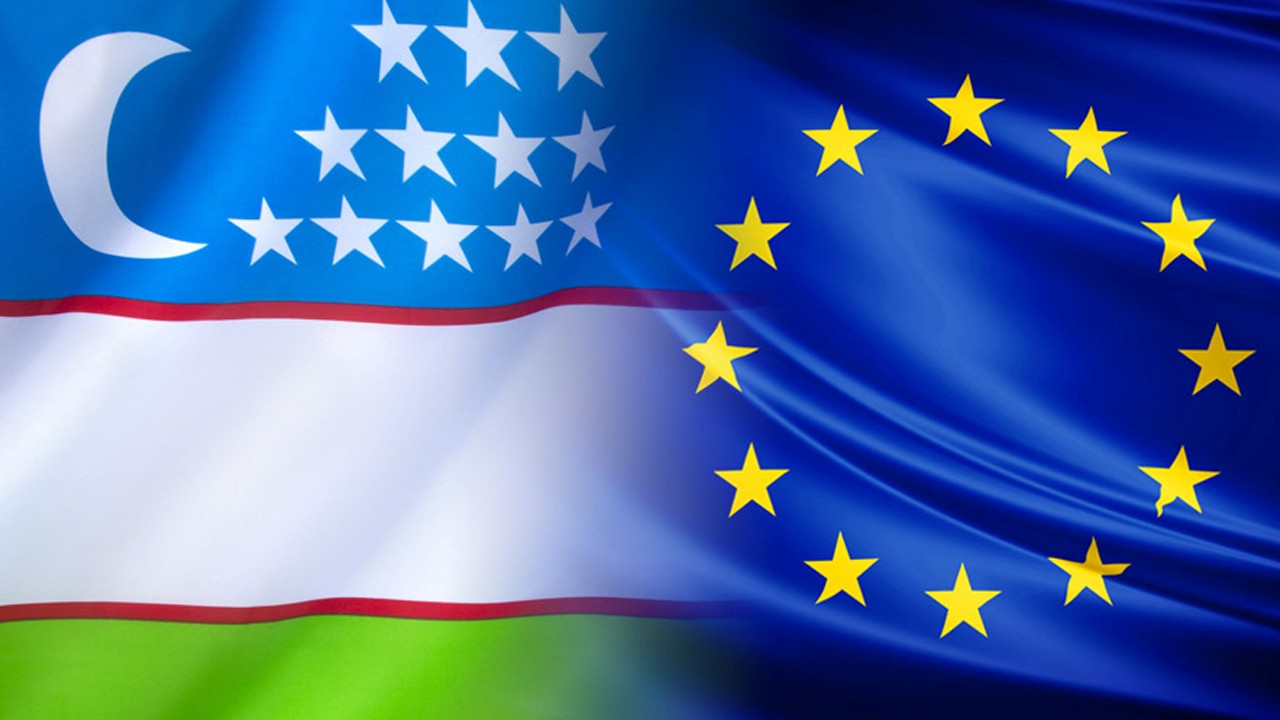
In recent years, tourism has become one of the priority areas in Uzbekistan’s foreign economic strategy. As part of this policy, the country is actively strengthening its partnership with the European Union, turning the tourism sector into a powerful driver of economic growth, cultural exchange, and enhanced international reputation.
Collaboration with the EU encompasses a broad spectrum of initiatives — from joint infrastructure and digital projects to promoting tourism on the global stage. A significant milestone was the first “Central Asia – European Union” summit held in April 2025 in Samarkand. A declaration on strategic partnership was adopted at the summit, highlighting the importance of tourism development.
President of the Republic of Uzbekistan, Shavkat Mirziyoyev, put forward the “One Tour – The Whole Region” initiative, aimed at unifying Central Asian tourist routes in line with EU standards. The goal is to simplify visa procedures, promote cultural exchange, and make travel across the region more accessible and appealing to European tourists.
Cultural cooperation has become a key element of this partnership. One of the most notable events was the large-scale production of the ballet Lazgi, which symbolized the cultural dialogue between Uzbekistan and the countries of Europe. Uzbekistan is also participating in international programs such as Horizon Europe, which contribute to the development of scientific and educational potential, directly impacting the quality of tourism services.
The economic benefits are already noticeable. In 2025, Uzbekistan expects to welcome over 11 million foreign tourists, with industry revenues projected to reach $4 billion. To achieve these goals, the country is actively modernizing its infrastructure and implementing digital solutions in the tourism sector. For example, the CAREN program established high-speed connectivity between universities in Central Asia and Europe, promoting the exchange of knowledge and innovation in the field of tourism.
Special attention is given to promoting Uzbekistan’s tourism image on international platforms. Leading media outlets such as Euronews, BBC, CNN, and National Geographic present the country as a promising destination, which contributes to the growth of tourist inflow from Europe.
A significant contribution to the promotion was made by the roadshows organized in European capitals—Berlin, Paris, Madrid, Rome, Zagreb, and Warsaw. These events not only showcased Uzbekistan’s cultural heritage but also served as a platform for establishing business connections with tour operators and investors.
Moreover, sustainable tourism development is a key focus: projects aimed at preserving natural and cultural heritage are being implemented, environmental standards are being introduced in tourist areas, and green infrastructure is being developed.
The partnership between Uzbekistan and the European Union in tourism is more than just an exchange of experience—it is a strategic alliance that brings real economic, cultural, and social benefits. This collaboration creates new opportunities for the region, strengthens bonds between peoples, and makes Central Asia more open and appealing to the world.
Chairman of the Tourism Committee
U.Shadiev
High legal culture – a guarantee of the Uzbekistan's development
📅 24.06.2024
In Uzbekistan, the formation and improvement of the legal culture of the population have become priorities of state policy. Strengthening the legal culture plays a key role in ensuring the rule of law, respecting the rights and freedoms of citizens, as well as achieving the economic and social progress of the country.
The primary sources of legal regulation of issues of improving the legal culture of the broad masses of the country's population are the laws of the Republic of Uzbekistan “On the dissemination of legal information and ensuring access to it” and “On the provision of legal assistance at the expense of the state”. In accordance with the first of these regulatory acts, to increase the legal literacy of citizens of the Republic of Uzbekistan, the concepts of legal information and access to legal information are defined for the first time at the legislative level. Consequently, from now on, following the provisions of article 3 of the law of the Republic of Uzbekistan “On the dissemination of legal information and ensuring access to it”, legal information should be understood as the texts of regulatory legal acts, official interpretations to them, explanations on the procedure for applying regulatory legal acts, decisions of the Constitutional Court of the Republic of Uzbekistan, decisions of the Plenum of the Supreme Court of the Republic of Uzbekistan on the application of legislation, as well as materials summarizing judicial practice, at the same time, access to legal information should be understood as the opportunity to freely obtain legal information and an ability to use it.
Furthermore, it is necessary to emphasize that following and thanks to the adoption of the law of the Republic of Uzbekistan dated February 27, “On the provision of legal assistance at the expense of the state”, low-income citizens of the country now have got a unique right to receive legal assistance at the expense of the state.
In turn, the adoption of the Decree of the President of the Republic of Uzbekistan “On radical improvement of the system for increasing legal awareness and legal culture in society” made it possible to determine the main tasks of increasing legal awareness and legal culture in society. It is important to specifically point out that strategic ideas in the form of establishing a spirit of respect for laws in society - the key to building a democratic rule of law state and maintaining a balance of personal and public interests were identified as a priority in the field of improving the legal culture in society.
A particularly significant and large legal basis for accelerating work in this direction also became the decree of the President of the Republic of Uzbekistan dated May 4, 2018 “On measures to radically increase the role of civil society institutions in the process of democratic renewal of the country” and the Decree of the President of the Republic of Uzbekistan dated 14 November 2018 “On measures to establish a badge “for contribution to the development of civil society.” In particular, if the first act of the head of state established an incentive badge “for contribution to the development of civil society”, which is awarded on the eve of the Constitution Day of the Republic of Uzbekistan, then the second legal act established that the badge “For contribution to the development of civil society” is awarded to representatives of non-governmental non-profit organizations and other civil society institutions, as well as proactive citizens who take an active part in reforms carried out in all spheres of society and have made a worthy contribution to the formation and development of a free civil society in the country, the protection of human rights and legitimate interests, and democratic values, increasing the political culture and legal consciousness of the population and strengthening social partnership relations among non-governmental non-profit organizations.
The latest novelty in the legislative strengthening of increasing legal awareness and legal culture of the population is the Decree of the President of the Republic of Uzbekistan dated May 24 of this year “On further increasing the responsibility and forming a compact management system of justice bodies and institutions within the framework of administrative reforms”, which once more defines further work to increase legal awareness and legal culture. For example, this decree establishes that to increase the legal awareness and legal culture of the population, the “Lawyer of Makhalla” project is being implemented in citizens’ self-government bodies, within the framework of which short-term free training courses will be organized aimed at continuously improving the legal knowledge and skills of chairmen of citizens’ self-government bodies, and in schools, starting from the 2024/2025 academic year, the subject Olympiad “Expert in Law” will be held, while each Wednesday of the week is designated as “Day of Legal Propaganda”.
Undoubtedly, all political and legal reforms aimed at increasing the legal culture of the population and to develop the country are meant to build a legal state and civil society in the Republic of Uzbekistan. In this regard, the implementation of the idea of “The future of the country lies with law-abiding youth who are intolerant of crime” contributes to the achieving of the goals and objectives of state policy in the field of involving the broad masses of citizens, government bodies and institutions into the process of increasing the legal literacy of the population.
Nasimbek Azizov – Head of the Department of the Law Enforcement Academy of the Republic of Uzbekistan;
Diyorbek Ibragimov - Senior Lecturer at the Law Enforcement Academy of the Republic of Uzbekistan;
Odiljon Nematillaev – Lecturer at the Law Enforcement Academy of
the Republic of Uzbekistan.

-
 Ministry of Foreign Affairs of the Republic of Uzbekistan
 -
 Diplomatic Service of the Ministry of Foreign Affairs
 -
 State Committee for Tourism Development
 -
Ministry of Investments and Foreign Trade of the Republic of Uzbekistan
-
 invest.gov.uz
 -
-

-

-

-

-

-

of Uzbekistan in the Republic
of Latvia
When using the information, a link to www.uzembassy.lv
must be provided.
All rights reserved
Address
Address: Riga c., LV-1010. 11-11 Elizabetes Str., Latvia
Phone: 37167322424
Fax: 37167322306
Email: embassy@uzbekistan.lv
Useful links
HomeIssuance of biometric passport for departure abroad
Certificate to return to Uzbekistan
Withdrawal of citizenship
Loss of citizenship