Phone
Consular Issues
Phone
Uzbekistan news
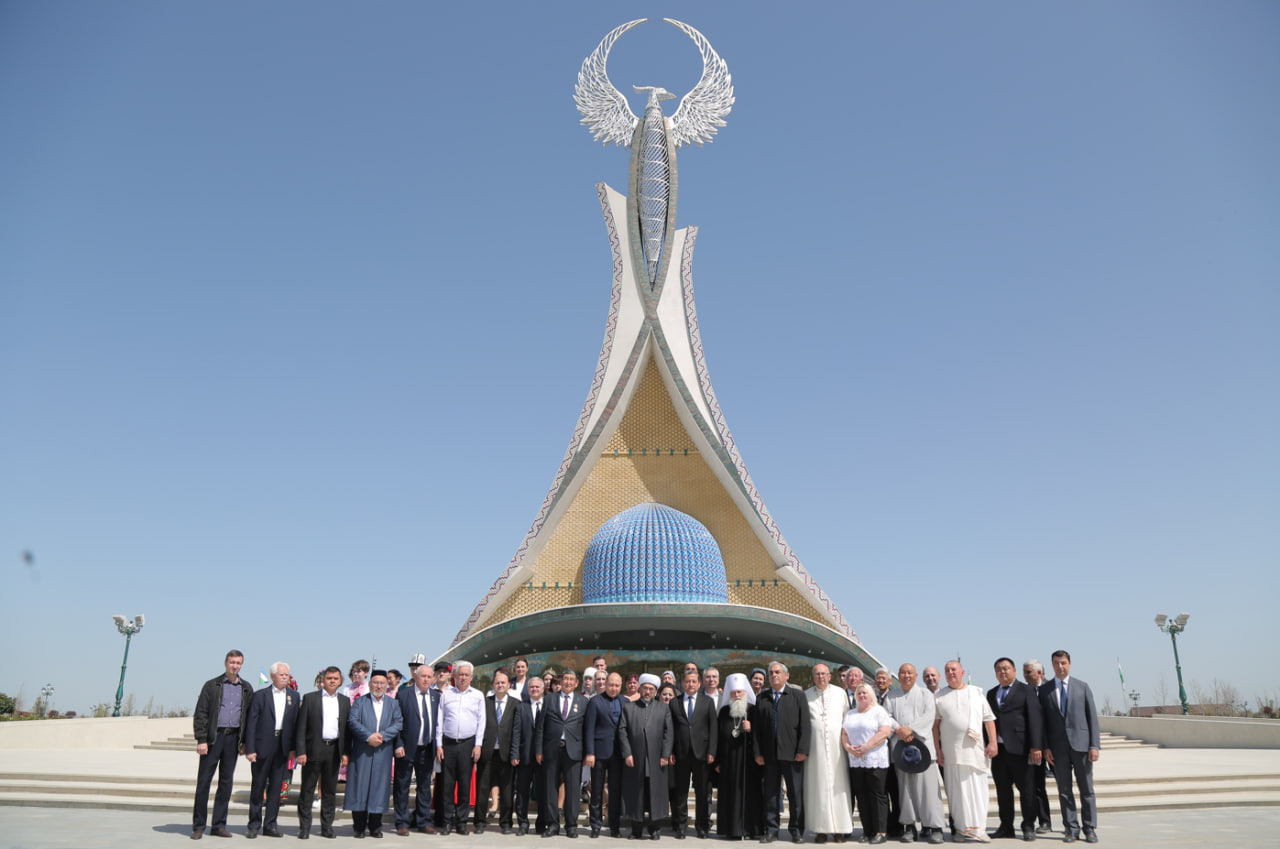
Uzbekistan – the land that glorifies peace, tranquility, and stability
At present, Uzbekistan is entering an entirely new stage of development, which is vividly demonstrated by the comprehensive reforms being carried out in all spheres. Profound transformations in domestic and foreign policy, socio-economic life, cultural and spiritual-educational fields are reflected in the lifestyle of our people.
At the initiative of the President of the Republic of Uzbekistan Shavkat Mirziyoyev, and based on the unity of the people, the “Uzbekistan – 2030” Strategy was adopted, serving as a solid legal and practical foundation for national renewal. The reforms implemented under this program create conditions for improving the well-being of citizens and ensuring the sustainable development of the state and society.
In recent years, special attention has been paid in our country to strengthening the atmosphere of mutual respect, solidarity and cooperation among various religious confessions, supporting intercultural dialogue, and ensuring peace and harmony, which has been widely recognized by the international community.
It is noteworthy that on 19 September 2017, at the 72nd session of the UN General Assembly in New York, the President of Uzbekistan Shavkat Mirziyoyev put forward an initiative which found its practical embodiment in the adoption, at the following session of the UN General Assembly in 2018, of a special resolution entitled “Enlightenment and Religious Tolerance”. The draft prepared by Uzbekistan was unanimously approved by all UN member states.
This resolution gained particular significance as it placed education and enlightenment at the forefront as an effective means of countering global threats – extremism and terrorism – especially at a time of growing intolerance and uncompromising attitudes towards representatives of different religions and beliefs.
As a logical continuation of this work, in 2022 the international forum “Dialogue of Declarations” was held with the aim of implementing the principles and provisions of the resolution “Enlightenment and Religious Tolerance”, as well as achieving the goals of the National Human Rights Strategy of the Republic of Uzbekistan, approved in 2020.
The main outcome of this meeting was the adoption of the “Bukhara Declaration,” which supplemented earlier declarations adopted in Marrakesh, Mecca, Jakarta, Potomac and Punta del Este. This document became an important contribution of Uzbekistan to strengthening the ideas of religious tolerance and interethnic harmony at the international level.
It is important that this dialogue has become a regular tradition: on 10–13 September of this year, the second international forum “Dialogue of Declarations” is scheduled to take place in Tashkent and Samarkand.
This forum represents an integral part of the international community’s efforts to ensure freedom of religion and to strengthen interfaith dialogue, as well as a demonstration of Uzbekistan’s readiness to actively promote at the global level its firm adherence to international obligations in the field of human rights and freedoms.
It should be emphasized that while in many parts of the world fundamental rights – to life, education, work, self-realization, and freedom of religion – are being violated, in Uzbekistan representatives of more than 130 nationalities and 16 confessions live peacefully on the basis of tolerance. The ability of people of different faiths to freely and safely perform their religious rites is a key factor of social stability.
Currently, there are 2,373 registered religious organizations in Uzbekistan, of which 2,174 are Islamic and 199 are non-Islamic. Over the past eight years, 130 religious organizations have been registered, including 3 higher and 1 secondary special Islamic educational institutions, 105 mosques and 25 non-Islamic organizations of various confessions.
The legal foundation for these transformations is the Concept of State Policy on Ensuring Freedom of Conscience of Citizens and in the Religious Sphere, adopted by the Law of the Republic of Uzbekistan No. 1037 of 25 February 2025.
The Concept affirms the right to freedom of conscience and the constitutional principle of the secular nature of the state, and defines the goals, objectives, principles and priority directions of state policy in the religious sphere. It was developed on the basis of the rich national-historical experience of statehood and universal values, and is aimed at ensuring a stable environment for the progressive development of Uzbekistan’s multiethnic and multi-confessional society on the basis of democracy, secularism, freedom, equality, social justice and solidarity.
Within a short period, major scientific and educational institutions were established, such as the Center of Islamic Civilization in Uzbekistan, international research centers named after Imam Bukhari, Imam Maturidi, Imam Termizi, Bahauddin Naqshband, the International Islamic Academy of Uzbekistan, the School of Hadith Studies in Samarkand, and the Mir Arab Higher Madrasa in Bukhara.
These institutions contribute significantly to ensuring a healthy spiritual environment in society, educating the younger generation as modern-minded individuals worthy of their great ancestors, in line with the noble universal idea “Enlightenment against Ignorance”.
If in 2017 the country had only 3 higher (1 Islamic and 2 non-Islamic) and 9 secondary special religious educational institutions, today their number has reached 16, of which 6 are higher institutions.
To further develop this sphere and elevate it to a new stage, a Presidential Decree “On measures to further strengthen guarantees of the right of citizens to freedom of conscience and to bring reforms in the spiritual-educational sphere to a new level” was signed. This document was positively received not only by representatives of the religious-educational sphere, but also by the wider public.
It is also worth noting that in recent years anniversaries and events of non-Islamic confessions have been held at a high level, alongside Islamic ones. These include the 145th (2017) and 150th (2021) anniversaries of the Russian Orthodox Church Diocese of Tashkent and Uzbekistan, the 120th anniversary of the Armenian Apostolic Church (2023), the 25th (2018) and 30th (2023) anniversaries of the Bible Society of Uzbekistan, the 200th anniversary of the birth of Baha’u’llah (2017), the 200th anniversary of the birth of the Bab (2019), and the 100th anniversary of the passing of ‘Abdu’l-Baha (2022). These events are vivid examples of peace and tolerance in our country.
At the same time, special attention has been paid to enabling believers of various religions to make pilgrimages abroad. In particular, nearly 500,000 citizens have performed Hajj and Umrah, and more than 10,000 people have visited holy sites in Israel, Russia, Georgia, Turkey and other countries.
In conclusion, it should be noted that for thousands of years Uzbekistan has been an integral part of the Great Silk Road, making a worthy contribution to the development of world civilization. Trade, science and cultural centers here have always flourished, while tolerance, hospitality and respect for representatives of different cultures have been key factors of progress.
Today, the traditions and customs of different peoples in Uzbekistan continue to develop in harmony. The consistent policy in the spiritual-educational sphere pursued under the leadership of the President of the Republic of Uzbekistan Shavkat Mirziyoyev serves as an important foundation not only for ensuring peace, stability and harmony in our country, but also for their promotion globally.
The broad participation of representatives from different countries in the upcoming second international forum “Dialogue of Declarations” is clear evidence of the high international recognition of Uzbekistan’s state policy in ensuring freedom of religion and interfaith harmony.
Davronbek Maksudov,
First Deputy Chairman
of the Committee on Religious Affairs
of the Republic of Uzbekistan📅 10.09.2025
Uzbekistan news
Inaugural Central Asia – Republic of Korea Summit at the highest level opens in Seoul
Uzbekistan and Korea: Advancing Green Energy and New Technologies
Uzbekistan and the Republic of Korea in the Emerging Framework for Cooperation with Central Asia
Tashkent brings together leaders and key deals in Polymer Market of Central Asia
The 1st Republic of Korea–Central Asia Summit: Why This Moment Matters
Uzbekistan – Serbia: A New Geography of Industrial Cooperation
The President of Uzbekistan’s Visit to Serbia: A New Stage in Economic Partnership Between Central Asia and the Balkans
Uzbekistan and the Republic of Korea: From Investment Partnership to Technological Cooperation
Regional Approaches to SDG Delivery: What Can Central Asia Offer?
Uzbekistan Opens a Balkan Gateway to Europe
The SCO Bishkek Summit: The Economic Agenda of a New Stage of Cooperation
Tourism: A new dimension of Uzbekistan-Kyrgyzstan partnership
Uzbekistan’s Role in the SCO: Economy, Security and Regional Cooperation
Economic Cooperation of Uzbekistan within the SCO at a New Stage of Development
Uzbekistan and Serbia: From Labour Mobility to a Strategic Partnership in Human Capital
Prospects for Uzbekistan–Serbia Cooperation in the ICT Sector
Prospects for Cooperation between the Republic of Uzbekistan and the Republic of Korea within the Framework of the Central Asia–Republic of Korea Cooperation Forum
THE SCO’S NEW FINANCIAL ARCHITECTURE: FROM COORDINATION TO PRACTICAL DEVELOPMENT MECHANISMS
INFORMATION NOTE ON COOPERATION WITH SERBIA
On September 8–10th, Tashkent to gather International Textile Industry Professionals
The Seoul Summit: Uzbekistan in the New Industrial Architecture of C5+1
New Opportunities to Expand Cooperation Between Uzbekistan and Serbia
Uzbekistan and Azerbaijan: Turning Political Alignment into Economic Growth
BRIGHT PROSPECTS FOR MUTUALLY BENEFICIAL PARTNERSHIP
Transport and Logistics Connectivity of the SCO Amid Geopolitical Turbulence: New Opportunities for the Regions
Business in Uzbekistan are moving from digitalization to technological modernization
Uzbekistan and Serbia expand prospects for cooperation in ecology and environmental protection
SCO AND WATER DIPLOMACY: IN PURSUIT OF COMMON INTERESTS
TASHKENT-DELHI: A NEW STAGE OF STRATEGIC PARTNERSHIP
On September 4–6th, Samarkand will host XII Inter-Parliamentary Union Global Conference of Young Parliamentarians

-
 Ministry of Foreign Affairs of the Republic of Uzbekistan
 -
 Diplomatic Service of the Ministry of Foreign Affairs
 -
 State Committee for Tourism Development
 -
Ministry of Investments and Foreign Trade of the Republic of Uzbekistan
-
 invest.gov.uz
 -
-

-

-

-
-

-

of Uzbekistan in the Republic
of Latvia
When using the information, a link to www.uzembassy.lv
must be provided.
All rights reserved
Address
Address: Riga c., LV-1010. 11-11 Elizabetes Str., Latvia
Phone: 37167322424
Fax: 37167322306
Email: embassy@uzbekistan.lv
Useful links
HomeIssuance of biometric passport for departure abroad
Certificate to return to Uzbekistan
Withdrawal of citizenship
Loss of citizenship