Phone
Consular Issues
Phone
Uzbekistan news
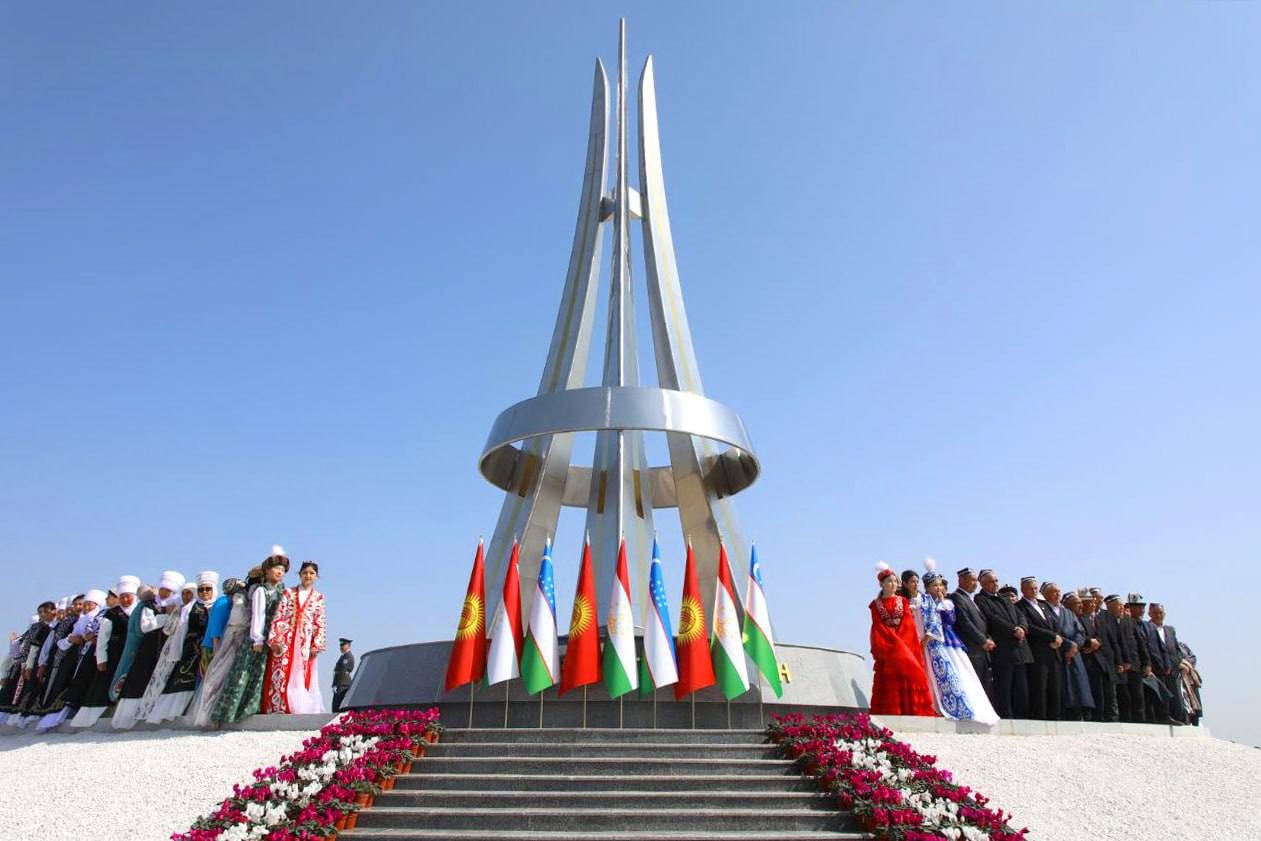
IF YOU WANT PEACE, BE FRIENDS WITH YOUR NEIGHBORS
Experts often use the Latin phrase “si vis pacem, para bellum”, which translates as “if you want peace, prepare for war”. They emphasis that only force can guarantee peace.
The processes observed in Central Asia in recent years suggest the opposite. Against the backdrop of geopolitical turbulence, countries in the region regularly pursue policies based primarily on the principles of dialogue and good neighborliness.
In a short period of time, the face of the region has changed dramatically, common points of growth are forming, and mutual trust is becoming an important condition for stability. Common triggers for development are being identified: the formation of a common economic space, active attraction of investment, and the strengthening of cultural and humanitarian ties. A spirit of unity and solidarity has formed in the region.
As Uzbekistan's leader Shavkat Mirziyoyev noted at the 80th session of the UN General Assembly, “Today, Central Asia is different - it is united and strong, open to dialogue and full-scale partnership”.
The political transformation of the region is underpinned by steady economic growth, demonstrating the region's growing power. In particular, over the last 10 years, Central Asia's GDP has grown by more than 6% annually — twice as fast as the global average.
Due to political will and joint efforts of the leaders of the states, significant results have been achieved in resolving border issues. An important milestone on this path was the trilateral meeting of the presidents of Uzbekistan, Tajikistan and Kyrgyzstan, held on 31 March 2025 in Khujand.
As a result, an agreement was signed on the junction point of the state borders of the three countries, which is clear evidence that the governments of our states place peace and harmony above all else.
All this confirms the idea that peace can only be achieved through mutual understanding, support and cooperation, which are the basis of friendly relations. We are guided by the principle: “If you want peace, be friends with your neighbors” This approach reflects the essence of the integration processes taking place in the region and certainly deserves the attention of the international community as a “exemplary model” for resolving even the most complex conflicts of our time.
How has humanity understood the world over the centuries?
Throughout human history, peace has been regarded as one of the highest spiritual and social values. Even in ancient times, thinkers in Ancient Greece sought to understand the phenomenon of Eirene – a state of harmony, the cessation of hostility and stable order in society.
In Eastern philosophical thought, the concept of peace also occupied a special place. It was understood, first and foremost, as the inner harmony of a person with themselves and the surrounding world, as a path to spiritual balance and moral perfection.
The great thinkers of Central Asia continued to develop the idea of peace, giving it philosophical and humanistic content. Thus, Abu Nasr Farabi regarded peace and harmony as an indispensable condition for the existence of a “Virtuous City”, where justice, reason, and mutual understanding between people become the basis of social well-being. Alisher Navoi, in his poetic works, presented peace as the highest form of spiritual and moral perfection of man, the basis of creation and mutual respect between peoples.
Thus, over the centuries, the idea of peace has evolved from an understanding of it as the absence of war to an awareness of spiritual and moral harmony between people and nations.
Why was Fergana chosen as the venue for the Forum?
The choice of Fergana as the venue for the forum is no coincidence.
The Fergana Valley is a unique geographical area where peoples speaking different languages and practicing different religions have coexisted peacefully for centuries. The Great Silk Road passed through the valley, and its inhabitants were engaged in crafts, trade and science, always striving for mutual understanding and dialogue. Conflict is a foreign concept to the region.
Today, the Fergana Valley unites the territories of three independent states, whose relations are based on the principles of good neighborliness, mutual respect, sovereignty and territorial integrity.
The Fergana Valley is the most populous region in Central Asia. According to data, the Andijan, Namangan and Fergana regions of Uzbekistan alone are home to about 11 million people, which is almost a third of the country's population. If we take into account the population of the territories of neighboring states that are geographically part of the region, the total figure is about 17 million.
With this in mind, the countries of Central Asia are striving to deepen regional integration, viewing it as an important condition for sustainable development. Strengthening mutual trust and partnership is becoming one of the key areas of their foreign policy. To discuss specific steps and exchange experiences, platforms are needed that promote open dialogue and coordination of positions.
One such platform will be the Fergana Peace Forum, which will be held on 15–16 October at Fergana State University. It will be attended by representatives of government agencies and business circles of Uzbekistan, Kyrgyzstan and Tajikistan, experts from scientific, analytical and research centers, as well as delegates from the CIS, SCO, OSCE, UNDP, EU and other international organizations.
In addition, the Fergana Valley is a multinational region where representatives of all peoples and ethnic groups live in peace and harmony.
In this regard, the attention that the government pays to strengthening interethnic friendship and creating conditions for all citizens to receive education in their native language and study their national culture is of great importance.
Today, there are more than 250 schools in the Fergana, Namangan and Andijan regions where instruction is conducted in Kyrgyz, Russian and Tajik.
It is important to emphasize the important role of regional branches of national cultural centers, which are involved in ensuring inter-ethnic harmony, developing intercultural dialogue and tolerance, and strengthening good-neighborly relations with neighboring states.
Various activities are carried out in this area by 17 national cultural centers (8 in Fergana, 5 in Andijan and 4 in Namangan regions), including Russian, Slavic, Korean, Jewish, German, Tatar, Kyrgyz, Uyghur, Tajik and Turkish.
Special mention should be made of the activities of public associations, foundations and NGOs implementing socially significant projects, both with funding from domestic donors and with the support of international organizations and foreign partners such as the World Bank, UNDP, the United Nations Population Fund, the UN Women, the European Union, the International Organization for Migration, Saferworld, DVV International, Fair and Sustainable Development Solutions, DIA International and others.
The implementation of such projects contributes to ensuring access to social protection, developing entrepreneurial skills, increasing the participation of women and young people in public affairs, and strengthening mutual understanding and friendship between residents of border areas.
Overall, the first Fergana Peace Forum opens a new page in the development of good neighborly relations and partnership between the countries of the region.
In this case, the choice of the Fergana Valley as the venue reflects its historical role as a space for mutual understanding and harmony. Undoubtedly, this forum will provide an additional stimulus for further strengthening stability and expanding cooperation in Central Asia.
Abror Yusupov,
PhD in Political Science,
Associate Professor,
Deputy Director of the
Center for Analysis of Democratic Processes
📅 17.10.2025
Uzbekistan news
CICA Member States Account for More Than 50% of Uzbekistan’s Foreign Trade Turnover
Uzbekistan and the United States: The Economics of Mutual Interest
NEW OPPORTUNITIES IN HIGHER EDUCATION IN THE TURKIC STATES: A COMMON SPACE, SHARED GOALS
Peace and Trust in Asia - essential conditions for sustainable development
CICA amid a Crisis of Trust: Uzbekistan’s Role in Strengthening Cooperation in Asia
Uzbekistan promotes initiatives in Central Asia that unlock new opportunities for cooperation
Strengthening Transport Connectivity in Asia through the Development of the Trans-Caspian International Transport Corridor
Uzbekistan promotes Initiatives in Central Asia unlocking new opportunities for cooperation
Political mutual trust in the Central Asian region is transforming into economic capital
Uzbekistan attracts specialists from 16 countries to the anniversary international exhibition “Mining, Metallurgy and Metalworking – MiningMetals Uzbekistan 2026”
Uzbekistan has moved its economic cooperation with the Turkic states into a practical dimension
Akramjon Nematov: Central Asia is increasingly emerging as an independent centre for shaping its own economic and technological agenda
Central Asia Is Shaping Its Own Model of Regional Cooperation
Initiatives of Uzbekistan aimed at Economic Results for the Countries of Central Asia and Azerbaijan
Regular dialogue is the Foundation for addressing common water-related challenges in Central Asia
Uzbekistan and Turkmenistan: A New Stage in the Development of Their Strategic Partnership
11th Tashkent International Biennale of Contemporary Art to be held in the capital of Uzbekistan on October 12–16th
OTS Member States - A Crucial Link in the Eurasian Space
Uzbekistan plays an active role in Economic Integration within the framework of the Organization of Turkic States
CICA opens new horizons for financial cooperation
Aquatherm Tashkent 2026 to Showcase Latest Technologies for Construction and Utility Infrastructure
Uzbekistan is securing its place in the Global Hub for Technological Outsourcing
Digital Cooperation among the Turkic States Towards a Unified Technological Ecosystem
Uzbekistan and Azerbaijan are creating a Hub for Startups, Investors and Talent
UZBEKISTAN AND THE UN: FROM NATIONAL INITIATIVES TO THE GLOBAL AGENDA
The 5th Samarkand Forum on Human Rights to take place on September 28–29th
Uzbekistan's key trading partners participate in CICA
Speech by President Shavkat Mirziyoyev at the solemn ceremony dedicated to the thirty-fifth anniversary of the independence of the Republic of Uzbekistan
Uzbekistan Firmly Establishes Itself as a Stable and Predictable Partner for Long-Term International Business
Changing economic priorities of Uzbekistan reshape its engagement with the CIS

-
 Ministry of Foreign Affairs of the Republic of Uzbekistan
 -
 Diplomatic Service of the Ministry of Foreign Affairs
 -
 State Committee for Tourism Development
 -
Ministry of Investments and Foreign Trade of the Republic of Uzbekistan
-
 invest.gov.uz
 -
-

-

-

-

-

-

of Uzbekistan in the Republic
of Latvia
When using the information, a link to www.uzembassy.lv
must be provided.
All rights reserved
Address
Address: Riga c., LV-1010. 11-11 Elizabetes Str., Latvia
Phone: 37167322424
Fax: 37167322306
Email: embassy@uzbekistan.lv
Useful links
HomeIssuance of biometric passport for departure abroad
Certificate to return to Uzbekistan
Withdrawal of citizenship
Loss of citizenship