Phone
Consular Issues
Phone
Uzbekistan news
The Fergana Valley — A Space of Shared Values and Cultural Convergence
On October 15–16, 2025, the city of Fergana will host the inaugural session of the Fergana Peace Forum under the theme: “The Fergana Valley: Uniting Efforts for Peace and Progress.”
Organized by the Institute for Strategic and Regional Studies (ISRS) under the President of the Republic of Uzbekistan, in partnership with colleagues from Kyrgyzstan and Tajikistan, and supported by national and international organizations, this unique large-scale event will bring together leading experts, researchers, public figures, and representatives of international organizations. Their goal is to discuss the prospects for the development of one of Central Asia’s most densely populated and culturally rich regions — the Fergana Valley.
Experts from prominent think tanks across the CIS, Asia, Europe, and the Americas, alongside academics, business leaders, civil society representatives, and youth leaders from the region, will convene in one place. High-level delegates from international bodies such as the United Nations, the Shanghai Cooperation Organization (SCO), the Commonwealth of Independent States (CIS), the Conference on Interaction and Confidence-Building Measures in Asia (CICA), the European Union, and the Organization for Security and Co-operation in Europe (OSCE) are also expected to participate. Renowned peacebuilding organizations including the Berghof Foundation (Germany), the Martti Ahtisaari Peace Foundation (Finland), PeaceNexus (Switzerland), and the Stockholm International Peace Research Institute (SIPRI) will be among the invited guests.
More than 300 participants will attend the Forum, including around 150 from Central Asia and over 50 from the CIS, Asia, Europe, and the Americas.
Experts believe the Forum will reinforce the vision expressed by Uzbekistan’s President Shavkat Mirziyoyev at the 80th session of the UN General Assembly — the transformation of Central Asia into a space of peace, good neighborliness, and partnership.
As President Mirziyoyev has noted, the region is entering the era of New Central Asia. The days of closed borders, unresolved disputes, and conflicts are becoming a thing of the past. Thanks to growing cohesion, stability, and an emerging shared identity, Central Asia is increasingly recognized as an independent and influential actor on the global stage.
The choice of the Fergana Valley as the Forum’s venue is symbolic. This unique region is where the lifelines of Uzbekistan, Kyrgyzstan, and Tajikistan intersect. The established atmosphere of trust, dialogue, and cooperation between these countries exemplifies the good-neighborly policy championed by President Mirziyoyev.
Historical records mention the ancient Fergana state of Davan, especially the cities of Aksikent and Mingtepa, which were famed for their fertile lands, strong defenses, and prized horses. These are documented in Chinese chronicles from the late 2nd century BCE. By medieval times, the valley was one of the leading regions of Mawarannahr (Transoxiana). Archaeological remains from the Bronze Age, Early Iron Age, and medieval periods testify to the valley’s role as a cradle of multiple civilizations.
The Han dynasty historian Sima Qian wrote: “The people live on the land, tilling fields and growing rice and wheat. They live in houses and fortified cities; there are about seventy or more cities of various sizes in this region.” Medieval Arab geographers described Fergana as a land dotted with many cities and villages, surrounded by steppes and mountains, where both urban life and pastoralism thrived.
Cities such as Kokand, Khujand, Osh, and Margilan were centuries-old centers of craftsmanship, trade, and learning. Caravans of the Great Silk Road passed through here; some of the earliest madrasahs were established in the valley. The region became a crossroads for ideas from Persia, China, India, and the Arab world.
Situated at the intersection of Hellenistic, Bactrian, Parthian, Chinese, and Islamic civilizations, the Fergana Valley is a unique hub of cultural exchange — a legacy evident today in its languages, traditions, cuisine, and architecture.
Experts agree that the peoples of the Fergana Valley form a unified historical and civilizational community — a reality forged over centuries of political, economic, and humanitarian interaction.
The Fergana Valley is living proof that the coexistence of diverse cultures is not only possible but also fruitful. Here, traditions are preserved while new forms of cooperation continuously emerge, from joint celebrations to cross-border initiatives. The region has effectively become a laboratory for cultural convergence, where the ideals of inter-civilizational dialogue are actively realized.
With its rich heritage, dense population, and vast economic potential, the Fergana Valley requires special attention to sustainable development, environmental security, and cross-border cooperation.
Coordinated action and open dialogue are essential here — to foster peace, mutual trust, and progress. The Forum’s agenda addresses a wide range of issues:
- Strengthening regional dialogue and trust;
- Jointly ensuring stability and sustainable development;
- Unlocking the valley’s economic and investment potential;
- Promoting cultural and humanitarian ties;
- Increasing the involvement of civil society, youth, and the private sector in transformation processes.
Special focus will be placed on turning challenges into opportunities and establishing regional cooperation as a firm foundation for peace and prosperity.
The maturity of the Fergana Valley is reflected in its shared historical and cultural foundation, which allows the countries in the region to build dialogue on existing trust rather than starting from zero.
Today, the Fergana Valley is more than a historical symbol — it is a strategic region for sustainable development and economic cooperation. Joint transport and energy projects, cross-border markets, and digital initiatives are driving dynamic growth.
The Fergana Peace Forum is poised to become not just a discussion platform but an ongoing mechanism for generating ideas, uniting efforts, and advancing projects for the benefit of the entire region.
Organizers highlight that the example of the Fergana Valley could serve as a model for post-conflict regions worldwide, where political stabilization must be accompanied by deep cultural and humanitarian work. Real mechanisms of cooperation are being forged here, grounded in a shared historical and cultural legacy that supports peace and development.
Among the anticipated outcomes of the Forum is the adoption of a Communiqué calling for the establishment of a unified space of friendship, good neighborliness, and sustainable development in the Fergana Valley.
Preparatory discussions have already confirmed that the Fergana Valley is a place where the past inspires, the present unites, and the future is built on values of peace and cooperation.
In a world where conflict has become commonplace and the international community searches for new models of sustainable coexistence, the Fergana Peace Forum offers one clear answer: peace begins with trust, and trust begins with open dialogue.
Fergana is not just a point on the map — it is a space where respect becomes the language of communication, friendship forms the foundation of neighborliness, and cultural diversity is a source of unity.
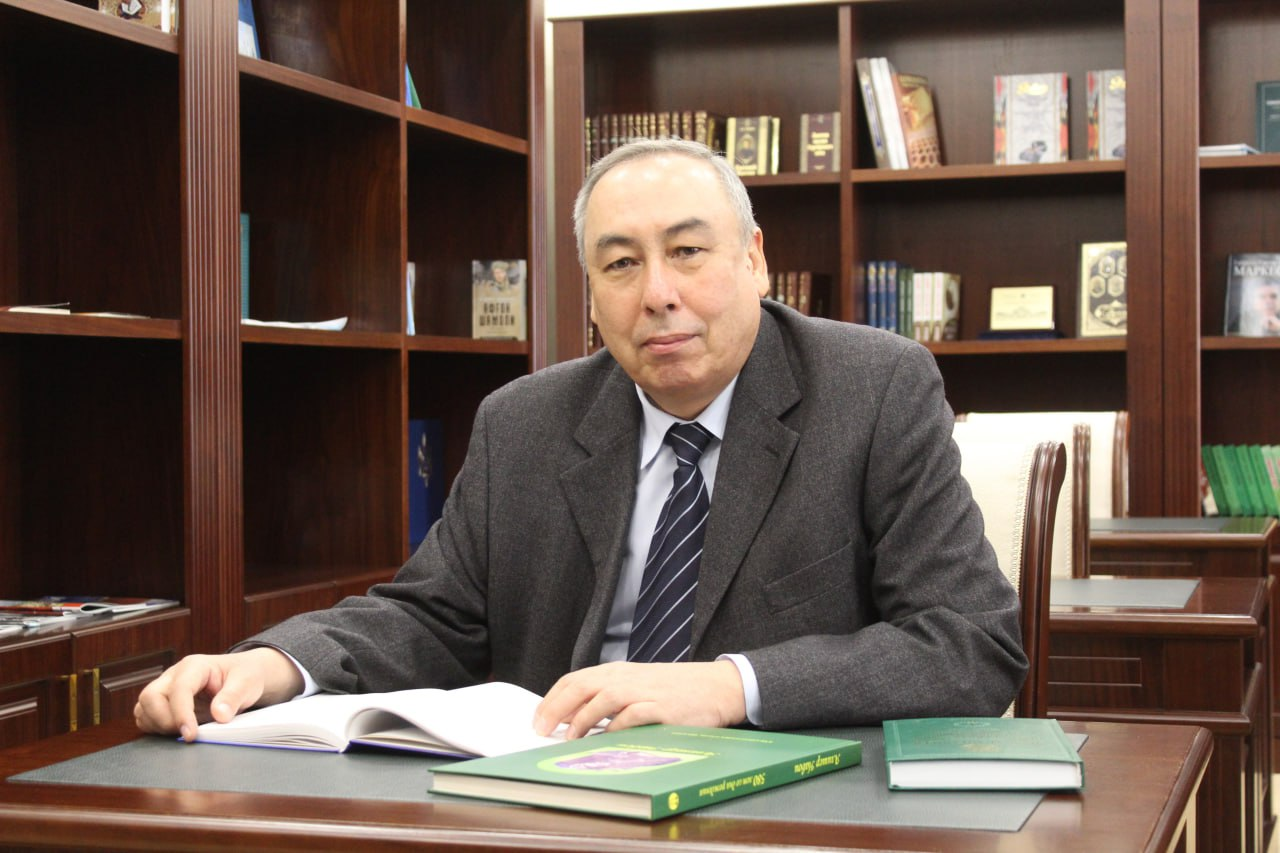
Dr. Alisher Sabirov, Doctor of Historical Sciences,
Professor, Nizami National Pedagogical University, Uzbekistan;
Adjunct Associate Professor, Shaanxi Normal University, People’s Republic of China
📅 17.10.2025
Uzbekistan news
CICA Member States Account for More Than 50% of Uzbekistan’s Foreign Trade Turnover
Uzbekistan and the United States: The Economics of Mutual Interest
NEW OPPORTUNITIES IN HIGHER EDUCATION IN THE TURKIC STATES: A COMMON SPACE, SHARED GOALS
Peace and Trust in Asia - essential conditions for sustainable development
CICA amid a Crisis of Trust: Uzbekistan’s Role in Strengthening Cooperation in Asia
Uzbekistan promotes initiatives in Central Asia that unlock new opportunities for cooperation
Strengthening Transport Connectivity in Asia through the Development of the Trans-Caspian International Transport Corridor
Uzbekistan promotes Initiatives in Central Asia unlocking new opportunities for cooperation
Political mutual trust in the Central Asian region is transforming into economic capital
Uzbekistan attracts specialists from 16 countries to the anniversary international exhibition “Mining, Metallurgy and Metalworking – MiningMetals Uzbekistan 2026”
Uzbekistan has moved its economic cooperation with the Turkic states into a practical dimension
Akramjon Nematov: Central Asia is increasingly emerging as an independent centre for shaping its own economic and technological agenda
Central Asia Is Shaping Its Own Model of Regional Cooperation
Initiatives of Uzbekistan aimed at Economic Results for the Countries of Central Asia and Azerbaijan
Regular dialogue is the Foundation for addressing common water-related challenges in Central Asia
Uzbekistan and Turkmenistan: A New Stage in the Development of Their Strategic Partnership
11th Tashkent International Biennale of Contemporary Art to be held in the capital of Uzbekistan on October 12–16th
OTS Member States - A Crucial Link in the Eurasian Space
Uzbekistan plays an active role in Economic Integration within the framework of the Organization of Turkic States
CICA opens new horizons for financial cooperation
Aquatherm Tashkent 2026 to Showcase Latest Technologies for Construction and Utility Infrastructure
Uzbekistan is securing its place in the Global Hub for Technological Outsourcing
Digital Cooperation among the Turkic States Towards a Unified Technological Ecosystem
Uzbekistan and Azerbaijan are creating a Hub for Startups, Investors and Talent
UZBEKISTAN AND THE UN: FROM NATIONAL INITIATIVES TO THE GLOBAL AGENDA
The 5th Samarkand Forum on Human Rights to take place on September 28–29th
Uzbekistan's key trading partners participate in CICA
Speech by President Shavkat Mirziyoyev at the solemn ceremony dedicated to the thirty-fifth anniversary of the independence of the Republic of Uzbekistan
Uzbekistan Firmly Establishes Itself as a Stable and Predictable Partner for Long-Term International Business
Changing economic priorities of Uzbekistan reshape its engagement with the CIS

-
 Ministry of Foreign Affairs of the Republic of Uzbekistan
 -
 Diplomatic Service of the Ministry of Foreign Affairs
 -
 State Committee for Tourism Development
 -
Ministry of Investments and Foreign Trade of the Republic of Uzbekistan
-
 invest.gov.uz
 -
-

-

-

-

-

-

of Uzbekistan in the Republic
of Latvia
When using the information, a link to www.uzembassy.lv
must be provided.
All rights reserved
Address
Address: Riga c., LV-1010. 11-11 Elizabetes Str., Latvia
Phone: 37167322424
Fax: 37167322306
Email: embassy@uzbekistan.lv
Useful links
HomeIssuance of biometric passport for departure abroad
Certificate to return to Uzbekistan
Withdrawal of citizenship
Loss of citizenship