Phone
Consular Issues
Phone
Uzbekistan news
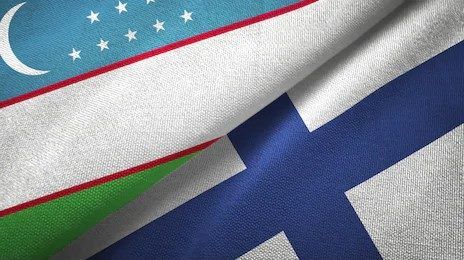
Uzbekistan and Finland: Digital Groundwater Modeling as a Contribution to Climate Resilience in Central Asia
Amid growing water scarcity and climate instability in Central Asia, Uzbekistan and Finland are implementing a unique form of scientific cooperation that combines digital innovation with sustainable water resource management.
In 2021, the Ministry of Mining Industry and Geology of the Republic of Uzbekistan and the Geological Survey of Finland (GTK) signed a Memorandum of Understanding aimed at the rational development of natural resources through advanced technologies. Today, this project stands as an example of scientific diplomacy that unites European expertise with Uzbekistan’s potential.
From Paper Maps to Digital Models.
For many years, hydrogeological maps of Uzbekistan existed only in paper form. Within the framework of the joint project, they were digitized using the ArcGIS platform, creating a unified national groundwater database. This digital transformation enables specialists to monitor aquifer conditions, analyze water balances, and forecast the impacts of climate change.
Finnish experts conducted a series of training programs for Uzbek specialists, introducing modern methods of digital mapping and data processing. This strengthened the professional capacity of the sector and laid the foundation for scientifically grounded and transparent water resource management.
Scientific Practice: Experimental Site in Akhangaran.
An experimental site was established in the Akhangaran district of the Tashkent region, where joint research teams conducted geophysical studies and developed digital models of groundwater flow. The obtained data help predict groundwater levels, plan water supply systems, and identify areas vulnerable to drought.
The use of the MODFLOW software package made it possible to create models that provide scientifically based solutions for water resource allocation — particularly important for regions with limited water reserves.
European Partnership for Climate Resilience.
Cooperation with Finland is part of a broader European agenda aimed at supporting climate adaptation and sustainable development in Central Asia. By combining European technologies with Uzbekistan’s scientific resources, the project demonstrates how international partnerships can strengthen ecological security and water stability.
The results of the joint work were published in the journal Water (Scopus) under the title “Assessing Climate Change Impacts on Groundwater Recharge and Storage Using MODFLOW in the Akhangaran River Alluvial Aquifer, Eastern Uzbekistan.”
Furthermore, new areas of cooperation have opened — with the University of Padua (Italy) in geological risk monitoring, and with the Belarusian Scientific and Production Center for Geology in groundwater observation.
Looking Ahead.
The joint project between Uzbekistan and Finland is more than a transfer of technology — it represents a step toward creating a new culture of rational water use and responsible climate action. The establishment of a national digital hydrogeological database will become a key element in the country’s environmentally sustainable development.
As Europe and Central Asia continue to strengthen cooperation in water, energy, and climate, the Uzbek-Finnish project serves as a model of how scientific initiatives can deliver tangible environmental and social benefits.
📅 06.11.2025
Uzbekistan news
Changing economic priorities of Uzbekistan reshape its engagement with the CIS
Inaugural Central Asia – Republic of Korea Summit at the highest level opens in Seoul
Uzbekistan and Korea: Advancing Green Energy and New Technologies
Uzbekistan and the Republic of Korea in the Emerging Framework for Cooperation with Central Asia
Tashkent brings together leaders and key deals in Polymer Market of Central Asia
The 1st Republic of Korea–Central Asia Summit: Why This Moment Matters
Uzbekistan – Serbia: A New Geography of Industrial Cooperation
The President of Uzbekistan’s Visit to Serbia: A New Stage in Economic Partnership Between Central Asia and the Balkans
Uzbekistan and the Republic of Korea: From Investment Partnership to Technological Cooperation
Regional Approaches to SDG Delivery: What Can Central Asia Offer?
Uzbekistan Opens a Balkan Gateway to Europe
The SCO Bishkek Summit: The Economic Agenda of a New Stage of Cooperation
Tourism: A new dimension of Uzbekistan-Kyrgyzstan partnership
Uzbekistan’s Role in the SCO: Economy, Security and Regional Cooperation
Economic Cooperation of Uzbekistan within the SCO at a New Stage of Development
Uzbekistan and Serbia: From Labour Mobility to a Strategic Partnership in Human Capital
Prospects for Uzbekistan–Serbia Cooperation in the ICT Sector
Prospects for Cooperation between the Republic of Uzbekistan and the Republic of Korea within the Framework of the Central Asia–Republic of Korea Cooperation Forum
THE SCO’S NEW FINANCIAL ARCHITECTURE: FROM COORDINATION TO PRACTICAL DEVELOPMENT MECHANISMS
INFORMATION NOTE ON COOPERATION WITH SERBIA
On September 8–10th, Tashkent to gather International Textile Industry Professionals
The Seoul Summit: Uzbekistan in the New Industrial Architecture of C5+1
New Opportunities to Expand Cooperation Between Uzbekistan and Serbia
Uzbekistan and Azerbaijan: Turning Political Alignment into Economic Growth
BRIGHT PROSPECTS FOR MUTUALLY BENEFICIAL PARTNERSHIP
Transport and Logistics Connectivity of the SCO Amid Geopolitical Turbulence: New Opportunities for the Regions
Business in Uzbekistan are moving from digitalization to technological modernization
Uzbekistan and Serbia expand prospects for cooperation in ecology and environmental protection
SCO AND WATER DIPLOMACY: IN PURSUIT OF COMMON INTERESTS
TASHKENT-DELHI: A NEW STAGE OF STRATEGIC PARTNERSHIP

-
 Ministry of Foreign Affairs of the Republic of Uzbekistan
 -
 Diplomatic Service of the Ministry of Foreign Affairs
 -
 State Committee for Tourism Development
 -
Ministry of Investments and Foreign Trade of the Republic of Uzbekistan
-
 invest.gov.uz
 -
-

-

-
-
-

-

of Uzbekistan in the Republic
of Latvia
When using the information, a link to www.uzembassy.lv
must be provided.
All rights reserved
Address
Address: Riga c., LV-1010. 11-11 Elizabetes Str., Latvia
Phone: 37167322424
Fax: 37167322306
Email: embassy@uzbekistan.lv
Useful links
HomeIssuance of biometric passport for departure abroad
Certificate to return to Uzbekistan
Withdrawal of citizenship
Loss of citizenship