Phone
Consular Issues
Phone
Uzbekistan news
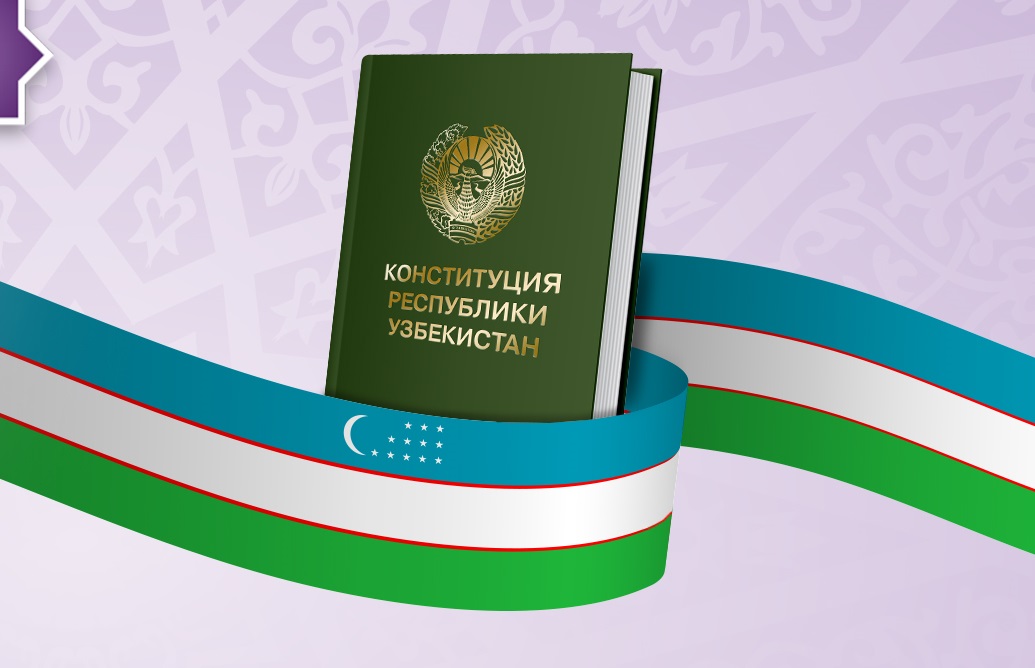
The Constitution of Uzbekistan: a foundation for modern statehood and human dignity
The 33rd anniversary of the adoption of the Constitution of the Republic of Uzbekistan is a momentous occasion for the nation. For the first time in our independent statehood, a Constitution adopted through the will of the people stands as a cornerstone of modern governance. It embodies the rich experience of national state-building, addresses pressing societal and administrative challenges, and presents a carefully considered strategy for the relationship between the individual, society, and the state amidst complex global geopolitical developments. In essence, the renewed Constitution reflects our irreversible commitment to democratic reforms in both state governance and human rights.
Our Basic Law defines the path of national development, ensures that reforms remain irreversible, and serves as the guiding framework for the country’s statehood model.
The anniversary is not only a celebration but also an opportunity to reflect on the Constitution’s role in daily life and its unmatched significance in safeguarding human dignity and justice. The President’s directive on celebrating Constitution Day at a high level reinforces this, highlighting the deep legal, moral, and strategic importance of the Constitution in modern society.
In today’s rapidly changing world, a country’s competitiveness, the effectiveness of governance, and the protection of human rights depend on constitutional norms and institutional mechanisms that meet contemporary needs. The revised Constitution embodies such modern legal approaches. It articulates principles such as human dignity, liberty, equality, social justice, popular sovereignty, and the rule of law, and establishes practical mechanisms for implementing these principles.
The Constitution’s impact extends to all sectors, uniting them under a single socio-legal system aimed at the overarching goal of ensuring human well-being. It serves as the foundation for consistent and sustainable reforms, from strengthening democracy and civil society to protecting entrepreneurship and expanding social protection. Positive changes in healthcare, education, science, culture, and sports all reflect the practical outcomes of these constitutional principles.
The core of these tasks is to convey the philosophy of the renewed Constitution, endorsed by the people, to every layer of society. It recognizes human dignity as the highest value, strengthens social solidarity, elevates legal culture, and unites the efforts of citizens to consciously and responsibly shape their future as a modern state founded on the rule of law – all under the noble ideal: “For the Motherland, for the Nation, for the People!”
The scholarly community and mentors in constitutional law play a crucial role in this process. Every academic study, legal insight, and educational initiative deepens public understanding of the spirit and essence of constitutional norms.
Practical mechanisms are also advancing these goals. For instance, “Law School” (“Huquq maktabi”) mobile application, developed under the President’s 24 May 2024 decree, enables citizens to acquire legal knowledge independently, conveniently, and in a modern format. With nearly 66,000 registered users, 32 educational courses, and over 33,000 users having completed courses and obtained certificates, the application is a clear sign of growing public interest in legal literacy. It is an effective, modern tool for strengthening legal culture, ensuring the rule of law, and enhancing citizens’ legal knowledge.
Tashkent State University of Law plays a vital role in educating the younger generation. Its faculty have developed “Foundations of State and Law” textbooks for students in grades 8–11, based on the revised Constitution, which help students understand its spirit and essence and develop practical skills to apply it in everyday life.
Ultimately, understanding the Constitution’s place in our lives and ensuring that its provisions are applied in all areas requires active civic engagement, a high level of legal culture, and steadfast commitment to the rule of law. The Constitution is more than a legal document; it is the moral benchmark of national development and the foundation that strengthens citizens’ trust in the state and society’s confidence in the future. Respecting it is not only a constitutional duty but also a civic responsibility in building the New Uzbekistan.
Ikhtiyor Bekov
Head of Constitutional Law Department,
Tashkent State University of Law
Professor of Law, DSc.
📅 28.11.2025
Uzbekistan news
Inaugural Central Asia – Republic of Korea Summit at the highest level opens in Seoul
Uzbekistan and Korea: Advancing Green Energy and New Technologies
Uzbekistan and the Republic of Korea in the Emerging Framework for Cooperation with Central Asia
Tashkent brings together leaders and key deals in Polymer Market of Central Asia
The 1st Republic of Korea–Central Asia Summit: Why This Moment Matters
Uzbekistan – Serbia: A New Geography of Industrial Cooperation
The President of Uzbekistan’s Visit to Serbia: A New Stage in Economic Partnership Between Central Asia and the Balkans
Uzbekistan and the Republic of Korea: From Investment Partnership to Technological Cooperation
Regional Approaches to SDG Delivery: What Can Central Asia Offer?
Uzbekistan Opens a Balkan Gateway to Europe
The SCO Bishkek Summit: The Economic Agenda of a New Stage of Cooperation
Tourism: A new dimension of Uzbekistan-Kyrgyzstan partnership
Uzbekistan’s Role in the SCO: Economy, Security and Regional Cooperation
Economic Cooperation of Uzbekistan within the SCO at a New Stage of Development
Uzbekistan and Serbia: From Labour Mobility to a Strategic Partnership in Human Capital
Prospects for Uzbekistan–Serbia Cooperation in the ICT Sector
Prospects for Cooperation between the Republic of Uzbekistan and the Republic of Korea within the Framework of the Central Asia–Republic of Korea Cooperation Forum
THE SCO’S NEW FINANCIAL ARCHITECTURE: FROM COORDINATION TO PRACTICAL DEVELOPMENT MECHANISMS
INFORMATION NOTE ON COOPERATION WITH SERBIA
On September 8–10th, Tashkent to gather International Textile Industry Professionals
The Seoul Summit: Uzbekistan in the New Industrial Architecture of C5+1
New Opportunities to Expand Cooperation Between Uzbekistan and Serbia
Uzbekistan and Azerbaijan: Turning Political Alignment into Economic Growth
BRIGHT PROSPECTS FOR MUTUALLY BENEFICIAL PARTNERSHIP
Transport and Logistics Connectivity of the SCO Amid Geopolitical Turbulence: New Opportunities for the Regions
Business in Uzbekistan are moving from digitalization to technological modernization
Uzbekistan and Serbia expand prospects for cooperation in ecology and environmental protection
SCO AND WATER DIPLOMACY: IN PURSUIT OF COMMON INTERESTS
TASHKENT-DELHI: A NEW STAGE OF STRATEGIC PARTNERSHIP
On September 4–6th, Samarkand will host XII Inter-Parliamentary Union Global Conference of Young Parliamentarians

-
 Ministry of Foreign Affairs of the Republic of Uzbekistan
 -
 Diplomatic Service of the Ministry of Foreign Affairs
 -
 State Committee for Tourism Development
 -
Ministry of Investments and Foreign Trade of the Republic of Uzbekistan
-
 invest.gov.uz
 -
-

-

-

-

-

-

of Uzbekistan in the Republic
of Latvia
When using the information, a link to www.uzembassy.lv
must be provided.
All rights reserved
Address
Address: Riga c., LV-1010. 11-11 Elizabetes Str., Latvia
Phone: 37167322424
Fax: 37167322306
Email: embassy@uzbekistan.lv
Useful links
HomeIssuance of biometric passport for departure abroad
Certificate to return to Uzbekistan
Withdrawal of citizenship
Loss of citizenship