Phone
Consular Issues
Phone
Uzbekistan news
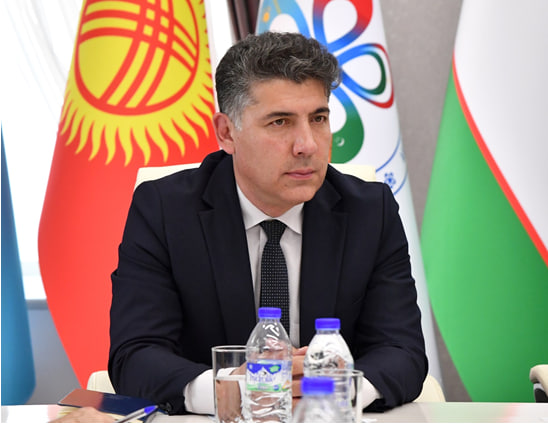
Akramjon Ne’matov: In his Address, President of Uzbekistan placed a key emphasis on the country’s socio-economic development, the enhancement of citizens’ well-being and the strengthening of the economy’s competitiveness
Comment from the First Deputy Director of the Institute for Strategic and Interregional Studies (ISRS) under the President of Uzbekistan to Dunyo Information Agency
The focal points of President Shavkat Mirziyoyev’s address to the Oliy Majlis and the people of Uzbekistan as well as the signals conveyed to both domestic and international audiences, were highlighted in a commentary by Akramjon Ne’matov, the First Deputy Director of the Institute for Strategic and Interregional Studies (ISRS) under the President of Uzbekistan, in an interview with Dunyo IA correspondent.
The expert highlighted that the primary focus of the Address was on the country’s socio-economic development, the improvement of citizens’ well-being and the enhancement of the national economy’s competitiveness. According to him, the President of Uzbekistan clearly emphasized that it is the economy, the sustainability of development, and the quality of growth that today define Uzbekistan’s opportunities both domestically and in its external engagements.
Akramjon Ne’matov emphasized that despite a challenging and fragmented global environment, Uzbekistan’s economy continues to demonstrate steady growth. For the first time in the country’s history, its GDP surpassed $145 billion this year, whereas just nine years ago, reaching the $100 billion mark was considered an ambitious milestone. Even amid disruptions in global supply chains, exports grew by 23% to $33.4 billion, electricity production in 2025 reached 85 billion kilowatt-hours, and foreign exchange reserves exceeded $60 billion. Over $43.1 billion in investments were attracted to the national economy this year, raising the investment-to-GDP ratio to 31.9%, a clear indicator of the country’s rising investment appeal.
In this context, the expert noted, maintaining high economic growth rates remains an absolute priority. However, what is particularly significant is the shift in focus from quantitative expansion toward a technological and innovative development model. This entails building a knowledge- and technology-based economy, modernizing industry, advancing the digital economy, promoting scientific research and fostering technology transfer. As Akramjon Ne’matov stressed, “An innovative economy ensures long-term competitiveness and reduces dependency on raw materials, which is critically important amid global instability”.
Another strategic priority highlighted by the President of Uzbekistan is the stimulation of domestic demand. According to the expert, the development of the domestic market is seen as a key driver of sustainable growth, encompassing higher household incomes, support for small and medium-sized enterprises, and broader access to financial instruments. Domestic demand, he emphasized, provides stable sources of development and helps shield the economy from external shocks.
Special attention, Akramjon Ne’matov noted, was also given to workforce development and the creation of a new labor market architecture. The President outlined objectives for modernizing vocational education, fostering new competencies, and shaping a flexible and adaptive labor market capable of meeting the needs of a modern economy. He stressed that the labor market and professional development determine the quality of human capital – the key resource of the 21st century.
At the same time, an important focus is placed on ensuring ecological balance, developing “green energy” and the rational use of water resources. The transition to sustainable development, the adoption of renewable energy sources, improving energy and water efficiency, and adapting to climate change are regarded as strategic objectives. Ecology and “green” energy are now considered key factors for national security and sustainable development, Akramjon Ne’matov emphasized.
Among the President of Uzbekistan’s key priorities is also the formation of modern state governance and a fair judicial system. Central to this agenda are enhancing the efficiency, transparency, and accountability of public administration, strengthening the rule of law, digitizing public services and reforming the judiciary. The expert stressed that effective governance and a fair judicial system build trust, enhance investment appeal, and ensure long-term stability.
Overall, he noted, these priorities reflect Uzbekistan’s shift from quantitative growth toward a qualitative model of modernization focused on long-term outcomes.
Based on these strategic directions, Uzbekistan is shaping a framework of key cooperation priorities with international partners, aimed at deepening engagement through high-quality collaboration.
The first priority is technological and industrial partnership. This includes establishing joint high value-added production, localizing advanced technologies, and implementing collaborative research and development projects. The strategic goal is to move beyond simple technology adoption toward co-creation and practical implementation of innovations.
The second priority is the development of human capital. This encompasses joint programs for training and retraining personnel, sustained collaboration between universities, research centers, and industry, and the cultivation of new competencies demanded by the modern economy. The objective is to ensure the sustainability of reforms and enhance the quality of the workforce.
The third priority is “green” energy and resource efficiency. The focus is on joint initiatives in renewable energy, water-saving technologies, and environmentally sustainable solutions. These efforts are viewed as key instruments for reducing ecological risks and enhancing the long-term resilience of the economy.
The fourth priority is infrastructure and multi-level connectivity. The development of transport, logistics, and digital infrastructure aims not only to deepen Uzbekistan’s integration into regional and global supply chains but also to strengthen internal connectivity across the country’s regions, reduce territorial disparities, and improve access to markets, services, and economic opportunities. Taken together, these initiatives reinforce Uzbekistan’s role as a stable regional hub for cooperation and transit.
The fifth priority is institutional development and the quality of public governance. This includes promoting principles of transparent and efficient governance, establishing a fair and independent judicial system, enhancing the effectiveness and professionalism of the civil service, and fostering experience-sharing in the digitalization of public services. These measures create a predictable institutional environment, strengthen trust among investors and partners, and serve as a solid foundation for sustainable, long-term international cooperation.
In conclusion, Akramjon Ne’matov emphasized that Uzbekistan views collaboration with foreign partners as a strategic priority. The country aims to transition from broad but largely quantitative engagement toward high-quality partnerships, centered on technology, human capital, and sustainable growth that align with the long-term interests of all parties.
Dunyo IA
📅 28.12.2025
Uzbekistan news
UZBEKISTAN AND THE UN: FROM NATIONAL INITIATIVES TO THE GLOBAL AGENDA
The 5th Samarkand Forum on Human Rights to take place on September 28–29th
Uzbekistan's key trading partners participate in CICA
Speech by President Shavkat Mirziyoyev at the solemn ceremony dedicated to the thirty-fifth anniversary of the independence of the Republic of Uzbekistan
Uzbekistan Firmly Establishes Itself as a Stable and Predictable Partner for Long-Term International Business
Changing economic priorities of Uzbekistan reshape its engagement with the CIS
Inaugural Central Asia – Republic of Korea Summit at the highest level opens in Seoul
Uzbekistan and Korea: Advancing Green Energy and New Technologies
Uzbekistan and the Republic of Korea in the Emerging Framework for Cooperation with Central Asia
Tashkent brings together leaders and key deals in Polymer Market of Central Asia
The 1st Republic of Korea–Central Asia Summit: Why This Moment Matters
Uzbekistan – Serbia: A New Geography of Industrial Cooperation
The President of Uzbekistan’s Visit to Serbia: A New Stage in Economic Partnership Between Central Asia and the Balkans
Uzbekistan and the Republic of Korea: From Investment Partnership to Technological Cooperation
Regional Approaches to SDG Delivery: What Can Central Asia Offer?
Uzbekistan Opens a Balkan Gateway to Europe
The SCO Bishkek Summit: The Economic Agenda of a New Stage of Cooperation
Tourism: A new dimension of Uzbekistan-Kyrgyzstan partnership
Uzbekistan’s Role in the SCO: Economy, Security and Regional Cooperation
Economic Cooperation of Uzbekistan within the SCO at a New Stage of Development
Uzbekistan and Serbia: From Labour Mobility to a Strategic Partnership in Human Capital
Prospects for Uzbekistan–Serbia Cooperation in the ICT Sector
Prospects for Cooperation between the Republic of Uzbekistan and the Republic of Korea within the Framework of the Central Asia–Republic of Korea Cooperation Forum
THE SCO’S NEW FINANCIAL ARCHITECTURE: FROM COORDINATION TO PRACTICAL DEVELOPMENT MECHANISMS
INFORMATION NOTE ON COOPERATION WITH SERBIA
On September 8–10th, Tashkent to gather International Textile Industry Professionals
The Seoul Summit: Uzbekistan in the New Industrial Architecture of C5+1
New Opportunities to Expand Cooperation Between Uzbekistan and Serbia
Uzbekistan and Azerbaijan: Turning Political Alignment into Economic Growth
BRIGHT PROSPECTS FOR MUTUALLY BENEFICIAL PARTNERSHIP

-
 Ministry of Foreign Affairs of the Republic of Uzbekistan
 -
 Diplomatic Service of the Ministry of Foreign Affairs
 -
 State Committee for Tourism Development
 -
Ministry of Investments and Foreign Trade of the Republic of Uzbekistan
-
 invest.gov.uz
 -
-

-

-
-
-

-

of Uzbekistan in the Republic
of Latvia
When using the information, a link to www.uzembassy.lv
must be provided.
All rights reserved
Address
Address: Riga c., LV-1010. 11-11 Elizabetes Str., Latvia
Phone: 37167322424
Fax: 37167322306
Email: embassy@uzbekistan.lv
Useful links
HomeIssuance of biometric passport for departure abroad
Certificate to return to Uzbekistan
Withdrawal of citizenship
Loss of citizenship