Phone
Consular Issues
Phone
Uzbekistan news
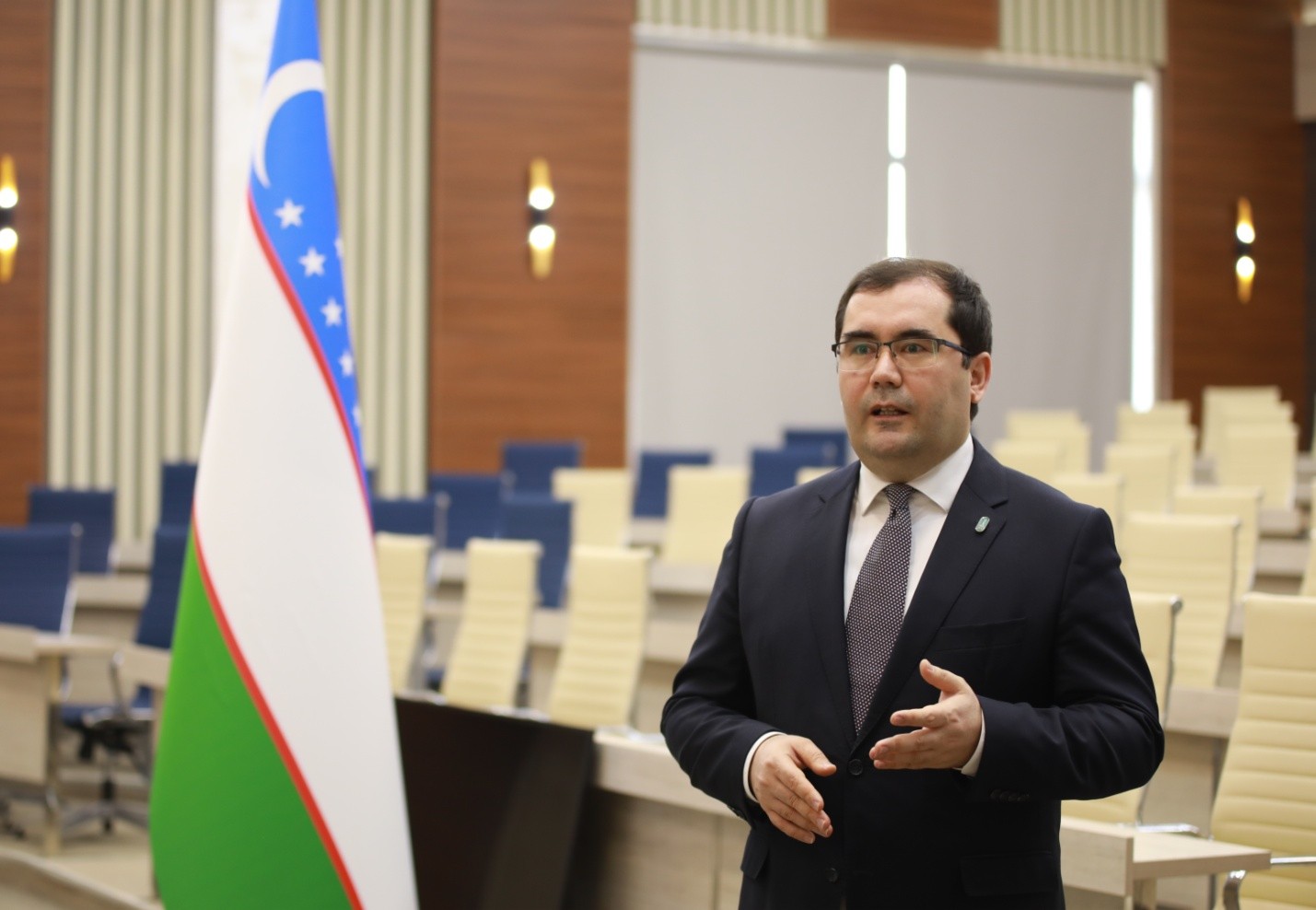
Uzbekistan–2030: Why the National Development Strategy Is Being Updated
Uzbekistan’s 2030 Strategy is the country’s principal framework for medium- and long-term development. It provides strategic direction for public policy, institutional reform, and socio-economic transformation, while embedding principles of continuity, predictability, and long-term planning at the core of state governance. Since its adoption, the strategy has served as a foundational reference point for the reform agenda, shaping what is often referred to as “New Uzbekistan.”
Over recent years, Uzbekistan has made tangible progress across a wide range of areas, including economic modernisation, public administration reform, judicial reform, the expansion of civic space, and the protection of human rights. These reforms have produced measurable results and have contributed to greater openness and institutional capacity. At the same time, the pace of change—both domestically and globally—has continued to accelerate.
Societal expectations are evolving, economic conditions are becoming more complex, technological change is reshaping governance models, and global geopolitical and economic dynamics are introducing new risks and opportunities. Against this backdrop, updating the Uzbekistan–2030 Strategy is a logical and necessary step to ensure that policy planning remains relevant, responsive, and effective.
At the heart of the revised strategy lies a fundamental principle articulated by the President of Uzbekistan: the state must serve the people, not the other way around. In its updated form, the strategy seeks to translate this principle into practical governance outcomes by reinforcing a development model that is results-oriented, accountable, and centred on human well-being.
Every policy decision and reform priority is assessed through the lens of its impact on citizens’ quality of life, social inclusion, and long-term prosperity. This marks a shift away from abstract targets toward a more outcome-driven approach to public policy.
A key element of the strategy’s refinement is a comprehensive review of progress achieved to date. This includes an honest assessment of remaining challenges and structural bottlenecks, as well as recalibrating performance indicators to enable more precise measurement and evaluation. Each strategic objective is linked to clearly designated responsible institutions, while required financial resources are explicitly identified. This strengthens institutional accountability and moves the strategy from a broad vision to an operational roadmap.
Another defining feature of the updated Uzbekistan–2030 Strategy is its emphasis on clarity and relevance for ordinary citizens. The strategy is being shaped so that people can readily understand how national reforms affect their daily lives—how they improve access to services, create economic opportunities, and enhance prospects for future generations. In this sense, the strategy is intended not as a set of slogans, but as a framework for tangible, lived improvements.
The revised strategy also reflects the need for adaptability. Performance benchmarks are being updated to align with new economic realities, social priorities, technological innovation, and international developments. This ensures that public policy remains flexible and able to respond to change, rather than being constrained by static assumptions.
Digitalisation plays a central role in this process. The monitoring and evaluation of strategy implementation are being fully digitised, enabling greater transparency, evidence-based decision-making, and enhanced public oversight. This approach strengthens trust in public institutions and supports more informed policy adjustments.
Equally important is policy coherence. All sectoral, regional, and thematic development plans are being aligned with the Uzbekistan–2030 Strategy to ensure consistency across government actions. This integrated approach reduces fragmentation and enhances the overall effectiveness of state policy.
Public participation is another core principle. The updated strategy is being developed through broad public consultation, incorporating input from citizens, civil society organisations, experts, and the wider public. This reflects the understanding that reforms are most sustainable and credible when they are shaped with society, rather than imposed upon it.
In conclusion, the ongoing refinement of the Uzbekistan–2030 Strategy represents a structured, transparent, and responsible effort to deepen reforms and adapt them to contemporary realities. Above all, it reaffirms a clear priority: national development is not an end in itself, but a means to improve people's lives and well-being. In this sense, Uzbekistan–2030 is being shaped as a genuinely people-centred roadmap for inclusive and sustainable progress.
Eldor Tulyakov,
Executive Director, Development Strategy Centre
📅 06.01.2026
Uzbekistan news
Initiatives of Uzbekistan aimed at Economic Results for the Countries of Central Asia and Azerbaijan
Regular dialogue is the Foundation for addressing common water-related challenges in Central Asia
Uzbekistan and Turkmenistan: A New Stage in the Development of Their Strategic Partnership
11th Tashkent International Biennale of Contemporary Art to be held in the capital of Uzbekistan on October 12–16th
OTS Member States - A Crucial Link in the Eurasian Space
Uzbekistan plays an active role in Economic Integration within the framework of the Organization of Turkic States
CICA opens new horizons for financial cooperation
Aquatherm Tashkent 2026 to Showcase Latest Technologies for Construction and Utility Infrastructure
Uzbekistan is securing its place in the Global Hub for Technological Outsourcing
Digital Cooperation among the Turkic States Towards a Unified Technological Ecosystem
Uzbekistan and Azerbaijan are creating a Hub for Startups, Investors and Talent
UZBEKISTAN AND THE UN: FROM NATIONAL INITIATIVES TO THE GLOBAL AGENDA
The 5th Samarkand Forum on Human Rights to take place on September 28–29th
Uzbekistan's key trading partners participate in CICA
Speech by President Shavkat Mirziyoyev at the solemn ceremony dedicated to the thirty-fifth anniversary of the independence of the Republic of Uzbekistan
Uzbekistan Firmly Establishes Itself as a Stable and Predictable Partner for Long-Term International Business
Changing economic priorities of Uzbekistan reshape its engagement with the CIS
Inaugural Central Asia – Republic of Korea Summit at the highest level opens in Seoul
Uzbekistan and Korea: Advancing Green Energy and New Technologies
Uzbekistan and the Republic of Korea in the Emerging Framework for Cooperation with Central Asia
Tashkent brings together leaders and key deals in Polymer Market of Central Asia
The 1st Republic of Korea–Central Asia Summit: Why This Moment Matters
Uzbekistan – Serbia: A New Geography of Industrial Cooperation
The President of Uzbekistan’s Visit to Serbia: A New Stage in Economic Partnership Between Central Asia and the Balkans
Uzbekistan and the Republic of Korea: From Investment Partnership to Technological Cooperation
Regional Approaches to SDG Delivery: What Can Central Asia Offer?
Uzbekistan Opens a Balkan Gateway to Europe
The SCO Bishkek Summit: The Economic Agenda of a New Stage of Cooperation
Tourism: A new dimension of Uzbekistan-Kyrgyzstan partnership
Uzbekistan’s Role in the SCO: Economy, Security and Regional Cooperation

-
 Ministry of Foreign Affairs of the Republic of Uzbekistan
 -
 Diplomatic Service of the Ministry of Foreign Affairs
 -
 State Committee for Tourism Development
 -
Ministry of Investments and Foreign Trade of the Republic of Uzbekistan
-
 invest.gov.uz
 -

-

-

-
-

-

-


of Uzbekistan in the Republic
of Latvia
When using the information, a link to www.uzembassy.lv
must be provided.
All rights reserved
Address
Address: Riga c., LV-1010. 11-11 Elizabetes Str., Latvia
Phone: 37167322424
Fax: 37167322306
Email: embassy@uzbekistan.lv
Useful links
HomeIssuance of biometric passport for departure abroad
Certificate to return to Uzbekistan
Withdrawal of citizenship
Loss of citizenship