Phone
Consular Issues
Phone
Uzbekistan news
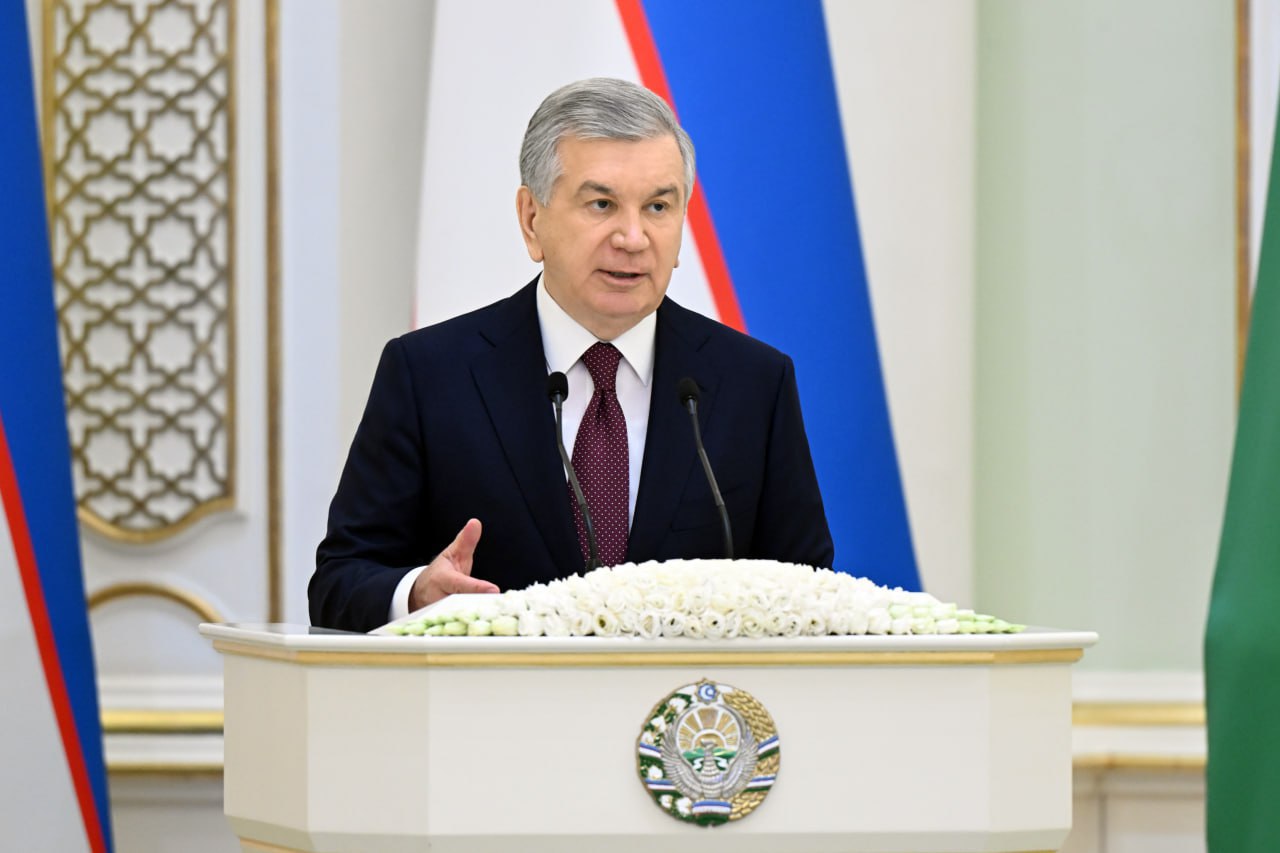
President of Uzbekistan: The time has come for a new generation of diplomats – those who achieve concrete results and firmly defend the interests of Uzbekistan in the international arena
The Head of State identified priorities for updating the activities of the Ministry of Foreign Affairs and foreign diplomatic missions
On January 15, an expanded meeting was chaired by President Shavkat Mirziyoyev on the activities of the Ministry of Foreign Affairs and diplomatic missions abroad, reports Dunyo IA correspondent.
Opening the session, the Head of our state noted that the meeting is taking place amid sharp geopolitical changes in the world and increasing threats to the sovereignty of states. In this regard, the need to critically assess current foreign policy activities and move to a renewed format for organizing the work of the Ministry of Foreign Affairs and foreign diplomatic missions was emphasized.
President noted that 2025 had been a productive year for the country's foreign policy. During the year, high-level visits were made to 26 foreign countries, and for the first time in recent history, visits to Uzbekistan were organized by the leaders of a number of countries. Multilateral dialogues in the “Central Asia Plus” format became productive. In recent years, strategic partnerships have been established with 11 countries, bringing the total number to 19, and allied relations have been built with Kazakhstan, Azerbaijan, and Tajikistan.
– As a result of an open, pragmatic, thoughtful and proactive foreign policy, Uzbekistan is consistently strengthening its position as one of the global centres of peace and diplomacy, – emphasized President.
Since 2017, 16 new diplomatic missions and consulates have been opened abroad, bringing their total number to 60, and the number of countries with which diplomatic relations have been established to 165. There has also been an increase in the number of staff and salaries of employees of embassies, consular offices, representative offices to international organizations and employees of the Ministry of Foreign Affairs.
At the same time, a fundamental question was raised as to whether all diplomatic missions are making full use of the opportunities provided.
– In the current environment, an ambassador is not just a person who conducts political dialogue. An ambassador is a state representative who attracts investment and technologies, opens new export markets, launches transport and logistics corridors, increases tourist flows, creates conditions for legal labor migration and, most importantly, protects the rights of our citizens, - emphasized President.
In this regard, it was noted that key performance indicators for ambassadors should include the volume of export revenues from the countries of residence, growth in tourist flows and the effectiveness of organizing legal labor migration.
Particular emphasis was placed on the need to increase exports and investments by strengthening economic diplomacy.
As part of bilateral and multilateral events in 2025, agreements were signed on investment projects and trade contracts totaling $160 billion. For the first time in history, foreign trade turnover exceeded $80 billion, exports reached $33,5 billion, and foreign investment exceeded $43 billion. Exports to 75 countries increased by almost $4,5 billion.
In view of this, the ambassadors have been tasked with expanding export deliveries to the Middle East, Europe, Asia, and Africa, as well as implementing specific projects in the fields of industry, agriculture, the chemical industry, the textile industry, greenhouse farming, and the service sector. At the same time, it was noted that Uzbekistan's products remain insufficiently recognized in certain markets.
It was noted that the growth of logistics costs has a negative impact on the competitiveness of domestic products. In this regard, the need to diversify transit routes, optimize logistics chains, and develop additional proposals to reduce transportation costs when entering European markets was indicated.
In the agricultural sector, tasks have been set for researching and implementing water-saving technologies, modern agricultural technologies, and innovative greenhouse solutions. Along with this, measures have been outlined to expand export markets for chemical industry products, bring domestic manufacturers up to international standards and requirements, and organize specialized exhibitions and presentations.
The need to intensify trade and economic cooperation with the African continent as one of the promising new export destinations has been emphasized. To this end, a clear roadmap is to be developed with the participation of relevant ministries and foreign diplomatic missions.
It was noted that ambassadors should be directly interested in finding promising projects, attracting them, and implementing them in practice. In this regard, it was decided to introduce financial incentives for ambassadors who bring specific investment or export projects to a logical conclusion.
Criticism was levelled at the insufficient realisation of existing potential in a number of areas. In particular, it was noted that opportunities to attract international grants are not being fully exploited. It was noted that with closer and more systematic interaction between ministries, industry leaders, and ambassadors, it would have been possible to attract an additional $200-300 million in grant funds last year.
As noted, international organizations and donor countries announce grant programs worth approximately $200 billion annually. In this regard, the task has been set to implement a unified, systematic and effective approach to working with grants.
In addition, the need to take concrete measures, together with the ambassadors to the United States, the United Kingdom, Germany, Switzerland, China, Japan and Singapore, to attract leading foreign universities ranked in the top 100 worldwide as partners of Uzbek higher education institutions was emphasized.
It was noted that cooperation between regions and diplomatic missions in expanding foreign economic relations is still insufficient. The need for active participation of regional governors, together with ambassadors, in the systematic promotion of export-oriented products of the regions and in facilitating the entry of local enterprises into foreign markets was emphasized.
Providing Uzbek citizens with legal and high-paying jobs abroad was identified as another priority area. The expansion of the geography of organized labor migration was noted, while it was pointed out that in a number of countries, work in this area is not sufficiently effective and relevant instructions were given in this regard.
It was emphasized that embassies and consulates should actively protect the rights and legitimate interests of citizens and provide qualified legal assistance in each specific case. The task has been set to abandon "office diplomacy", strengthen work in the field and establish direct dialogue with compatriots.
In the field of tourism, the need to further strengthen the role of ambassadors, introduce new approaches to promoting the country's tourism and cultural potential, make effective use of visa-free regimes and attract international outsourcing companies has been identified.
Issues related to expanding foreign policy ties, high-quality and timely preparation of high-level visits, retraining of diplomatic personnel, and the formation of a reserve of promising specialists were also discussed.
The intensification of foreign information policy and the improvement of the country's international image through systematic work with foreign media and the implementation of special media projects were identified as priority tasks.
The need to update the Concept of foreign policy of the Republic of Uzbekistan, review its priority areas, and define clear tasks for protecting national interests and strengthening the country's position in the international arena was emphasized.
As the President noted, the new concept should comprehensively reflect long-term strategic goals, the logic of internal reforms as well as national interests in the areas of economic diplomacy, security, investment, exports, transport and logistics, water and climate issues.
In order to give proper recognition to the achievements of diplomats, it was proposed to establish the honorary title of “Honored Diplomat of the Republic of Uzbekistan".
At the end of the meeting, President Shavkat Mirziyoyev emphasized: “The time has come for a new generation of diplomats – those who achieve concrete results and firmly defend the interests of Uzbekistan in the international arena”.
In the course of the session, reports and proposals of our ambassadors abroad were heard.
Dunyo IA
📅 22.01.2026
Uzbekistan news
Tashkent to host 22nd International Exhibition “Transport and Logistics - TransLogistica Uzbekistan” on November 10–12th, 2026
CICA Member States Account for More Than 50% of Uzbekistan’s Foreign Trade Turnover
Uzbekistan and the United States: The Economics of Mutual Interest
NEW OPPORTUNITIES IN HIGHER EDUCATION IN THE TURKIC STATES: A COMMON SPACE, SHARED GOALS
Peace and Trust in Asia - essential conditions for sustainable development
CICA amid a Crisis of Trust: Uzbekistan’s Role in Strengthening Cooperation in Asia
Uzbekistan promotes initiatives in Central Asia that unlock new opportunities for cooperation
Strengthening Transport Connectivity in Asia through the Development of the Trans-Caspian International Transport Corridor
Uzbekistan promotes Initiatives in Central Asia unlocking new opportunities for cooperation
Political mutual trust in the Central Asian region is transforming into economic capital
Uzbekistan attracts specialists from 16 countries to the anniversary international exhibition “Mining, Metallurgy and Metalworking – MiningMetals Uzbekistan 2026”
Uzbekistan has moved its economic cooperation with the Turkic states into a practical dimension
Akramjon Nematov: Central Asia is increasingly emerging as an independent centre for shaping its own economic and technological agenda
Central Asia Is Shaping Its Own Model of Regional Cooperation
Initiatives of Uzbekistan aimed at Economic Results for the Countries of Central Asia and Azerbaijan
Regular dialogue is the Foundation for addressing common water-related challenges in Central Asia
Uzbekistan and Turkmenistan: A New Stage in the Development of Their Strategic Partnership
11th Tashkent International Biennale of Contemporary Art to be held in the capital of Uzbekistan on October 12–16th
OTS Member States - A Crucial Link in the Eurasian Space
Uzbekistan plays an active role in Economic Integration within the framework of the Organization of Turkic States
CICA opens new horizons for financial cooperation
Aquatherm Tashkent 2026 to Showcase Latest Technologies for Construction and Utility Infrastructure
Uzbekistan is securing its place in the Global Hub for Technological Outsourcing
Digital Cooperation among the Turkic States Towards a Unified Technological Ecosystem
Uzbekistan and Azerbaijan are creating a Hub for Startups, Investors and Talent
UZBEKISTAN AND THE UN: FROM NATIONAL INITIATIVES TO THE GLOBAL AGENDA
The 5th Samarkand Forum on Human Rights to take place on September 28–29th
Uzbekistan's key trading partners participate in CICA
Speech by President Shavkat Mirziyoyev at the solemn ceremony dedicated to the thirty-fifth anniversary of the independence of the Republic of Uzbekistan
Uzbekistan Firmly Establishes Itself as a Stable and Predictable Partner for Long-Term International Business

-
 Ministry of Foreign Affairs of the Republic of Uzbekistan
 -
 Diplomatic Service of the Ministry of Foreign Affairs
 -
 State Committee for Tourism Development
 -
Ministry of Investments and Foreign Trade of the Republic of Uzbekistan
-
 invest.gov.uz
 -
-

-

-

-

-

-


of Uzbekistan in the Republic
of Latvia
When using the information, a link to www.uzembassy.lv
must be provided.
All rights reserved
Address
Address: Riga c., LV-1010. 11-11 Elizabetes Str., Latvia
Phone: 37167322424
Fax: 37167322306
Email: embassy@uzbekistan.lv
Useful links
HomeIssuance of biometric passport for departure abroad
Certificate to return to Uzbekistan
Withdrawal of citizenship
Loss of citizenship