Phone
Consular Issues
Phone
Uzbekistan news
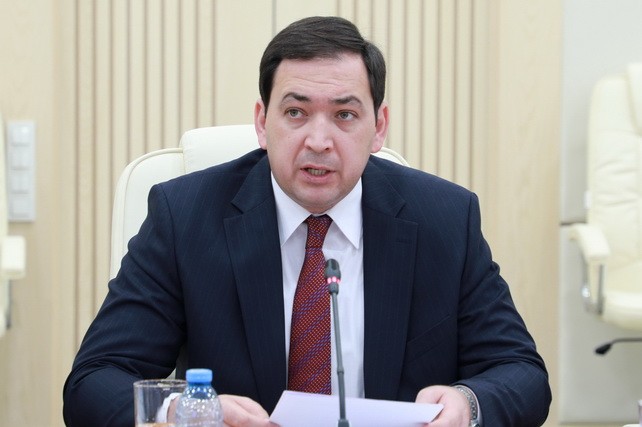
Bakhtiyor Mustafayev: The visit of the President of Uzbekistan to Switzerland has set a new strategic trajectory for the country’s development
Bakhtiyor Mustafayev, Deputy Director of the Institute for Strategic and Regional Studies under the Head of our state (ISRS), commented on the outcomes of the working visit of President of Uzbekistan Shavkat Mirziyoyev to Switzerland and his participation in the ceremony of signing the Board of Peace Charter in Davos:
- The participation of the President of Uzbekistan, Shavkat Mirziyoyev, in events held on the sidelines of the Annual Meeting of the World Economic Forum in Davos in January 2026 constituted a landmark development, reflecting the country’s transition to a new stage of international positioning.
Against the backdrop of increasing geopolitical uncertainty, Uzbekistan demonstrated an approach that aligns domestic reforms with evolving global expectations, positioning itself as a reliable and predictable partner for investment and initiatives in the field of security.
A central milestone of the working visit was the participation of the Head of State in the ceremonial signing of the Board of Peace Charter on January 22, 2026. The invitation extended to the President of Uzbekistan by the President of the United States, Donald Trump, to join this body as a founding member reflects a high level of international confidence.
Uzbekistan’s participation in the Board of Peace is grounded in clear strategic considerations.
First, this represents a natural continuation of the strategy of openness and multi-vector dialogue that Uzbekistan has consistently pursued in recent years.
Tashkent has been purposefully strengthening its presence across all major global platforms, actively participating in regional and international formats of the United Nations, the Shanghai Cooperation Organization (SCO), the Commonwealth of Independent States (CIS), the Organization of Turkic States (OTS), the Organization of Islamic Cooperation (OIC), and BRICS+.
The invitation extended to U.S. President Donald Trump to participate in the G20 Summit reflects the growing recognition of Uzbekistan as a responsible partner in global governance. Accession to the Board of Peace logically builds on this trajectory, reaffirming Uzbekistan’s capacity to engage on an equal footing with the world’s leading powers and to make a constructive contribution to the development of new mechanisms of international cooperation.
Second, Uzbekistan’s participation in the Board of Peace clearly demonstrates its firm commitment to a principled position on the Palestinian issue, where Tashkent combines humanitarian resolve with practical action.
Following President Shavkat Mirziyoyev’s public call for a ceasefire in November 2023, the country moved from words to deeds: USD 1.5 million in assistance was allocated through UNRWA, and in December 2024 Uzbekistan carried out a humanitarian evacuation of 100 wounded Palestinian women and children from Rafah.
Drawing on the successful experience of the Mehr program, Tashkent created comprehensive conditions for their medical treatment and social rehabilitation, effectively offering the international community a functioning model of practical humanitarianism. This state policy—going beyond declarations and implying real responsibility for human lives—became a key factor of trust in the formation of the Board of Peace.
Third, the Davos platform served as a catalyst for advancing Uzbekistan’s economic and investment profile toward a higher level of global competitiveness. Over the past decade, the country has demonstrated sustained economic growth: GDP has more than doubled to USD 145 billion, economic growth reached 7.7 percent in 2025, and foreign exchange and gold reserves exceeded USD 60 billion for the first time.
Structural transformation of the economy is reflected in the fact that more than 80 percent of GDP is generated by processing industries, while exports reached a historic high of USD 33.4 billion, representing a 24 percent increase. Equally significant are the social outcomes of the reforms, including a reduction in the poverty rate from 35 percent in 2017 to 5.8 percent in 2025, contributing to more inclusive economic development.
In addition, negotiations between the President of Uzbekistan and the leadership of BlackRock, the world’s largest asset manager, marked an important step toward attracting long-term and sustainable investment. Discussions on potential equity participation and the establishment of joint investment mechanisms indicate Uzbekistan’s growing integration into global investment processes. This confidence is also reflected in the activities of the European Bank for Reconstruction and Development (EBRD), whose total investments in Uzbekistan have reached nearly USD 7 billion, making the country one of the Bank’s key partners in the region.
Fourth, amid the fragmentation of the global order and the escalation of regional tensions, ensuring that the interests of Uzbekistan and Central Asia are adequately reflected in emerging security frameworks remains of critical importance. Participation in the Board of Peace serves as an instrument of preventive diplomacy based on the understanding of the interconnected nature of contemporary challenges and threats.
Uzbekistan is effectively establishing the first line of defence for its own security and for the stability of the entire region, ensuring that national and Central Asian interests are not marginalized in global decision-making processes.
In conclusion, it can be stated with confidence that President Shavkat Mirziyoyev’s visit to Switzerland has set a new strategic trajectory for the country’s development.
The combination of institutional consolidation within the Board of Peace, internationally recognized macroeconomic achievements, a consistent humanitarian stance, and the active promotion of regional interests at the global level positions Uzbekistan as a unique model of successful modernization in the contemporary world — a state that not only adapts to changes in the international system, but also earns the right to participate in shaping the global agenda of the 21st century.
Dunyo IA
📅 28.01.2026
Uzbekistan news
Uzbekistan — OTS: A new scale of cooperative ties
Uzbekistan sees the Organisation of Turkic States as a Platform for new economic opportunities
Economic cooperation – a key direction for the development of Organization of Turkic States
Tashkent to host 22nd International Exhibition “Transport and Logistics - TransLogistica Uzbekistan” on November 10–12th, 2026
CICA Member States Account for More Than 50% of Uzbekistan’s Foreign Trade Turnover
Uzbekistan and the United States: The Economics of Mutual Interest
NEW OPPORTUNITIES IN HIGHER EDUCATION IN THE TURKIC STATES: A COMMON SPACE, SHARED GOALS
Peace and Trust in Asia - essential conditions for sustainable development
CICA amid a Crisis of Trust: Uzbekistan’s Role in Strengthening Cooperation in Asia
Uzbekistan promotes initiatives in Central Asia that unlock new opportunities for cooperation
Strengthening Transport Connectivity in Asia through the Development of the Trans-Caspian International Transport Corridor
Uzbekistan promotes Initiatives in Central Asia unlocking new opportunities for cooperation
Political mutual trust in the Central Asian region is transforming into economic capital
Uzbekistan attracts specialists from 16 countries to the anniversary international exhibition “Mining, Metallurgy and Metalworking – MiningMetals Uzbekistan 2026”
Uzbekistan has moved its economic cooperation with the Turkic states into a practical dimension
Akramjon Nematov: Central Asia is increasingly emerging as an independent centre for shaping its own economic and technological agenda
Central Asia Is Shaping Its Own Model of Regional Cooperation
Initiatives of Uzbekistan aimed at Economic Results for the Countries of Central Asia and Azerbaijan
Regular dialogue is the Foundation for addressing common water-related challenges in Central Asia
Uzbekistan and Turkmenistan: A New Stage in the Development of Their Strategic Partnership
11th Tashkent International Biennale of Contemporary Art to be held in the capital of Uzbekistan on October 12–16th
OTS Member States - A Crucial Link in the Eurasian Space
Uzbekistan plays an active role in Economic Integration within the framework of the Organization of Turkic States
CICA opens new horizons for financial cooperation
Aquatherm Tashkent 2026 to Showcase Latest Technologies for Construction and Utility Infrastructure
Uzbekistan is securing its place in the Global Hub for Technological Outsourcing
Digital Cooperation among the Turkic States Towards a Unified Technological Ecosystem
Uzbekistan and Azerbaijan are creating a Hub for Startups, Investors and Talent
UZBEKISTAN AND THE UN: FROM NATIONAL INITIATIVES TO THE GLOBAL AGENDA
The 5th Samarkand Forum on Human Rights to take place on September 28–29th

-
 Ministry of Foreign Affairs of the Republic of Uzbekistan
 -
 Diplomatic Service of the Ministry of Foreign Affairs
 -
 State Committee for Tourism Development
 -
Ministry of Investments and Foreign Trade of the Republic of Uzbekistan
-
 invest.gov.uz
 -
-

-
-
-
-

-

of Uzbekistan in the Republic
of Latvia
When using the information, a link to www.uzembassy.lv
must be provided.
All rights reserved
Address
Address: Riga c., LV-1010. 11-11 Elizabetes Str., Latvia
Phone: 37167322424
Fax: 37167322306
Email: embassy@uzbekistan.lv
Useful links
HomeIssuance of biometric passport for departure abroad
Certificate to return to Uzbekistan
Withdrawal of citizenship
Loss of citizenship