Phone
Consular Issues
Phone
Uzbekistan news
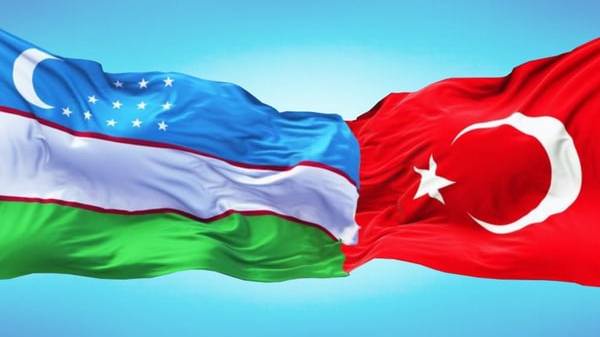
Bringing Markets and Capital Together: The Uzbekistan–Türkiye Economic Union
Over the past eight years, relations between Uzbekistan and Türkiye have undergone a profound qualitative transformation, evolving from traditionally friendly ties into a full-fledged strategic partnership with a strong economic, investment, and industrial dimension. While the period prior to 2017 was largely characterized by inertia, the launch of large-scale reforms in Uzbekistan marked a decisive shift in bilateral relations toward practical cooperation focused on trade, investment, and joint manufacturing.
A key role in this transformation has been played by the political will and personal engagement of the leaders of both countries - President of the Republic of Uzbekistan Shavkat Mirziyoyev and President of the Republic of Türkiye Recep Tayyip Erdoğan. Regular high-level dialogue has provided Uzbek-Turkish relations with stability, strategic coherence, and a long-term economic horizon.
Political Foundations as a Driver of Economic Convergence
Diplomatic relations between the two countries were established in 1992; however, a turning point came in October 2017 with the signing of the Joint Declaration on Strategic Partnership in Ankara. This step laid a solid institutional foundation for the rapid expansion of trade, economic, and investment cooperation.
In 2018, the High-Level Strategic Cooperation Council was established in Tashkent under the co-chairmanship of the two presidents. Its meetings in 2020, 2022, and 2024 became key platforms for aligning priorities in trade, investment, industry, transport, and interregional cooperation. Over time, political dialogue has evolved from declarative engagement into a practical instrument supporting concrete economic initiatives and project-based decisions.
Trade: Scale, Structure and Institutional Incentives
Türkiye is firmly among Uzbekistan’s largest trading partners. In 2020, bilateral trade turnover amounted to USD 2.1 billion, reaching USD 3.02 billion by the end of 2025.
Uzbekistan’s exports to Türkiye are predominantly industrial in nature, comprising non-ferrous metals and metal products, textiles, services, plastics, and food products. Imports from Türkiye consist mainly of mechanical and electrical equipment, chemical products, textiles, pharmaceuticals, and metal structures, reflecting Türkiye’s role as a key source of industrial technologies and equipment.
A significant qualitative step forward was the signing of the Preferential Trade Agreement in 2022, which entered into force in 2023. In 2025, the parties began expanding the list of goods covered by preferential treatment, creating additional incentives for trade diversification and deeper industrial cooperation.
Investment Cooperation: From Presence to Systemic Engagement
Investment cooperation is one of the most dynamically developing areas of bilateral relations. In 2024, the volume of Turkish investments utilized in Uzbekistan reached USD 2.2 billion, while in January-November 2025 it increased to USD 3.2 billion. A total of 2,137 enterprises with Turkish capital operate in Uzbekistan, including 496 joint ventures and 1,641 wholly Turkish-owned companies.
These enterprises are active in textiles and furniture manufacturing, construction, trade, transport, logistics, and services. Importantly, a substantial share of them is export-oriented, strengthening Uzbekistan’s integration into regional and global value chains.
Industrial Cooperation: Transition to Joint Manufacturing
In recent years, Uzbek–Turkish cooperation has increasingly shifted from traditional trade toward industrial partnership. Turkish companies are actively involved in establishing production facilities across Uzbekistan’s regions, introducing modern technologies, management standards, and export-oriented business models.
Regular meetings of the Intergovernmental Commission on Trade and Economic Cooperation, accompanied by business forums, result in detailed roadmaps comprising dozens of measures covering industry, energy, logistics, and regional projects. This approach forms a solid foundation for sustainable industrial partnership.
Interregional Cooperation: Localized Economic Engagement
Active interregional interaction has become an essential element of the new partnership model. In 2024, targeted visits by delegations from the Fergana, Khorezm, Namangan, Navoi, Samarkand, and Jizzakh regions, as well as the city of Tashkent, were held to various regions of Türkiye.
This format enables a shift from framework agreements to concrete investment projects, creates direct B2B and B2G communication channels, and contributes to a more decentralized and resilient architecture of cooperation.
Transport and Logistics as Pillars of Trade and Investment
The expansion of trade and industrial cooperation naturally increases the importance of transport and logistics interaction. Türkiye is viewed by Uzbekistan as a key logistical gateway to European and Mediterranean markets, while Uzbekistan is becoming an important hub for Türkiye’s access to Central Asia.
The development of rail and road transport, along with intensive air connectivity - up to 97 regular flights per week across eight routes - enhances business mobility, supports investment activity, and strengthens economic integration between the two countries.
Prospective Areas of Cooperation: Converging Interests
The established economic core of Uzbek–Turkish relations provides a basis for a new phase of cooperation, shifting from quantitative growth to deeper structural and technological integration.
Localization and joint development of industrial production remain key convergence points. Uzbekistan offers industrial zones, resources, and a growing domestic market, while Türkiye contributes technology, design, managerial expertise, and access to external markets.
The textile and light industry is evolving toward the production of finished branded goods and contract manufacturing for international retail chains. Mechanical engineering and electrical equipment sectors are creating prerequisites for the establishment of assembly and production facilities. The agro-industrial complex offers opportunities for deep processing and joint exports of food products.
A separate strategic direction is the joint entry into third-country markets, where the combination of Uzbekistan’s production potential and Türkiye’s trade and logistics infrastructure creates substantial competitive advantages.
Overall, over the past eight years Uzbekistan and Türkiye have built a resilient model of strategic partnership based on trade, investment, industrial cooperation, interregional engagement, and transport connectivity. Trade turnover exceeding USD 3 billion, multi-billion-dollar investments, and thousands of joint enterprises testify to the maturity and long-term nature of bilateral relations.
Mashrab Mamirov,
Head of Directorate General of the Ministry of Investment, Industry and Trade of the Republic of Uzbekistan📅 28.01.2026
Uzbekistan news
Uzbekistan and the Republic of Korea in the Emerging Framework for Cooperation with Central Asia
Tashkent brings together leaders and key deals in Polymer Market of Central Asia
The 1st Republic of Korea–Central Asia Summit: Why This Moment Matters
Uzbekistan – Serbia: A New Geography of Industrial Cooperation
The President of Uzbekistan’s Visit to Serbia: A New Stage in Economic Partnership Between Central Asia and the Balkans
Uzbekistan and the Republic of Korea: From Investment Partnership to Technological Cooperation
Regional Approaches to SDG Delivery: What Can Central Asia Offer?
Uzbekistan Opens a Balkan Gateway to Europe
The SCO Bishkek Summit: The Economic Agenda of a New Stage of Cooperation
Tourism: A new dimension of Uzbekistan-Kyrgyzstan partnership
Uzbekistan’s Role in the SCO: Economy, Security and Regional Cooperation
Economic Cooperation of Uzbekistan within the SCO at a New Stage of Development
Uzbekistan and Serbia: From Labour Mobility to a Strategic Partnership in Human Capital
Prospects for Uzbekistan–Serbia Cooperation in the ICT Sector
Prospects for Cooperation between the Republic of Uzbekistan and the Republic of Korea within the Framework of the Central Asia–Republic of Korea Cooperation Forum
THE SCO’S NEW FINANCIAL ARCHITECTURE: FROM COORDINATION TO PRACTICAL DEVELOPMENT MECHANISMS
INFORMATION NOTE ON COOPERATION WITH SERBIA
On September 8–10th, Tashkent to gather International Textile Industry Professionals
The Seoul Summit: Uzbekistan in the New Industrial Architecture of C5+1
New Opportunities to Expand Cooperation Between Uzbekistan and Serbia
Uzbekistan and Azerbaijan: Turning Political Alignment into Economic Growth
BRIGHT PROSPECTS FOR MUTUALLY BENEFICIAL PARTNERSHIP
Transport and Logistics Connectivity of the SCO Amid Geopolitical Turbulence: New Opportunities for the Regions
Business in Uzbekistan are moving from digitalization to technological modernization
Uzbekistan and Serbia expand prospects for cooperation in ecology and environmental protection
SCO AND WATER DIPLOMACY: IN PURSUIT OF COMMON INTERESTS
TASHKENT-DELHI: A NEW STAGE OF STRATEGIC PARTNERSHIP
On September 4–6th, Samarkand will host XII Inter-Parliamentary Union Global Conference of Young Parliamentarians
The Infrastructure Already Linking Uzbekistan and Korea What Korea Has Already Built Inside Uzbekistan's Digital Economy From Fiber Optics to AI: The Scope of Uzbek-Korean Digital Cooperation The Digital Bridge Already Built Between Uzbekistan and South Korea
On September 8–10th, Tashkent to gather International Textile Industry Professionals

-
 Ministry of Foreign Affairs of the Republic of Uzbekistan
 -
 Diplomatic Service of the Ministry of Foreign Affairs
 -
 State Committee for Tourism Development
 -
Ministry of Investments and Foreign Trade of the Republic of Uzbekistan
-
 invest.gov.uz
 -

-

-

-

-

-

-

of Uzbekistan in the Republic
of Latvia
When using the information, a link to www.uzembassy.lv
must be provided.
All rights reserved
Address
Address: Riga c., LV-1010. 11-11 Elizabetes Str., Latvia
Phone: 37167322424
Fax: 37167322306
Email: embassy@uzbekistan.lv
Useful links
HomeIssuance of biometric passport for departure abroad
Certificate to return to Uzbekistan
Withdrawal of citizenship
Loss of citizenship