Phone
Consular Issues
Phone
Uzbekistan news
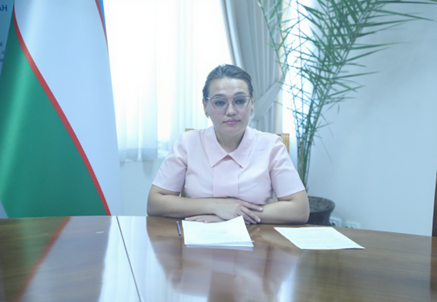
Central Asia and Turkiye: A New Phase of Interconnectivity
The strategic convergence between Turkiye and Central Asian states –driven by shared historical and cultural heritage alongside mutually reinforcing economic interests – is cultivating a novel architectural framework for regional interconnectedness. Through multilateral formats and bilateral initiatives, these actors have been establishing a durable platform for cooperation across trade, energy, transportation, and the “green” economy, transforming geographical proximity into a long-term factor of stability and collective development.
Amidst the diversification of Central Asian countries’ foreign policy vectors and the Turkish diplomacy’s increasing emphasis on the Eurasian dimension, this partnership has been acquiring a systemic character that goes beyond specific projects, thereby shaping a sustainable architecture of regional interconnectedness.
Political Foundations of Institutionalizing the Partnership
The core instrument facilitating political engagement is the Organization of Turkic States (OTS), which has evolved from a cultural and educational association into a regional a center of attraction spanning from Central Asia to the Caucasus and Europe. Regular summit meetings of OTS leaders exemplify a transition to a pragmatic cooperation phase. Particular significance is attributed to Uzbekistan and its President, Shavkat Mirziyoyev, who has initiated to deepen collaboration within the organization.
At the October 2025 OTS summit in Gabala, Azerbaijan, the Uzbek leader proposed to craft OTS’s Strategy of Development 2030, including the establishment of a Permanent Council for economic partnership headquartered in Tashkent. These initiatives aim to coordinate economic projects, support business initiatives, and enhance the efficiency of interaction – underscoring Uzbekistan’s aspiration to become a regional hub of integration and a platform for sustainable development.
Simultaneously, Turkiye is intensifying its engagement within other multilateral structures relevant to Central Asia, such as Conference on Interaction and Confidence Building Measures in Asia (CICA) and the Shanghai Cooperation Organization (SCO), where Ankara, holding the status of a partner and strives for full membership. This multi-format engagement allows for flexible adaptation of the agenda to specific priorities – from confidence-building measures in security to the coordination of transport corridors.
On January 20 2026, a meeting of the Joint Strategic Planning Group took place, co-chaired by the foreign ministers of Uzbekistan and Turkiye, confirming mutual readiness to deepen coordination within the UN, OSCE, OIC, and ECO, and to support each other’s candidacies in international organizations. This approach transforms bilateral relations into a component of a broader global diplomatic strategy, where support on the international stage becomes a shared interest.
Economic Dimension: From Trade to Strategic Investments
Since 2018, the bilateral trade volume between Central Asia and Ankara has more than doubled – from 6 billion to14.5 billion in 2025. In the long-term Turkiye has set an ambitious target of reaching $30 billion in bilateral trade with Central Asian region.
The volume of Turkish investments exhibits an even more remarkable trend. From 2016 to 2024, Turkish investments in the region increased 2.5 times – from 1.1 billion to3 billion – significantly surpassing the overall growth of Turkish investments in Eurasia (34%) during the same period. Central Asia accounts for 24% of Turkiye’s total accumulated investments in Eurasia. The number of Turkish companies operating in the region increased from 4,000 in 2016 to over 7,000 in 2025. Turkiye has become Uzbekistan’s third-largest investor (after China and Russia), with more than 2,000 enterprises, including 438 joint ventures.
Turkish business is gradually shifting from small-scale operations to implementing large-scale infrastructure projects across construction, telecommunications, textiles, and agribusiness sectors. Framework documents such as the “OTS Strategy-2026” and the “OTS Strategy-2040,” approved within the OTS, envisage creating a unified economic space –including a common energy grid and a regional development bank. Uzbekistan’s initiatives to expand the activities of the Turkic Investment Fund and the adoption of the “OTS’s Roadmap on Artificial Intelligence and the Creative Economy” indicate a transition towards a high-tech collaboration agenda.
Energy Interdependence: From Hydrocarbons to “Green” Transformation
Central Asia possesses significant hydrocarbon reserves: Kazakhstan holds approximately 30 billion barrels of oil; Turkmenistan ranks fifth globally in natural gas reserves; Uzbekistan has sizable, largely undeveloped deposits. Correspondingly, Turkiye aims to become an energy hub, providing Central Asia with direct access to the European market amid EU’s decarbonization efforts and reduced reliance on Russian supplies.
The Baku–Tbilisi–Ceyhan (BTC) pipeline, initially intended for Azerbaijani oil, has evolved into the Trans-Caspian export route. Kazakhstan has been exporting oil through this corridor since 2008, and Turkmenistan since 2010.
In addition, negotiations are underway concerning the export of Turkmen gas via the Trans-Anatolian Pipeline (TANAP), with plans to double its capacity from 16 to 32 billion cubic meters.
Simultaneously, the countries are actively transitioning to renewable energy sources. In Uzbekistan, the Turkish conglomerate “Cengiz” has completed construction of two power plants totaling 460 MW, with additional facilities exceeding 500 MW under construction in Jizzakh. According to estimates from the International Renewable Energy Agency (IRENA), Kazakhstan, Uzbekistan, and Turkmenistan possess immense potential not only for domestic green energy production but also for export.
The culmination of these efforts is exemplified by the Trans-Caspian Green Energy Corridor project – an initiative under the Green Corridor Alliance, a joint Kazakh-Uzbek-Azerbaijani enterprise, with funding from the Asian Infrastructure Investment Bank. It aims to connect the electricity grids of Kazakhstan and Uzbekistan with Azerbaijan across the Caspian Sea for subsequent export to Turkiye and Europe. An agreement on strategic partnership for this project was signed at COP29 in Baku in 2024.
The Central Corridor: An Artery of Development
The Trans-Caspian route (the Middle Corridor) has gained strategic importance as an alternative land corridor connecting China with Europe via Central Asia, the Caspian Sea, the South Caucasus, and Turkiye. Forecasts suggest that freight volumes along this route could double by 2030, heightening economic interdependence and boosting its geopolitical relevance.
Uzbekistan actively supports the reinforcement of the Central Corridor, viewing it as a core factor for sustainable regional economic development. The infrastructural interdependence created by this project fosters long-term stability among the countries of Central Asia, the South Caucasus, and Turkiye, transforming transport cooperation into a tool for regional security enhancement.
Cultural and Humanitarian Dimension: The Foundation of Sustainable Partnership
Historical and cultural links rooted in a common Turkic heritage continue to underpin modern cooperation. The parties are steadily expanding educational programs within the “Turkic World” concept. Several universities operate across Central Asia, including the International University of Turkic States and the Turkish University of Economics and Technology in Uzbekistan. Special attention is given to increasing scholarships for Uzbek students within the “Türkiye Bursları” program and developing joint scholarship initiatives.
Such exchanges in science and culture foster durable horizontal ties among the citizens of Turkiye and Central Asian countries. An increasingly important element is digital cooperation: joint projects in artificial intelligence, digital governance, and creative industries open new avenues for engagement. The expansion of tourism flows and media exchanges also contribute to forming a unified informational and communicational space which is particularly relevant amid the global competition in the modern media environment of information manipulation.
Conclusion
Overall, the partnership between Central Asia and Turkiye reflects a transition from ad hoc interactions to a systematic model of cooperation based on resource, infrastructural, and strategic complementarity. Turkiye gains access to energy resources and transit routes, strengthening its status as an Eurasian hub. In turn, Central Asian states diversify their foreign policy and economic ties, increasing their autonomy and competitiveness.
The future prospects of this partnership hinge on three core vectors: first, deepening economic integration through the OTS and bilateral agreements; second, jointly implementing cross-border infrastructure projects in energy and transportation; third, advancing the “green” and digital agendas as foundations for sustainable development. Achieving these objectives requires ongoing dialogue, regulatory harmonization, and trust-building measures, but it already clear that the Central Asia–Turkiye partnership forms a robust platform for regional stability and collective prosperity in a multipolar world.
Dilorom MAMATKULOVA,
Leading research fellow of the Institute for Strategic and Regional Studies under the President of the Republic of Uzbekistan
📅 29.01.2026
Uzbekistan news
Uzbekistan and the Republic of Korea in the Emerging Framework for Cooperation with Central Asia
Tashkent brings together leaders and key deals in Polymer Market of Central Asia
The 1st Republic of Korea–Central Asia Summit: Why This Moment Matters
Uzbekistan – Serbia: A New Geography of Industrial Cooperation
The President of Uzbekistan’s Visit to Serbia: A New Stage in Economic Partnership Between Central Asia and the Balkans
Uzbekistan and the Republic of Korea: From Investment Partnership to Technological Cooperation
Regional Approaches to SDG Delivery: What Can Central Asia Offer?
Uzbekistan Opens a Balkan Gateway to Europe
The SCO Bishkek Summit: The Economic Agenda of a New Stage of Cooperation
Tourism: A new dimension of Uzbekistan-Kyrgyzstan partnership
Uzbekistan’s Role in the SCO: Economy, Security and Regional Cooperation
Economic Cooperation of Uzbekistan within the SCO at a New Stage of Development
Uzbekistan and Serbia: From Labour Mobility to a Strategic Partnership in Human Capital
Prospects for Uzbekistan–Serbia Cooperation in the ICT Sector
Prospects for Cooperation between the Republic of Uzbekistan and the Republic of Korea within the Framework of the Central Asia–Republic of Korea Cooperation Forum
THE SCO’S NEW FINANCIAL ARCHITECTURE: FROM COORDINATION TO PRACTICAL DEVELOPMENT MECHANISMS
INFORMATION NOTE ON COOPERATION WITH SERBIA
On September 8–10th, Tashkent to gather International Textile Industry Professionals
The Seoul Summit: Uzbekistan in the New Industrial Architecture of C5+1
New Opportunities to Expand Cooperation Between Uzbekistan and Serbia
Uzbekistan and Azerbaijan: Turning Political Alignment into Economic Growth
BRIGHT PROSPECTS FOR MUTUALLY BENEFICIAL PARTNERSHIP
Transport and Logistics Connectivity of the SCO Amid Geopolitical Turbulence: New Opportunities for the Regions
Business in Uzbekistan are moving from digitalization to technological modernization
Uzbekistan and Serbia expand prospects for cooperation in ecology and environmental protection
SCO AND WATER DIPLOMACY: IN PURSUIT OF COMMON INTERESTS
TASHKENT-DELHI: A NEW STAGE OF STRATEGIC PARTNERSHIP
On September 4–6th, Samarkand will host XII Inter-Parliamentary Union Global Conference of Young Parliamentarians
The Infrastructure Already Linking Uzbekistan and Korea What Korea Has Already Built Inside Uzbekistan's Digital Economy From Fiber Optics to AI: The Scope of Uzbek-Korean Digital Cooperation The Digital Bridge Already Built Between Uzbekistan and South Korea
On September 8–10th, Tashkent to gather International Textile Industry Professionals

-
 Ministry of Foreign Affairs of the Republic of Uzbekistan
 -
 Diplomatic Service of the Ministry of Foreign Affairs
 -
 State Committee for Tourism Development
 -
Ministry of Investments and Foreign Trade of the Republic of Uzbekistan
-
 invest.gov.uz
 -

-

-

-

-

-

-

of Uzbekistan in the Republic
of Latvia
When using the information, a link to www.uzembassy.lv
must be provided.
All rights reserved
Address
Address: Riga c., LV-1010. 11-11 Elizabetes Str., Latvia
Phone: 37167322424
Fax: 37167322306
Email: embassy@uzbekistan.lv
Useful links
HomeIssuance of biometric passport for departure abroad
Certificate to return to Uzbekistan
Withdrawal of citizenship
Loss of citizenship