Phone
Consular Issues
Phone
Uzbekistan news
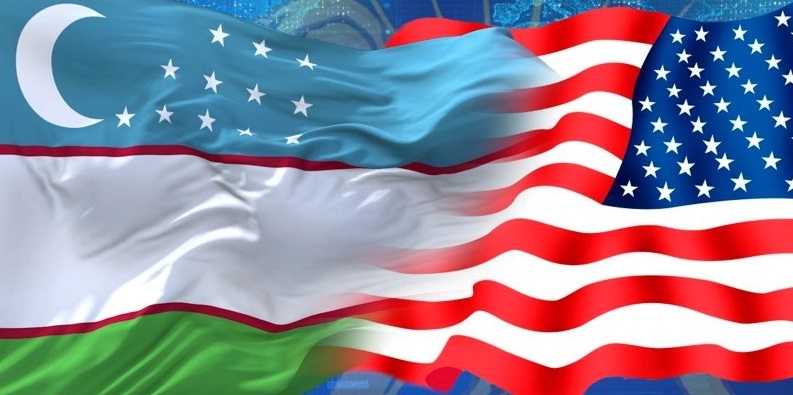
Relations between Uzbekistan and the United States have entered a phase of regular strategic communication
An expert from the Institute for Strategic and Regional Studies under the President of Uzbekistan, commented to Dunyo IA on the outcomes of President Shavkat Mirziyoyev’s working visit to the United States, which took place from February 17 to 19:
- The visit of the President of Uzbekistan to the United States, which took place as part of his participation in the first meeting of the Board of Peace, was not just another diplomatic event, but a logical continuation of the strategy of pragmatic and mutually beneficial dialogue with Washington built over recent years. It demonstrated a shift from symbolic political interaction to systemic coordination in security, economics, trade, and humanitarian exchanges.
This visit marked the culmination of an intensive partnership over the past six months. Meetings on the sidelines of the UN General Assembly, the C5+1 summit, participation in events in Davos, and the signing of the Charter of the Board of Peace, as well as personal contacts between the two leaders, have fostered a stable dynamic of political dialogue. This fifth summit in six months demonstrates that relations have entered a phase of regular strategic communication, with each meeting reinforced by concrete agreements.
The visit’s busy business program confirmed its practical nature. During his stay in the United States, the head of state held talks with representatives of the American administration, financial institutions, and business circles, including the Export-Import Bank of the United States, the International Development Finance Corporation, the American-Uzbekistan Chamber of Commerce, as well as the heads of major companies such as Traxys, Valmont Industries, Gulf Oil, Aviagen, John Deere, BlackRock Financial Markets Advisory, Oppenheimer, and others. Following the signing of bilateral documents, the parties solidified agreements in priority areas such as the agro-industrial complex, critical minerals, financial market development, improving the investment climate, and the creation of an investment platform.
Discussions with the US Trade Representative and the Secretary of Commerce deserve special attention. During these talks, the need to intensify work within the framework of the Trade and Investment Framework Agreement between the countries of Central Asia and the United States was emphasized. This gave cooperation not only a bilateral but also a regional dimension, strengthening Uzbekistan’s position as a coordinator of economic processes in the region.
Viewed historically, the current stage’s foundation was laid back in 2018 during Shavkat Mirziyoyev’s first official visit to Washington, when agreements worth over $4.8 billion were signed. This package signaled Uzbekistan’s systemic openness to international businesses. In 2021, the Strategic Partnership Dialogue was established, and its subsequent expansion testifies to the institutionalization of bilateral relations. The invitation of the Uzbek leader to the G20 summit in Miami, personally initiated by US President Donald Trump, further confirmed the country’s strengthening international status and recognition of its growing role on the global agenda.
The economic dimension of cooperation is demonstrating steady growth. While trade turnover stood at $408 million in 2018, it consistently exceeded $1 billion by the end of 2024-2025. The current three-year Economic Cooperation Program, worth $35 billion, reflects the long-term nature of the parties' intentions. At the same time, the structure of interaction is undergoing a qualitative change: the emphasis is shifting from trade operations to the implementation of investment and production projects.
Today, flagship American companies such as Air Products, General Electric, General Motors, Boeing, Honeywell, and John Deere are actively operating in Uzbekistan. The $8.7 billion package of agreements signed at the C5+1 summit, including a contract for 22 Boeing aircraft, investments in the critical minerals sector, and projects in the agro-industrial sector, confirms the practical focus of the dialogue.
The transformation of the export structure is particularly revealing: services now account for approximately 86% of Uzbek exports to the US, with the IT sector remaining the key driver. Of the 800 active digital services exporters, 448 target the US market, accounting for 45% of all industry exports. This demonstrates that the partnership is gradually becoming more high-tech, moving beyond traditional commodity-based models.
The humanitarian dimension of cooperation is no less important. Academic exchange is expanding, the number of joint research projects is growing, and the integration of Uzbek specialists into international educational networks is strengthening. Currently, 40 Uzbek universities are implementing partnership programs with more than 25 US universities. Webster University’s Tashkent branch and the American University of Technology, established jointly with Arizona State University, are successfully operating. Thus, a long-term intellectual infrastructure for strategic partnership is being formed.
Overall, the current stage of relations between Uzbekistan and the United States is characterized by a transition from symbolic declarations to systemic coordination on issues of regional security, sustainable development, investment policy, and technological modernization. These achievements confirm that Uzbekistan is steadily establishing itself as a key US partner in Central Asia.
Dunyo IA
📅 20.02.2026
Uzbekistan news
Regular dialogue is the Foundation for addressing common water-related challenges in Central Asia
Uzbekistan and Turkmenistan: A New Stage in the Development of Their Strategic Partnership
11th Tashkent International Biennale of Contemporary Art to be held in the capital of Uzbekistan on October 12–16th
OTS Member States - A Crucial Link in the Eurasian Space
Uzbekistan plays an active role in Economic Integration within the framework of the Organization of Turkic States
CICA opens new horizons for financial cooperation
Aquatherm Tashkent 2026 to Showcase Latest Technologies for Construction and Utility Infrastructure
Uzbekistan is securing its place in the Global Hub for Technological Outsourcing
Digital Cooperation among the Turkic States Towards a Unified Technological Ecosystem
Uzbekistan and Azerbaijan are creating a Hub for Startups, Investors and Talent
UZBEKISTAN AND THE UN: FROM NATIONAL INITIATIVES TO THE GLOBAL AGENDA
The 5th Samarkand Forum on Human Rights to take place on September 28–29th
Uzbekistan's key trading partners participate in CICA
Speech by President Shavkat Mirziyoyev at the solemn ceremony dedicated to the thirty-fifth anniversary of the independence of the Republic of Uzbekistan
Uzbekistan Firmly Establishes Itself as a Stable and Predictable Partner for Long-Term International Business
Changing economic priorities of Uzbekistan reshape its engagement with the CIS
Inaugural Central Asia – Republic of Korea Summit at the highest level opens in Seoul
Uzbekistan and Korea: Advancing Green Energy and New Technologies
Uzbekistan and the Republic of Korea in the Emerging Framework for Cooperation with Central Asia
Tashkent brings together leaders and key deals in Polymer Market of Central Asia
The 1st Republic of Korea–Central Asia Summit: Why This Moment Matters
Uzbekistan – Serbia: A New Geography of Industrial Cooperation
The President of Uzbekistan’s Visit to Serbia: A New Stage in Economic Partnership Between Central Asia and the Balkans
Uzbekistan and the Republic of Korea: From Investment Partnership to Technological Cooperation
Regional Approaches to SDG Delivery: What Can Central Asia Offer?
Uzbekistan Opens a Balkan Gateway to Europe
The SCO Bishkek Summit: The Economic Agenda of a New Stage of Cooperation
Tourism: A new dimension of Uzbekistan-Kyrgyzstan partnership
Uzbekistan’s Role in the SCO: Economy, Security and Regional Cooperation
Economic Cooperation of Uzbekistan within the SCO at a New Stage of Development

-
 Ministry of Foreign Affairs of the Republic of Uzbekistan
 -
 Diplomatic Service of the Ministry of Foreign Affairs
 -
 State Committee for Tourism Development
 -
Ministry of Investments and Foreign Trade of the Republic of Uzbekistan
-
 invest.gov.uz
 -
-

-

-
-

-

-

of Uzbekistan in the Republic
of Latvia
When using the information, a link to www.uzembassy.lv
must be provided.
All rights reserved
Address
Address: Riga c., LV-1010. 11-11 Elizabetes Str., Latvia
Phone: 37167322424
Fax: 37167322306
Email: embassy@uzbekistan.lv
Useful links
HomeIssuance of biometric passport for departure abroad
Certificate to return to Uzbekistan
Withdrawal of citizenship
Loss of citizenship