Phone
Consular Issues
Phone
Uzbekistan news
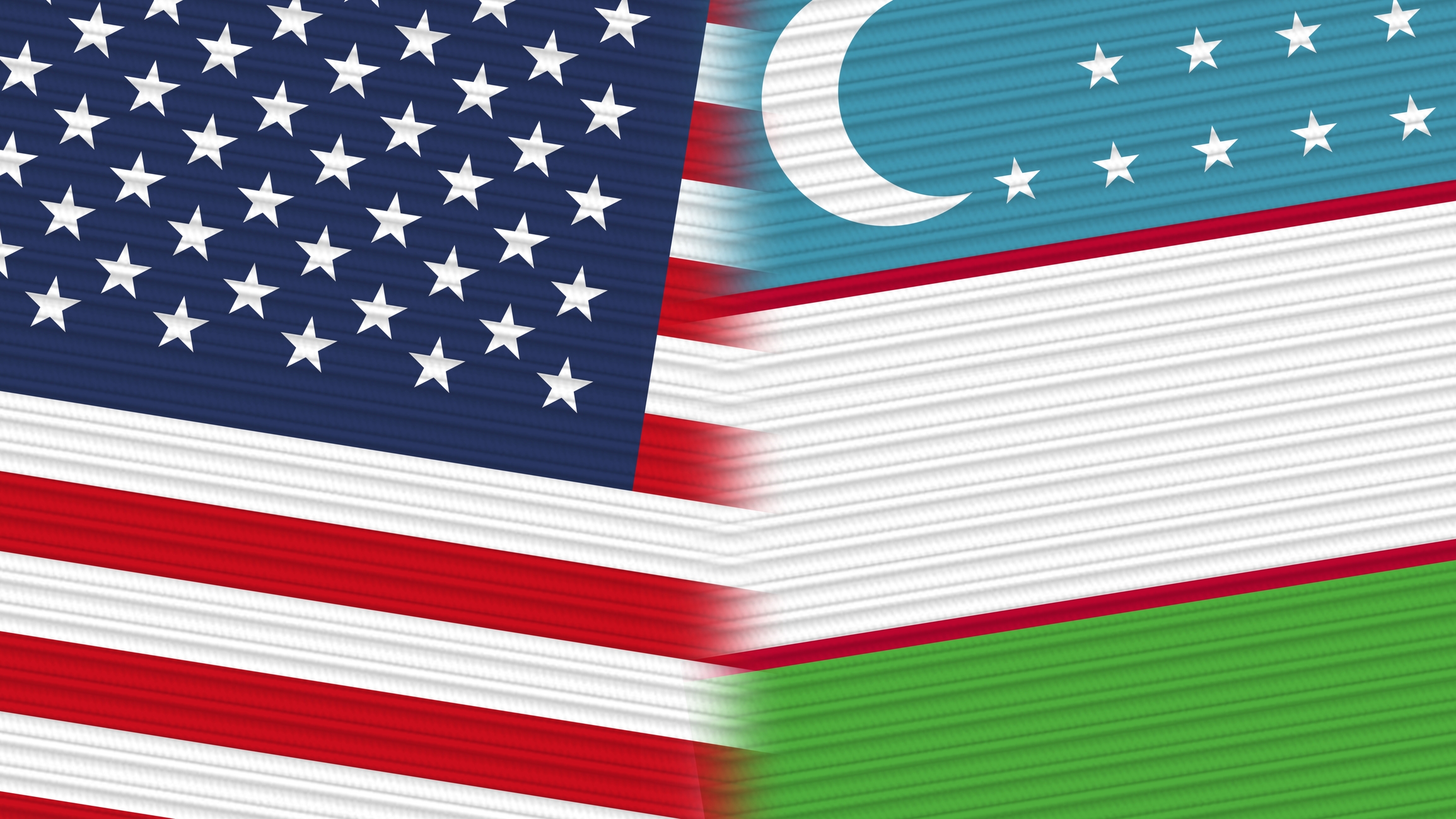
Strengthening Peace in Gaza and Expanding Economic Ties with the U.S.
On the Inaugural Meeting of the Peace Council in Washington
At the invitation of the President of the United States Donald Trump, President of the Republic of Uzbekistan Shavkat Mirziyoyev paid a working visit to Washington on February 17–19 to participate in the inaugural meeting of the Peace Council. The visit combined a substantive political agenda with an extensive economic program and resulted in a number of agreements aimed at further strengthening Uzbek-American strategic partnership and expanding bilateral cooperation across key sectors.
Expanding Participation in Addressing Global Challenges
The Peace Council is an intergovernmental initiative put forward by President Trump within the framework of the Gaza peace plan endorsed by the UN Security Council in November 2025. The establishment of this platform is intended not only to coordinate humanitarian assistance but also to create institutional mechanisms for long-term stabilization, reconstruction, and socio-economic recovery of the Gaza Strip, while reducing the risks of renewed escalation in the Middle East.
The Charter of the Peace Council was signed on January 22, 2026, on the sidelines of the World Economic Forum in Davos. Signatories included leaders and representatives of Azerbaijan, Argentina, Armenia, Bahrain, Bulgaria, Hungary, Indonesia, Jordan, Kazakhstan, Qatar, Morocco, Mongolia, the United Arab Emirates, Pakistan, Paraguay, Saudi Arabia, Türkiye, Uzbekistan, and Kosovo. Subsequently, Belarus, Albania, Cambodia, Egypt, El Salvador, Jordan, and Kuwait officially joined the group of founding states, expanding the Council’s geographic and political representation.
By joining the founding members at the invitation of the U.S. President, Uzbekistan reaffirmed its commitment to peaceful diplomacy, respect for international law, and shared responsibility for maintaining global stability. Uzbekistan recognized Palestine in 1994 and consistently supports the right of the Palestinian people to establish an independent state in accordance with international legal norms and UN resolutions.
Uzbekistan’s policy toward Gaza combines principled political positioning with practical humanitarian engagement. In 2023, Uzbekistan allocated $1.5 mln through UNRWA. In December 2023, 100 wounded Palestinian women and children were evacuated and provided with medical treatment and rehabilitation services. In 2025, Uzbekistan developed a comprehensive state support mechanism for Palestinian citizens received in the country, including asylum procedures, access to healthcare, education for children, and employment assistance. A dedicated fund under the National Agency for Social Protection was established to finance these measures through budgetary and charitable resources.
The inaugural meeting of the Peace Council held on February 19 in Washington brought together leaders and representatives of more than 40 countries. Discussions focused on humanitarian relief, infrastructure restoration, and ensuring the sustainability of the post-conflict recovery process. At the opening of the session, President Trump announced that nine countries – Kazakhstan, Azerbaijan, the UAE, Morocco, Bahrain, Qatar, Saudi Arabia, Uzbekistan, and Kuwait – had jointly pledged $7 bn in assistance to Gaza, while the United States committed an additional $10 bn to support the Council’s activities.
In his address, President Mirziyoyev expressed full support for the peace initiative and confirmed Uzbekistan’s readiness to participate practically in its implementation. Particular emphasis was placed on the principle that any external governance framework for Gaza must rely on internal public support in order to ensure legitimacy, stability, and long-term effectiveness.
Highlighting the importance of coordinated international efforts, the President noted that joint actions would help secure the sustainability of the post-conflict process and accelerate socio-economic recovery. Uzbekistan also declared its readiness to contribute to the construction of residential housing, schools, kindergartens, and healthcare facilities in Gaza, thereby supporting both humanitarian and development objectives.
The Palestinian and Gaza issue has remained on the international agenda for decades without a comprehensive solution. In this context, the creation of the Peace Council represents one of the most structured multilateral attempts in recent years to address the crisis, while Uzbekistan’s participation among the founding states reflects the growing recognition of its constructive diplomatic role.
Expanding Trade and Economic Cooperation
Alongside political dialogue, the economic dimension of the visit formed a central pillar of bilateral engagement. In recent years, Uzbekistan and the United States have steadily restored institutional mechanisms of strategic partnership and expanded practical cooperation.
Cooperation with the U.S. Export-Import Bank resumed in 2017 after a 13-year hiatus. Agreements were concluded between Amazon and Uztrade, while science, technology, and economic modernization were identified among priority cooperation areas. In 2018, a $100 mln memorandum on trade financing was signed between Eximbank and Uzbekistan’s National Bank for Foreign Economic Activity. Cooperation with Openbucks supported the development of e-commerce and digital payment infrastructure.
A major milestone was reached in September 2025 during the 80th UN General Assembly in New York, where negotiations between the two presidents resulted in the formation of a portfolio of contracts and prospective projects exceeding $100 bn. The agreements covered aviation, mining and chemicals, energy, finance, and innovation. Specific arrangements included cooperation with Denali Exploration Group on rare earth elements, Re Element Technologies in rare earth metals, Flowserve on modernization of pumping stations, Valmont Industries on water-saving technologies, and Palo Alto Networks in artificial intelligence.
During the Washington visit, President Mirziyoyev held meetings with U.S. Secretary of Commerce Howard Lutnick, Eximbank President John Jovanovic, DFC CEO Ben Black, and U.S. Trade Representative Jamieson Greer. Discussions focused on expanding financing for major industrial and infrastructure projects, supporting high-tech equipment exports, launching a bilateral Investment Platform, advancing Uzbekistan’s WTO accession, and strengthening regional trade cooperation under TIFA. The agreement establishing the Investment Platform was formally signed during the visit.
Additional bilateral documents were concluded covering construction of fuel station networks, sprinkler irrigation technologies, extraction and supply of critical minerals, development of poultry clusters, agro-industrial cooperation, financial market development, and investment climate reforms. The economic agenda was identified as one of the key pillars of Uzbek-American strategic partnership, with priority cooperation areas including critical raw materials, petrochemicals, energy, agriculture, and industrial modernization.
Trade and Investment Dynamics
The intensification of bilateral cooperation has already produced tangible economic results. Between 2017 and 2025, trade turnover increased 4.7-fold from $215 mln to $1 bn. Exports grew 9.1-fold to $291.7 mln, while imports rose 3.9-fold to $712.3 mln.
Exports to the United States are dominated by services (81%), including programming, financial, information, and transport services. Petroleum products account for 8.6%, machinery and equipment 3.7%, food products 3.5%, and industrial goods 3.3%.
Imports from the United States are led by machinery and equipment (59%), including aircraft, vehicles, computing equipment, engines, pumps, and industrial installations. Services account for 20.5%, chemicals 9.7%, industrial goods 3.8%, food products 3.2%, and manufactured goods 2.2%.
Investment cooperation has expanded dynamically. U.S. FDI and loans increased nearly 64-fold from $8.6 mln in 2017 to $383.2 mln in 2025, with cumulative inflows exceeding $2.9 bn. As of February 2026, 346 enterprises with U.S. capital operate in Uzbekistan, including 146 joint ventures and 200 wholly foreign-owned firms. Investments are concentrated in manufacturing, mining, construction, services, and agriculture.
Prospects for Deeper Economic Partnership
Recent dynamics indicate a transition from trade expansion toward long-term technological and industrial partnership. While services dominate exports, significant untapped potential remains in agro-processing, textiles, non-ferrous metallurgy, and higher value-added manufacturing.
Given annual U.S. imports of $118 bn in textiles and apparel, $539 bn in food products, and $213 bn in pharmaceuticals, even limited market penetration could significantly expand Uzbek exports and rebalance their structure.
Technology cooperation represents a separate strategic track. The United States accounts for 45% of Uzbekistan’s IT exports, with 448 of 800 exporters supplying digital services to the U.S. market. The next phase may involve joint industrial production in electronics and microelectronics with companies such as NVIDIA, Intel, and Qualcomm, enabling integration into global value chains.
Energy cooperation could support infrastructure modernization and renewable energy deployment, while pharmaceutical localization and joint R&D with companies such as Pfizer, Johnson & Johnson, and Merck offer additional avenues for technology transfer and investment.
Privatization and PPP initiatives create further opportunities. By 2030, the private sector share in Uzbekistan’s economy is projected to reach 85%, with stakes in 2,000 enterprises planned for sale and $30 bn in PPP projects to be launched. Cooperation with U.S. capital markets, including the NYSE and Nasdaq, may further support the development of Uzbekistan’s financial infrastructure.
Conclusion
President Mirziyoyev’s visit to Washington and participation in the inaugural Peace Council meeting carry both diplomatic and economic significance.
Uzbekistan’s engagement in the Council strengthens its international standing and expands its contribution to addressing global challenges. At the same time, the agreements reached and the expanding portfolio of joint projects elevate Uzbek-American relations to a new stage characterized by deeper institutional cooperation, industrial integration, and long-term strategic trust.
Viktor Abaturov,
Center for Economic Research and Reforms
📅 27.02.2026
Uzbekistan news
Strengthening Transport Connectivity in Asia through the Development of the Trans-Caspian International Transport Corridor
Uzbekistan promotes Initiatives in Central Asia unlocking new opportunities for cooperation
Political mutual trust in the Central Asian region is transforming into economic capital
Uzbekistan attracts specialists from 16 countries to the anniversary international exhibition “Mining, Metallurgy and Metalworking – MiningMetals Uzbekistan 2026”
Uzbekistan has moved its economic cooperation with the Turkic states into a practical dimension
Akramjon Nematov: Central Asia is increasingly emerging as an independent centre for shaping its own economic and technological agenda
Central Asia Is Shaping Its Own Model of Regional Cooperation
Initiatives of Uzbekistan aimed at Economic Results for the Countries of Central Asia and Azerbaijan
Regular dialogue is the Foundation for addressing common water-related challenges in Central Asia
Uzbekistan and Turkmenistan: A New Stage in the Development of Their Strategic Partnership
11th Tashkent International Biennale of Contemporary Art to be held in the capital of Uzbekistan on October 12–16th
OTS Member States - A Crucial Link in the Eurasian Space
Uzbekistan plays an active role in Economic Integration within the framework of the Organization of Turkic States
CICA opens new horizons for financial cooperation
Aquatherm Tashkent 2026 to Showcase Latest Technologies for Construction and Utility Infrastructure
Uzbekistan is securing its place in the Global Hub for Technological Outsourcing
Digital Cooperation among the Turkic States Towards a Unified Technological Ecosystem
Uzbekistan and Azerbaijan are creating a Hub for Startups, Investors and Talent
UZBEKISTAN AND THE UN: FROM NATIONAL INITIATIVES TO THE GLOBAL AGENDA
The 5th Samarkand Forum on Human Rights to take place on September 28–29th
Uzbekistan's key trading partners participate in CICA
Speech by President Shavkat Mirziyoyev at the solemn ceremony dedicated to the thirty-fifth anniversary of the independence of the Republic of Uzbekistan
Uzbekistan Firmly Establishes Itself as a Stable and Predictable Partner for Long-Term International Business
Changing economic priorities of Uzbekistan reshape its engagement with the CIS
Inaugural Central Asia – Republic of Korea Summit at the highest level opens in Seoul
Uzbekistan and Korea: Advancing Green Energy and New Technologies
Uzbekistan and the Republic of Korea in the Emerging Framework for Cooperation with Central Asia
Tashkent brings together leaders and key deals in Polymer Market of Central Asia
The 1st Republic of Korea–Central Asia Summit: Why This Moment Matters
Uzbekistan – Serbia: A New Geography of Industrial Cooperation

-
 Ministry of Foreign Affairs of the Republic of Uzbekistan
 -
 Diplomatic Service of the Ministry of Foreign Affairs
 -
 State Committee for Tourism Development
 -
Ministry of Investments and Foreign Trade of the Republic of Uzbekistan
-
 invest.gov.uz
 -
-

-

-
-

-

-

of Uzbekistan in the Republic
of Latvia
When using the information, a link to www.uzembassy.lv
must be provided.
All rights reserved
Address
Address: Riga c., LV-1010. 11-11 Elizabetes Str., Latvia
Phone: 37167322424
Fax: 37167322306
Email: embassy@uzbekistan.lv
Useful links
HomeIssuance of biometric passport for departure abroad
Certificate to return to Uzbekistan
Withdrawal of citizenship
Loss of citizenship