Phone
Consular Issues
Phone
Uzbekistan news
CERR Assesses the Potential for Expanding Trade Between Uzbekistan and Tajikistan
According to estimates by the Center for Economic Research and Reforms (CERR), there is potential to increase mutual trade between Uzbekistan and Tajikistan by 30–40%. Additional opportunities for expanding economic cooperation are primarily linked to the development of industrial cooperation between the two countries.
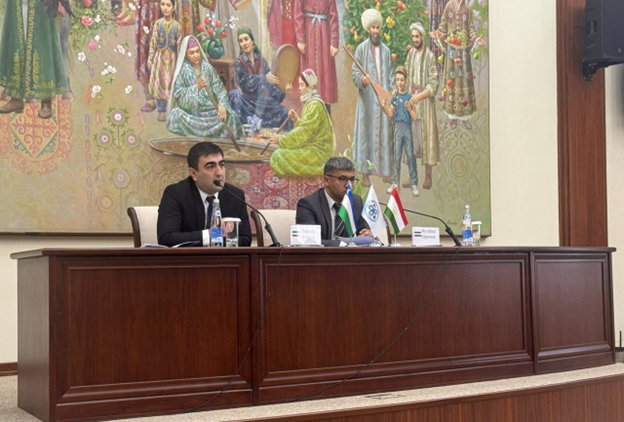
Economic cooperation between Uzbekistan and Tajikistan has demonstrated steady positive dynamics; however, the potential of bilateral relations remains only partially realized. This was stated today by Khurshed Asadov, Deputy Director of the Center for Economic Research and Reforms (CERR), during the international scientific and practical conference “Uzbekistan – Tajikistan: New Prospects for Alliance and Regional Cooperation”, held in Tashkent.
According to the expert, relations between the two countries have reached a qualitatively new level in recent years. Cooperation, reinforced by agreements on strategic partnership and allied relations, has created an institutional foundation for the active development of economic ties.
According to CERR estimates, mutual trade between Uzbekistan and Tajikistan increased 3.8 times during 2017–2025, rising from $238 mln to $912 mln. During the same period, Uzbekistan’s exports grew 3.7 times, while imports from Tajikistan increased more than fourfold.
Today, Tajikistan ranks among Uzbekistan’s key regional partners, occupying ninth place among the countries importing Uzbek products.
At the same time, current indicators reflect only part of the possible potential of economic interaction. According to CERR estimates, mutual trade could increase by an additional 30–40% solely through the substitution of Tajikistan’s imports from third countries with products manufactured by Uzbek producers.
The expert emphasized that geographical proximity, a shared border, and well-developed transport connections create favorable conditions for deepening trade relations. In particular, significant prospects remain for expanding Uzbekistan’s industrial exports, including automobiles, household appliances, textile products, and chemical goods.
At the same time, considerable potential also exists in the sphere of industrial cooperation. According to the expert, one of the most promising cooperation models could involve the establishment of joint processing facilities in border regions, particularly focused on the processing of agricultural raw materials and the development of agrologistics centers.
Asadov also noted that further development of transport infrastructure and the expansion of transit opportunities in Central Asia could serve as an additional driver of economic integration.
As emphasized by the Deputy Director of CERR, the current level of allied relations between Uzbekistan and Tajikistan creates the foundation for transitioning to a deeper model of economic cooperation, focused on joint investments, industrial cooperation, and the development of regional infrastructure, which could become an important factor in strengthening economic connectivity and promoting the development of Central Asia.
For reference: The international scientific and practical conference “Uzbekistan – Tajikistan: New Prospects for Alliance and Regional Cooperation” was organized by the International Institute for Central Asia (IICA). The event brought together representatives of government institutions, the diplomatic corps, and expert and academic communities from both countries. Participants discussed the current state and prospects for developing trade-economic, investment, and humanitarian cooperation between Uzbekistan and Tajikistan.
CERR Public Relations Sector
📅 18.03.2026
Uzbekistan news
Uzbekistan and Korea: Advancing Green Energy and New Technologies
Uzbekistan and the Republic of Korea in the Emerging Framework for Cooperation with Central Asia
Tashkent brings together leaders and key deals in Polymer Market of Central Asia
The 1st Republic of Korea–Central Asia Summit: Why This Moment Matters
Uzbekistan – Serbia: A New Geography of Industrial Cooperation
The President of Uzbekistan’s Visit to Serbia: A New Stage in Economic Partnership Between Central Asia and the Balkans
Uzbekistan and the Republic of Korea: From Investment Partnership to Technological Cooperation
Regional Approaches to SDG Delivery: What Can Central Asia Offer?
Uzbekistan Opens a Balkan Gateway to Europe
The SCO Bishkek Summit: The Economic Agenda of a New Stage of Cooperation
Tourism: A new dimension of Uzbekistan-Kyrgyzstan partnership
Uzbekistan’s Role in the SCO: Economy, Security and Regional Cooperation
Economic Cooperation of Uzbekistan within the SCO at a New Stage of Development
Uzbekistan and Serbia: From Labour Mobility to a Strategic Partnership in Human Capital
Prospects for Uzbekistan–Serbia Cooperation in the ICT Sector
Prospects for Cooperation between the Republic of Uzbekistan and the Republic of Korea within the Framework of the Central Asia–Republic of Korea Cooperation Forum
THE SCO’S NEW FINANCIAL ARCHITECTURE: FROM COORDINATION TO PRACTICAL DEVELOPMENT MECHANISMS
INFORMATION NOTE ON COOPERATION WITH SERBIA
On September 8–10th, Tashkent to gather International Textile Industry Professionals
The Seoul Summit: Uzbekistan in the New Industrial Architecture of C5+1
New Opportunities to Expand Cooperation Between Uzbekistan and Serbia
Uzbekistan and Azerbaijan: Turning Political Alignment into Economic Growth
BRIGHT PROSPECTS FOR MUTUALLY BENEFICIAL PARTNERSHIP
Transport and Logistics Connectivity of the SCO Amid Geopolitical Turbulence: New Opportunities for the Regions
Business in Uzbekistan are moving from digitalization to technological modernization
Uzbekistan and Serbia expand prospects for cooperation in ecology and environmental protection
SCO AND WATER DIPLOMACY: IN PURSUIT OF COMMON INTERESTS
TASHKENT-DELHI: A NEW STAGE OF STRATEGIC PARTNERSHIP
On September 4–6th, Samarkand will host XII Inter-Parliamentary Union Global Conference of Young Parliamentarians
The Infrastructure Already Linking Uzbekistan and Korea What Korea Has Already Built Inside Uzbekistan's Digital Economy From Fiber Optics to AI: The Scope of Uzbek-Korean Digital Cooperation The Digital Bridge Already Built Between Uzbekistan and South Korea

-
 Ministry of Foreign Affairs of the Republic of Uzbekistan
 -
 Diplomatic Service of the Ministry of Foreign Affairs
 -
 State Committee for Tourism Development
 -
Ministry of Investments and Foreign Trade of the Republic of Uzbekistan
-
 invest.gov.uz
 -
-

-

-

-

-

-

of Uzbekistan in the Republic
of Latvia
When using the information, a link to www.uzembassy.lv
must be provided.
All rights reserved
Address
Address: Riga c., LV-1010. 11-11 Elizabetes Str., Latvia
Phone: 37167322424
Fax: 37167322306
Email: embassy@uzbekistan.lv
Useful links
HomeIssuance of biometric passport for departure abroad
Certificate to return to Uzbekistan
Withdrawal of citizenship
Loss of citizenship