Phone
Consular Issues
Phone
Uzbekistan news
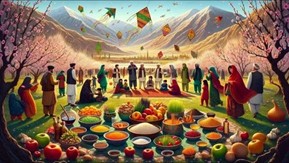
Navruz – A symbol of national tradition and new life
Navruz is considered one of the ancient and widely celebrated traditional holidays, embodying values such as humanity, kindness, generosity and diligence.
This holiday holds a significant place in the culture of the peoples of Central Asia, Iran, the Caucasus, the Near East and South Asia, reflecting the continuity of centuries-old civilizational traditions.
According to historical sources, the tradition of Navruz dates back at least three thousand years. Detailed information on this subject was provided by Abu Rayhan Beruni in his work “The Remaining Signs of Past Ages” (Athar al-Baqiya).
Navruz is closely linked to the calendar systems of ancient Iranian and Turkic peoples and is celebrated during the vernal equinox. The origins of Navruz are directly connected to astronomical events: during the equinox, the Sun moves along the ecliptic and enters the sign of Aries, making day and night equal in length. Ancient peoples interpreted this natural phenomenon as the beginning of a new year. Consequently, since antiquity, Navruz has been regarded as a symbol of nature's awakening, fertility and the renewal of life.
Today, Navruz is recognized as a cultural tradition celebrated across a vast geographical area. The holiday is observed in various forms in countries such as Uzbekistan, Iran, Afghanistan, Azerbaijan, Tajikistan, Kazakhstan, Kyrgyzstan, Türkiye, India and Pakistan. Its shared core philosophy is centered on harmony with nature, fostering friendship between people and strengthening unity within society.
The international significance of Navruz has received special recognition. In 2009, UNESCO inscribed Navruz on the Representative List of the Intangible Cultural Heritage of Humanity. Subsequently, the United Nations General Assembly proclaimed March 21 as International Nowruz Day, highlighting the holiday's role in strengthening cultural ties and mutual respect among nations.
The traditional festive table (dasturkhon) plays a central role in Navruz ceremonies. Various dishes prepared from spring bounties, including Uzbek national specialties such as kuk somsa (green somsa), kuk chuchvara (herb dumplings), halim and sumalak, are considered symbolic elements of the holiday. In particular, ceremony of preparing sumalak represents a centuries-old communal tradition. Made from wheat sprouts, this dish is interpreted as a symbol of abundance and prosperity.
Historical sources record that ceremonies associated with sumalak were held in the form of ancient communal festivities. Some researchers note that these traditions continued through the Middle Ages. In particular, historical records from the Timurid era contain information about spring festivals and public celebrations. These ceremonies were often organized in open fields, gardens, or city centers, featuring various traditional folk games.
Another ancient tradition associated with Navruz is the spring festival. Events such as the Tulip Festival (Lola Sayli) or the Red Flower Festival (Guli Surkh Sayli) are dedicated to celebrating the awakening of nature. These festivities were primarily held in mountain and foothill regions, evolving as ceremonies linked to the blooming of spring flowers.
Cultural scholars explain the significance of Navruz in society through several key aspects. First and foremost, it ensures the continuity of centuries-old traditions and values. Secondly, the holiday strengthens social virtues such as collectivism, generosity, and tolerance. Thirdly, Navruz serves as an important platform for promoting cultural dialogue and mutual understanding among diverse peoples.
From this perspective, Navruz is regarded not only as a spring holiday but as a unique cultural phenomenon shaped throughout the history of human civilization. Its ancient customs, ceremonies and symbolic meaning continue to play a vital role today in strengthening social harmony, preserving historical heritage, and passing it on to future generations.
Dunyo IA
📅 19.03.2026
Uzbekistan news
Inaugural Central Asia – Republic of Korea Summit at the highest level opens in Seoul
Uzbekistan and Korea: Advancing Green Energy and New Technologies
Uzbekistan and the Republic of Korea in the Emerging Framework for Cooperation with Central Asia
Tashkent brings together leaders and key deals in Polymer Market of Central Asia
The 1st Republic of Korea–Central Asia Summit: Why This Moment Matters
Uzbekistan – Serbia: A New Geography of Industrial Cooperation
The President of Uzbekistan’s Visit to Serbia: A New Stage in Economic Partnership Between Central Asia and the Balkans
Uzbekistan and the Republic of Korea: From Investment Partnership to Technological Cooperation
Regional Approaches to SDG Delivery: What Can Central Asia Offer?
Uzbekistan Opens a Balkan Gateway to Europe
The SCO Bishkek Summit: The Economic Agenda of a New Stage of Cooperation
Tourism: A new dimension of Uzbekistan-Kyrgyzstan partnership
Uzbekistan’s Role in the SCO: Economy, Security and Regional Cooperation
Economic Cooperation of Uzbekistan within the SCO at a New Stage of Development
Uzbekistan and Serbia: From Labour Mobility to a Strategic Partnership in Human Capital
Prospects for Uzbekistan–Serbia Cooperation in the ICT Sector
Prospects for Cooperation between the Republic of Uzbekistan and the Republic of Korea within the Framework of the Central Asia–Republic of Korea Cooperation Forum
THE SCO’S NEW FINANCIAL ARCHITECTURE: FROM COORDINATION TO PRACTICAL DEVELOPMENT MECHANISMS
INFORMATION NOTE ON COOPERATION WITH SERBIA
On September 8–10th, Tashkent to gather International Textile Industry Professionals
The Seoul Summit: Uzbekistan in the New Industrial Architecture of C5+1
New Opportunities to Expand Cooperation Between Uzbekistan and Serbia
Uzbekistan and Azerbaijan: Turning Political Alignment into Economic Growth
BRIGHT PROSPECTS FOR MUTUALLY BENEFICIAL PARTNERSHIP
Transport and Logistics Connectivity of the SCO Amid Geopolitical Turbulence: New Opportunities for the Regions
Business in Uzbekistan are moving from digitalization to technological modernization
Uzbekistan and Serbia expand prospects for cooperation in ecology and environmental protection
SCO AND WATER DIPLOMACY: IN PURSUIT OF COMMON INTERESTS
TASHKENT-DELHI: A NEW STAGE OF STRATEGIC PARTNERSHIP
On September 4–6th, Samarkand will host XII Inter-Parliamentary Union Global Conference of Young Parliamentarians

-
 Ministry of Foreign Affairs of the Republic of Uzbekistan
 -
 Diplomatic Service of the Ministry of Foreign Affairs
 -
 State Committee for Tourism Development
 -
Ministry of Investments and Foreign Trade of the Republic of Uzbekistan
-
 invest.gov.uz
 -
-

-
-
-
-

-

of Uzbekistan in the Republic
of Latvia
When using the information, a link to www.uzembassy.lv
must be provided.
All rights reserved
Address
Address: Riga c., LV-1010. 11-11 Elizabetes Str., Latvia
Phone: 37167322424
Fax: 37167322306
Email: embassy@uzbekistan.lv
Useful links
HomeIssuance of biometric passport for departure abroad
Certificate to return to Uzbekistan
Withdrawal of citizenship
Loss of citizenship