Phone
Consular Issues
Phone
Uzbekistan news
Climate Change Adaptation Measures in the Aral Sea Region
Today, climate change stands as one of the most urgent and complex global challenges, with its negative effects being particularly acute in ecologically fragile regions under high anthropogenic pressure. One such area is the Aral Sea region, where the consequences of climate change are having a far-reaching impact on the state of natural resources, the living standards of the population, and economic activities.
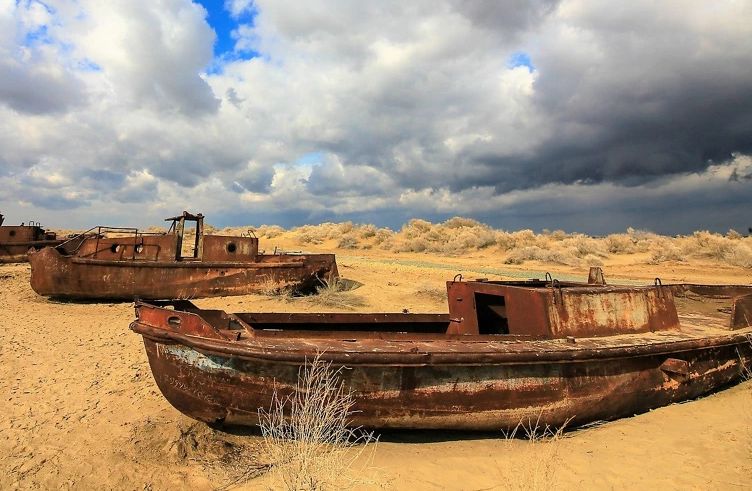
The desiccation of the Aral Sea has led to a sharp change in the region's microclimate, an increase in air temperature, a decrease in precipitation, intensified wind activity, and a greater frequency of dust and sand storms. These processes are causing land degradation, water scarcity, and a decline in biodiversity. Consequently, agricultural productivity is diminishing, the pressure on drinking water supplies is mounting, and a serious threat to public health is emerging.
Climate change adaptation measures in the Aral Sea region primarily encompass a comprehensive set of actions aimed at sustainable water resource management, strengthening hydro-technical infrastructure, establishing protective forest plantations on the dried seabed, reducing land degradation, conserving biodiversity, and enhancing the climate resilience of the population.
In the New Uzbekistan, the issue of adapting to climate change is one of the priority directions of state policy.
Under the leadership of President of Uzbekistan Shavkat Mirziyoyev, numerous initiatives are being advanced at the international level to ensure environmental sustainability, protect natural resources, and adapt to climate change.
Notably, on the initiative of the President of the Republic of Uzbekistan, a special resolution "On declaring the Aral Sea region a zone of environmental innovations and technologies" was adopted at the 75th session of the UN General Assembly on May 18, 2021.
Today, programs aimed at transforming the Aral Sea region into a zone of environmental innovations and technologies, developing green infrastructure, and increasing the population's resilience to climate change are being consistently implemented. This is crucial for combating the negative environmental and public health consequences of the Aral Sea's desiccation, addressing the resulting problems, and improving the living conditions of the local population by ensuring their employment.
In his speech at the 80th session of the UN General Assembly in September 2025, the leader of Uzbekistan will emphasize that the negative consequences of the Aral Sea's desiccation must remain a constant focus of the global community. It will be noted that in recent years, 2 million hectares of salt-tolerant desert plants have been planted on the dried seabed, and by 2030, green cover will be established across 80 percent of this area.
The International Fund for Saving the Aral Sea (IFAS) is a key institutional center that develops practical solutions for climate change adaptation.
The Agency of the International Fund for Saving the Aral Sea (IFAS), operating within the IFAS system, plays a crucial role in implementing climate change adaptation measures in the Aral Sea region.
Specifically, within the framework of the "Creation of Small Water Bodies in the Amu Darya Delta (Phase II) " project, mechanisms for a stable water supply to the lake system have been improved. This is enabling the redistribution of water resources, regulation of the hydrological regime, and strengthening of the region's ecological balance.
In parallel, the reconstruction of the Muynak Canal has significantly increased its water conveyance capacity. Water distribution efficiency has improved, the water supply to the lakes has stabilized, and water losses have been considerably reduced.
Furthermore, as part of the reconstruction of the "Ribache" reservoir dam, hydraulic structures were reinforced, water discharge systems were modernized, and the risk of erosion was significantly diminished. This contributes to strengthening water security and ensuring the effective and rational use of water resources.
In the area of ecological restoration, protective forests are being established in the Akhantay and Akkum areas. Forest reclamation measures carried out on the dried seabed are helping to reduce wind erosion and salt migration processes. Through these efforts, the microclimate in the region is stabilizing, and landscape degradation is being prevented.
At the same time, the social dimension is also vital for ensuring environmental sustainability. To this end, competitions, educational campaigns, and promotional events aimed at raising ecological awareness among youth are regularly organized.
Additionally, modern models for the sustainable use of water and land resources are being introduced for the local population and farms. In this process, special attention is focused on the widespread adoption of water-saving technologies, effective management of land resources, rational land administration, and the implementation of agricultural practices adapted to climate change.
As a result of these measures, it is possible not only to mitigate environmental problems but also to raise the population's standard of living, ensure economic stability, and strengthen the region's resilience to climate change.
A Digital and Scientific Approach: A New Stage in Climate Adaptation
At the current stage, climate change adaptation processes are not limited to traditional methods but are being integrated with modern digital technologies and scientific approaches. Specifically, these include:
- real-time monitoring of hydrological and meteorological data;
- analyzing the condition of territories based on satellite imagery;
- planning and optimal allocation of water resources;
- and collecting and managing data through digital platforms.
These approaches enable the early detection of climate change impacts, the reduction of risks, and the efficient use of resources.
At the same time, international cooperation is crucial for the effective implementation of climate change adaptation measures in the Aral Sea region. In particular, through collaboration with the Swiss Agency for Development and Cooperation (SDC), efforts are underway to enhance the region's climate resilience through sustainable water resource management and the introduction of integrated approaches.
Additionally, in partnership with the Global Water Partnership (GWP), mechanisms for ensuring water security and the rational use of resources are being developed. Meanwhile, projects implemented with the Organization for Security and Co-operation in Europe (OSCE) involve monitoring the ecosystems of the Aral Sea's wetlands to assess the impacts of climate change and develop adaptation measures.
Adapting to climate change in the Aral Sea region is not merely about addressing environmental problems; it is a fundamental condition for achieving sustainable development.
The ongoing systemic reforms show that through a scientific approach, modern technologies, and institutional cooperation, sustainable solutions can be achieved even amid the most complex environmental crises.
The primary task now is to prioritize climate change adaptation in every sector and integrate it into our way of life.
This is because adapting to climate change is not just a present-day task, but a strategic responsibility to future generations.
Birodarjon Burkhonjonov,
Head of the Agency of the International Fund for Saving the Aral Sea.
📅 21.04.2026
Uzbekistan news
CICA Member States Account for More Than 50% of Uzbekistan’s Foreign Trade Turnover
Uzbekistan and the United States: The Economics of Mutual Interest
NEW OPPORTUNITIES IN HIGHER EDUCATION IN THE TURKIC STATES: A COMMON SPACE, SHARED GOALS
Peace and Trust in Asia - essential conditions for sustainable development
CICA amid a Crisis of Trust: Uzbekistan’s Role in Strengthening Cooperation in Asia
Uzbekistan promotes initiatives in Central Asia that unlock new opportunities for cooperation
Strengthening Transport Connectivity in Asia through the Development of the Trans-Caspian International Transport Corridor
Uzbekistan promotes Initiatives in Central Asia unlocking new opportunities for cooperation
Political mutual trust in the Central Asian region is transforming into economic capital
Uzbekistan attracts specialists from 16 countries to the anniversary international exhibition “Mining, Metallurgy and Metalworking – MiningMetals Uzbekistan 2026”
Uzbekistan has moved its economic cooperation with the Turkic states into a practical dimension
Akramjon Nematov: Central Asia is increasingly emerging as an independent centre for shaping its own economic and technological agenda
Central Asia Is Shaping Its Own Model of Regional Cooperation
Initiatives of Uzbekistan aimed at Economic Results for the Countries of Central Asia and Azerbaijan
Regular dialogue is the Foundation for addressing common water-related challenges in Central Asia
Uzbekistan and Turkmenistan: A New Stage in the Development of Their Strategic Partnership
11th Tashkent International Biennale of Contemporary Art to be held in the capital of Uzbekistan on October 12–16th
OTS Member States - A Crucial Link in the Eurasian Space
Uzbekistan plays an active role in Economic Integration within the framework of the Organization of Turkic States
CICA opens new horizons for financial cooperation
Aquatherm Tashkent 2026 to Showcase Latest Technologies for Construction and Utility Infrastructure
Uzbekistan is securing its place in the Global Hub for Technological Outsourcing
Digital Cooperation among the Turkic States Towards a Unified Technological Ecosystem
Uzbekistan and Azerbaijan are creating a Hub for Startups, Investors and Talent
UZBEKISTAN AND THE UN: FROM NATIONAL INITIATIVES TO THE GLOBAL AGENDA
The 5th Samarkand Forum on Human Rights to take place on September 28–29th
Uzbekistan's key trading partners participate in CICA
Speech by President Shavkat Mirziyoyev at the solemn ceremony dedicated to the thirty-fifth anniversary of the independence of the Republic of Uzbekistan
Uzbekistan Firmly Establishes Itself as a Stable and Predictable Partner for Long-Term International Business
Changing economic priorities of Uzbekistan reshape its engagement with the CIS

-
 Ministry of Foreign Affairs of the Republic of Uzbekistan
 -
 Diplomatic Service of the Ministry of Foreign Affairs
 -
 State Committee for Tourism Development
 -
Ministry of Investments and Foreign Trade of the Republic of Uzbekistan
-
 invest.gov.uz
 -

-

-

-

-

-

-


of Uzbekistan in the Republic
of Latvia
When using the information, a link to www.uzembassy.lv
must be provided.
All rights reserved
Address
Address: Riga c., LV-1010. 11-11 Elizabetes Str., Latvia
Phone: 37167322424
Fax: 37167322306
Email: embassy@uzbekistan.lv
Useful links
HomeIssuance of biometric passport for departure abroad
Certificate to return to Uzbekistan
Withdrawal of citizenship
Loss of citizenship