Phone
Consular Issues
Phone
Uzbekistan news
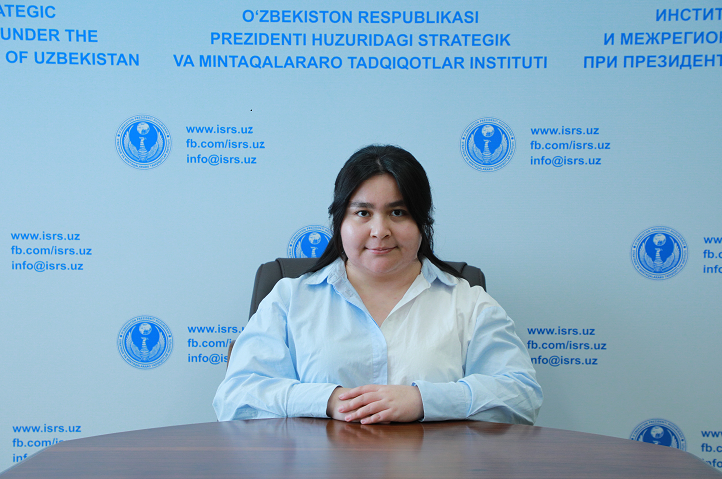
Uzbekistan–Czech Republic: A Strategic Partnership at a New Stage of Development
Uzbekistan and the Czech Republic are entering a new phase in their relationship, building on the strong foundation laid over more than three decades. During this period, Uzbek-Czech ties have evolved from largely ceremonial contacts into a system of substantive engagement spanning political dialogue, trade, investment, and cultural and humanitarian exchange. Today, as Uzbekistan deepens its connections across Europe, the Czech Republic stands out as one of its most prominent partners in Central Europe.
The framework of the current relationship took shape from the first years of independence. The two countries established diplomatic relations on January 1, 1993, and the Czech Republic moved quickly to open a trade mission in Tashkent – one of the first to do so – which it converted into a full embassy in November 1994. Over the following decades, both sides steadily built out the treaty and legal framework, developed inter-parliamentary ties, and established intergovernmental communication channels, creating the infrastructure for genuine cooperation.
The year 2023 marked a qualitative turning point. Reciprocal visits at the prime ministerial level – Czech Prime Minister Petr Fiala’s visit to Tashkent in April and Uzbek Prime Minister Abdulla Aripov’s visit to Prague in October – infused the relationship with new content and momentum. The talks produced the Interstate Joint Declaration “On Enhanced Cooperation”, which set the direction for the partnership in the years ahead.
The pace of engagement has not slowed since. Czech Foreign Minister Jan Lipavský visited Tashkent in October 2024, and in September 2025 President Shavkat Mirziyoyev and President Petr Pavel met on the sidelines of the 80th UN General Assembly. Both sides have concentrated on expanding ties in investment, transport, innovation, and agriculture – a focus that reflects the practical, results-oriented character of the bilateral dialogue.
An important institutional development came in February 2025, when both chambers of the Oliy Majlis established Uzbek-Czech inter-parliamentary groups. These structures sustain continuous dialogue at the parliamentary level and create conditions for strengthening the legislative relationship and broadening the treaty and legal framework.
This political activity has created fertile ground for trade and economic engagement, which is showing positive momentum. Bilateral trade reached $189.7million in 2025. Although this represents a slight decline from 2024, the figure is three times higher than the 2018 level, reflecting the broader long-term upward trend. The Joint Intergovernmental Commission on Economic, Industrial and Scientific-Technical Cooperation serves as the structural instrument for sustaining this trajectory; its tenth session took place in Prague in March 2025. Through this mechanism, both sides are steadily expanding their business presence.
More than 40 companies with Czech capital now operate in Uzbekistan, and that number continues to grow. A vivid example of Czech business interest is Škoda Group’s intention to launch a joint venture in Uzbekistan for the local assembly and maintenance of railway rolling stock, as well as to establish a Škoda Academy for the training of industry specialists.
Beyond manufacturing and trade, Czech business is also making inroads in healthcare. Contacts with Czech pharmaceutical companies are becoming more regular, and Czech medicines and modern medical equipment have gained a solid presence on the Uzbek market.
Czech business interest is underpinned by active government support: the Czech Republic is actively backing Uzbekistan’s accession to the WTO, which is expected this year. Membership in the organization will open new opportunities for foreign investors and create additional conditions for expanding trade.
The humanitarian dimension of the partnership has taken the longest to develop and is, for that reason, the most durable. As far back as 2003, Termez State University and Charles University launched a joint archaeological expedition in the Surkhandarya region. Over twenty years of fieldwork, the project has uncovered previously unknown monuments from the Bronze and Iron Ages. The exceptional finds gathered over the years of research formed the basis of the exhibition “From Zarathustra to Genghis Khan”, which opened in Tashkent in April 2023 on the occasion of Prime Minister Fiala's visit.
The cultural agenda continues to grow. Czech musical ensembles regularly participate in the Sharq Taronalari festival in Samarkand, while the Czech-Uzbek Friendship Society in Prague has for many years served as a living platform for people-to-people diplomacy.
Academic and scientific cooperation is also advancing. The National University of Uzbekistan named after Mirzo Ulugbek, the Tashkent Medical Academy, and a number of other universities are running joint programmes with Charles University, Comenius University, the Czech University of Life Sciences Prague, and Mendel University.
Student interest in Czech education continues to grow steadily: over the past five years, the number of students from Uzbekistan studying in the Czech Republic has doubled, approaching 700. The annual Czech government scholarship programme, which gives Uzbek citizens access to undergraduate, master’s and doctoral study, has contributed significantly to this growth.
Labour mobility between the two countries is also developing. Around 3,000 Uzbek citizens currently work in the Czech Republic in industry, construction, trade, and services, and an annual quota of 150 labour visas reflects both sides’ structured approach to organising labour mobility.
All of this sustains a steady flow of mutual travel, supported by a direct weekly air service between Tashkent and Karlovy Vary that makes the Czech Republic a readily accessible destination.
The breadth and depth of this engagement naturally raises the question of priorities for the bilateral dialogue going forward.
First, opening an Embassy of the Republic of Uzbekistan in Prague would improve the speed of contacts, expand Uzbekistan’s diplomatic presence, and allow more effective support for joint projects.
Second, despite the temporary decline in trade volumes in 2025, the potential for recovery is considerable. The Czech Republic’s high standing in the Prosperity Index, 8th in the EU in 2026, confirms its status as a key technology and investment partner for Uzbekistan.
Third, particular promise lies in mechanical engineering, machine-tool manufacturing, and industrial automation. According to Harvard University’s Economic Complexity Index, the Czech Republic has held 7th place globally for a decade in its capacity to produce and export technologically sophisticated goods – precisely the kind of partnership Uzbekistan needs for its industrial modernisation agenda.
Overall, the Czech Republic is consolidating its role as one of the strategic anchors in Uzbekistan’s European partnership network. The convergence of Czech industrial capacity and Uzbekistan’s dynamic, fast-growing economy lays the foundation not merely for an exchange of goods, but for deep technological integration and large-scale industrial projects designed to last for decades.
Kayumova Madinabonu,
Leading Researcher of the Institute for Strategic and Regional Studies under the President of the Republic of Uzbekistan
📅 27.04.2026
Uzbekistan news
Uzbekistan sees the Organisation of Turkic States as a Platform for new economic opportunities
Economic cooperation – a key direction for the development of Organization of Turkic States
Tashkent to host 22nd International Exhibition “Transport and Logistics - TransLogistica Uzbekistan” on November 10–12th, 2026
CICA Member States Account for More Than 50% of Uzbekistan’s Foreign Trade Turnover
Uzbekistan and the United States: The Economics of Mutual Interest
NEW OPPORTUNITIES IN HIGHER EDUCATION IN THE TURKIC STATES: A COMMON SPACE, SHARED GOALS
Peace and Trust in Asia - essential conditions for sustainable development
CICA amid a Crisis of Trust: Uzbekistan’s Role in Strengthening Cooperation in Asia
Uzbekistan promotes initiatives in Central Asia that unlock new opportunities for cooperation
Strengthening Transport Connectivity in Asia through the Development of the Trans-Caspian International Transport Corridor
Uzbekistan promotes Initiatives in Central Asia unlocking new opportunities for cooperation
Political mutual trust in the Central Asian region is transforming into economic capital
Uzbekistan attracts specialists from 16 countries to the anniversary international exhibition “Mining, Metallurgy and Metalworking – MiningMetals Uzbekistan 2026”
Uzbekistan has moved its economic cooperation with the Turkic states into a practical dimension
Akramjon Nematov: Central Asia is increasingly emerging as an independent centre for shaping its own economic and technological agenda
Central Asia Is Shaping Its Own Model of Regional Cooperation
Initiatives of Uzbekistan aimed at Economic Results for the Countries of Central Asia and Azerbaijan
Regular dialogue is the Foundation for addressing common water-related challenges in Central Asia
Uzbekistan and Turkmenistan: A New Stage in the Development of Their Strategic Partnership
11th Tashkent International Biennale of Contemporary Art to be held in the capital of Uzbekistan on October 12–16th
OTS Member States - A Crucial Link in the Eurasian Space
Uzbekistan plays an active role in Economic Integration within the framework of the Organization of Turkic States
CICA opens new horizons for financial cooperation
Aquatherm Tashkent 2026 to Showcase Latest Technologies for Construction and Utility Infrastructure
Uzbekistan is securing its place in the Global Hub for Technological Outsourcing
Digital Cooperation among the Turkic States Towards a Unified Technological Ecosystem
Uzbekistan and Azerbaijan are creating a Hub for Startups, Investors and Talent
UZBEKISTAN AND THE UN: FROM NATIONAL INITIATIVES TO THE GLOBAL AGENDA
The 5th Samarkand Forum on Human Rights to take place on September 28–29th
Uzbekistan's key trading partners participate in CICA

-
 Ministry of Foreign Affairs of the Republic of Uzbekistan
 -
 Diplomatic Service of the Ministry of Foreign Affairs
 -
 State Committee for Tourism Development
 -
Ministry of Investments and Foreign Trade of the Republic of Uzbekistan
-
 invest.gov.uz
 -
-

-

-

-

-

-

of Uzbekistan in the Republic
of Latvia
When using the information, a link to www.uzembassy.lv
must be provided.
All rights reserved
Address
Address: Riga c., LV-1010. 11-11 Elizabetes Str., Latvia
Phone: 37167322424
Fax: 37167322306
Email: embassy@uzbekistan.lv
Useful links
HomeIssuance of biometric passport for departure abroad
Certificate to return to Uzbekistan
Withdrawal of citizenship
Loss of citizenship