Phone
Consular Issues
Phone
Uzbekistan news
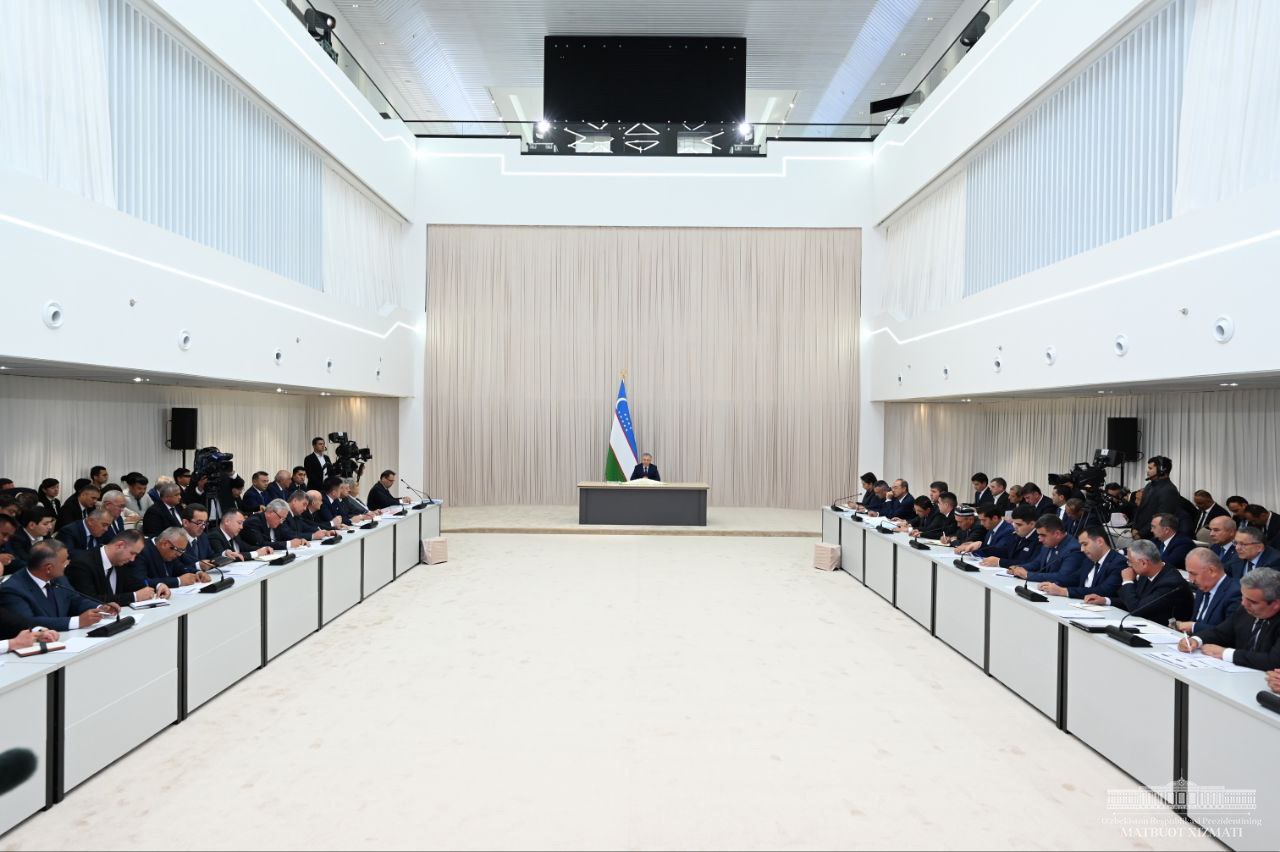
Dialogue on the development of engineering science and education was held
On June 20, President Shavkat Mirziyoyev chaired a video conference call on training engineering personnel and improving the performance of higher educational institutions.
In today's competitive world, our country, relying on domestic resources, is moving towards industrial development. Every year 3 thousand industrial enterprises are put into operation, about 150 thousand jobs are created.
This year, projects worth 21 trillion soums will be implemented within the framework of state investment programs. Also, projects with foreign and regional investments worth 37.5 billion dollars are planned for this year.
Accordingly, the state pays great attention to science, education and innovation. For example, over the past four years, 2.2 trillion soums have been allocated to 1,727 practical, innovative, fundamental and startup projects. Spending on research and development has doubled.
However, the results in this area and the number of highly qualified engineers are still insufficient. There is a gap between higher education institutions and industry.
That is why rectors of technical universities were also invited to the meeting.
The head of state first of all dwelt on the problems in this sphere.
The 36 state technical higher educational institutions annually graduate 67 thousand specialists. However, the programs and specialties in these universities do not meet the requirements of manufacturers. As a result, 60 percent of engineers do not work in their specialty.
Higher educational institutions are limited to fundamental research, and practical developments for the economy are very rare. Hundreds of startups and innovative projects in engineering fields remain on paper.
In foreign universities there are such specialties as "value engineering", "comparative engineering", "reverse engineering". In our technical universities, these areas are not developed. As a result, industries have to spend a lot of money on training their employees abroad or attract specialists from abroad.
Although the coverage of higher education has increased 5 times in the last seven years, the interest of young people in engineering and technical specialties is very low. Some equipment of universities and scientific laboratories is outdated. Many professors and teachers are disconnected from practice. Rectors do not visit enterprises, do not familiarize themselves with new technologies, do not study equipment and machines.
Over the last four years, the number of research contracts of universities has tripled. Revenues from them have increased 6 times. However, the implementation of the results of scientific developments into production is slow. Not everyone is equally successful in patenting their inventions.
The President presented new initiatives to develop this area.
Now training and research processes in technical areas will be completely changed based on the best practices. 36 universities and their branches will be gradually consolidated, leaving a total of 20 technical universities. They will completely switch to the dual system of education.
Specialties that are not in demand in the labor market will be reduced. Some departments will be merged. The functions of dean offices to serve students will be digitalized. Based on foreign experience, a "Registrar's Office" will be created.
Each university will establish cooperation with prestigious technical universities of developed partner countries such as Germany, Japan, China, Russia, Italy, Turkey, South Korea, Singapore.
Based on the chain "industry-enterprise-university", each university will be assigned an industrial partner.
All engineering universities will open departments at their partner enterprises and introduce dual education. At the same time, the enterprises will allocate funds to equip the departments, stimulate teachers and students. Student internships and graduate training will be fully organized at partner enterprises.
Thirty-two sectoral councils will be established in the system of ministries and enterprises. They will determine priority directions of scientific research in technical fields together with institutes and will be customers of these researches.
Also at the first stage, higher engineering schools will be opened in 10 universities. Two-year applied master's degree programs will be implemented in them, and candidates will be selected by order of manufacturers. Enterprises will financially support the establishment and equipping of laboratories in higher engineering schools. The state will also provide highly qualified engineers-technologists. If every minister, industry leader, rector, professor and teacher feels deep sense of responsibility and works hard, we will definitely achieve this," Shavkat Mirziyoyev said.
The status of pilot production enterprises of universities will be legislated. They will be granted privileges applicable to IT park residents. At least 60 percent of the employees of the subsidiaries will be doctoral candidates and students.
From next year, state grants for projects in technical areas will be increased fourfold. Partner organizations of universities will also be allowed to act as founders of enterprises.
Hokims of regions and heads of industries will be able to directly provide universities with orders for scientific and production projects up to 10 billion soums.
A system of allocating at least half a percent of the cost of investment projects for scientific activities will be introduced.
It has been determined to organize national contests "Best Idea", "Best Project" and "Best Invention" in engineering fields. Teachers, students and practicing engineers will be able to participate in them. The prize for the first place is an electric car.
Also 10 best participants, authors of ideas, projects and inventions will be sent for internship to such countries as Germany, Japan, China, Russia, Italy, Turkey, South Korea, Singapore.
The meeting continued in the format of an open dialog. Industry leaders, scientists, rectors and engineers expressed their opinions on the development of science and education in engineering.
It was assigned to draft a relevant decree based on the proposals.
- We need highly qualified engineers-technologists like air for the accelerated development of the economy. If every minister, industry leader, rector, professor and teacher feels deep sense of responsibility and works hard, we will definitely achieve this," Shavkat Mirziyoyev said.
📅 20.06.2024
Uzbekistan news
CICA Member States Account for More Than 50% of Uzbekistan’s Foreign Trade Turnover
Uzbekistan and the United States: The Economics of Mutual Interest
NEW OPPORTUNITIES IN HIGHER EDUCATION IN THE TURKIC STATES: A COMMON SPACE, SHARED GOALS
Peace and Trust in Asia - essential conditions for sustainable development
CICA amid a Crisis of Trust: Uzbekistan’s Role in Strengthening Cooperation in Asia
Uzbekistan promotes initiatives in Central Asia that unlock new opportunities for cooperation
Strengthening Transport Connectivity in Asia through the Development of the Trans-Caspian International Transport Corridor
Uzbekistan promotes Initiatives in Central Asia unlocking new opportunities for cooperation
Political mutual trust in the Central Asian region is transforming into economic capital
Uzbekistan attracts specialists from 16 countries to the anniversary international exhibition “Mining, Metallurgy and Metalworking – MiningMetals Uzbekistan 2026”
Uzbekistan has moved its economic cooperation with the Turkic states into a practical dimension
Akramjon Nematov: Central Asia is increasingly emerging as an independent centre for shaping its own economic and technological agenda
Central Asia Is Shaping Its Own Model of Regional Cooperation
Initiatives of Uzbekistan aimed at Economic Results for the Countries of Central Asia and Azerbaijan
Regular dialogue is the Foundation for addressing common water-related challenges in Central Asia
Uzbekistan and Turkmenistan: A New Stage in the Development of Their Strategic Partnership
11th Tashkent International Biennale of Contemporary Art to be held in the capital of Uzbekistan on October 12–16th
OTS Member States - A Crucial Link in the Eurasian Space
Uzbekistan plays an active role in Economic Integration within the framework of the Organization of Turkic States
CICA opens new horizons for financial cooperation
Aquatherm Tashkent 2026 to Showcase Latest Technologies for Construction and Utility Infrastructure
Uzbekistan is securing its place in the Global Hub for Technological Outsourcing
Digital Cooperation among the Turkic States Towards a Unified Technological Ecosystem
Uzbekistan and Azerbaijan are creating a Hub for Startups, Investors and Talent
UZBEKISTAN AND THE UN: FROM NATIONAL INITIATIVES TO THE GLOBAL AGENDA
The 5th Samarkand Forum on Human Rights to take place on September 28–29th
Uzbekistan's key trading partners participate in CICA
Speech by President Shavkat Mirziyoyev at the solemn ceremony dedicated to the thirty-fifth anniversary of the independence of the Republic of Uzbekistan
Uzbekistan Firmly Establishes Itself as a Stable and Predictable Partner for Long-Term International Business
Changing economic priorities of Uzbekistan reshape its engagement with the CIS

-
 Ministry of Foreign Affairs of the Republic of Uzbekistan
 -
 Diplomatic Service of the Ministry of Foreign Affairs
 -
 State Committee for Tourism Development
 -
Ministry of Investments and Foreign Trade of the Republic of Uzbekistan
-
 invest.gov.uz
 -

-

-

-

-

-

-


of Uzbekistan in the Republic
of Latvia
When using the information, a link to www.uzembassy.lv
must be provided.
All rights reserved
Address
Address: Riga c., LV-1010. 11-11 Elizabetes Str., Latvia
Phone: 37167322424
Fax: 37167322306
Email: embassy@uzbekistan.lv
Useful links
HomeIssuance of biometric passport for departure abroad
Certificate to return to Uzbekistan
Withdrawal of citizenship
Loss of citizenship