Phone
Consular Issues
Phone
Uzbekistan news
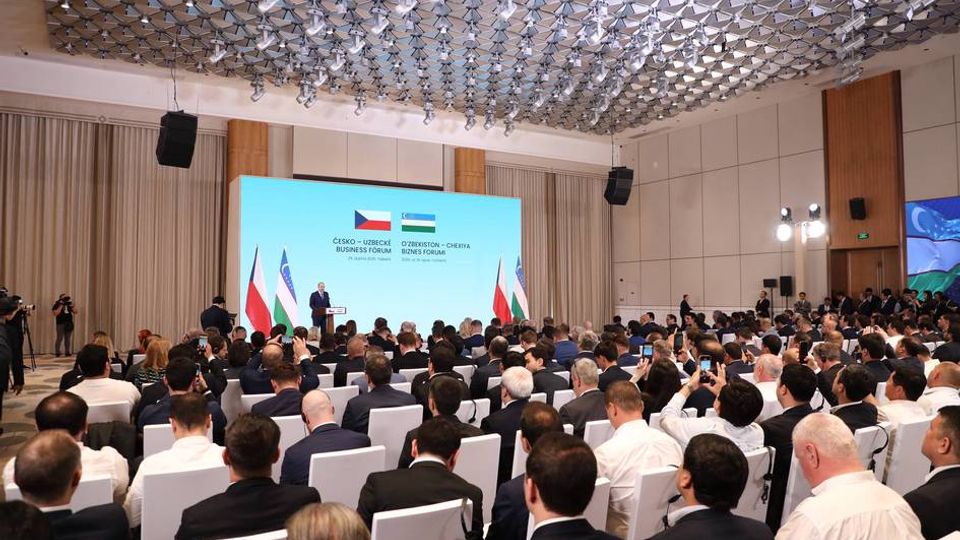
In 2026, the first forum of rectors of Uzbekistan and the Czech Republic will be held
In recent years, cooperation between Uzbekistan and the Czech Republic in the fields of higher education, science, and innovation has been enriched with new content and has been steadily developing. Previously formed mainly within the framework of individual projects, grant programs, and short-term initiatives, this relationship has now reached a new stage — a well-thought-out, systematic, and long-term strategic partnership.
Today, this cooperation is being shaped based on clear goals and priority areas. Links between universities are strengthening, transforming not only into platforms for knowledge exchange but also into a shared intellectual space where scientific ideas, innovative solutions, and future technologies are created. In this process, the educational systems of both countries complement each other, reaching a new level of quality through the synergy of experience and opportunities. For Uzbekistan, this creates opportunities to engage more closely with European educational traditions and scientific schools, while for the Czech Republic, cooperation with the dynamically developing educational and innovation environment of Central Asia opens new horizons.
During the period from 2020 to 2026, educational ties between Uzbekistan and the Czech Republic have undergone significant transformation both in content and scale. Academic bridges connecting the two countries have strengthened, enabling the free movement of knowledge, experience, and scientific perspectives. One of the most notable indicators of this cooperation has been the steady increase in the number of Uzbek students studying in Czech higher education institutions.
If in 2020 this number was around 350, by 2024 it had exceeded 600, and today it is approaching 650–700, maintaining a steady growth trend. Behind these figures lie the aspirations of hundreds of young people striving for knowledge and seeking to find their place in the international arena.
This process also reflects the growing trust in the Czech education system. For students from Uzbekistan, the Czech Republic is becoming not only a source of quality education but also an important academic environment that fosters innovative thinking, independent research, and the development of modern professional skills.
Particular importance within this cooperation is given to strategic fields such as engineering, information technology, economics, and agriculture. Specialists trained in these areas will play a key role in further strengthening scientific and economic ties between the two countries and in implementing innovative ideas in practice.
In recent years, the foundation of cooperation between higher education institutions has become more stable and reliable. Partnerships between leading universities of Uzbekistan and reputable Czech universities are adding depth and quality to this process.
As a result, student and faculty exchanges have reached a new level, creating broad opportunities for the free exchange of scientific and educational ideas. Joint research, double degree programs, and scientific projects contribute to knowledge exchange and the development of new academic schools.
Currently, joint educational programs between higher education institutions of Uzbekistan and the Czech Republic represent one of the most effective and modern forms of cooperation. Models such as 2+2, 3+1, 1+1, and 1.5+0.5 allow students to experience the academic environments of both countries, adopt different educational traditions, and gain international experience.
These programs not only provide knowledge but also broaden perspectives, develop independent thinking, and prepare specialists who meet the demands of the global labor market. The opportunity to obtain a double degree opens new horizons for young people and enhances their international competitiveness.
Most importantly, this process deepens integration in the field of education and contributes to improving the national system of training specialists based on international standards. It is expected that students participating in these programs will become highly qualified professionals and serve as intellectual bridges connecting different cultures and academic traditions.
Today, cooperation between Uzbekistan and the Czech Republic goes beyond education alone — it is also expanding in the fields of science and innovation. The growing collaboration between researchers and scientists of the two countries is broadening the geography of research and integrating it into global scientific processes.
Joint projects implemented within international programs such as Erasmus+ and Horizon Europe play a key role in this process. These platforms facilitate the exchange of scientific ideas, the development of innovative solutions, and the implementation of modern technologies.
Special attention is given to priority areas aligned with contemporary global challenges. Research in “green” technologies and sustainable development contributes to environmental protection and the rational use of natural resources. Joint studies on water resources and ecology are aimed at finding scientifically grounded solutions to regional environmental issues.
At the same time, cooperation in digital technologies and artificial intelligence is becoming one of the main drivers of the modern economy, creating opportunities for the development of innovative products and services. Research in agricultural innovation plays an important role in increasing efficiency in agriculture, ensuring food security, and introducing advanced technologies.
Importantly, this cooperation is not limited to theoretical research but is focused on practical outcomes. Scientific achievements are being integrated into the real economy and aligned with societal needs, contributing to innovative development.
In the near future, several important initiatives are planned to further deepen cooperation between Uzbekistan and the Czech Republic. In particular, the first Uzbekistan–Czech Rectors’ Forum, scheduled to be held in the Czech Republic in 2026, will serve as an important platform for systematizing university cooperation, defining priorities, and launching new joint projects.
In addition, plans include expanding academic mobility, increasing exchanges of students and faculty, and developing programs such as Double Degree and PhD cotutelle, which will further integrate the educational systems and strengthen scientific collaboration.
Furthermore, special attention is being paid to supporting joint startups and innovative projects, as well as fostering cooperation between technoparks and university incubators. This will strengthen the link between science and business and accelerate the implementation of scientific ideas in practice.
Overall, cooperation between Uzbekistan and the Czech Republic in higher education has reached a qualitatively new level in recent years. It encompasses not only student exchanges and joint programs but also scientific, innovative, and institutional integration. In the future, this partnership will serve as an important factor in training highly qualified specialists, enhancing scientific potential, and strengthening both countries’ positions in the global educational landscape.
Farhod AHROROV, Head of Department,
Ministry of Higher Education, Science and Innovation
📅 02.05.2026
Uzbekistan news
Uzbekistan and Korea: Advancing Green Energy and New Technologies
Uzbekistan and the Republic of Korea in the Emerging Framework for Cooperation with Central Asia
Tashkent brings together leaders and key deals in Polymer Market of Central Asia
The 1st Republic of Korea–Central Asia Summit: Why This Moment Matters
Uzbekistan – Serbia: A New Geography of Industrial Cooperation
The President of Uzbekistan’s Visit to Serbia: A New Stage in Economic Partnership Between Central Asia and the Balkans
Uzbekistan and the Republic of Korea: From Investment Partnership to Technological Cooperation
Regional Approaches to SDG Delivery: What Can Central Asia Offer?
Uzbekistan Opens a Balkan Gateway to Europe
The SCO Bishkek Summit: The Economic Agenda of a New Stage of Cooperation
Tourism: A new dimension of Uzbekistan-Kyrgyzstan partnership
Uzbekistan’s Role in the SCO: Economy, Security and Regional Cooperation
Economic Cooperation of Uzbekistan within the SCO at a New Stage of Development
Uzbekistan and Serbia: From Labour Mobility to a Strategic Partnership in Human Capital
Prospects for Uzbekistan–Serbia Cooperation in the ICT Sector
Prospects for Cooperation between the Republic of Uzbekistan and the Republic of Korea within the Framework of the Central Asia–Republic of Korea Cooperation Forum
THE SCO’S NEW FINANCIAL ARCHITECTURE: FROM COORDINATION TO PRACTICAL DEVELOPMENT MECHANISMS
INFORMATION NOTE ON COOPERATION WITH SERBIA
On September 8–10th, Tashkent to gather International Textile Industry Professionals
The Seoul Summit: Uzbekistan in the New Industrial Architecture of C5+1
New Opportunities to Expand Cooperation Between Uzbekistan and Serbia
Uzbekistan and Azerbaijan: Turning Political Alignment into Economic Growth
BRIGHT PROSPECTS FOR MUTUALLY BENEFICIAL PARTNERSHIP
Transport and Logistics Connectivity of the SCO Amid Geopolitical Turbulence: New Opportunities for the Regions
Business in Uzbekistan are moving from digitalization to technological modernization
Uzbekistan and Serbia expand prospects for cooperation in ecology and environmental protection
SCO AND WATER DIPLOMACY: IN PURSUIT OF COMMON INTERESTS
TASHKENT-DELHI: A NEW STAGE OF STRATEGIC PARTNERSHIP
On September 4–6th, Samarkand will host XII Inter-Parliamentary Union Global Conference of Young Parliamentarians
The Infrastructure Already Linking Uzbekistan and Korea What Korea Has Already Built Inside Uzbekistan's Digital Economy From Fiber Optics to AI: The Scope of Uzbek-Korean Digital Cooperation The Digital Bridge Already Built Between Uzbekistan and South Korea

-
 Ministry of Foreign Affairs of the Republic of Uzbekistan
 -
 Diplomatic Service of the Ministry of Foreign Affairs
 -
 State Committee for Tourism Development
 -
Ministry of Investments and Foreign Trade of the Republic of Uzbekistan
-
 invest.gov.uz
 -
-

-

-

-

-

-

of Uzbekistan in the Republic
of Latvia
When using the information, a link to www.uzembassy.lv
must be provided.
All rights reserved
Address
Address: Riga c., LV-1010. 11-11 Elizabetes Str., Latvia
Phone: 37167322424
Fax: 37167322306
Email: embassy@uzbekistan.lv
Useful links
HomeIssuance of biometric passport for departure abroad
Certificate to return to Uzbekistan
Withdrawal of citizenship
Loss of citizenship