Phone
Consular Issues
Phone
Uzbekistan news
Partnership in the transport and transit sector has become a cornerstone of cooperation between Turkic countries
In the context of rapidly changing global economies, transport and logistics are becoming more than just infrastructure elements, but crucial instruments of economic and geopolitical influence. Against this backdrop, the Organization of Turkic States (OTS) is gradually emerging as one of the most promising platforms for regional cooperation in Eurasia. The development of transport and transit links, which are now becoming the foundation for the economic integration of the Turkic countries, holds a special place in the Organization's activities.
In this regard, the informal summit of the OTS, which will take place on May 14-15 this year in Turkestan (Republic of Kazakhstan), will be positive step in further strengthening the position of the Organization, deepening cooperation and uniting the efforts of all Turkic states.
Transport as the basis of a new Eurasian architecture
Today, the member states of the OTS interact in more than 40 areas – from economics and energy to digital technologies and artificial intelligence. However, transport sphere is gradually becoming the main driver of integration.
This is due to the unique geographical location of the Turkic countries. The region is located at the intersection of major international routes connecting Europe, Central Asia, China, the Middle East, and South Asia. A new Eurasian logistics system is effectively emerging, in which the OTS’s member states play a key link between East and West.
Amid the transformation of global supply chains and growing competition between international transport routes, the states of the region are striving not only to strengthen their own infrastructure but also to create a unified transit and logistics space.
Formation of a common transport policy
In recent years, a solid legal framework has been created within the OTS, which enshrines the strategic importance of this area in documents such as «Turkic Vision 2040» and «OTS Strategy for 2022–2026».
The 2022 Samarkand Summit was of particular significance, as it saw the signing of «Agreement on International Combined Freight Transport among the Governments of the Member States of the OTS» and «the Transport Connectivity Program». These documents ushered in a new era of cooperation among Turkic countries in the near future and established specific mechanisms for its implementation.
An important step was the introduction of the e-CMR system in 2026, which allows for the electronic transfer of transport documentation. This significantly simplifies transportation, reduces bureaucratic procedures, and expedites the passage of goods across state borders. At the same time, cooperation is developing in the digitalization of customs processes, the implementation of electronic permits, and the unification of transit procedures.
Institutional strengthening of cooperation
In recent years, the OTS has been consistently developing an institutional framework for transport integration, moving cooperation from a political and declarative level to a practical level. Regular meetings of the competent authorities of the Organization’s member states play a key role in this process.
Thus, at the meeting of OTS Transport ministers in April 2026 in Bishkek, the focus was on the development of transport corridors and the removal of border crossing barriers. Essentially, this is about creating a more coordinated regional transport system capable of increasing the competitiveness of OTS routes amid growing freight flows between Asia and Europe.
Meetings of heads of railway administration, held since 2022, serve a similar function. At the October 2025 meeting in Bishkek, issues of digitalization of transportation management and improving the efficiency of rail service were discussed. This demonstrates the desire of the OTS countries to unify transport procedures and reduce logistics costs within the region.
An additional step toward institutionalization was the creation of the Alliance of Logistics Centers and Cargo Carriers within the OTS in Tashkent in 2024. The establishment of this structure demonstrates a shift toward deeper business involvement in transport integration processes.
Transport corridors as a strategic basis for the integration of OTS countries
One of the key areas of the OTS's transport strategy is the creation of a unified space of transport connectivity, centered on the development of international corridors linking East and West, as well as North and South Eurasia.
The «Middle Corridor», connecting China and Europe via Central Asia and the South Caucasus, is particularly important in this system. Against the backdrop of the transformation of global logistics, geopolitical instability, and the desire of states to diversify trade routes, this corridor is becoming one of the most promising transport arteries in Eurasia.
While the volume of traffic along this route remained relatively limited in 2020, by 2025 it exceeded 5 million tons, an increase of almost sixfold. This demonstrates the gradual transformation of the «Middle Corridor» from an alternative route into an important element of the global transport system.
Moreover, the corridor's significance extends far beyond its purely transit function. For the OTS’s member states, its development means strengthening trade and economic ties, expanding access to external markets, attracting investment, and increasing the resilience of national economies to external challenges. In the long term, the «Middle Corridor» is seen as the foundation for the development of a new model of Eurasian connectivity.
A key element of this strategy is the implementation of the «China-Kyrgyzstan-Uzbekistan» railway project, which is already considered one of the most significant infrastructure projects in Central Asia. Construction of the highway, which includes 50 bridges and 29 tunnels with a total length of approximately 120 kilometers, is estimated to cost approximately $4.7 billion.
The project will significantly reduce freight delivery times between China and Europe, strengthen Central Asia’s transit potential, and enhance the integration of the OTS’s transport system. Essentially, this creates a new strategic route capable of transforming the region's logistics configuration.
Equally important is the development of the «Trans-Afghan Corridor», which opens OTS countries to the markets of South Asia, with a population of approximately 1,9 billion and a combined GDP of approximately $3,5 trillion. For Central Asian states, this creates opportunities to diversify foreign trade, expand export routes, and reduce transportation costs. At the same time, the Trans-Afghan route has the potential to become a factor in the economic stabilization of the region by boosting trade, investment, and industrial cooperation.
Uzbekistan as a Driver of Transport Integration in the OTS
Since the Republic of Uzbekistan joined the Organization of Turkic States in 2019, transport and logistics cooperation has become a key focus of the country's foreign economic strategy within the Organization. Against the backdrop of the transformation of global supply chains, the growing importance of alternative Eurasian routes, and increased competition among international transport corridors, Tashkent has consistently promoted initiatives aimed at creating a unified transport and transit space for the OTS.
The initiatives of the President of the Republic of Uzbekistan, Shavkat Mirziyoyev, play a key role in advancing this agenda. He views transport connectivity as a key factor in regional integration and economic development. At the OTS summit in Turkey in 2021, the head of state emphasized the need for systemic cooperation in transport and transit, effectively marking a shift to a more comprehensive approach within the Organization. This agenda received significant impetus at the 2022 Samarkand Summit, where Uzbekistan advocated for the development of multimodal routes and the implementation of the e-TIR, e-Permit, and e-CMR electronic systems.
Uzbek logistics centers Universal Logistics Services (Tashkent), Akhtachy (Andijan), and Termez Cargo Center (Surkhandarya) joined the «Sister Ports» initiative, marking a practical step toward integrating Uzbekistan’s transport infrastructure into the regional logistics network.
At the summit in Astana in 2023, Uzbekistan again emphasized the diversification of transport routes and the development of the «Middle Corridor», which, in the current geo-economic environment, is acquiring strategic significance as an perspective route between Asia and Europe. At the same time, Tashkent promoted for the expansion of transport routes connecting OTS countries with the markets of China, South Asia, and Europe.
A logical continuation of this line of action was the initiatives announced at the OTS summit in Bishkek in November 2024. The focus was on optimizing transit tariffs, simplifying border procedures, creating joint logistics mechanisms, and transitioning to electronic document management.
In May 2025, at the informal OTS summit in Hungary, Uzbekistan supported for the accelerated implementation of «single-window» systems and «green corridors» along the Trans-Caspian route. At the summit in Gabala in November 2025, special attention was paid to enhancing the competitiveness of the «Middle Corridor», modernizing infrastructure, and other areas. Particular importance was placed on linking this route with the «China-Kyrgyzstan-Uzbekistan» railway project and the «Trans-Afghan Corridor», which effectively creates a new system of transport connectivity across a vast region.
The International Forum on Multimodal Transportation held in Tashkent on November 12, 2025, was a practical confirmation of Uzbekistan's growing role in the OTS’s transport agenda.
Overall, the Turkic countries are already demonstrating a willingness to move beyond the idea of partnership to the creation of a unified interconnected space. Joint infrastructure projects, the development of interregional corridors, the digitalization of logistics, and Uzbekistan’s active role in promoting these processes form the foundation of a new transport architecture within the OTS.
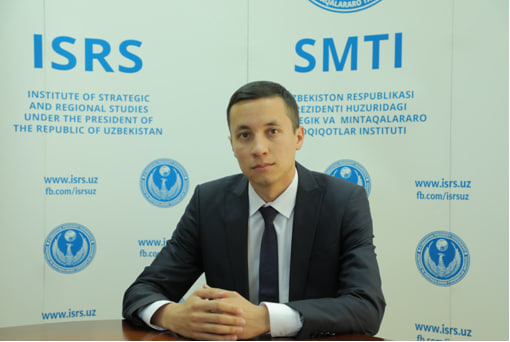
Sarvar Kamolov,
the Chief Research Fellow of
the Institute for Strategic and Regional Studies
under the President of the Republic of Uzbekistan
📅 10.05.2026
Uzbekistan news
Uzbekistan Firmly Establishes Itself as a Stable and Predictable Partner for Long-Term International Business
Changing economic priorities of Uzbekistan reshape its engagement with the CIS
Inaugural Central Asia – Republic of Korea Summit at the highest level opens in Seoul
Uzbekistan and Korea: Advancing Green Energy and New Technologies
Uzbekistan and the Republic of Korea in the Emerging Framework for Cooperation with Central Asia
Tashkent brings together leaders and key deals in Polymer Market of Central Asia
The 1st Republic of Korea–Central Asia Summit: Why This Moment Matters
Uzbekistan – Serbia: A New Geography of Industrial Cooperation
The President of Uzbekistan’s Visit to Serbia: A New Stage in Economic Partnership Between Central Asia and the Balkans
Uzbekistan and the Republic of Korea: From Investment Partnership to Technological Cooperation
Regional Approaches to SDG Delivery: What Can Central Asia Offer?
Uzbekistan Opens a Balkan Gateway to Europe
The SCO Bishkek Summit: The Economic Agenda of a New Stage of Cooperation
Tourism: A new dimension of Uzbekistan-Kyrgyzstan partnership
Uzbekistan’s Role in the SCO: Economy, Security and Regional Cooperation
Economic Cooperation of Uzbekistan within the SCO at a New Stage of Development
Uzbekistan and Serbia: From Labour Mobility to a Strategic Partnership in Human Capital
Prospects for Uzbekistan–Serbia Cooperation in the ICT Sector
Prospects for Cooperation between the Republic of Uzbekistan and the Republic of Korea within the Framework of the Central Asia–Republic of Korea Cooperation Forum
THE SCO’S NEW FINANCIAL ARCHITECTURE: FROM COORDINATION TO PRACTICAL DEVELOPMENT MECHANISMS
INFORMATION NOTE ON COOPERATION WITH SERBIA
On September 8–10th, Tashkent to gather International Textile Industry Professionals
The Seoul Summit: Uzbekistan in the New Industrial Architecture of C5+1
New Opportunities to Expand Cooperation Between Uzbekistan and Serbia
Uzbekistan and Azerbaijan: Turning Political Alignment into Economic Growth
BRIGHT PROSPECTS FOR MUTUALLY BENEFICIAL PARTNERSHIP
Transport and Logistics Connectivity of the SCO Amid Geopolitical Turbulence: New Opportunities for the Regions
Business in Uzbekistan are moving from digitalization to technological modernization
Uzbekistan and Serbia expand prospects for cooperation in ecology and environmental protection
SCO AND WATER DIPLOMACY: IN PURSUIT OF COMMON INTERESTS

-
 Ministry of Foreign Affairs of the Republic of Uzbekistan
 -
 Diplomatic Service of the Ministry of Foreign Affairs
 -
 State Committee for Tourism Development
 -
Ministry of Investments and Foreign Trade of the Republic of Uzbekistan
-
 invest.gov.uz
 -

-

-

-

-

-

-

of Uzbekistan in the Republic
of Latvia
When using the information, a link to www.uzembassy.lv
must be provided.
All rights reserved
Address
Address: Riga c., LV-1010. 11-11 Elizabetes Str., Latvia
Phone: 37167322424
Fax: 37167322306
Email: embassy@uzbekistan.lv
Useful links
HomeIssuance of biometric passport for departure abroad
Certificate to return to Uzbekistan
Withdrawal of citizenship
Loss of citizenship