Phone
Consular Issues
Phone
Uzbekistan news
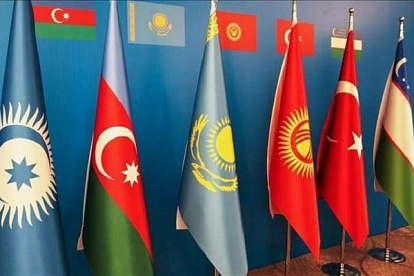
Current State, Comparative Dynamics, and Development Prospects of Relations with the Organization of Turkic States
Relations with the Organization of Turkic States (OTS) have reached a qualitatively new stage of development by 2026. While Uzbekistan’s accession to the organization in 2019 was largely of a political and symbolic nature, today this cooperation has evolved into a comprehensive system enriched with tangible elements of economic, transport-logistical, and technological integration. In this context, the OTS is no longer merely a platform based on shared language and cultural ties, but rather functions as a significant geo-economic center influencing regional development.
The summits held between 2024 and 2026, along with the documents adopted within their framework, have significantly accelerated the institutional consolidation of the organization. In particular, initiatives such as the “Charter of the Turkic World”, as well as decisions related to digital cooperation and green development, have defined the long-term strategic priorities of the OTS. By 2026, the practical outcomes of these initiatives have begun to materialize: the volume of mutual trade has increased, the number of joint investment projects has expanded, and transport connectivity among member states has been substantially strengthened. All these developments indicate the steady strengthening of the organization both institutionally and in practical terms.
A comparative analysis of development dynamics over the past seven years reveals several key trends. First, there has been a clear institutionalization of political dialogue, with meetings at the level of heads of state becoming systematic and mechanisms for implementing decisions being established. Second, the scope of economic cooperation has significantly expanded: whereas trade relations were previously limited, there is now active development of industrial cooperation, the establishment of investment funds, and the formation of joint production clusters. At the same time, cooperation in transport and logistics has intensified considerably, transforming the OTS into one of the key transit hubs of Eurasia. Particular importance by 2026 has been attached to the so-called “Middle Corridor” (the Trans-Caspian International Transport Route). Against the backdrop of global geopolitical shifts and disruptions in traditional supply chains, this corridor is increasingly viewed as a reliable and alternative route connecting Europe and Asia. Uzbekistan is actively participating in these processes by modernizing its railway and road infrastructure and developing logistics centers. As a result, the country is strengthening its position not only as a transit state but also as one of the key transport hubs in the region.
Economic cooperation within the OTS continues to demonstrate stable positive dynamics. By 2026, the volume of intra-organizational trade has grown significantly, driven by trade facilitation measures, harmonization of customs procedures, and the implementation of digital platforms. At the same time, new projects in industrial cooperation are being carried out, particularly in sectors such as textiles, automotive manufacturing, and agricultural processing.
In the energy sector, cooperation is acquiring new dimensions. While the primary focus was previously on traditional energy sources, priority is now increasingly given to green energy. Projects in solar and wind power, energy efficiency programs, and initiatives aimed at ensuring environmental sustainability are being actively promoted within the OTS framework. This contributes to strengthening the organization’s role in the global climate agenda.
Digital transformation has emerged as one of the most rapidly developing areas of cooperation. By 2026, collaboration in e-government systems, digital services, and IT startups has deepened significantly. These processes not only enhance economic efficiency but also contribute to the modernization of public administration.
Cultural and humanitarian cooperation continues to play a crucial role, serving as the foundation of the OTS’s “soft power.” Educational exchange programs, the establishment of joint universities, tourism development, and cultural initiatives contribute to strengthening mutual understanding among member states. This, in turn, creates a solid social foundation for further deepening economic and political cooperation.
From the perspective of future development, the further evolution of the OTS is associated with several strategic directions. In particular, the likelihood of forming elements of a common economic space is increasing. Further deepening of transport and logistics integration is expected, enabling the OTS to become an integral part of global trade chains. Significant potential is also linked to the development of the digital economy and innovation. At the same time, geopolitical factors will continue to play an important role, contributing to the transformation of the OTS into one of the key centers of power in Eurasia.
In conclusion, by 2026 the Organization of Turkic States has emerged as a dynamically developing integration structure steadily expanding its sphere of influence. Uzbekistan’s active and proactive participation in these processes plays an important role in ensuring its foreign policy and economic interests. The observed positive trends suggest that, in the future, the OTS is likely to secure a significant and stable position not only at the regional but also at the global level.
📅 12.05.2026
Uzbekistan news
UZBEKISTAN AND THE UN: FROM NATIONAL INITIATIVES TO THE GLOBAL AGENDA
The 5th Samarkand Forum on Human Rights to take place on September 28–29th
Uzbekistan's key trading partners participate in CICA
Speech by President Shavkat Mirziyoyev at the solemn ceremony dedicated to the thirty-fifth anniversary of the independence of the Republic of Uzbekistan
Uzbekistan Firmly Establishes Itself as a Stable and Predictable Partner for Long-Term International Business
Changing economic priorities of Uzbekistan reshape its engagement with the CIS
Inaugural Central Asia – Republic of Korea Summit at the highest level opens in Seoul
Uzbekistan and Korea: Advancing Green Energy and New Technologies
Uzbekistan and the Republic of Korea in the Emerging Framework for Cooperation with Central Asia
Tashkent brings together leaders and key deals in Polymer Market of Central Asia
The 1st Republic of Korea–Central Asia Summit: Why This Moment Matters
Uzbekistan – Serbia: A New Geography of Industrial Cooperation
The President of Uzbekistan’s Visit to Serbia: A New Stage in Economic Partnership Between Central Asia and the Balkans
Uzbekistan and the Republic of Korea: From Investment Partnership to Technological Cooperation
Regional Approaches to SDG Delivery: What Can Central Asia Offer?
Uzbekistan Opens a Balkan Gateway to Europe
The SCO Bishkek Summit: The Economic Agenda of a New Stage of Cooperation
Tourism: A new dimension of Uzbekistan-Kyrgyzstan partnership
Uzbekistan’s Role in the SCO: Economy, Security and Regional Cooperation
Economic Cooperation of Uzbekistan within the SCO at a New Stage of Development
Uzbekistan and Serbia: From Labour Mobility to a Strategic Partnership in Human Capital
Prospects for Uzbekistan–Serbia Cooperation in the ICT Sector
Prospects for Cooperation between the Republic of Uzbekistan and the Republic of Korea within the Framework of the Central Asia–Republic of Korea Cooperation Forum
THE SCO’S NEW FINANCIAL ARCHITECTURE: FROM COORDINATION TO PRACTICAL DEVELOPMENT MECHANISMS
INFORMATION NOTE ON COOPERATION WITH SERBIA
On September 8–10th, Tashkent to gather International Textile Industry Professionals
The Seoul Summit: Uzbekistan in the New Industrial Architecture of C5+1
New Opportunities to Expand Cooperation Between Uzbekistan and Serbia
Uzbekistan and Azerbaijan: Turning Political Alignment into Economic Growth
BRIGHT PROSPECTS FOR MUTUALLY BENEFICIAL PARTNERSHIP

-
 Ministry of Foreign Affairs of the Republic of Uzbekistan
 -
 Diplomatic Service of the Ministry of Foreign Affairs
 -
 State Committee for Tourism Development
 -
Ministry of Investments and Foreign Trade of the Republic of Uzbekistan
-
 invest.gov.uz
 -
-

-

-
-
-

-

of Uzbekistan in the Republic
of Latvia
When using the information, a link to www.uzembassy.lv
must be provided.
All rights reserved
Address
Address: Riga c., LV-1010. 11-11 Elizabetes Str., Latvia
Phone: 37167322424
Fax: 37167322306
Email: embassy@uzbekistan.lv
Useful links
HomeIssuance of biometric passport for departure abroad
Certificate to return to Uzbekistan
Withdrawal of citizenship
Loss of citizenship