Phone
Consular Issues
Phone
Uzbekistan news
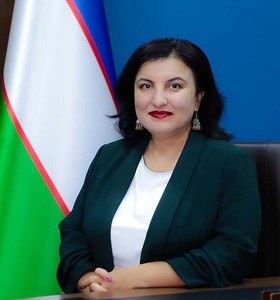
Education, Science and Innovation – the Main Driver of Integration Among Turkic States
In the context of today’s global development, the competitiveness of states is determined прежде всего by their intellectual potential, modern education systems, scientific advancement, and innovative capabilities. In this regard, education, science, and innovation are gaining strategic importance in elevating cooperation among Turkic states to a fundamentally new level. These areas contribute not only to economic growth and human capital development, but also to strengthening spiritual closeness among peoples, creating a common civilizational space, and building a solid foundation for future progress.
In recent years, thanks to the efforts of the President of the Republic of Uzbekistan, Shavkat Mirziyoyev, an entirely new atmosphere has emerged in relations with the Turkic states. In particular, large-scale projects implemented in the fields of higher education, science, and innovation are gradually becoming a practical mechanism for Turkic integration. Today, hundreds of inter-university agreements, joint educational programs, academic exchanges, and research projects are being implemented with Türkiye, Kazakhstan, Kyrgyzstan, Azerbaijan, and Turkmenistan.
Cooperation with Kazakhstan is among the most active areas in this regard. Currently, more than 280 agreements and memorandums are in force between higher education institutions of Uzbekistan and Kazakhstan. In recent years, student exchange between the two countries has increased significantly. In particular, during the 2025/2026 academic year, the number of Kazakh students studying at universities in Uzbekistan exceeded 1,000. At the same time, more than 5,500 Uzbek students are pursuing higher education in Kazakhstan.
The practice of opening branch campuses of universities has also marked a new stage in Turkic educational integration. The branch of South Kazakhstan University in Chirchiq and the branch of the National Research University “TIIAME” in Almaty are vivid examples of such important initiatives. These projects contribute not only to training qualified personnel, but also to developing common educational standards.
Cooperation with Kyrgyzstan is also developing consistently. In recent years, more than 90 agreements and memorandums have been signed between the universities of the two countries. In 2023, a forum of rectors was held in Osh, and in 2024 another forum took place in Samarkand, resulting in dozens of new agreements. These forums are becoming important platforms for shaping a common higher education space among the Turkic states.
Uzbekistan’s allocation of state grants for Kyrgyz youth is also of particular importance. Since 2021, 100 state grants have been allocated annually for citizens of Kyrgyzstan. This contributes to strengthening the integration of human capital through education.
In cooperation with Azerbaijan, cultural and educational initiatives occupy a special place. Universities of the two countries are implementing joint projects in philology, literature, arts, tourism, oil and gas studies, and medicine.
The operation of the Fuzuli Center for Azerbaijani Culture, Education and Research at the Tashkent State University of Uzbek Language and Literature, as well as the establishment of the Alisher Navoi Scientific Center in Baku, are vivid examples of the spiritual closeness between the two peoples. Such centers contribute to the in-depth study of the common literary and cultural heritage of the Turkic nations.
It should be emphasized that the joint study and promotion of the legacy of great ancestors plays an important role in strengthening the spiritual foundations of Turkic integration. In particular, the legacy of Alisher Navoi serves as a powerful spiritual bridge uniting Turkic peoples. On February 13, 2026, an international conference titled “Alisher Navoi — the Great Representative of Turkic Literature” was held at the TURKSOY headquarters in Ankara to mark the 585th anniversary of the poet’s birth. The event brought together representatives of science, literature, and diplomacy from across the Turkic world, as well as prominent scholars and cultural figures.
During the conference, TURKSOY Secretary General Sultan Raev described Navoi as the common conscience and civilizational symbol of the Turkic world. Discussions focused on researching Navoi’s works using modern scientific approaches, studying manuscripts, and expanding publishing and translation activities. In particular, the full publication of the “Khamsa” in Azerbaijani and the translation of “Mahbub ul-Qulub” into several Turkic languages demonstrate that Navoi’s legacy has become a shared spiritual treasure of the Turkic world.
As part of the conference, international scientific projects implemented by the Tashkent State University of Uzbek Language and Literature were presented. In addition, the awarding of TURKSOY medals to several Uzbek scholars and cultural figures for their contributions to Turkic culture and literature became a high recognition of spiritual cooperation.
Turkology occupies a special place in the scientific and cultural cooperation among Turkic states. The International Conference on Turkological Studies dedicated to the 100th anniversary of the First Turkological Congress, held on April 8, 2025, at Baku Slavic University, demonstrated that cooperation in this sphere is reaching a new level. The event brought together representatives of the Azerbaijan National Academy of Sciences, leaders of universities from Türkiye, Kazakhstan, and Uzbekistan, prominent scholars, and a delegation from Namangan State University. Discussions focused on promising directions in Turkological research, the study of shared historical and cultural heritage, and the expansion of international academic cooperation.
Humanitarian and scientific cooperation with Turkmenistan is also developing harmoniously. Joint research, olympiads, international conferences, and scientific projects are regularly organized between Uzbek and Turkmen scholars. In particular, the launch of a joint scientific project competition and the financing of four joint research initiatives starting from 2024 are of great significance.
Cooperation with Türkiye has become one of the largest and most institutionalized dimensions of Turkic integration. In recent years, more than 200 cooperation agreements have been signed between higher education institutions of Uzbekistan and Türkiye. Dozens of new projects have also been launched within the framework of rectors’ forums between the two countries.
Joint educational programs, technoparks, and projects in engineering and high technologies are being implemented with leading Turkish universities. In particular, training courses on drone technologies organized in cooperation with the company TUSAŞ, the establishment of an innovative educational and industrial technopark based on the “Yildiz” technopark concept, and the activities of the branch campus of the Turkish University of Economics and Technology in Tashkent are creating a new model of Turkic innovation cooperation.
Today, the integration of Turkic states is no longer limited to cultural proximity or historical commonality. It is gaining new substance through innovation, startups, digital technologies, artificial intelligence, engineering, and scientific research. Joint scientific project competitions conducted between Uzbekistan and Türkiye in cooperation with TÜBİTAK are a practical manifestation of this process.
At the same time, initiatives are being advanced to strengthen academic mobility among Turkic states, ensure mutual recognition of diplomas and qualifications, create unified educational platforms, and establish scientific journals and research funds. Most importantly, these processes are driven by the idea of investing in human capital, educating younger generations on the basis of shared values, and ensuring intellectual unity. In the 21st century, the fate of nations is determined not by oil or gas, but by knowledge, technology, and innovation.
In this sense, cooperation in education, science, and innovation is becoming the most sustainable, promising, and powerful driver of integration among Turkic states. This process not only brings Turkic peoples closer together, but also contributes to the emergence of a new intellectual and technological center across the Eurasian region.
One of the important factors elevating Turkic integration to a new stage is the strengthening of institutional cooperation among higher education institutions. Uzbekistan’s chairmanship of the Union of Turkic Universities — TÜRKÜNİB — during 2025–2026, an organization uniting more than 100 universities, clearly demonstrates the country’s active and initiative-driven policy in this area.
On October 15, 2025, the 8th General Assembly of TÜRKÜNİB was held at Tashkent International University within the framework of the “Days of Turkic Science and Innovation.” The event was attended by the Secretary General of the Organization of Turkic States, Kubanychbek Omuraliev, President of the Turkic Academy Shahin Mustafayev, representatives of the OTS and TURKSOY leadership, university rectors, scholars, and representatives of international organizations. Around 200 delegates from 69 universities of Azerbaijan, Türkiye, Kazakhstan, Kyrgyzstan, Hungary, Northern Cyprus, and Uzbekistan participated in the Assembly.
During the event, the results of the “TurkBarometer” project were presented, and socio-political processes and integration trends within the Turkic states were discussed. Meetings held in the U2U — “University-to-University” — format served as a practical platform for establishing new inter-university partnerships.
Today, one of the important institutional platforms contributing to the formation of a unified academic space among Turkic states is the International University of Turkic States established in Tashkent. The university operates with the aim of deepening cooperation in education, science, and innovation among Turkic countries, training modern specialists, and developing joint scientific research.
The university’s academic programs, governance model, and educational processes are being developed based on the principles of mutual integration among Turkic states. In addition, the institution serves as an important platform for expanding academic exchange among faculty members and students, as well as for implementing joint educational programs and scientific projects.
Integration among Turkic states is no longer confined solely to education and science. Youth policy, student exchange, and sports diplomacy are also becoming important components of this process. In particular, at the 3rd Turkic States Universiade held in Cholpon-Ata, Kyrgyzstan, in September 2025, the Uzbek delegation participated with 80 student-athletes across seven sports disciplines. These competitions contribute to strengthening friendship and solidarity among the youth of Turkic countries, fostering a healthy competitive environment, and developing a shared youth space.
Today, cooperation among Turkic states in the fields of education, science, and innovation is becoming one of the key drivers of common development. Relations strengthened through universities, scientific centers, academic platforms, and youth initiatives are helping to unite the intellectual potential of the Turkic world.
Importantly, these processes are not limited to current interests or short-term projects. Their significance lies in the creation of a common space of knowledge and development for future generations. Convergence in science, innovation, and modern technologies plays a crucial role in enhancing the international competitiveness of Turkic states.
Today, the intellectual cooperation developing among Turkic states is bringing not only universities and research institutions closer together, but also the peoples themselves. This creates an opportunity to build a new model of modern development based on shared history and spiritual heritage.
In this regard, education, science, and innovation are becoming the strongest spiritual and intellectual bridge connecting the common future of the Turkic states.
Nazokat ABDUQUNDUZOVA, Head of the Information Service
Ministry of Higher Education, Science and Innovation
📅 13.05.2026
Uzbekistan news
UZBEKISTAN AND THE UN: FROM NATIONAL INITIATIVES TO THE GLOBAL AGENDA
The 5th Samarkand Forum on Human Rights to take place on September 28–29th
Uzbekistan's key trading partners participate in CICA
Speech by President Shavkat Mirziyoyev at the solemn ceremony dedicated to the thirty-fifth anniversary of the independence of the Republic of Uzbekistan
Uzbekistan Firmly Establishes Itself as a Stable and Predictable Partner for Long-Term International Business
Changing economic priorities of Uzbekistan reshape its engagement with the CIS
Inaugural Central Asia – Republic of Korea Summit at the highest level opens in Seoul
Uzbekistan and Korea: Advancing Green Energy and New Technologies
Uzbekistan and the Republic of Korea in the Emerging Framework for Cooperation with Central Asia
Tashkent brings together leaders and key deals in Polymer Market of Central Asia
The 1st Republic of Korea–Central Asia Summit: Why This Moment Matters
Uzbekistan – Serbia: A New Geography of Industrial Cooperation
The President of Uzbekistan’s Visit to Serbia: A New Stage in Economic Partnership Between Central Asia and the Balkans
Uzbekistan and the Republic of Korea: From Investment Partnership to Technological Cooperation
Regional Approaches to SDG Delivery: What Can Central Asia Offer?
Uzbekistan Opens a Balkan Gateway to Europe
The SCO Bishkek Summit: The Economic Agenda of a New Stage of Cooperation
Tourism: A new dimension of Uzbekistan-Kyrgyzstan partnership
Uzbekistan’s Role in the SCO: Economy, Security and Regional Cooperation
Economic Cooperation of Uzbekistan within the SCO at a New Stage of Development
Uzbekistan and Serbia: From Labour Mobility to a Strategic Partnership in Human Capital
Prospects for Uzbekistan–Serbia Cooperation in the ICT Sector
Prospects for Cooperation between the Republic of Uzbekistan and the Republic of Korea within the Framework of the Central Asia–Republic of Korea Cooperation Forum
THE SCO’S NEW FINANCIAL ARCHITECTURE: FROM COORDINATION TO PRACTICAL DEVELOPMENT MECHANISMS
INFORMATION NOTE ON COOPERATION WITH SERBIA
On September 8–10th, Tashkent to gather International Textile Industry Professionals
The Seoul Summit: Uzbekistan in the New Industrial Architecture of C5+1
New Opportunities to Expand Cooperation Between Uzbekistan and Serbia
Uzbekistan and Azerbaijan: Turning Political Alignment into Economic Growth
BRIGHT PROSPECTS FOR MUTUALLY BENEFICIAL PARTNERSHIP

-
 Ministry of Foreign Affairs of the Republic of Uzbekistan
 -
 Diplomatic Service of the Ministry of Foreign Affairs
 -
 State Committee for Tourism Development
 -
Ministry of Investments and Foreign Trade of the Republic of Uzbekistan
-
 invest.gov.uz
 -
-

-

-
-
-

-

of Uzbekistan in the Republic
of Latvia
When using the information, a link to www.uzembassy.lv
must be provided.
All rights reserved
Address
Address: Riga c., LV-1010. 11-11 Elizabetes Str., Latvia
Phone: 37167322424
Fax: 37167322306
Email: embassy@uzbekistan.lv
Useful links
HomeIssuance of biometric passport for departure abroad
Certificate to return to Uzbekistan
Withdrawal of citizenship
Loss of citizenship