Phone
Consular Issues
Phone
Uzbekistan news
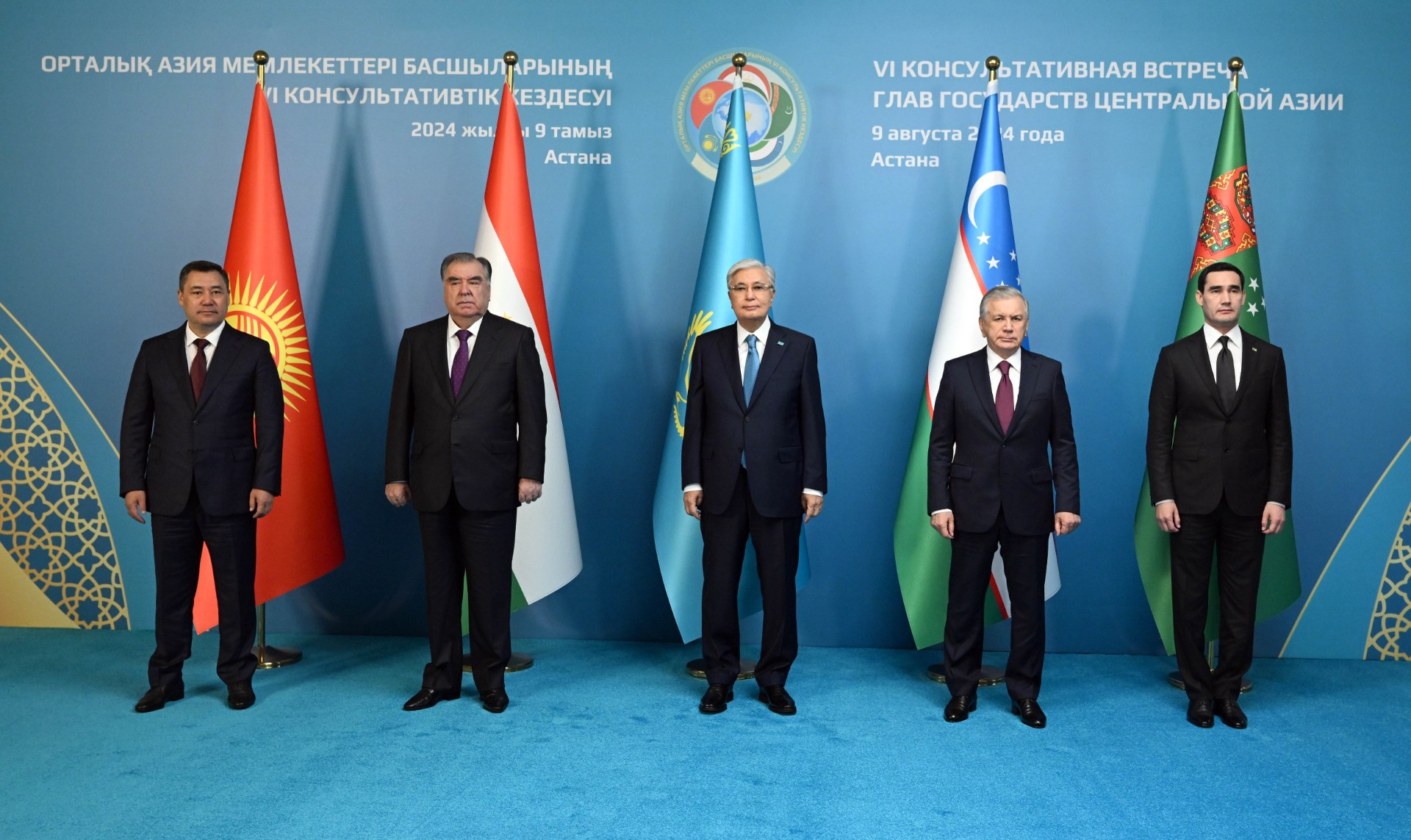
Central Asia’s Shared Experience of Compromise Is Increasingly in Demand Globally as a Practical Model for Preventive Diplomacy
The UN General Assembly adopted by consensus, without a vote, the resolution Peaceful Settlement of Border Disputes, introduced by Kyrgyzstan, Tajikistan, and Uzbekistan and co-sponsored by 40 states. Akramjon Nematov, First Deputy Director of the Institute for Strategic and Regional Studies under the President of Uzbekistan, commented to IA Dunyo on the significance of the adopted document in the context of changing perceptions of our region on the international stage.
- This is truly a historic event of fundamental importance both for Central Asia and for the entire contemporary international practice. The fact that the resolution was adopted unanimously, without a formal vote, testifies to the unconditional support for and high level of trust in our region on the part of the international community. I would especially emphasize that dozens of countries acted as co-authors of the document, but the key initiators, acting in solidarity and on equal terms, were Kyrgyzstan, Tajikistan, and Uzbekistan.
The document is devoted to a topic that today remains one of the most difficult and painful on the global agenda – the peaceful delimitation and formalization of state borders. At a time when geopolitical fractures are deepening across the planet, trust is declining, and there is a dangerous rollback toward forceful methods of resolving disputes, the states of Central Asia have demonstrated high political maturity and responsibility.
In practice, we have proved to the entire world that direct, honest, and respectful dialogue is the only effective way to untangle the most complex knots of contradictions that remained unresolved since the collapse of the USSR. Central Asia is finally moving away from its former stereotypical image as a “zone of latent risks and border conflicts.” Today, our region is acting as a mature and independent subject of international politics, capable of ensuring stability in our common home through its own efforts and of shaping exemplary peaceful practices that are in demand on a global scale.
— Bringing this initiative to the UN level is a serious step. What strategic and legal consequences does it entail for the initiating states?
— Bringing the Central Asian case to the universal UN platform is important because it consolidates the results we have achieved and gives the processes of regional rapprochement a stable and irreversible character.
By registering these steps within the international legal framework, the states of the region publicly confirm their mutual commitments to follow the course of good-neighborliness. This places a high level of responsibility on all parties before the international community. Thus, strong political and legal guarantees of stability are being created, and the risks of any future revision of the agreements are being radically reduced.
This breakthrough became possible thanks to the firm political will and foresight of the leaders of all Central Asian states, who were able to place the long-term interests of stability and prosperity of our peoples above current disagreements. If we analyze the origins of this process, the most important role here was played by the open and pragmatic foreign policy course of Uzbekistan proclaimed by President Shavkat Mirziyoyev in 2017. This strategy was initially aimed at turning Central Asia into a space of trust.
What is fundamental is that this approach was not imposed from above as someone’s doctrine, but found a sincere and active response among our neighbors. The current success is precisely the result of joint work and inclusive regional synergy. The initiatives of Tashkent were supported, substantively supplemented, and jointly implemented together with Bishkek and Dushanbe. The signing by the leaders of the three countries of the agreement on the junction point of state borders and the opening of the “Stele of Friendship” became a logical outcome of this large-scale joint work, where the contribution of each side is equally valuable
- Akramjon Ilkhamovich, the political will of the leaders has given a powerful impulse, but peace must also be durable in practice. What economic prospects are opening up for the region, and how is the very model of ensuring security at the borders changing?
- Today we are witnessing a conceptual shift in approaches to regional security: the previous paradigm of rigid restrictions, fences, and barriers in border areas is being replaced by a modern security model based on joint economic development and the formation of deep interdependence. Security in the region is now measured not by the height of dividing barriers, but by the depth and scale of joint projects.
New round-the-clock border checkpoints are opening one after another, which has greatly simplified the movement of people and caused a colossal tourism boom. An illustrative fact: neighboring states now account for more than 60% of all tourists visiting Uzbekistan, which amounts to about 7 million people annually.
The economic framework of stability lies in the fact that we are moving toward major joint infrastructure projects. Trade and industrial zones and logistics centers are being built in border areas, a vivid example of which is the International Trade and Economic Park “Dostuk”. Moreover, we are jointly building the strategic railway China–Kyrgyzstan–Uzbekistan and launching projects for the construction of major hydroelectric power plants such as Kambarata HPP-1 and Yavan HPP. What until recently seemed like a distant, almost unattainable dream is today being realized through our common efforts.
All this opens colossal prospects. Central Asia is turning into a single, integral, and stable macro-region. Today our population amounts to about 85 million people. Such a demographic scale has never existed in our history before. But the most important thing is the absolute, practically one hundred percent literacy of this population. The presence of such an impressive body of educated, qualified intellectual capital makes the region a powerful asset for attracting high technologies, major investments, and transforming Central Asia into a key transit and industrial hub for the whole of Eurasia.
- For this complex process to develop progressively, agreements at the highest level must be supported by society. What role do institutions of people’s diplomacy and dialogue platforms on the ground play here?
- You are absolutely right: interstate agreements will be viable only when they possess a developed social base and take root at the level of civil society. Look at how actively dialogue through people’s diplomacy is developing today: regular forums of civil society and women leaders of our countries are being held, large-scale meetings of the creative and scientific intelligentsia are taking place, and living human ties are being restored.
The expert community plays an enormous role in this architecture. It is precisely for this purpose that new inclusive dialogue platforms are being created, and one of the key among them is the Fergana Peace Forum, which we are actively developing in close partnership with our neighbors. We are convinced that the Fergana Forum should become a permanent platform for cooperation in the Fergana Valley. This is a space where analysts, representatives of government bodies, entrepreneurs, and local communities of Uzbekistan, Kyrgyzstan, and Tajikistan conduct direct and transparent dialogue. Coordinated approaches to complex cross-border challenges are developed here — issues of joint water use, ecology, climate change, and the development of border territories. This makes it possible to transfer potential points of friction into the sphere of practical interaction.
And, of course, systematic work with youth occupies a special, strategic place, because it is the new generation that will have to preserve and develop the conflict-free space that is being laid today. Continuing the logic of the Fergana Peace Forum, already in June, within the framework of the “Youth Month,” we plan to hold a large-scale International Youth Seminar on Peacebuilding in Fergana under the auspices of the UN and the OSCE.
Active youth from all over Central Asia will take part in this three-day event, but the main emphasis is on young people from the border regions of our three countries. Our task is to strengthen youth ties on the ground, teach them to find a common language, jointly implement projects, and deeply support the continuity of the culture of peaceful dialogue.
In conclusion, it can be said that by adopting this resolution, the world recognized that the joint experience of compromises in Central Asia is highly in demand at the global level as a viable matrix of preventive diplomacy that can and should be studied and scaled up. Through concrete action, our region has proved its ability to independently generate stability and bear joint responsibility for a common prosperous future.
IA Dunyo
📅 25.05.2026
Uzbekistan news
Central Asia Is Shaping Its Own Model of Regional Cooperation
Initiatives of Uzbekistan aimed at Economic Results for the Countries of Central Asia and Azerbaijan
Regular dialogue is the Foundation for addressing common water-related challenges in Central Asia
Uzbekistan and Turkmenistan: A New Stage in the Development of Their Strategic Partnership
11th Tashkent International Biennale of Contemporary Art to be held in the capital of Uzbekistan on October 12–16th
OTS Member States - A Crucial Link in the Eurasian Space
Uzbekistan plays an active role in Economic Integration within the framework of the Organization of Turkic States
CICA opens new horizons for financial cooperation
Aquatherm Tashkent 2026 to Showcase Latest Technologies for Construction and Utility Infrastructure
Uzbekistan is securing its place in the Global Hub for Technological Outsourcing
Digital Cooperation among the Turkic States Towards a Unified Technological Ecosystem
Uzbekistan and Azerbaijan are creating a Hub for Startups, Investors and Talent
UZBEKISTAN AND THE UN: FROM NATIONAL INITIATIVES TO THE GLOBAL AGENDA
The 5th Samarkand Forum on Human Rights to take place on September 28–29th
Uzbekistan's key trading partners participate in CICA
Speech by President Shavkat Mirziyoyev at the solemn ceremony dedicated to the thirty-fifth anniversary of the independence of the Republic of Uzbekistan
Uzbekistan Firmly Establishes Itself as a Stable and Predictable Partner for Long-Term International Business
Changing economic priorities of Uzbekistan reshape its engagement with the CIS
Inaugural Central Asia – Republic of Korea Summit at the highest level opens in Seoul
Uzbekistan and Korea: Advancing Green Energy and New Technologies
Uzbekistan and the Republic of Korea in the Emerging Framework for Cooperation with Central Asia
Tashkent brings together leaders and key deals in Polymer Market of Central Asia
The 1st Republic of Korea–Central Asia Summit: Why This Moment Matters
Uzbekistan – Serbia: A New Geography of Industrial Cooperation
The President of Uzbekistan’s Visit to Serbia: A New Stage in Economic Partnership Between Central Asia and the Balkans
Uzbekistan and the Republic of Korea: From Investment Partnership to Technological Cooperation
Regional Approaches to SDG Delivery: What Can Central Asia Offer?
Uzbekistan Opens a Balkan Gateway to Europe
The SCO Bishkek Summit: The Economic Agenda of a New Stage of Cooperation
Tourism: A new dimension of Uzbekistan-Kyrgyzstan partnership

-
 Ministry of Foreign Affairs of the Republic of Uzbekistan
 -
 Diplomatic Service of the Ministry of Foreign Affairs
 -
 State Committee for Tourism Development
 -
Ministry of Investments and Foreign Trade of the Republic of Uzbekistan
-
 invest.gov.uz
 -
-

-

-

-

-

-

of Uzbekistan in the Republic
of Latvia
When using the information, a link to www.uzembassy.lv
must be provided.
All rights reserved
Address
Address: Riga c., LV-1010. 11-11 Elizabetes Str., Latvia
Phone: 37167322424
Fax: 37167322306
Email: embassy@uzbekistan.lv
Useful links
HomeIssuance of biometric passport for departure abroad
Certificate to return to Uzbekistan
Withdrawal of citizenship
Loss of citizenship