Phone
Consular Issues
Phone
Uzbekistan news
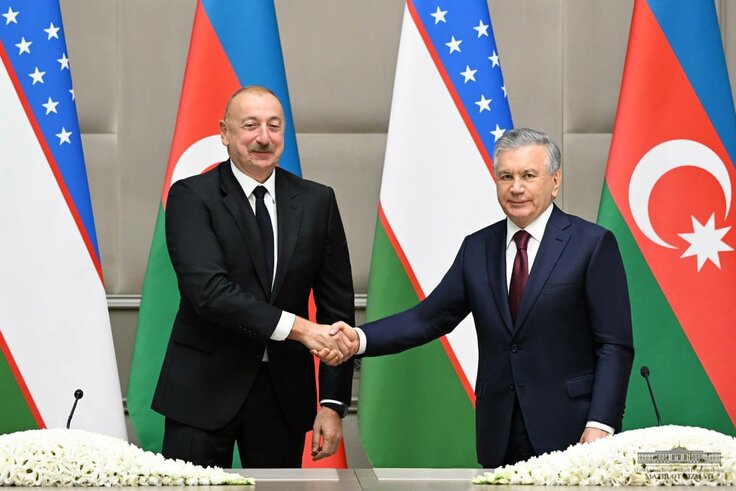
Smart Cities: How Uzbekistan and Azerbaijan Are Rethinking Urban Development
Just a few years ago, the concept of the “smart city” was largely seen as a futuristic idea associated with digital control panels, autonomous transport, widespread sensor networks, and automated urban services.
Today, the smart city has become a practical tool for addressing modern urban challenges. This trend can be seen across countries facing rapid population growth, increasing migration to major metropolitan areas, overstretched infrastructure, and mounting climate risks.
In this context, smart technologies are no longer viewed as an end in themselves. Instead, they are increasingly used to improve the resilience and efficiency of key urban systems, including transport, energy, public utilities, waste management, and environmental monitoring. This allows cities to adapt more effectively to emerging challenges, reduce pressure on infrastructure, and improve the overall quality of urban life.
At the same time, smart city development is gaining strategic economic importance by creating long-term drivers of growth. Such projects attract substantial investment by combining digital infrastructure, innovative services, and principles of sustainable development.
The growth of smart urban areas also contributes to job creation in high-tech sectors ranging from IT and telecommunications to engineering and urban data analytics. In parallel, the modernization of urban infrastructure improves resource management and raises overall living standards.
Against this backdrop, the approaches taken by Uzbekistan and Azerbaijan deserve particular attention. Rather than simply following a global trend, both countries are developing their own models of smart urbanization — ones in which technology serves people and supports the creation of more comfortable, sustainable, and future-oriented cities.
In this regard, Uzbekistan offers a particularly notable example, as urbanization is becoming an increasingly pressing issue amid steady demographic growth. The country’s population is growing by approximately 1.8–2% annually, placing additional pressure on transport systems, housing, infrastructure, and social services.
Under these conditions, the government is focusing not on limited modernization of the existing urban environment, but on the creation of new growth centers. The Smart City concept adopted in 2019, followed by the Digital Uzbekistan – 2030 strategy, established the institutional foundation for the large-scale digital transformation of urban infrastructure and public services.
One of the most visible outcomes of this strategy is the New Tashkent project, whose significance extends far beyond that of a traditional urban development initiative.
In essence, the project aims to create a new economic, administrative, and investment hub capable of easing pressure on the existing capital while introducing a fundamentally new model of urban organization based on smart city principles and sustainable development.
In this case, the concept of the “15-minute city,” green infrastructure, digital governance, public transport prioritization, and energy efficiency are not treated as separate elements, but as components of a broader strategy aimed at expanding economic space and improving the quality of the urban environment.
Against this backdrop, New Tashkent illustrates how urbanization can serve not only as a response to infrastructure pressures, but also as a tool for creating new centers of economic growth capable of redistributing business activity and shaping the long-term development of the urban agglomeration.
This is also why the project has a distinctly international dimension. Its implementation involves Singapore’s Meinhardt Group, the UK-based Foster + Partners and Cross Works, the Dutch firm OMA, Japan’s Sojitz Corporation, South Korea’s Incheon International Airport Corporation, and other international partners. This reflects Uzbekistan’s efforts to integrate global expertise into its national development model.
Azerbaijan, in turn, has chosen a different approach to the development of smart urban spaces. Rather than building entirely new cities from scratch, the focus has been placed on the restoration and comprehensive modernization of recently reintegrated territories alongside the introduction of modern urban planning solutions and Smart City technologies.
This approach goes beyond the physical reconstruction of infrastructure and involves rethinking urban development through digital technologies, sustainable planning, and green standards.
Following the reintegration of Karabakh and Eastern Zangezur, Azerbaijan faced not only the challenge of rebuilding damaged territories, but also the task of their socio-economic reintegration into the country’s broader development framework. In this context, the concepts of Smart City and Smart Village have gained particular strategic importance, serving as the foundation for a new model of territorial planning and governance.
Within this model, technology is no longer viewed solely as a modernization tool, but as an instrument for comprehensive territorial development. It supports the rapid restoration of basic services, creates conditions for the return of displaced populations, stimulates economic activity, and enables more effective management of spatial development.
One of the clearest examples is Aghali — Azerbaijan’s first “smart village.” The project demonstrates how digital infrastructure, renewable energy, smart agriculture, and modern public services can become part of a new model of post-conflict reconstruction.
The village covers around 119 hectares and includes more than 200 modern eco-friendly homes equipped with smart systems, as well as social and public infrastructure facilities, including a school, kindergarten, medical center, ASAN xidmət and DOST service centers, small business facilities, and administrative buildings.
A similar development model can also be seen in Fizuli, Aghdam, Shusha, Khojaly, and several other settlements, where new infrastructure systems are being developed based on environmental sustainability, transport accessibility, and digital management of urban and rural services.
Like Uzbekistan, Azerbaijan also relies heavily on international cooperation as a key driver of modernization. Huawei is involved in implementing digital solutions, the World Bank provides analytical and advisory support, while Japan is expanding cooperation in smart infrastructure and green energy, contributing to the adoption of advanced technological practices.
Uzbekistan is building a new urban environment from the ground up, while Azerbaijan is developing its model against the backdrop of a complex historical and territorial transformation. At first glance, these are very different starting points. Yet this is precisely what makes the similarities in their approaches particularly notable. In both cases, digital infrastructure is not treated as an additional layer built onto the city, but as a core element shaping its future development from the outset.
At the same time, neither country is pursuing a model based on copying existing examples. The experiences of Singapore, Dubai, and Qatar are being studied, but not replicated. Instead, both states are developing their own models tailored to local demographic, geographic, historical, and social realities. This reflects not a limitation of choice, but the maturity of their strategic approach.
Against the backdrop of accelerating urbanization across Central Asia and the South Caucasus, the experiences of Uzbekistan and Azerbaijan are increasingly emerging as a kind of laboratory for new development models. While their strategies differ in tools and priorities, both are driven by the same objective: building a new generation of cities that combine technology, sustainability, adaptability, and a people-centered approach.
Abbosbek Mashrapov
Senior Research Fellow, International Institute for Central Asia
📅 25.05.2026
Uzbekistan news
Political mutual trust in the Central Asian region is transforming into economic capital
Uzbekistan attracts specialists from 16 countries to the anniversary international exhibition “Mining, Metallurgy and Metalworking – MiningMetals Uzbekistan 2026”
Uzbekistan has moved its economic cooperation with the Turkic states into a practical dimension
Akramjon Nematov: Central Asia is increasingly emerging as an independent centre for shaping its own economic and technological agenda
Central Asia Is Shaping Its Own Model of Regional Cooperation
Initiatives of Uzbekistan aimed at Economic Results for the Countries of Central Asia and Azerbaijan
Regular dialogue is the Foundation for addressing common water-related challenges in Central Asia
Uzbekistan and Turkmenistan: A New Stage in the Development of Their Strategic Partnership
11th Tashkent International Biennale of Contemporary Art to be held in the capital of Uzbekistan on October 12–16th
OTS Member States - A Crucial Link in the Eurasian Space
Uzbekistan plays an active role in Economic Integration within the framework of the Organization of Turkic States
CICA opens new horizons for financial cooperation
Aquatherm Tashkent 2026 to Showcase Latest Technologies for Construction and Utility Infrastructure
Uzbekistan is securing its place in the Global Hub for Technological Outsourcing
Digital Cooperation among the Turkic States Towards a Unified Technological Ecosystem
Uzbekistan and Azerbaijan are creating a Hub for Startups, Investors and Talent
UZBEKISTAN AND THE UN: FROM NATIONAL INITIATIVES TO THE GLOBAL AGENDA
The 5th Samarkand Forum on Human Rights to take place on September 28–29th
Uzbekistan's key trading partners participate in CICA
Speech by President Shavkat Mirziyoyev at the solemn ceremony dedicated to the thirty-fifth anniversary of the independence of the Republic of Uzbekistan
Uzbekistan Firmly Establishes Itself as a Stable and Predictable Partner for Long-Term International Business
Changing economic priorities of Uzbekistan reshape its engagement with the CIS
Inaugural Central Asia – Republic of Korea Summit at the highest level opens in Seoul
Uzbekistan and Korea: Advancing Green Energy and New Technologies
Uzbekistan and the Republic of Korea in the Emerging Framework for Cooperation with Central Asia
Tashkent brings together leaders and key deals in Polymer Market of Central Asia
The 1st Republic of Korea–Central Asia Summit: Why This Moment Matters
Uzbekistan – Serbia: A New Geography of Industrial Cooperation
The President of Uzbekistan’s Visit to Serbia: A New Stage in Economic Partnership Between Central Asia and the Balkans
Uzbekistan and the Republic of Korea: From Investment Partnership to Technological Cooperation

-
 Ministry of Foreign Affairs of the Republic of Uzbekistan
 -
 Diplomatic Service of the Ministry of Foreign Affairs
 -
 State Committee for Tourism Development
 -
Ministry of Investments and Foreign Trade of the Republic of Uzbekistan
-
 invest.gov.uz
 -

-

-

-

-

-

-


of Uzbekistan in the Republic
of Latvia
When using the information, a link to www.uzembassy.lv
must be provided.
All rights reserved
Address
Address: Riga c., LV-1010. 11-11 Elizabetes Str., Latvia
Phone: 37167322424
Fax: 37167322306
Email: embassy@uzbekistan.lv
Useful links
HomeIssuance of biometric passport for departure abroad
Certificate to return to Uzbekistan
Withdrawal of citizenship
Loss of citizenship