Phone
Consular Issues
Phone
Uzbekistan news
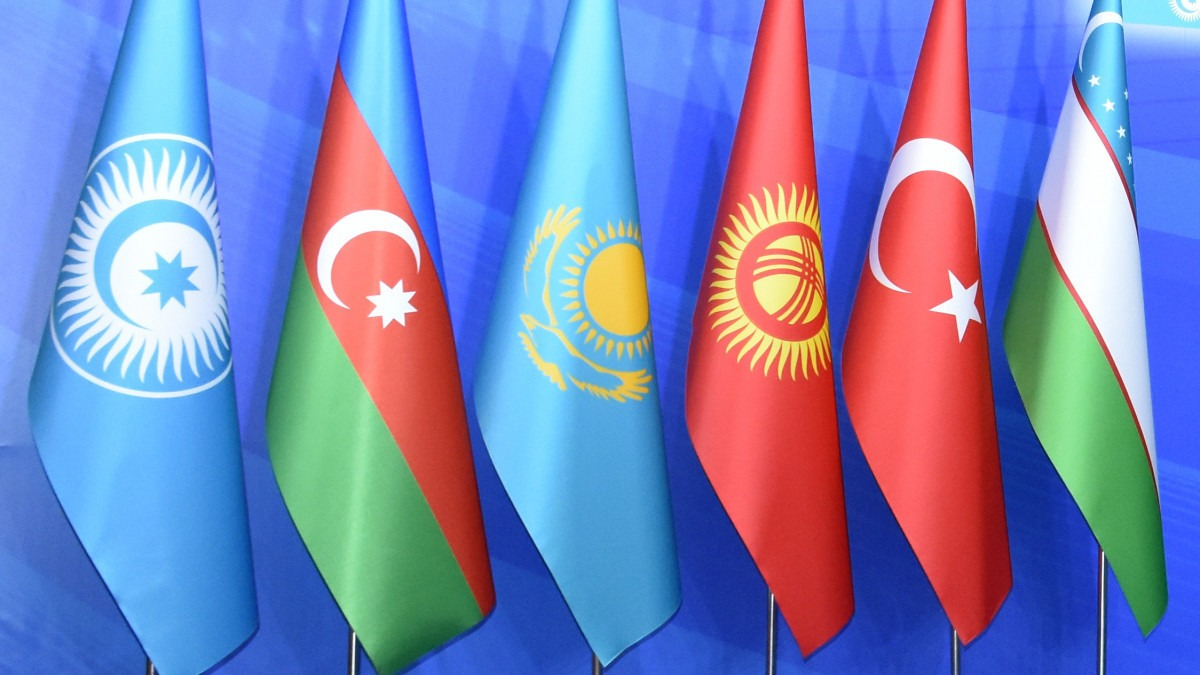
ORGANIZATION OF TURKIC STATES: DYNAMICS OF DEVELOPMENT, ECONOMIC POTENTIAL AND STRATEGIC OPPORTUNITIES
Over the past five years, the Organization of Turkic States (OTS) has undergone a qualitative transformation, evolving into an effective mechanism for interregional cooperation.
The stability and effectiveness of this format are largely determined by the degree of development of its institutional architecture. Within the OTS, this architecture features a multi-tiered structure, comprising the Council of Heads of State, the Council of Ministers of Foreign Affairs, the Committee of Senior Officials, the Council of Elders and the Secretariat of the organization.
A powerful impetus to the development of the association was provided by the adoption in 2021 of the “Turkic Vision – 2040” strategy, which became the conceptual foundation for the formulation of sectoral roadmaps, action plans, and a system of long-term milestones. The implementation of this strategy has manifested most visibly in the areas of transport digitalization, customs procedures, investment cooperation, and educational exchange.
Special attention should be paid to the activities of the Parliamentary Assembly of Turkic States (TURKPA), within the framework of which efforts have intensified to harmonize legislative approaches in the fields of trade, transport regulation and humanitarian cooperation.
A significant impetus to the development of the OTS was provided by the active engagement of Uzbekistan in the organization's work. In the subsequent period, Tashkent became one of the key drivers in modernizing the OTS agenda. At the initiative of the President of the Republic of Uzbekistan, Shavkat Mirziyoyev, the promotion of projects in transport connectivity, industrial cooperation, digital transformation, and investment collaboration intensified. It is with the invigoration of Uzbek participation that many experts associate the organization's transition from a declarative stage to a phase of practical institutionalization.
The 2022 Samarkand Summit provided an additional symbolic and political impetus, during which decisions were made to establish the Turkic Investment Fund and institutionally expand the economic agenda. This stage solidified the evolution of the OTS toward forming a fully-fledged geo-economic space while preserving its cultural and historical foundation.
Concurrently, economic cooperation is steadily establishing itself as a key pillar of the OTS development. The combined demographic potential of the organization is estimated at approximately 178 million people, a significant portion of whom comprise a young, able-bodied population. The nominal GDP of the member states exceeds USD 1.8–1.9 trillion, while their total foreign trade turnover surpasses USD 1.1 trillion.
In recent years, interregional trade has demonstrated steady positive dynamics. According to estimates by the OTS Secretariat, mutual trade turnover among member states reached USD 22–23 billion, nearly doubling compared to the figures at the beginning of the decade.
Uzbekistan plays a notable role in this process. By the end of 2025, the Republic's trade volume with OTS countries exceeded USD 9 billion, whereas in 2019, this figure stood at approximately USD 4.2 billion. Thus, over a six-year period, the trade turnover has practically doubled.
A prime example is the Uzbek-Turkish industrial cooperation. The number of enterprises with Turkish capital participation in Uzbekistan has surpassed 2,000, while the total volume of joint investment projects is estimated at over USD 5 billion. A significant share of these projects is concentrated in the textile industry, building materials manufacturing, electrical engineering, and the food industry.
The specific significance of this interstate association is driven by its geo-economic location. The member states of the organization are situated at the strategic intersection of transport arteries linking East Asia, the South Caucasus, the Middle East and Europe.
Its central element is the Middle Corridor, which connects China, Central Asia, the Caspian region, the South Caucasus, Türkiye and onwards to European markets. Over the past three years, the route has demonstrated steady cargo traffic growth. By the end of 2025, shipment volumes along the corridor exceeded 4.5 million tons, whereas in 2021, they stood at less than 1 million tons.
A key driver of this growth has been the comprehensive modernization of port infrastructure. For instance, following its reconstruction, the Baku International Sea Trade Port now possesses the capacity to handle up to 15 million tons of cargo annually, including up to 100,000 containers, with future expansion potential reaching 25 million tons.
The acceleration of delivery timelines is of equally vital importance. While cargo transportation from China to Europe along this route previously required 40–50 days, the digitalization of document flows (e-CMR), the unification of pre-arrival customs declaration procedures, and infrastructure modernization have successfully reduced this timeframe to 18–23 days.
The creation of a trans-regional "green energy corridor" is emerging as a highly promising avenue of cooperation, envisaging the export of electricity generated from renewable sources in Central Asia and the South Caucasus toward Europe. Azerbaijan, Kazakhstan and Uzbekistan have intensified their coordination regarding the synchronization and construction of the necessary power transmission infrastructure.
At the same time, in the context of accelerating global digitalization, technological development is acquiring not only economic but also strategic importance, forming the foundation for enhancing the efficiency of interstate cooperation, modernizing industry, and strengthening infrastructural connectivity.
The combined volume of the digital economy of the member states already exceeds $110 billion, while the average annual growth rate of the sector in a number of countries stands at 12–18%, which is significantly higher than the global growth rates of traditional industry.
The strengthening of the OTS digital development track was reflected in the agenda of the informal summit held on May 15, 2026, in Turkistan, where artificial intelligence and digital development served as the central theme. This highlighted the organization's transition toward treating technological transformation as a high-priority area of strategic cooperation.
Uzbekistan is likewise demonstrating accelerated digital modernization. By the end of 2025, the country's export of IT services exceeded $1 billion, representing a nearly fivefold increase compared to 2020. Hundreds of companies operate through a network of specialized IT Parks, serving external markets, including the OTS member states. Within the framework of regional cooperation, the Republic actively promotes initiatives for the unification of digital services and the development of joint educational programs in high technology.
However, the effectiveness of these processes is largely determined not only by economic but also by humanitarian factors. In this regard, the OTS possesses a unique advantage, as it is built upon a deep historical and cultural commonality, linguistic proximity, and a shared civilizational heritage among the member states.
A pivotal role in this process is played by a network of specialized institutions, among which the International Turkic Academy, TURKSOY, TURKPA, and the Turkic Universities Union hold particular significance, ensuring the comprehensive development of humanitarian, scientific and educational cooperation.
These structures provide coordination for scientific research, the development of joint educational initiatives, the promotion of cultural heritage, and the expansion of inter-societal engagement.
Special attention is dedicated to the development of academic integration. Since 2025, dozens of academic exchange programs, including joint master's and doctoral tracks, have been implemented within the framework of inter-university cooperation among the OTS states. The number of students participating in educational mobility between the countries of the organization increases annually by an average of 18–22%.
A notable contribution to this process is made by leading universities, such as the Al-Farabi Kazakh National University, Ankara University, Samarkand State University, and the Kyrgyz-Turkish Manas University, which serve as key centers for personnel training and scientific support for integration processes.
Separate attention of the member states is directed toward expanding tourism potential. The cumulative tourism flow among the OTS states has increased by more than 35% over the past five years. A significant impact was delivered by the development of joint tourist routes, including pilgrimage, historical-cultural, and ethnographic programs.
In this context, "Cultural Capital of the Turkic World" program and the granting of this status to cities such as Khiva, Aktau, Turkmenbashi, and Shusha have contributed to a significant intensification of tourism exchange within the format.
Another factor driving tourism development has been the formulation of a unified tourism product, "Tabarruk Ziyorat," aimed at developing religious and educational tourism among Uzbekistan, Kazakhstan, Kyrgyzstan and Türkiye.
Looking ahead, the OTS possesses significant potential for further strengthening as a space for practical cooperation.
Crucial importance in this context will be attached to the deepening of economic cooperation by reducing non-tariff barriers and digitalizing trade and customs procedures, the further development of transport and logistics connectivity - primarily within the framework of the Middle Corridor - the expansion of technological collaboration focused on the development of the digital economy and joint innovation platforms, as well as the strengthening of expert-analytical, academic and educational interaction.
On the whole, deepening cooperation across key areas will serve to strengthen the role of the OTS as one of the most promising frameworks ensuring the development and resilience of Central Asian nations.
In this context, the informal OTS summit held in Turkistan stands as a crucial milestone in advancing this agenda, reaffirming the commitment of the member states to expanding practical cooperation and defining new benchmarks for joint development, primarily in digital transformation and technological collaboration.
📅 27.05.2026
Uzbekistan news
Political mutual trust in the Central Asian region is transforming into economic capital
Uzbekistan attracts specialists from 16 countries to the anniversary international exhibition “Mining, Metallurgy and Metalworking – MiningMetals Uzbekistan 2026”
Uzbekistan has moved its economic cooperation with the Turkic states into a practical dimension
Akramjon Nematov: Central Asia is increasingly emerging as an independent centre for shaping its own economic and technological agenda
Central Asia Is Shaping Its Own Model of Regional Cooperation
Initiatives of Uzbekistan aimed at Economic Results for the Countries of Central Asia and Azerbaijan
Regular dialogue is the Foundation for addressing common water-related challenges in Central Asia
Uzbekistan and Turkmenistan: A New Stage in the Development of Their Strategic Partnership
11th Tashkent International Biennale of Contemporary Art to be held in the capital of Uzbekistan on October 12–16th
OTS Member States - A Crucial Link in the Eurasian Space
Uzbekistan plays an active role in Economic Integration within the framework of the Organization of Turkic States
CICA opens new horizons for financial cooperation
Aquatherm Tashkent 2026 to Showcase Latest Technologies for Construction and Utility Infrastructure
Uzbekistan is securing its place in the Global Hub for Technological Outsourcing
Digital Cooperation among the Turkic States Towards a Unified Technological Ecosystem
Uzbekistan and Azerbaijan are creating a Hub for Startups, Investors and Talent
UZBEKISTAN AND THE UN: FROM NATIONAL INITIATIVES TO THE GLOBAL AGENDA
The 5th Samarkand Forum on Human Rights to take place on September 28–29th
Uzbekistan's key trading partners participate in CICA
Speech by President Shavkat Mirziyoyev at the solemn ceremony dedicated to the thirty-fifth anniversary of the independence of the Republic of Uzbekistan
Uzbekistan Firmly Establishes Itself as a Stable and Predictable Partner for Long-Term International Business
Changing economic priorities of Uzbekistan reshape its engagement with the CIS
Inaugural Central Asia – Republic of Korea Summit at the highest level opens in Seoul
Uzbekistan and Korea: Advancing Green Energy and New Technologies
Uzbekistan and the Republic of Korea in the Emerging Framework for Cooperation with Central Asia
Tashkent brings together leaders and key deals in Polymer Market of Central Asia
The 1st Republic of Korea–Central Asia Summit: Why This Moment Matters
Uzbekistan – Serbia: A New Geography of Industrial Cooperation
The President of Uzbekistan’s Visit to Serbia: A New Stage in Economic Partnership Between Central Asia and the Balkans
Uzbekistan and the Republic of Korea: From Investment Partnership to Technological Cooperation

-
 Ministry of Foreign Affairs of the Republic of Uzbekistan
 -
 Diplomatic Service of the Ministry of Foreign Affairs
 -
 State Committee for Tourism Development
 -
Ministry of Investments and Foreign Trade of the Republic of Uzbekistan
-
 invest.gov.uz
 -
-

-
-
-
-

-

of Uzbekistan in the Republic
of Latvia
When using the information, a link to www.uzembassy.lv
must be provided.
All rights reserved
Address
Address: Riga c., LV-1010. 11-11 Elizabetes Str., Latvia
Phone: 37167322424
Fax: 37167322306
Email: embassy@uzbekistan.lv
Useful links
HomeIssuance of biometric passport for departure abroad
Certificate to return to Uzbekistan
Withdrawal of citizenship
Loss of citizenship