Phone
Consular Issues
Phone
Uzbekistan news
Uzbekistan as a Driver of Regional Connectivity: The Significance of the Termez Dialogue
Amid ongoing global geoeconomic transformations, Central Asia is increasingly emerging as one of the key hubs of Eurasian connectivity.
Against this backdrop, Uzbekistan has consistently strengthened its position as a proactive advocate of regional dialogue, transport integration, and economic cooperation between Central and South Asia.
One of the most prominent manifestations of this strategy is the Termez Dialogue, a new international platform aimed at fostering sustainable links between the two macro-regions.
Accordingly, the central message of the inaugural meeting of the Termez Dialogue on Connectivity between Central and South Asia, held in May 2025, was reflected in the forum’s theme: “Building a Common Space of Peace, Friendship, and Prosperity.”
The event was jointly organized by the Institute for Strategic and Regional Studies under the President of the Republic of Uzbekistan, the Ministry of Foreign Affairs, and the Chamber of Commerce and Industry of Uzbekistan. The forum brought together approximately 200 participants from Central and South Asia, Europe, the Middle East, and the Asia-Pacific region.
The choice of Termez as the venue was highly symbolic. As Uzbekistan’s southern gateway and a major transport and logistics hub on the Afghan border, the city has historically served as a bridge between regions and is now evolving into a platform for shaping a new model of interregional cooperation.
TRANSPORT CONNECTIVITY AS THE FOUNDATION OF REGIONAL INTEGRATION
The Termez Dialogue reflects Uzbekistan’s strategic vision of creating an open and interconnected Eurasian space. In recent years, Tashkent has consistently promoted the idea of linking Central and South Asia through the development of transport corridors, energy cooperation, and humanitarian exchanges.
One of the most significant initiatives in this regard is the construction of the Trans-Afghan Railway “Termez–Mazar-i-Sharif–Kharlachi.” The project is expected to substantially reduce cargo transit times between Central Asia and Pakistan’s seaports, providing regional countries with direct access to the Indian Ocean. Uzbekistan remains actively engaged in negotiations with Afghanistan and Pakistan to advance this initiative, viewing it as a cornerstone of a future Eurasian transport corridor.
Another practical example of connectivity is the modernization of Termez’s transport and logistics infrastructure. The international transport hub in Surkhandarya Region already plays a crucial role in facilitating humanitarian assistance to Afghanistan and supporting southbound transit transportation. Through the development of multimodal transport routes, Uzbekistan is strengthening its position as a key transit state in the region.
Particular attention is also being devoted to energy connectivity. Uzbekistan continues to export electricity to Afghanistan while simultaneously promoting projects aimed at expanding regional power networks. These measures contribute not only to economic integration but also to the creation of a foundation for long-term stability in neighboring countries.
GEOPOLITICAL TRANSFORMATION AND THE GROWING IMPORTANCE OF CENTRAL ASIA
In recent years, regional connectivity has acquired not only economic but also strategic significance for Central Asia.
The conflict in the Persian Gulf, accompanied by strikes on military and energy infrastructure, has demonstrated the vulnerability of traditional transport and logistics routes passing through the Middle East. Under these circumstances, Central Asia’s role as an alternative corridor for transit and a zone of political stability has become increasingly important.
For Uzbekistan, these new geopolitical realities present both challenges and opportunities. On the one hand, instability surrounding Iran increases risks to international trade, energy supplies, and regional security. On the other hand, demand is growing for overland corridors linking East Asia, South Asia, and Europe while bypassing areas affected by military tensions.
As a result, the connectivity projects promoted by Tashkent are increasingly viewed not merely as regional initiatives but as integral elements of a new Eurasian logistics architecture.
The Trans-Afghan Corridor has gained particular significance in this context. Against the backdrop of potential disruptions to maritime transport through the Strait of Hormuz and growing risks along Middle Eastern routes, the **Termez–Mazar-i-Sharif–Kabul–Peshawar railway** could become one of the shortest and safest overland connections between Central Asia and the ports of the Indian Ocean. This has increased interest in the project not only among regional states but also among major external actors seeking to diversify trade routes.
Furthermore, tensions surrounding Iran have brought issues of food and energy security into sharper focus. In response, Uzbekistan has intensified regional coordination efforts concerning electricity supplies, logistics, and humanitarian engagement with Afghanistan.
In this context, Termez is evolving from a border city into a critical hub of regional crisis-response infrastructure.
THE TERMEZ DIALOGUE AS A MECHANISM FOR INSTITUTIONALIZING COOPERATION
The significance of the Termez Dialogue extends far beyond transport and economic issues.
The platform is gradually developing into an institutional mechanism for cooperation between Central and South Asia. Experts increasingly describe the forum as a step toward the formation of a new architecture of interregional interaction.
Against the backdrop of escalating tensions in the Middle East, Uzbekistan continues to promote a diplomatic model of regional development based on the principles of neutrality, pragmatism, and multilateral cooperation.
At a time of growing confrontation in global politics, the Termez Dialogue serves as a platform where discussions encompass not only trade and transport but also mechanisms for maintaining the resilience of the broader Eurasian space.
This explains the growing international support for Uzbekistan’s initiative. The themes addressed within the Termez Dialogue are increasingly discussed at international forums, reflecting broader recognition of Tashkent’s role as a mediator and integrator across Eurasia.
Uzbekistan is advancing an alternative model of regional development based on dialogue, economic cooperation, and infrastructure connectivity. Consequently, the Termez Dialogue is becoming not merely a diplomatic initiative but an important element of an emerging framework for interregional cooperation.
CLIMATE AND ENVIRONMENTAL ISSUES WITHIN THE CONNECTIVITY AGENDA
At the same time, Uzbekistan emphasizes a comprehensive approach to addressing regional challenges. During the second meeting of the Termez Dialogue, particular attention was devoted to climate resilience, water security, and joint responses to environmental challenges.
Organizers stressed that climate-related risks have become common challenges for both Central and South Asia and therefore require coordinated solutions.
In particular, Uzbekistan advocates expanding regional cooperation on the rational management of transboundary water resources within the Amu Darya and Syr Darya basins, which directly affect the food and energy security of regional states.
Special attention is also being paid to environmental degradation in the Aral Sea region. Uzbekistan continues to promote international initiatives aimed at ecosystem restoration, including the establishment of the International Innovation Center for the Aral Sea Region and the implementation of large-scale afforestation programs on the dried seabed of the Aral Sea.
Over recent years, millions of hectares have been planted with saxaul trees, making this one of Central Asia’s largest climate adaptation projects.
In addition, Tashkent actively promotes green energy initiatives as a component of regional sustainability. Uzbekistan is implementing major solar and wind power projects with the participation of investors from the UAE, Saudi Arabia, and China.
The development of renewable energy is viewed not only as a domestic priority but also as a foundation for future cross-border energy cooperation between Central and South Asia.
Another example of this comprehensive approach is the discussion of regional mechanisms for responding to climate emergencies, including droughts, dust storms, and water shortages.
Uzbekistan has proposed intensifying the exchange of hydrometeorological data and scientific research among regional countries, emphasizing that environmental security is becoming an integral component of the broader connectivity architecture.
CONCLUSION
Today, it is increasingly evident that Uzbekistan is steadily consolidating its role as one of the principal drivers of regional connectivity.
Through transport projects, diplomatic platforms, and economic initiatives, Tashkent is contributing to the transformation of Central Asia into an active center of Eurasian interaction.
Within this process, the Termez Dialogue has emerged as a symbol of a new regional strategy – one based on openness, pragmatism, and mutually beneficial development.
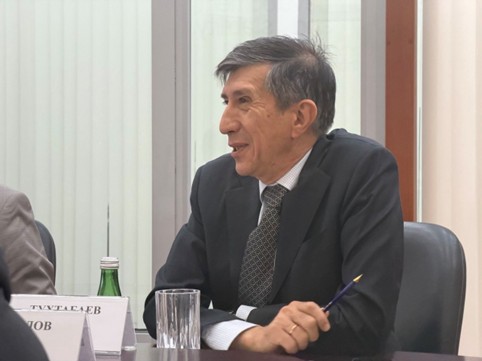
Author: Shukhrat Tukhtabaev,
Chief Research Fellow
Center for Foreign Policy Studies
(Uzbekistan)
📅 01.06.2026
Uzbekistan news
Peace and Trust in Asia - essential conditions for sustainable development
CICA amid a Crisis of Trust: Uzbekistan’s Role in Strengthening Cooperation in Asia
Uzbekistan promotes initiatives in Central Asia that unlock new opportunities for cooperation
Strengthening Transport Connectivity in Asia through the Development of the Trans-Caspian International Transport Corridor
Uzbekistan promotes Initiatives in Central Asia unlocking new opportunities for cooperation
Political mutual trust in the Central Asian region is transforming into economic capital
Uzbekistan attracts specialists from 16 countries to the anniversary international exhibition “Mining, Metallurgy and Metalworking – MiningMetals Uzbekistan 2026”
Uzbekistan has moved its economic cooperation with the Turkic states into a practical dimension
Akramjon Nematov: Central Asia is increasingly emerging as an independent centre for shaping its own economic and technological agenda
Central Asia Is Shaping Its Own Model of Regional Cooperation
Initiatives of Uzbekistan aimed at Economic Results for the Countries of Central Asia and Azerbaijan
Regular dialogue is the Foundation for addressing common water-related challenges in Central Asia
Uzbekistan and Turkmenistan: A New Stage in the Development of Their Strategic Partnership
11th Tashkent International Biennale of Contemporary Art to be held in the capital of Uzbekistan on October 12–16th
OTS Member States - A Crucial Link in the Eurasian Space
Uzbekistan plays an active role in Economic Integration within the framework of the Organization of Turkic States
CICA opens new horizons for financial cooperation
Aquatherm Tashkent 2026 to Showcase Latest Technologies for Construction and Utility Infrastructure
Uzbekistan is securing its place in the Global Hub for Technological Outsourcing
Digital Cooperation among the Turkic States Towards a Unified Technological Ecosystem
Uzbekistan and Azerbaijan are creating a Hub for Startups, Investors and Talent
UZBEKISTAN AND THE UN: FROM NATIONAL INITIATIVES TO THE GLOBAL AGENDA
The 5th Samarkand Forum on Human Rights to take place on September 28–29th
Uzbekistan's key trading partners participate in CICA
Speech by President Shavkat Mirziyoyev at the solemn ceremony dedicated to the thirty-fifth anniversary of the independence of the Republic of Uzbekistan
Uzbekistan Firmly Establishes Itself as a Stable and Predictable Partner for Long-Term International Business
Changing economic priorities of Uzbekistan reshape its engagement with the CIS
Inaugural Central Asia – Republic of Korea Summit at the highest level opens in Seoul
Uzbekistan and Korea: Advancing Green Energy and New Technologies
Uzbekistan and the Republic of Korea in the Emerging Framework for Cooperation with Central Asia

-
 Ministry of Foreign Affairs of the Republic of Uzbekistan
 -
 Diplomatic Service of the Ministry of Foreign Affairs
 -
 State Committee for Tourism Development
 -
Ministry of Investments and Foreign Trade of the Republic of Uzbekistan
-
 invest.gov.uz
 -

-

-

-

-

-

-


of Uzbekistan in the Republic
of Latvia
When using the information, a link to www.uzembassy.lv
must be provided.
All rights reserved
Address
Address: Riga c., LV-1010. 11-11 Elizabetes Str., Latvia
Phone: 37167322424
Fax: 37167322306
Email: embassy@uzbekistan.lv
Useful links
HomeIssuance of biometric passport for departure abroad
Certificate to return to Uzbekistan
Withdrawal of citizenship
Loss of citizenship