Phone
Consular Issues
Phone
Uzbekistan news
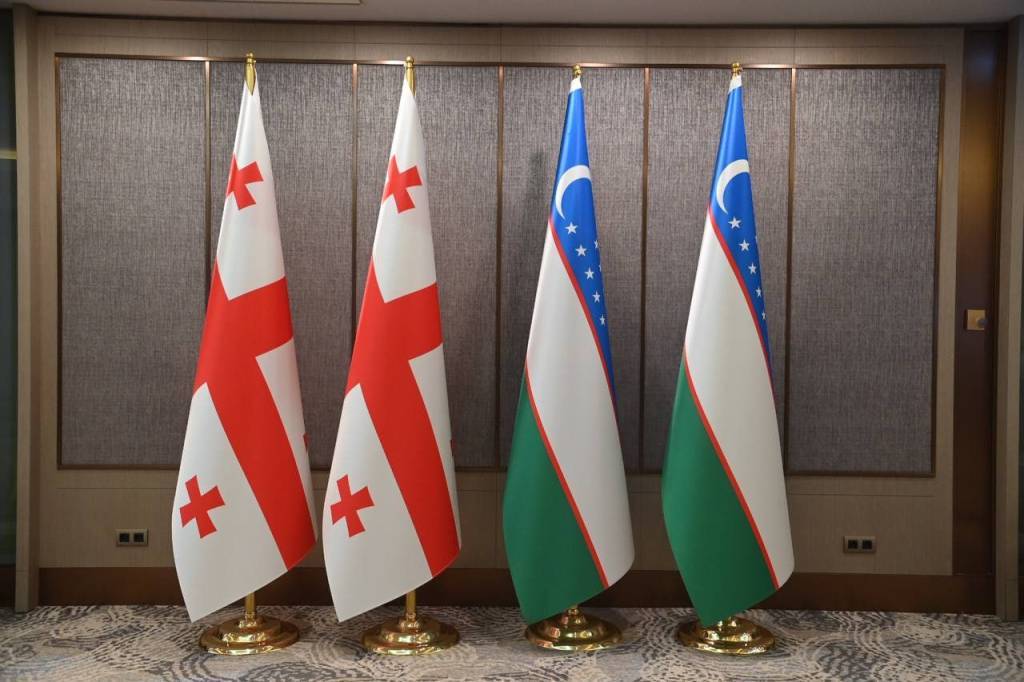
Cooperation Between Uzbekistan and Georgia in Strengthening Connectivity in Central Asia and the South Caucasus
The current transformation of global supply chains and the search for sustainable alternative routes between Asia and Europe are bringing issues of transport connectivity to the forefront. In this context, the development of reliable corridors running through Central Asia and the South Caucasus takes on strategic importance, becoming a key factor in ensuring the sustainability of regional trade, diversifying transport routes, and strengthening economic integration across Eurasia.
Uzbekistan and Georgia occupy complementary geographical positions at the crossroads of key Eurasian routes. For Uzbekistan, a landlocked country, Georgia serves as a vital maritime gateway to Europe via its Black Sea ports. In turn, for Georgia, the partnership with Uzbekistan opens up access to the rapidly growing markets of China and South Asia. This complementarity forms a solid foundation for long-term transportation and logistics cooperation.
The Trans-Caspian International Transport Route (Middle Corridor) plays a central role in this cooperation, with Uzbekistan and Georgia playing a particularly important role. By the end of 2025, steady growth was recorded: the volume of Uzbek cargo transported along this route doubled, reaching 1.2 million metric tons. These results confirm the corridor’s growing popularity and its emergence as a viable alternative to traditional transport routes between the East and the West.
A positive trend is also evident in bilateral freight traffic. By the end of 2025, the total volume of freight traffic between Uzbekistan and Georgia stood at 146.8 thousand metric tons, an increase of 5 percent. Exports grew by 27 percent to 53,400 metric tons, while imports rose by 26 percent to 71,500 metric tons.
Rail transport showed the highest growth rates. In 2025, the volume of rail freight traffic between the two countries reached 53,1 thousand metric tons, an increase of 56 percent. Exports grew by 71 percent, imports by 65 percent, and transit shipments by 49 percent, indicating significant untapped potential in this sector.
The key instrument for increasing rail freight traffic between the two countries and transit through them is the CASCA+ international route, which connects countries in the Asia-Pacific region—China, Kyrgyzstan, Uzbekistan, Turkmenistan, Azerbaijan, Georgia, Turkey, and Europe. To develop this route, Uzbekistan has established a Coordination Committee, and the parties have designated logistics companies responsible for organizing transit container trains.
As part of this route, the railway administrations of the participating countries are granted annual tariff preferences of up to 70%, which leads to an increase in mutually beneficial freight volumes. In addition, on June 8–9 of this year, another six-party meeting was held among the participating countries, resulting in the signing of a protocol to increase freight volumes along the CASCA+ corridor.
Air service is also developing rapidly. Regular flights operate on the Tashkent–Tbilisi and Tashkent–Batumi routes. In 2025, Uzbek airlines operated 608 scheduled and charter flights to and from Georgia, a 12 percent increase over the previous year. In the first five months of 2026, the number of flights doubled compared to the same period last year, reflecting growing mutual interest and the strengthening of humanitarian ties between the peoples of the two countries.
The strategic outlook for cooperation is shaped by major railway projects being implemented with Uzbekistan playing a leading role. The construction of the “China – Kyrgyzstan – Uzbekistan” railway creates the shortest overland route from China to Central Asia and, via the Caspian Sea, to the South Caucasus. In turn, the Trans-Afghan Railway project (“Uzbekistan – Afghanistan – Pakistan”) opens a direct route to the markets of South Asia.
Integrating these projects with existing transport corridors through the countries of the Caucasus and Central Asia will strengthen their interconnectivity and efficiency. Thus, cooperation between Uzbekistan and Georgia is taking on the character of a strategic partnership aimed at strengthening the interconnectedness of Central Asia and the South Caucasus.
Sh. Akhmedov, Leading Specialist at the Center for the Study of Transportation and Logistics Development Issues under the Ministry of Transportation of the Republic of Uzbekistan
📅 24.06.2026
Uzbekistan news
Uzbekistan Firmly Establishes Itself as a Stable and Predictable Partner for Long-Term International Business
Changing economic priorities of Uzbekistan reshape its engagement with the CIS
Inaugural Central Asia – Republic of Korea Summit at the highest level opens in Seoul
Uzbekistan and Korea: Advancing Green Energy and New Technologies
Uzbekistan and the Republic of Korea in the Emerging Framework for Cooperation with Central Asia
Tashkent brings together leaders and key deals in Polymer Market of Central Asia
The 1st Republic of Korea–Central Asia Summit: Why This Moment Matters
Uzbekistan – Serbia: A New Geography of Industrial Cooperation
The President of Uzbekistan’s Visit to Serbia: A New Stage in Economic Partnership Between Central Asia and the Balkans
Uzbekistan and the Republic of Korea: From Investment Partnership to Technological Cooperation
Regional Approaches to SDG Delivery: What Can Central Asia Offer?
Uzbekistan Opens a Balkan Gateway to Europe
The SCO Bishkek Summit: The Economic Agenda of a New Stage of Cooperation
Tourism: A new dimension of Uzbekistan-Kyrgyzstan partnership
Uzbekistan’s Role in the SCO: Economy, Security and Regional Cooperation
Economic Cooperation of Uzbekistan within the SCO at a New Stage of Development
Uzbekistan and Serbia: From Labour Mobility to a Strategic Partnership in Human Capital
Prospects for Uzbekistan–Serbia Cooperation in the ICT Sector
Prospects for Cooperation between the Republic of Uzbekistan and the Republic of Korea within the Framework of the Central Asia–Republic of Korea Cooperation Forum
THE SCO’S NEW FINANCIAL ARCHITECTURE: FROM COORDINATION TO PRACTICAL DEVELOPMENT MECHANISMS
INFORMATION NOTE ON COOPERATION WITH SERBIA
On September 8–10th, Tashkent to gather International Textile Industry Professionals
The Seoul Summit: Uzbekistan in the New Industrial Architecture of C5+1
New Opportunities to Expand Cooperation Between Uzbekistan and Serbia
Uzbekistan and Azerbaijan: Turning Political Alignment into Economic Growth
BRIGHT PROSPECTS FOR MUTUALLY BENEFICIAL PARTNERSHIP
Transport and Logistics Connectivity of the SCO Amid Geopolitical Turbulence: New Opportunities for the Regions
Business in Uzbekistan are moving from digitalization to technological modernization
Uzbekistan and Serbia expand prospects for cooperation in ecology and environmental protection
SCO AND WATER DIPLOMACY: IN PURSUIT OF COMMON INTERESTS

-
 Ministry of Foreign Affairs of the Republic of Uzbekistan
 -
 Diplomatic Service of the Ministry of Foreign Affairs
 -
 State Committee for Tourism Development
 -
Ministry of Investments and Foreign Trade of the Republic of Uzbekistan
-
 invest.gov.uz
 -

-

-

-

-

-

-


of Uzbekistan in the Republic
of Latvia
When using the information, a link to www.uzembassy.lv
must be provided.
All rights reserved
Address
Address: Riga c., LV-1010. 11-11 Elizabetes Str., Latvia
Phone: 37167322424
Fax: 37167322306
Email: embassy@uzbekistan.lv
Useful links
HomeIssuance of biometric passport for departure abroad
Certificate to return to Uzbekistan
Withdrawal of citizenship
Loss of citizenship