Phone
Consular Issues
Phone
Uzbekistan news
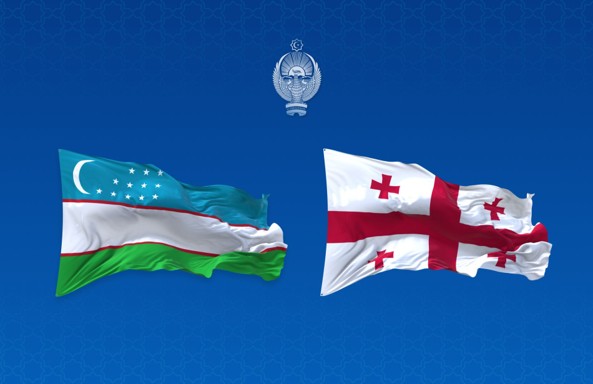
Uzbekistan and Georgia: From historical friendship to a strategic partnership
President of Uzbekistan Shavkat Mirziyoyev will pay a state visit to Georgia on July 2-3
Bilateral relations between Uzbekistan and Georgia are underpinned by profound, centuries-old historical ties, and are undergoing a systematic, dynamic evolution across the political, economic, cultural and humanitarian spectrums in the contemporary era.
Two nations are bound not only by ancient trade routes but also by a comprehensive cooperation firmly anchored in mutual respect, trust, and a profound alignment of strategic interests. In recent years, high-level exchanges, substantial expansion of trade and economic ties and intensification of cultural exchange have successfully elevated bilateral relations to a qualitatively new and historic milestone.
Diplomatic relations between Uzbekistan and Georgia were established on August 19, 1994. Since then, the political dialogue between the two sovereign states has consistently and progressively advanced. In September 1995, Treaty of Friendship and Cooperation was signed, serving as the foundational legal instrument underpinning bilateral relations.
In recent years, regular engagements between Heads of State and Government have substantially enhanced the foundation of bilateral political trust. In particular, between 2022 and 2025, a profound impetus was imparted to the expansion of comprehensive cooperation through reciprocal official visits by the Prime Ministers of both nations, high-level presidential dialogues, sessions of the Joint Intergovernmental Commission and institutionalized political consultations between the respective Ministries of Foreign Affairs.
On March 5th, 2025, President of Uzbekistan received a high-level delegation led by the Prime Minister of Georgia, Irakli Kobakhidze, who arrived in our country on an official visit. During the meeting, the sides comprehensively reviewed matters pertaining to the further expansion of mutually beneficial cooperation across the trade, economic, investment, transport, logistics, tourism and cultural dimensions. It was noted with profound satisfaction that institutional contacts at the parliamentary and governmental levels of the two nations have intensified significantly.
Inter-parliamentary cooperation is likewise undergoing a consistent and progressive evolution. Concurrently, an inter-parliamentary cooperation group dedicated to fostering relations with the Parliament of Georgia functions actively within the Legislative Chamber of the Oliy Majlis. Furthermore, representatives of Georgia routinely participate as international observers in the presidential and parliamentary elections conducted within Uzbekistan.
A free trade regime operates between the two nations, serving as a catalyst for the sustained growth of reciprocal trade turnover. Over the past five years, the volume of bilateral trade has increased two and a half times, accompanied by a rise in the number of joint ventures and a substantial expansion in the volume of cargo transportation.
Furthermore, a digital bank established with the participation of Georgian investors is operating successfully within Uzbekistan.
Furthermore, in June 2025, “Made in Uzbekistan” National Exhibition was organized in Tbilisi, featuring the active participation of over one hundred premier Uzbek enterprises representing the textile, electrical engineering, pharmaceutical, food processing, mechanical engineering and other pivotal industrial sectors.
Matters of transit, transport, and logistical interaction occupy a distinctive place within the architecture of bilateral cooperation. In June of the current year, the official opening ceremony of the modernized Baku - Tbilisi - Kars railway was hosted in the city of Akhalkalaki. In the strategic perspective, the seamless integration of this transport corridor with the construction of the China - Kyrgyzstan - Uzbekistan railway will substantively reinforce the comprehensive transit potential of our respective nations.
Cultural cooperation between Uzbekistan and Georgia is likewise anchored in rich, enduring traditions. Cinema days, cultural festivals, as well as institutional events in the spheres of science and education, are organized on a regular basis.
In the preceding year, Days of Uzbek Culture and Cinema were successfully hosted in Tbilisi, while in the current year, Days of Georgian Culture were celebrated with grand success in Tashkent.
One of the enduring symbols of the profound bonds of friendship uniting the two sovereign states is a central avenue in the capital of Uzbekistan, which proudly bears the name of the eminent Georgian poet Shota Rustaveli, alongside a monument erected in his honor.
Concurrently, in 2025, by the decree of the Tbilisi City Assembly, a prominent central park in the capital of Georgia was officially named after the great Uzbek poet and thinker Alisher Navoi. This monumental gesture stands as a vivid testament to the deep, reciprocal reverence that both nations possess for each other's rich history and cultural heritage.
Today, direct air services operating on the Tashkent - Tbilisi and Tashkent - Batumi routes serve to further catalyze the robust expansion of tourism and business linkages between the two nations.
At present, approximately four thousand citizens of Georgian heritage reside in Uzbekistan. Furthermore, since 1994, the Georgian Cultural Center “Megobroba” ("Friendship") has successfully functioned in Tashkent, contributing significantly to the preservation and promotion of their distinct cultural identity.
It should be noted that the relations between the peoples of Uzbekistan and Georgia trace their roots back to deep antiquity. Ancient authors historically documented the existence of trade linkages between Khwarazm and Colchis, which were actively maintained along Amu Darya river and across the Caspian Sea.
Following the establishment of the Great Silk Road, particularly from the 6th century onward, one of the most critical commercial routes connecting the Caucasus and the Byzantine Empire traversed through Samarkand, Bukhara and Khwarazm. Furthermore, in Shota Rustaveli’s renowned 12th-century epic poem, Knight in the Panther's Skin, explicit reference is made to Khwarazm. This compellingly demonstrates that deep-seated historical, cultural and trade linkages actively existed between Georgia and Central Asia as early as the Middle Ages.
In subsequent periods, representatives of the Georgian people likewise took an active part in the public life of Uzbekistan, among whom were prominent entrepreneurs, architects, scientists, cultural figures and medical professionals. Distinct symbols of the enduring friendship between the two nations include the entrepreneur George Tsintsadze, under whose initiative the renowned “Colosseum” Theater was constructed in Tashkent, as well as Academician Edvard Rtveladze, who rendered an monumental contribution to the development of archaeological science in Uzbekistan.
The scientific heritage of Academician Edvard Rtveladze merits profound and distinctive attention. Hundreds of his scholarly works dedicated to the comprehensive history of Uzbekistan and the thorough examination of Great Silk Road, alongside groundbreaking research that successfully established the precise location of the ancient settlement in the Surkhandarya region, have garnered widespread international acclaim and constitute a monumental contribution to global historical science.
In conclusion, it should be emphasized that amidst the complexities of the contemporary international landscape, relations between Uzbekistan and Georgia continue to systematically evolve on the basis of unwavering mutual trust, open dialogue, and pragmatic cooperation. The steadfast political will of the Leaders of the two states, the dynamic expansion of economic and humanitarian linkages, and a rich historical heritage serve as a solid foundation for the further reinforcement of the mutually beneficial partnership between the two nations.
There is no doubt that such large-scale interaction, regular engagements, and constructive dialogue will continue to facilitate the expansion of comprehensive cooperation in the fields of trade, transport, investments, tourism, culture, and other domains, thereby forging a reliable foundation for the further progressive development of Uzbek-Georgian relations.
Dunyo IA
📅 02.07.2026
Uzbekistan news
Aquatherm Tashkent 2026 to Showcase Latest Technologies for Construction and Utility Infrastructure
Uzbekistan is securing its place in the Global Hub for Technological Outsourcing
Digital Cooperation among the Turkic States Towards a Unified Technological Ecosystem
Uzbekistan and Azerbaijan are creating a Hub for Startups, Investors and Talent
UZBEKISTAN AND THE UN: FROM NATIONAL INITIATIVES TO THE GLOBAL AGENDA
The 5th Samarkand Forum on Human Rights to take place on September 28–29th
Uzbekistan's key trading partners participate in CICA
Speech by President Shavkat Mirziyoyev at the solemn ceremony dedicated to the thirty-fifth anniversary of the independence of the Republic of Uzbekistan
Uzbekistan Firmly Establishes Itself as a Stable and Predictable Partner for Long-Term International Business
Changing economic priorities of Uzbekistan reshape its engagement with the CIS
Inaugural Central Asia – Republic of Korea Summit at the highest level opens in Seoul
Uzbekistan and Korea: Advancing Green Energy and New Technologies
Uzbekistan and the Republic of Korea in the Emerging Framework for Cooperation with Central Asia
Tashkent brings together leaders and key deals in Polymer Market of Central Asia
The 1st Republic of Korea–Central Asia Summit: Why This Moment Matters
Uzbekistan – Serbia: A New Geography of Industrial Cooperation
The President of Uzbekistan’s Visit to Serbia: A New Stage in Economic Partnership Between Central Asia and the Balkans
Uzbekistan and the Republic of Korea: From Investment Partnership to Technological Cooperation
Regional Approaches to SDG Delivery: What Can Central Asia Offer?
Uzbekistan Opens a Balkan Gateway to Europe
The SCO Bishkek Summit: The Economic Agenda of a New Stage of Cooperation
Tourism: A new dimension of Uzbekistan-Kyrgyzstan partnership
Uzbekistan’s Role in the SCO: Economy, Security and Regional Cooperation
Economic Cooperation of Uzbekistan within the SCO at a New Stage of Development
Uzbekistan and Serbia: From Labour Mobility to a Strategic Partnership in Human Capital
Prospects for Uzbekistan–Serbia Cooperation in the ICT Sector
Prospects for Cooperation between the Republic of Uzbekistan and the Republic of Korea within the Framework of the Central Asia–Republic of Korea Cooperation Forum
THE SCO’S NEW FINANCIAL ARCHITECTURE: FROM COORDINATION TO PRACTICAL DEVELOPMENT MECHANISMS
INFORMATION NOTE ON COOPERATION WITH SERBIA
On September 8–10th, Tashkent to gather International Textile Industry Professionals

-
 Ministry of Foreign Affairs of the Republic of Uzbekistan
 -
 Diplomatic Service of the Ministry of Foreign Affairs
 -
 State Committee for Tourism Development
 -
Ministry of Investments and Foreign Trade of the Republic of Uzbekistan
-
 invest.gov.uz
 -
-

-

-

-

-

-

of Uzbekistan in the Republic
of Latvia
When using the information, a link to www.uzembassy.lv
must be provided.
All rights reserved
Address
Address: Riga c., LV-1010. 11-11 Elizabetes Str., Latvia
Phone: 37167322424
Fax: 37167322306
Email: embassy@uzbekistan.lv
Useful links
HomeIssuance of biometric passport for departure abroad
Certificate to return to Uzbekistan
Withdrawal of citizenship
Loss of citizenship