Phone
Consular Issues
Phone
Uzbekistan news
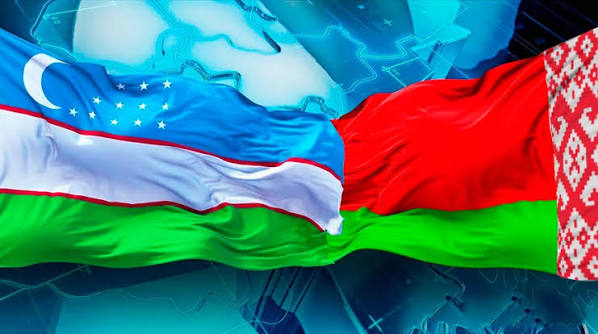
Areas of Cooperation between Belarus and Uzbekistan in Strengthening Sustainable Transport Corridors in Eurasia
Belarus and Uzbekistan actively cooperate in the transport and logistics sector within the framework of the Coordinating Transport Conference of the CIS Member States (CIS CTC), the Organization for Cooperation of Railways (OSJD), and the Commonwealth Railway Transport Council (CIS RTC).
An additional basis for the development of bilateral and multilateral cooperation is the participation of both countries in the CIS and SCO, where issues of developing international transport corridors and strengthening transport connectivity between states occupy an important place on the cooperation agenda.
A practical result of cooperation is the steady positive growth in freight traffic between the Republic of Uzbekistan and the Republic of Belarus, which is one of the republic's key trade and transport partners.
In terms of export and import freight volumes, Belarus is among Uzbekistan's top ten trading partners. By the end of 2025, freight traffic between the two countries reached 850,000 tons, an increase of 30% compared to the previous year.
The structure of freight traffic is dominated by imports, primarily timber, timber products, and food products, while export volumes remain insignificant and consist primarily of agricultural products.
The current situation demonstrates significant potential for increasing mutual freight traffic, primarily through the expansion of Uzbek exports and the development of new logistics routes.
In the context of geopolitical conflicts and the diversification of global supply chains, the creation of new international transport corridors in Eurasia using mixed modes of transport in the East-West and North-South directions is acquiring strategic importance.
The following are promising cooperation projects:
- Development of new, optimal alternative transport routes with access to seaports.
A promising area is the development of the international transport route "Belarus – Russia – Kazakhstan – Uzbekistan – Afghanistan – Pakistan – Indian Ocean ports," which utilizes the shortest railway section running through Kazakhstan between the Dina Nurpeisova and Karakalpakstan stations.
On November 1, 2023, in Tashkent, at the SCO Transport Forum, the transport ministers of Uzbekistan, Russia, and Kazakhstan signed a Memorandum of Understanding on the creation and development of this corridor. Belarus and Pakistan joined the Memorandum in 2024, and negotiations are currently underway to add Afghanistan.
The economic logic of the project is very clear. The corridor is approximately half the length of existing alternative routes and reduces delivery times by 2-3 times. It will directly connect the countries of the European Union and the CIS with Southeast and South Asia via a land-based rail and road route, increasing our countries' transit potential by transporting goods to the densely populated countries of South Asia – India and Pakistan – via the Uzbekistan – Afghanistan – Pakistan route.
In the future, joint work is planned to develop uniform standards for the operation of the international transport corridor, including the introduction of a single shipping document and the unification of technological and technical standards.
It should be noted that the new route through Uzbekistan, Afghanistan, and Pakistan will contribute to the diversification of the geography and structure of foreign trade and will lead to an increase in the region's transit potential.
This potential is already being demonstrated in practice. In the first quarter of 2026 alone, freight transit to the south through Uzbekistan increased by 23% compared to the same period last year, reaching 1.8 million tons, of which 1.3 million tons were transported by rail and 0.5 million tons by road.
- Cooperation in Transport Personnel Training.
A significant element of the long-term partnership is cooperation in the training and advanced training of transport specialists.
Belarus has a recognized track record in transport training. For example, the Belarusian State University of Transport in Gomel is a leading specialized educational and research institution, which includes the Institute for Advanced Training and Retraining of Personnel and the Research Institute of Railway Transport.
Developing cooperation between the Belarusian State University of Transport and specialized organizations in Uzbekistan, particularly the Tashkent State Transport University, would enable the organization of internships and advanced training programs for specialists, the development of academic mobility for undergraduate, graduate, and postgraduate students, and joint research in priority areas of rail transport development, multimodal transportation, and international transport logistics.
III. Digitalization of Permit Exchange for Road Transport.
A separate practical area is the transition to the electronic exchange of permit forms—the E-permit system. Uzbekistan currently fully implements this exchange with Azerbaijan, Kazakhstan, Kyrgyzstan, China, and Turkey, and partially with Tajikistan. Work is underway to launch it with Turkmenistan.
Implementing this system in cooperation with Belarus will ensure transparency in permit distribution, eliminate human error, and strengthen oversight of their use, which is especially relevant given the growing volume of road transport between the countries.
Thus, cooperation between Belarus and Uzbekistan in transport and logistics goes beyond increasing mutual traffic and acquires a strategic dimension.
The implementation of these projects—from a multimodal corridor to Indian Ocean ports to the digitalization of permitting procedures—could transform our countries' geographical location into a real competitive advantage, making the Belarus-Uzbekistan-South Asia route convenient, fast, and predictable.
Joint and consistent work in these areas will strengthen economic ties between the two countries and make a significant contribution to the development of sustainable transport connectivity in the Eurasian space.
Head of Department, Center for the Study of Transport and Logistics Development Problems under the Ministry of Transport of the Republic of Uzbekistan Dildora Ibragimova
📅 03.07.2026
Uzbekistan news
Aquatherm Tashkent 2026 to Showcase Latest Technologies for Construction and Utility Infrastructure
Uzbekistan is securing its place in the Global Hub for Technological Outsourcing
Digital Cooperation among the Turkic States Towards a Unified Technological Ecosystem
Uzbekistan and Azerbaijan are creating a Hub for Startups, Investors and Talent
UZBEKISTAN AND THE UN: FROM NATIONAL INITIATIVES TO THE GLOBAL AGENDA
The 5th Samarkand Forum on Human Rights to take place on September 28–29th
Uzbekistan's key trading partners participate in CICA
Speech by President Shavkat Mirziyoyev at the solemn ceremony dedicated to the thirty-fifth anniversary of the independence of the Republic of Uzbekistan
Uzbekistan Firmly Establishes Itself as a Stable and Predictable Partner for Long-Term International Business
Changing economic priorities of Uzbekistan reshape its engagement with the CIS
Inaugural Central Asia – Republic of Korea Summit at the highest level opens in Seoul
Uzbekistan and Korea: Advancing Green Energy and New Technologies
Uzbekistan and the Republic of Korea in the Emerging Framework for Cooperation with Central Asia
Tashkent brings together leaders and key deals in Polymer Market of Central Asia
The 1st Republic of Korea–Central Asia Summit: Why This Moment Matters
Uzbekistan – Serbia: A New Geography of Industrial Cooperation
The President of Uzbekistan’s Visit to Serbia: A New Stage in Economic Partnership Between Central Asia and the Balkans
Uzbekistan and the Republic of Korea: From Investment Partnership to Technological Cooperation
Regional Approaches to SDG Delivery: What Can Central Asia Offer?
Uzbekistan Opens a Balkan Gateway to Europe
The SCO Bishkek Summit: The Economic Agenda of a New Stage of Cooperation
Tourism: A new dimension of Uzbekistan-Kyrgyzstan partnership
Uzbekistan’s Role in the SCO: Economy, Security and Regional Cooperation
Economic Cooperation of Uzbekistan within the SCO at a New Stage of Development
Uzbekistan and Serbia: From Labour Mobility to a Strategic Partnership in Human Capital
Prospects for Uzbekistan–Serbia Cooperation in the ICT Sector
Prospects for Cooperation between the Republic of Uzbekistan and the Republic of Korea within the Framework of the Central Asia–Republic of Korea Cooperation Forum
THE SCO’S NEW FINANCIAL ARCHITECTURE: FROM COORDINATION TO PRACTICAL DEVELOPMENT MECHANISMS
INFORMATION NOTE ON COOPERATION WITH SERBIA
On September 8–10th, Tashkent to gather International Textile Industry Professionals

-
 Ministry of Foreign Affairs of the Republic of Uzbekistan
 -
 Diplomatic Service of the Ministry of Foreign Affairs
 -
 State Committee for Tourism Development
 -
Ministry of Investments and Foreign Trade of the Republic of Uzbekistan
-
 invest.gov.uz
 -
-

-

-

-

-

-

of Uzbekistan in the Republic
of Latvia
When using the information, a link to www.uzembassy.lv
must be provided.
All rights reserved
Address
Address: Riga c., LV-1010. 11-11 Elizabetes Str., Latvia
Phone: 37167322424
Fax: 37167322306
Email: embassy@uzbekistan.lv
Useful links
HomeIssuance of biometric passport for departure abroad
Certificate to return to Uzbekistan
Withdrawal of citizenship
Loss of citizenship