Phone
Consular Issues
Phone
Uzbekistan news
Through the Caspian to New Markets
Development of the “Central Asia Plus” Formats
In recent years, Central Asia has increasingly acted as a unified region in international relations. Alongside bilateral ties, “Central Asia Plus” formats have been developing, allowing the countries to coordinate their shared interests and discuss trade, investment, industrial cooperation, transportation, energy, and security with external partners.
Existing formats include “Central Asia–European Union,” “Central Asia–Russia,” the C5+1 platform with the United States, as well as dialogue mechanisms with China, Japan, South Korea, and other partners. These mechanisms do not replace bilateral cooperation but complement it with a regional agenda.
Central Asia’s Multivector Cooperation
The first “Central Asia–European Union” summit, held in Samarkand in April 2025, focused on developing a strategic partnership between the two regions. Particular attention was paid to investment, technological modernization, green energy, critical minerals, transportation, and logistics.
Uzbekistan proposed establishing an investment platform to advance regional projects and developing coordinated conditions for expanding the Trans-Caspian Transport Corridor. It also proposed holding a meeting of the transport ministers of the countries located along the route.
The second “Central Asia–Russia” summit, held in October 2025, focused on expanding trade, industrial cooperation, and collaboration in energy and transportation.
Uzbekistan proposed holding annual summits, establishing a coordination council at the deputy prime minister level, and creating an integrated transportation and logistics framework combining national road, rail, and air connectivity programs. Particular attention was also paid to developing the North–South Corridor and resilient production chains.
Thus, the “Central Asia Plus” formats enable the region to develop cooperation in several areas simultaneously. Their purpose is not to choose a single partner or route, but to expand economic ties and strengthen the region’s resilience to external changes.
Establishing a New C5+1 Format
The “Central Asia + Azerbaijan” format differs from other platforms because Azerbaijan is directly connected to the region through the Caspian Sea and is a key component of transportation routes leading toward the South Caucasus, Türkiye, and Europe.
For Central Asia, Azerbaijan is an important transit, investment, and industrial partner. For Azerbaijan, the Central Asian countries represent a growing market and a source of cargo flows for its port, railway, and logistics infrastructure. The new format therefore has not only political significance but also a specific economic dimension.
At the seventh Consultative Meeting of the Heads of State of Central Asia, held in Tashkent on November 16, 2025, a decision was made to grant Azerbaijan full participation. This became the first meeting of regional leaders in the expanded format.
President of Uzbekistan Shavkat Mirziyoyev proposed gradually transforming the consultative dialogue into a strategic “Central Asian Community” format. Initial steps included strengthening the institutional framework of the meetings, establishing a rotating secretariat, and elevating the status of national coordinators to special representatives of the presidents.
In trade and economic cooperation, Uzbekistan proposed developing a Comprehensive Regional Program for Trade and Economic Cooperation through 2035. The document is expected to address the removal of administrative barriers, simplification of customs and tax procedures, joint use of industrial and free economic zones, and other measures to increase intraregional trade.
Initiatives were also proposed to establish a common investment space and develop e-commerce. These measures include coordinating basic approaches to investor protection, creating regional digital marketplaces, and developing reliable digital payment systems.
Particular attention was paid to transportation and energy infrastructure. Uzbekistan proposed establishing an Infrastructure Development Council at the deputy prime minister level. Priorities included the construction and modernization of roads, railways, border checkpoints, energy networks, green corridors, and digital infrastructure.
Transportation initiatives covered the China–Kyrgyzstan–Uzbekistan railway, the Trans-Afghan route, and the Trans-Caspian transportation routes connecting Central Asia with the markets of the Caucasus, Türkiye, and Europe.
In 2026, the meeting is expected to continue under Turkmenistan’s chairmanship in the new “Central Asia and Azerbaijan” format.
Economic Foundation of Cooperation
The expansion of the regional format is taking place against the backdrop of growing trade and investment ties between Uzbekistan and the Central Asian countries.
In 2025, Uzbekistan’s trade turnover with the countries of the region reached $8.3 billion. Exports totaled approximately $3.2 billion, while imports amounted to $5.1 billion. Kazakhstan remained Uzbekistan’s largest regional trading partner, accounting for 60.2% of its trade with Central Asian countries. Turkmenistan and Kyrgyzstan each accounted for 14.5%, while Tajikistan accounted for 11%.
As of June 2026, Uzbekistan was home to 2,384 enterprises with capital from Central Asian countries. These included 1,283 enterprises with Kazakh capital, 442 with Tajik capital, 362 with Kyrgyz capital, and 297 with Turkmen capital.
The total volume of direct investment and loans attracted from the countries of the region in 2017–2025 amounted to $2.5 billion. In 2025 alone, this figure reached $1.3 billion.
At the same time, the potential of intraregional trade has not been fully utilized. According to calculations by the Center for Economic Research and Reforms, replacing some goods imported from third countries with intraregional supplies could increase trade within Central Asia by $11.4 billion, more than doubling its current volume. Unlocking this potential requires reducing tariff and non-tariff barriers, improving information exchange among businesses, and developing regional production chains.
Uzbekistan’s economic relations with Azerbaijan are also strengthening. Between 2017 and 2025, bilateral trade increased 9.5-fold, from $32.5 million to $307.3 million. Uzbekistan’s exports reached $227.3 million, while imports from Azerbaijan amounted to $80 million.
Uzbekistan’s exports mainly consist of manufactured goods, machinery and transportation equipment, food products, beverages, finished goods, and services. Imports are dominated by food and manufactured goods, machinery, transportation equipment, and chemical products.
Uzbekistan is home to 460 enterprises with Azerbaijani capital. Their number has increased 6.5-fold since 2017. In 2025, Azerbaijani investment in Uzbekistan totaled $173.7 million, bringing cumulative investment to $318.6 million.
An additional instrument was created in 2023 with the establishment of the Azerbaijan–Uzbekistan Investment Company, which has authorized capital of $500 million and can finance projects in Uzbekistan, Azerbaijan, and third countries.
Cooperation is also developing in the automotive industry, textiles, construction, agriculture, and other sectors.
The Middle Corridor and Azerbaijan
Expanding trade and industrial cooperation requires reliable transportation infrastructure. For Uzbekistan, which has no direct access to the sea, developing alternative routes is essential to strengthening the resilience of foreign trade.
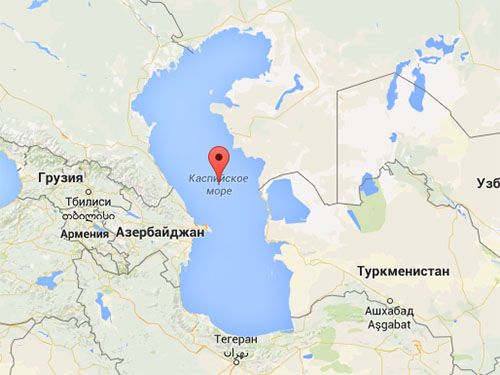
The Middle Corridor connects China and Central Asia with the South Caucasus, Türkiye, and Europe. Cargo from Uzbekistan can be transported through Kazakhstan or Turkmenistan to Caspian ports, shipped by sea to Azerbaijan, and then delivered to European markets through Georgia and Türkiye or across the Black Sea.
Azerbaijan occupies a central position in the western section of the route. Its transportation infrastructure includes the Alat International Sea Trade Port, the Caspian merchant fleet, and the Baku–Tbilisi–Kars railway.
The capacity of the Alat Port is expected to increase from 15 million to 25 million metric tons, while the capacity of the Baku–Tbilisi–Kars railway has been expanded to 5 million metric tons. A unified digital platform is also being developed to simplify transportation operations and trade between Caspian ports.
According to the World Bank, if the necessary infrastructure and organizational reforms are implemented, freight traffic along the Middle Corridor could triple by 2030, while delivery times could be reduced by half.
During the first nine months of 2025, transit freight between Uzbekistan and Azerbaijan exceeded 1 million metric tons. This indicates growing prospects for using Azerbaijan’s transportation infrastructure as a transit route for Uzbek cargo.
The opening of the Zangezur Corridor is also expected to create additional opportunities for all Central Asian countries.
Opportunities for Uzbekistan and Central Asia
For Uzbekistan, the Middle Corridor provides an additional route to the markets of Azerbaijan, Georgia, Türkiye, and the European Union. This makes it possible to diversify transportation routes and reduce foreign trade dependence on a limited number of corridors.
Delivery times and predictability are especially important. They directly affect the competitiveness of textiles, fruits and vegetables, electrical equipment, automobiles, and other high-value-added products. Coordinating rail and maritime transportation schedules, introducing digital documentation, and reducing border-crossing times could lower exporters’ costs.
The corridor’s development will also create demand for dry ports, multimodal terminals, warehouses and cold-storage facilities, repair enterprises, and insurance, financial, and digital services. Transportation can therefore be viewed not only as a means of delivering goods but also as a separate area of investment and industrial development.
Additional opportunities are associated with the construction of the China–Kyrgyzstan–Uzbekistan railway. Its integration with the Middle Corridor would establish a shorter and more resilient transportation link between China, Central Asia, the Caucasus, and Europe.
For Central Asia as a whole, developing the route would make it possible to consolidate cargo flows, harmonize transportation procedures, and increase the region’s attractiveness to international investors. A larger and more stable cargo base would support regular train and vessel services, reduce per-unit costs, and expand the geographic reach of shipments.
The Middle Corridor is not viewed as a replacement for northern or southern routes. Its main purpose is to expand available options, strengthen logistics resilience, and create additional connections to external markets.
The Importance of Industrial Cooperation
Transportation cooperation will have a long-term impact if it is linked to the development of manufacturing. Growth in transit alone will not ensure the full realization of the new format’s economic potential.
Uzbekistan, other Central Asian countries, and Azerbaijan could establish joint production chains in the automotive industry, textiles, agricultural processing, electrical engineering, construction materials, chemicals, and machinery manufacturing.
An analysis by the Center for Economic Research and Reforms shows that regional enterprises could supply one another with raw materials, components, and finished products, reducing their dependence on imports from third countries.
One promising area is the establishment of joint industrial zones and logistics centers along the Middle Corridor. The idea of creating “mirror” special economic zones in Uzbekistan and Azerbaijan has not yet reached the implementation stage, but it offers significant development potential.
At the same time, growing bilateral trade, the work of the joint investment company, and expanding transportation links are creating conditions for revisiting this initiative.
Such zones could specialize in product assembly and processing, consolidation of export shipments, warehousing operations, and transportation services. Establishing interconnected production facilities in Uzbekistan and Azerbaijan would combine Central Asia’s industrial potential with the transportation infrastructure of the South Caucasus.
Conclusion
The first meeting in the expanded format established a political and institutional foundation for cooperation between Central Asia and Azerbaijan. The next meeting, under Turkmenistan’s chairmanship, could focus on the practical development of the Middle Corridor and the expansion of industrial cooperation.
In transportation, the main priorities include coordinating tariffs and procedures, developing regular rail and maritime services, modernizing port and border infrastructure, digitizing documentation, and exploring opportunities to connect the Middle Corridor with the China–Kyrgyzstan–Uzbekistan railway.
In industry, priorities could include establishing joint production chains, developing industrial zones, implementing projects through the Azerbaijan–Uzbekistan Investment Company, and attracting international financial institutions to infrastructure and manufacturing projects.
For Uzbekistan, the “Central Asia + Azerbaijan” format creates opportunities to expand exports, diversify transportation routes, and attract investment in manufacturing and logistics. For other Central Asian countries, it provides an additional route to Western markets.
The format’s future significance will depend on how consistently the participating countries develop the Middle Corridor and complement the transportation agenda with industrial and investment cooperation. The upcoming meeting could provide practical momentum for implementing the most ambitious and mutually beneficial projects.
Edvard Romanov,
Center for Economic Research and Reforms
📅 21.07.2026
Uzbekistan news
Tashkent to host 22nd International Exhibition “Transport and Logistics - TransLogistica Uzbekistan” on November 10–12th, 2026
CICA Member States Account for More Than 50% of Uzbekistan’s Foreign Trade Turnover
Uzbekistan and the United States: The Economics of Mutual Interest
NEW OPPORTUNITIES IN HIGHER EDUCATION IN THE TURKIC STATES: A COMMON SPACE, SHARED GOALS
Peace and Trust in Asia - essential conditions for sustainable development
CICA amid a Crisis of Trust: Uzbekistan’s Role in Strengthening Cooperation in Asia
Uzbekistan promotes initiatives in Central Asia that unlock new opportunities for cooperation
Strengthening Transport Connectivity in Asia through the Development of the Trans-Caspian International Transport Corridor
Uzbekistan promotes Initiatives in Central Asia unlocking new opportunities for cooperation
Political mutual trust in the Central Asian region is transforming into economic capital
Uzbekistan attracts specialists from 16 countries to the anniversary international exhibition “Mining, Metallurgy and Metalworking – MiningMetals Uzbekistan 2026”
Uzbekistan has moved its economic cooperation with the Turkic states into a practical dimension
Akramjon Nematov: Central Asia is increasingly emerging as an independent centre for shaping its own economic and technological agenda
Central Asia Is Shaping Its Own Model of Regional Cooperation
Initiatives of Uzbekistan aimed at Economic Results for the Countries of Central Asia and Azerbaijan
Regular dialogue is the Foundation for addressing common water-related challenges in Central Asia
Uzbekistan and Turkmenistan: A New Stage in the Development of Their Strategic Partnership
11th Tashkent International Biennale of Contemporary Art to be held in the capital of Uzbekistan on October 12–16th
OTS Member States - A Crucial Link in the Eurasian Space
Uzbekistan plays an active role in Economic Integration within the framework of the Organization of Turkic States
CICA opens new horizons for financial cooperation
Aquatherm Tashkent 2026 to Showcase Latest Technologies for Construction and Utility Infrastructure
Uzbekistan is securing its place in the Global Hub for Technological Outsourcing
Digital Cooperation among the Turkic States Towards a Unified Technological Ecosystem
Uzbekistan and Azerbaijan are creating a Hub for Startups, Investors and Talent
UZBEKISTAN AND THE UN: FROM NATIONAL INITIATIVES TO THE GLOBAL AGENDA
The 5th Samarkand Forum on Human Rights to take place on September 28–29th
Uzbekistan's key trading partners participate in CICA
Speech by President Shavkat Mirziyoyev at the solemn ceremony dedicated to the thirty-fifth anniversary of the independence of the Republic of Uzbekistan
Uzbekistan Firmly Establishes Itself as a Stable and Predictable Partner for Long-Term International Business

-
 Ministry of Foreign Affairs of the Republic of Uzbekistan
 -
 Diplomatic Service of the Ministry of Foreign Affairs
 -
 State Committee for Tourism Development
 -
Ministry of Investments and Foreign Trade of the Republic of Uzbekistan
-
 invest.gov.uz
 -

-

-

-

-

-

-


of Uzbekistan in the Republic
of Latvia
When using the information, a link to www.uzembassy.lv
must be provided.
All rights reserved
Address
Address: Riga c., LV-1010. 11-11 Elizabetes Str., Latvia
Phone: 37167322424
Fax: 37167322306
Email: embassy@uzbekistan.lv
Useful links
HomeIssuance of biometric passport for departure abroad
Certificate to return to Uzbekistan
Withdrawal of citizenship
Loss of citizenship