Phone
Consular Issues
Phone
Uzbekistan news
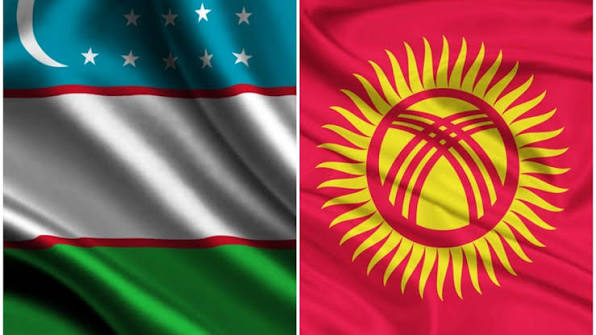
Uzbekistan - Kyrgyzstan: from border neighborhood to long-term economic cooperation
Relations between Uzbekistan and Kyrgyzstan have in recent years become one of the key pillars of regional cooperation in Central Asia. They are underpinned by a shared border, historical ties, sustained dialogue between the two countries’ leaders, and growing interdependence in trade, transport, energy, industry, agriculture, and the development of border regions. Consequently, the bilateral agenda is increasingly moving beyond traditional good-neighbourly relations and evolving into a comprehensive economic partnership.
Regular high-level contacts provide the strategic framework, while the Joint Commission on Bilateral Cooperation remains the principal mechanism for intergovernmental coordination. In May 2026, the Deputy Prime Ministers of the two countries met on the sidelines of the KazanForum. In June, the relevant ministers discussed current issues of trade, investment, and economic cooperation, while the 12th meeting of the Intergovernmental Commission was held in Cholpon-Ata on 22–23 June.
Direct interregional ties remain an important element of this architecture. The Council of Hokims of Uzbekistan’s border regions and Plenipotentiary Representatives of the President of Kyrgyzstan, established in 2017, was renewed in 2025 through the establishment of the Council of Heads of Regions of the two countries. As a continuation of this initiative, Uzbekistan plans to host the first Forum of Regions. This format has practical significance for trade, logistics, border checkpoints, markets, and local entrepreneurship.
Business contacts are also becoming increasingly intensive. In July 2024, Tashkent hosted a business forum attended by 350 entrepreneurs, which resulted in the signing of 20 documents worth USD 213 million. Preparations for the next forum in Bishkek confirm the continuity of this track and its focus not only on trade transactions but also on projects involving industrial cooperation.
Trade dynamics reflect growing economic interest. By the end of 2025, bilateral trade had reached nearly USD 1.2 billion, an increase of 36.4%. The positive trend continued in January–May 2026, with trade turnover reaching USD 468.8 million, up 43.9%. Uzbekistan’s exports increased by 60.8%, while imports from Kyrgyzstan rose by 12.1%. The structure of trade also demonstrates a broad sectoral base, ranging from textiles, food products, construction materials, and equipment in Uzbekistan’s exports to ores, electricity, metals, and plastics in imports from Kyrgyzstan.
To consolidate these trends, the two countries are implementing a programme to increase bilateral trade for 2024–2030. Its purpose is to move beyond growth in individual product categories towards a more sustainable supply model by expanding the range of goods, developing promotion and distribution channels, and eliminating trade barriers. As part of this work, the parties are considering issues related to coal, construction materials, livestock, seedlings, and sheet glass.
The next level of cooperation involves trade, logistics, and industrial instruments. The Termez International Trade Centre provides Kyrgyz products with an additional southern route, while trading houses in Bishkek and Tashkent could serve as permanent channels for promoting goods. Assembly facilities using components from Uzbekistan would give bilateral trade a stronger industrial dimension.
The investment component is supported by the mutual presence of businesses: 450 enterprises with Kyrgyz capital operate in Uzbekistan, while 85 enterprises with Uzbek capital operate in Kyrgyzstan. This indicates a transition from conventional trade operations to more sustainable forms of business engagement.
On this basis, industrial cooperation is acquiring tangible substance. Automobile production has been launched in the Chuy Region with the participation of the Uzbek side, including the manufacture of Onix, Captiva, Damas, Cobalt, Tahoe, and Tracker models.
At the same time, sectoral opportunities are not limited to the automotive industry. In the field of geology, the parties are interested in the joint exploration of several deposits, including iron ore and phosphorites, as well as cooperation on critical minerals. In the pharmaceutical sector, plans are being developed to manufacture affordable medicines.
The light industry sector holds particularly significant potential. Textile enterprises have already been established in Kara-Balta and Andijan, garment production is expanding in Bishkek and the Osh Region, and fabric manufacturing is being developed in the Chuy Region.
Alongside industrial initiatives, energy cooperation continues to be of strategic importance. The Kambarata HPP-1 project occupies a central place in this area. It is important to accelerate the coordination of the relevant intergovernmental agreement and ensure a balance between the parties’ water and energy interests.
The transport dimension complements this logic, as it directly affects the sustainability of economic ties. Transport operators in both countries require predictable operating conditions. Therefore, the establishment of a working group and the preparation of a joint transport and logistics programme for 2026–2028 remain relevant priorities.
The Uzbek-Kyrgyz Development Fund provides the financial foundation for some of these initiatives. Its portfolio already includes projects in transport, finance, light industry, construction materials, and energy. Expanding the Fund’s project portfolio and considering the participation of the Kyrgyz side in its authorised capital could further strengthen the sustainability of this mechanism.
Border infrastructure is of particular importance, as it translates the broader bilateral agenda into practical cooperation at the regional and local levels.
Overall, these areas demonstrate that Uzbek-Kyrgyz relations are progressing towards a more mature economic model. Growing trade, industrial projects, energy coordination, transport corridors, agricultural and industrial initiatives, and the expansion of financial instruments are forming not a fragmented set of agreements, but an interconnected system of long-term partnership.
📅 21.07.2026
Uzbekistan news
CICA Member States Account for More Than 50% of Uzbekistan’s Foreign Trade Turnover
Uzbekistan and the United States: The Economics of Mutual Interest
NEW OPPORTUNITIES IN HIGHER EDUCATION IN THE TURKIC STATES: A COMMON SPACE, SHARED GOALS
Peace and Trust in Asia - essential conditions for sustainable development
CICA amid a Crisis of Trust: Uzbekistan’s Role in Strengthening Cooperation in Asia
Uzbekistan promotes initiatives in Central Asia that unlock new opportunities for cooperation
Strengthening Transport Connectivity in Asia through the Development of the Trans-Caspian International Transport Corridor
Uzbekistan promotes Initiatives in Central Asia unlocking new opportunities for cooperation
Political mutual trust in the Central Asian region is transforming into economic capital
Uzbekistan attracts specialists from 16 countries to the anniversary international exhibition “Mining, Metallurgy and Metalworking – MiningMetals Uzbekistan 2026”
Uzbekistan has moved its economic cooperation with the Turkic states into a practical dimension
Akramjon Nematov: Central Asia is increasingly emerging as an independent centre for shaping its own economic and technological agenda
Central Asia Is Shaping Its Own Model of Regional Cooperation
Initiatives of Uzbekistan aimed at Economic Results for the Countries of Central Asia and Azerbaijan
Regular dialogue is the Foundation for addressing common water-related challenges in Central Asia
Uzbekistan and Turkmenistan: A New Stage in the Development of Their Strategic Partnership
11th Tashkent International Biennale of Contemporary Art to be held in the capital of Uzbekistan on October 12–16th
OTS Member States - A Crucial Link in the Eurasian Space
Uzbekistan plays an active role in Economic Integration within the framework of the Organization of Turkic States
CICA opens new horizons for financial cooperation
Aquatherm Tashkent 2026 to Showcase Latest Technologies for Construction and Utility Infrastructure
Uzbekistan is securing its place in the Global Hub for Technological Outsourcing
Digital Cooperation among the Turkic States Towards a Unified Technological Ecosystem
Uzbekistan and Azerbaijan are creating a Hub for Startups, Investors and Talent
UZBEKISTAN AND THE UN: FROM NATIONAL INITIATIVES TO THE GLOBAL AGENDA
The 5th Samarkand Forum on Human Rights to take place on September 28–29th
Uzbekistan's key trading partners participate in CICA
Speech by President Shavkat Mirziyoyev at the solemn ceremony dedicated to the thirty-fifth anniversary of the independence of the Republic of Uzbekistan
Uzbekistan Firmly Establishes Itself as a Stable and Predictable Partner for Long-Term International Business
Changing economic priorities of Uzbekistan reshape its engagement with the CIS

-
 Ministry of Foreign Affairs of the Republic of Uzbekistan
 -
 Diplomatic Service of the Ministry of Foreign Affairs
 -
 State Committee for Tourism Development
 -
Ministry of Investments and Foreign Trade of the Republic of Uzbekistan
-
 invest.gov.uz
 -

-

-

-

-

-

-

of Uzbekistan in the Republic
of Latvia
When using the information, a link to www.uzembassy.lv
must be provided.
All rights reserved
Address
Address: Riga c., LV-1010. 11-11 Elizabetes Str., Latvia
Phone: 37167322424
Fax: 37167322306
Email: embassy@uzbekistan.lv
Useful links
HomeIssuance of biometric passport for departure abroad
Certificate to return to Uzbekistan
Withdrawal of citizenship
Loss of citizenship