Phone
Consular Issues
Phone
Uzbekistan news
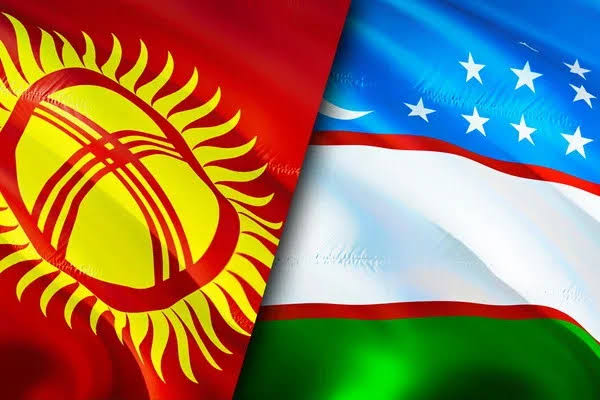
Uzbekistan – Kyrgyzstan: Prospects for Cooperation on Water Resources
In recent years, under the leadership of President Shavkat Mirziyoyev, good neighborliness, mutual respect, and practical cooperation have become the guiding principles of Uzbekistan's foreign policy.
As a result of this policy, a completely new political atmosphere has taken shape in Central Asia. Many issues once considered complex are now being resolved through dialogue, agreement, and shared interests. These changes are also clearly evident in the water sector.
Today, relations between Uzbekistan and Kyrgyzstan are recognized as a model of the most successful cooperation in Central Asia. The political will of the President of the Republic of Uzbekistan, Shavkat Mirziyoyev, and the President of the Kyrgyz Republic, Sadyr Japarov, their regular meetings, the work of intergovernmental commissions, and the close dialogue between relevant agencies have forged a completely new approach to water resource management. Most importantly, the perception of water has changed. It is no longer seen as a source of contention but as a resource that ensures mutual development and stability.
Rivers do not recognize state borders. But their fate is determined by the trust between states. At the Consultative Meeting of the Heads of State of Central Asia and the summit of the International Fund for Saving the Aral Sea, President Shavkat Mirziyoyev emphasized that in conditions of water scarcity, the countries of the region must act based on common responsibility. He put forward the initiative to declare 2026–2036 as the "Decade of Practical Action for Rational Water Use in Central Asia."
This initiative, within the framework of bilateral relations with the Kyrgyz Republic, encompasses a wide range of areas such as the joint operation of transboundary hydraulic structures, reconstruction of irrigation infrastructure, digitalization of water management, introduction of modern water-saving technologies, training of specialists, and the implementation of regional projects in the field of sustainable water resource management.
Analyzing the last decade, a new stage of bilateral cooperation began in 2017. One of the most significant events was the signing of the Agreement between the Government of the Republic of Uzbekistan and the Government of the Kyrgyz Republic on the joint management, use, and protection of the water resources of the Kasansay (Ortotokoy) reservoir on October 6, 2017.
This document has served as an important legal basis for the further development of cooperation and, for the first time, established modern mechanisms for the joint management of one of the region's largest transboundary reservoirs.
The signing of this agreement was a significant step in strengthening mutual trust between the two countries. It enabled a transition from the annual coordination of specific issues on the use of water management facilities to the formation of a long-term system for the joint management of water resources.
To implement the provisions of the agreement, a joint Uzbek-Kyrgyz Commission on the Use of the Kosonsoy (Ortotokoy) Reservoir was established. Within its framework, representatives of the relevant ministries of the two states gained the opportunity to regularly address issues concerning the operation of hydraulic structures, coordinate reservoir filling and water release schedules, conduct repair work, exchange hydrological data, and jointly monitor the technical condition of the facilities.
Within the framework of regular trilateral meetings held since 2021 with the participation of the heads of the water and energy sectors of the Republic of Uzbekistan, the Republic of Kazakhstan, and the Kyrgyz Republic, relevant protocols and schedules are being approved. These concern the additional release of water from the Toktogul Reservoir to increase the water supply in the Syr Darya basin during the growing season, and the reciprocal supply of electricity to the Kyrgyz Republic during the autumn-winter period.
Within the framework of these agreements, the Kyrgyz Republic is able to accumulate more water in the Toktogul reservoir during the winter season. In turn, Uzbekistan and Kazakhstan are provided with additional water resources during the vegetation period. As a result, the water supply for irrigated lands in the middle and lower reaches of the Syr Darya is improving, ensuring a stable water supply for agricultural crops.
The most recent trilateral meeting was held on June 20, 2026, in Bishkek. The heads of the water management and energy sectors of Uzbekistan, Kazakhstan, and Kyrgyzstan participated in the meeting, signing the next Protocol on water release volumes and mutual electricity supplies for the 2026 vegetation season.
Based on the agreements between Uzbekistan and Kyrgyzstan, the rational use of water resources, water delivery during the vegetation period, and the distribution and use of rivers and streams are being carried out according to established plans and schedules.
The parties agreed to strictly adhere to the approved schedules, constantly monitor water distribution, and ensure prompt coordination between authorized water management organizations.
The initiatives of our President, Shavkat Mirziyoyev, are yielding practical results. A wide range of issues is being addressed, including the development of transboundary water infrastructure, the improvement of water distribution mechanisms, the implementation of joint projects, and the enhancement of regional cooperation.
Zokir Ishpulatov,
First Deputy Minister of Water Resources of the Republic of Uzbekistan – Director of the Agency for Operation of Water Management Facilities
📅 21.07.2026
Uzbekistan news
Uzbekistan – Serbia: A New Geography of Industrial Cooperation
The President of Uzbekistan’s Visit to Serbia: A New Stage in Economic Partnership Between Central Asia and the Balkans
Uzbekistan and the Republic of Korea: From Investment Partnership to Technological Cooperation
Regional Approaches to SDG Delivery: What Can Central Asia Offer?
Uzbekistan Opens a Balkan Gateway to Europe
The SCO Bishkek Summit: The Economic Agenda of a New Stage of Cooperation
Tourism: A new dimension of Uzbekistan-Kyrgyzstan partnership
Uzbekistan’s Role in the SCO: Economy, Security and Regional Cooperation
Economic Cooperation of Uzbekistan within the SCO at a New Stage of Development
Uzbekistan and Serbia: From Labour Mobility to a Strategic Partnership in Human Capital
Prospects for Uzbekistan–Serbia Cooperation in the ICT Sector
Prospects for Cooperation between the Republic of Uzbekistan and the Republic of Korea within the Framework of the Central Asia–Republic of Korea Cooperation Forum
THE SCO’S NEW FINANCIAL ARCHITECTURE: FROM COORDINATION TO PRACTICAL DEVELOPMENT MECHANISMS
INFORMATION NOTE ON COOPERATION WITH SERBIA
On September 8–10th, Tashkent to gather International Textile Industry Professionals
The Seoul Summit: Uzbekistan in the New Industrial Architecture of C5+1
New Opportunities to Expand Cooperation Between Uzbekistan and Serbia
Uzbekistan and Azerbaijan: Turning Political Alignment into Economic Growth
BRIGHT PROSPECTS FOR MUTUALLY BENEFICIAL PARTNERSHIP
Transport and Logistics Connectivity of the SCO Amid Geopolitical Turbulence: New Opportunities for the Regions
Business in Uzbekistan are moving from digitalization to technological modernization
Uzbekistan and Serbia expand prospects for cooperation in ecology and environmental protection
SCO AND WATER DIPLOMACY: IN PURSUIT OF COMMON INTERESTS
TASHKENT-DELHI: A NEW STAGE OF STRATEGIC PARTNERSHIP
On September 4–6th, Samarkand will host XII Inter-Parliamentary Union Global Conference of Young Parliamentarians
The Infrastructure Already Linking Uzbekistan and Korea What Korea Has Already Built Inside Uzbekistan's Digital Economy From Fiber Optics to AI: The Scope of Uzbek-Korean Digital Cooperation The Digital Bridge Already Built Between Uzbekistan and South Korea
On September 8–10th, Tashkent to gather International Textile Industry Professionals
New Uzbekistan: A Builder of Peace and Trust
‘Mustaqillik’ Generation: New Navigators of the Silk Road
GLOBAL COMPETITION AND NEW PEACE DIPLOMACY: THE VOICE OF ENLIGHTENMENT OF NEW UZBEKISTAN IN THE GLOBAL ARENA

-
 Ministry of Foreign Affairs of the Republic of Uzbekistan
 -
 Diplomatic Service of the Ministry of Foreign Affairs
 -
 State Committee for Tourism Development
 -
Ministry of Investments and Foreign Trade of the Republic of Uzbekistan
-
 invest.gov.uz
 -
-

-

-

-

-

-

of Uzbekistan in the Republic
of Latvia
When using the information, a link to www.uzembassy.lv
must be provided.
All rights reserved
Address
Address: Riga c., LV-1010. 11-11 Elizabetes Str., Latvia
Phone: 37167322424
Fax: 37167322306
Email: embassy@uzbekistan.lv
Useful links
HomeIssuance of biometric passport for departure abroad
Certificate to return to Uzbekistan
Withdrawal of citizenship
Loss of citizenship