Phone
Consular Issues
Phone
Uzbekistan news
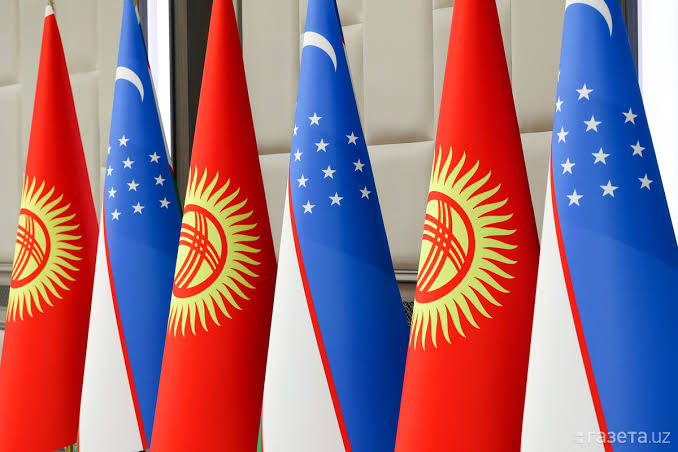
Uzbekistan and Kyrgyzstan: Transitioning to Joint Value Chains
Today, Uzbekistan and Kyrgyzstan are connected not only by a shared border and close historical and cultural ties. A common economic space is gradually emerging, built on mutual trade, industrial cooperation, joint investment, and direct ties between businesses and regions.
Over the past decade, the two countries have moved from resolving accumulated issues to implementing concrete projects. The border is becoming a link rather than a barrier, while the complementary nature of the two economies is creating new opportunities.
Drivers of Trade and Economic Cooperation
The transformation is most clearly reflected in the growth of bilateral trade. Compared with 2016, mutual trade has increased more than sevenfold. Uzbekistan’s exports have grown more than sixfold, while imports from Kyrgyzstan have increased more than ninefold. Thus, the flow of goods is expanding in both directions.
In 2025, Uzbekistan’s foreign trade turnover with Kyrgyzstan reached nearly $1.2 billion, rising by 37% year-on-year. Uzbekistan’s exports to Kyrgyzstan increased by 46.5% to $771 million, while imports reached $428 million, up nearly 23%.
The positive trend continued in 2026. In January–May, trade turnover approached $469 million, increasing by 45.5%. Uzbekistan’s exports rose by 63% to $771 million, while imports from Kyrgyzstan increased by nearly 13% to $428 million.
The structure of bilateral trade has also changed significantly in recent years. For example, while light industry products accounted for more than 50% of Uzbekistan’s exports in 2021–2022, their share declined to 19%, or $147 million, in 2025. Agricultural and food products accounted for 15%, or $112 million; machinery, equipment, and vehicles for 11%, or $87 million; and chemical products for 11%, or $81 million.
At the product level, exports are primarily composed of finished textile products, electricity, cement, mineral fertilizers, knitted fabrics, automobile bodies and components, ceramic tiles, aluminum profiles, fruit and vegetable products, and confectionery.
The quality of Uzbekistan’s export structure has also improved. The share of raw materials in exports declined from 56% in 2019 to 8.2% in 2025. Processed goods accounted for 40%, with the remainder consisting of finished products, services, and goods supplied by individuals.
Imports from Kyrgyzstan are also gaining strategic importance. In 2025, mineral and raw material products accounted for 44%, or $190 million, of imports from Kyrgyzstan. Fuel and energy products made up 26%, or $111 million, including $85 million worth of coal and lignite. Agricultural and food products accounted for 14%, or $61 million. Other significant imports included glass, natural stone, rolled metal products, tires, and packaging materials.
At the same time, considerable growth potential remains. Kyrgyzstan currently accounts for only about 1.5% of Uzbekistan’s total foreign trade turnover. This indicates that the goal set by the two countries to increase mutual trade to $2 billion by 2030 is fully achievable. However, reaching this target will require systematic efforts to diversify the range of traded goods and strengthen cooperative links that can support durable trade and investment relations.
Investment and Industrial Cooperation
Investment and industrial cooperation constitute the second major driver of economic relations between the two countries.
In 2016, only 49 enterprises with Kyrgyz capital operated in Uzbekistan. By the end of 2025, their number had reached 344, representing a sevenfold increase. As of July 1, 2026, there were already 374 such enterprises.
An important mechanism in this area is the Uzbek–Kyrgyz Development Fund, established in 2021. The fund already uses several support instruments, including investment lending, leasing, and project financing. The next stage of its development could involve expanding its portfolio and actively channeling resources into export-oriented joint ventures.
A number of joint enterprises have also been launched in recent years. These include the Kyrgyz–Uzbek Tulpar Motors automobile plant in the Chuy Region, which generates demand for metalworking, automotive components, logistics, and maintenance services.
Joint projects are also being implemented in the textile industry, household appliance manufacturing, the production of plastic and aluminum profiles, construction materials, and other sectors.
Implementation has begun on major projects such as the China–Kyrgyzstan–Uzbekistan railway and the 1.9 MW Kambarata Hydropower Plant-1.
These projects provide a solid foundation for a new structural breakthrough in bilateral relations.
Promising Areas of Cooperation
The results achieved in trade and economic cooperation, together with the rapid economic growth of Uzbekistan and Kyrgyzstan, create significant opportunities for further expanding bilateral economic relations.
One priority is to increase mutual trade, with a particular emphasis on products resulting from industrial cooperation. Achieving the target of $2 billion in bilateral trade will require more than simply increasing sales of finished goods. The two countries will need to expand trade in inputs intended for further processing as part of deeper cross-border value chains.
According to estimates by the Center for Economic Research and Reforms, Uzbekistan has the potential to increase exports to Kyrgyzstan of passenger vehicles and components, trucks, agricultural machinery, iron and steel products, finished textile products, polymer materials and finished plastic goods, electrical products and equipment, pharmaceuticals, and cement.
Kyrgyzstan, in turn, has the potential to increase supplies of mineral ores, plastic products, glass, natural stone, ceramic products, and environmentally friendly agricultural and food products.
A strategically important area of cooperation could be the transition to large-scale industrial collaboration through the creation of joint full-cycle production facilities and clusters in border regions.
In light industry, border regions produce more than 600 tons of raw cotton and have a cattle population of 4 million and a sheep and goat population of 6.4 million, providing a substantial raw material base. Proximity to China can also reduce the cost of purchasing synthetic raw materials for the industry.
Construction materials represent another promising area because their production is already one of the leading industrial sectors in the border regions. Kyrgyzstan is also experiencing a construction boom, with construction activity increasing 1.7 times in the first half of 2026, thereby generating additional demand for construction materials.
In the food industry, cooperation could focus on processing fruit and vegetables, meat and dairy products, and producing juices, jams, animal feed, and other food products.
In the mining sector, the two countries could develop joint projects for the exploration and development of mineral resources, including critical minerals and iron ore deposits. Such projects should aim to establish full production cycles, from extraction to the manufacture of finished products.
Additional potential for industrial cooperation and investment exists in electrical equipment, household appliances, pharmaceuticals, medical devices, and automotive components, including parts, batteries, tires, and plastic and metal components.
An important consideration in this area is ensuring that products are manufactured in accordance with the standards and market requirements of the Eurasian Economic Union. This would strengthen the export potential of joint projects.
As part of their industrial cooperation agenda, Uzbekistan and Kyrgyzstan should begin developing joint industrial projects along the route of the China–Kyrgyzstan–Uzbekistan railway. Logistics terminals, industrial zones, warehouses, processing centers, and freight service facilities should be established along the route. This would help create a major industrial hub in the region.
Other important areas include deeper interregional and cross-border cooperation and greater support for entrepreneurship. Promising fields include e-commerce, joint entry into third-country markets, marketplaces, startup cooperation, digital payments, tourism, and workforce training for joint enterprises.
In conclusion, Uzbekistan and Kyrgyzstan have already established a solid foundation for economic partnership. The next stage should transform quantitative growth into qualitative production integration. The two countries need to move from trading individual goods toward joint value chains, interconnected industrial cooperation networks, and a common production and logistics space.
Ruslan Abaturov,
Center for Economic Research and Reforms
📅 24.07.2026
Uzbekistan news
Uzbekistan – Serbia: A New Geography of Industrial Cooperation
The President of Uzbekistan’s Visit to Serbia: A New Stage in Economic Partnership Between Central Asia and the Balkans
Uzbekistan and the Republic of Korea: From Investment Partnership to Technological Cooperation
Regional Approaches to SDG Delivery: What Can Central Asia Offer?
Uzbekistan Opens a Balkan Gateway to Europe
The SCO Bishkek Summit: The Economic Agenda of a New Stage of Cooperation
Tourism: A new dimension of Uzbekistan-Kyrgyzstan partnership
Uzbekistan’s Role in the SCO: Economy, Security and Regional Cooperation
Economic Cooperation of Uzbekistan within the SCO at a New Stage of Development
Uzbekistan and Serbia: From Labour Mobility to a Strategic Partnership in Human Capital
Prospects for Uzbekistan–Serbia Cooperation in the ICT Sector
Prospects for Cooperation between the Republic of Uzbekistan and the Republic of Korea within the Framework of the Central Asia–Republic of Korea Cooperation Forum
THE SCO’S NEW FINANCIAL ARCHITECTURE: FROM COORDINATION TO PRACTICAL DEVELOPMENT MECHANISMS
INFORMATION NOTE ON COOPERATION WITH SERBIA
On September 8–10th, Tashkent to gather International Textile Industry Professionals
The Seoul Summit: Uzbekistan in the New Industrial Architecture of C5+1
New Opportunities to Expand Cooperation Between Uzbekistan and Serbia
Uzbekistan and Azerbaijan: Turning Political Alignment into Economic Growth
BRIGHT PROSPECTS FOR MUTUALLY BENEFICIAL PARTNERSHIP
Transport and Logistics Connectivity of the SCO Amid Geopolitical Turbulence: New Opportunities for the Regions
Business in Uzbekistan are moving from digitalization to technological modernization
Uzbekistan and Serbia expand prospects for cooperation in ecology and environmental protection
SCO AND WATER DIPLOMACY: IN PURSUIT OF COMMON INTERESTS
TASHKENT-DELHI: A NEW STAGE OF STRATEGIC PARTNERSHIP
On September 4–6th, Samarkand will host XII Inter-Parliamentary Union Global Conference of Young Parliamentarians
The Infrastructure Already Linking Uzbekistan and Korea What Korea Has Already Built Inside Uzbekistan's Digital Economy From Fiber Optics to AI: The Scope of Uzbek-Korean Digital Cooperation The Digital Bridge Already Built Between Uzbekistan and South Korea
On September 8–10th, Tashkent to gather International Textile Industry Professionals
New Uzbekistan: A Builder of Peace and Trust
‘Mustaqillik’ Generation: New Navigators of the Silk Road
GLOBAL COMPETITION AND NEW PEACE DIPLOMACY: THE VOICE OF ENLIGHTENMENT OF NEW UZBEKISTAN IN THE GLOBAL ARENA

-
 Ministry of Foreign Affairs of the Republic of Uzbekistan
 -
 Diplomatic Service of the Ministry of Foreign Affairs
 -
 State Committee for Tourism Development
 -
Ministry of Investments and Foreign Trade of the Republic of Uzbekistan
-
 invest.gov.uz
 -

-

-

-

-

-

-


of Uzbekistan in the Republic
of Latvia
When using the information, a link to www.uzembassy.lv
must be provided.
All rights reserved
Address
Address: Riga c., LV-1010. 11-11 Elizabetes Str., Latvia
Phone: 37167322424
Fax: 37167322306
Email: embassy@uzbekistan.lv
Useful links
HomeIssuance of biometric passport for departure abroad
Certificate to return to Uzbekistan
Withdrawal of citizenship
Loss of citizenship