Phone
Consular Issues
Phone
Uzbekistan news
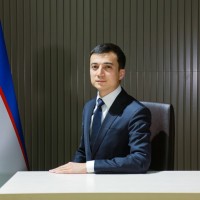
GLOBAL COMPETITION AND NEW PEACE DIPLOMACY: THE VOICE OF ENLIGHTENMENT OF NEW UZBEKISTAN IN THE GLOBAL ARENA
Recently, President of the Republic of Uzbekistan Shavkat Mirziyoyev received a special letter from President of the United States Donald Trump. In this message, which is of great significance in political and diplomatic circles, the U.S. President highly commended our Head of State’s active and constructive participation in the inaugural meeting of the Peace Council in Washington. The letter specifically acknowledged the innovative reforms being implemented by our esteemed President in New Uzbekistan and the results achieved, and invited him to the next meeting of the Peace Council as well as to the prestigious G20 Summit to be held in Miami.
It concluded with the words, “May the Creator bless you and the great people of Uzbekistan,” expressing the highest respect.
Do you know the geopolitical significance of this development?
It is an open acknowledgment that the leader of the world’s most powerful country regards New Uzbekistan not as a small Central Asian state, but as a strategic partner helping to shape global peace, security, and a new world order. The attention and invitation extended by the head of the White House represent the international community’s true assessment of the balanced, enlightened, and pragmatic foreign policy pursued by our President.
What force lies behind this diplomatic success? Why is Washington listening so closely to Tashkent’s views and position today, at a time of intensifying rivalry among global powers?
The answer is clear and well founded: humanity stands on the threshold of a profound paradigm shift. Indeed, the world’s geopolitical architecture is currently undergoing a stage of fundamental renewal, transformation, and restructuring.
Traditional methods in international relations—the use of force, financial pressure, and artificially constructed political alliances—are losing their value. At a time when humanity is caught in a vortex of unexpected global crises and conflicts, a new form of peace diplomacy—grounded in reason, science, rational analysis, enlightenment, and logic—is emerging on the geopolitical stage.
Therefore, President Donald Trump’s letter is far more than a matter of ordinary diplomatic courtesy or symbolic protocol. It demonstrates that New Uzbekistan is becoming a firm pillar of the global political architecture.
Those of us in the academic and scientific community must examine this process at a deep, fundamental level: Why is the leader of the world’s most powerful country paying such close attention to Uzbekistan’s voice and to its balanced, enlightened position?
It should be noted that the international community has recently come to recognize Tashkent’s foreign policy as a “phenomenon of pragmatism grounded in humanism and enlightenment.” Uzbekistan is therefore no longer a mere observer at global flashpoints. Tashkent proposes addressing problems through clear, systematic solutions based on reason and knowledge. This is precisely why Donald Trump attaches fundamental importance to Tashkent’s role in the Peace Council established in Davos and at the Washington summit. His views indicate that Uzbekistan has already moved beyond the status of a “geopolitical player in the shadows” or a “small state.” Our country is emerging as a pillar of stability in Central Asia and a strong bridge for peace in global diplomacy.
In his historic address at the Peace Council’s first summit in February of this year, our Head of State stated clearly and firmly: “We must seize this historic opportunity to build a New Gaza—a prosperous region with decent living conditions for its people.”
The Uzbek leader’s initiative to build homes, kindergartens, schools, and hospitals in crisis-stricken areas is a fundamental concept conveying to the world that war and destruction can be overcome only through enlightenment, education, socioeconomic recovery, and science diplomacy.
Clear evidence of this can be seen in the period from 2022 to 2026, which has been marked by entirely new initiatives, major investments, and the rapid expansion of academic exchanges in education and science. Data from the Ministry of Higher Education, Science and Innovation of the Republic of Uzbekistan, the U.S. Embassy in Tashkent, and international organizations such as American Councils clearly demonstrate the scale of this growth.
In recent years, thousands of local English-language teachers have been retrained in accordance with international standards through the English Speaking Nation (ESN) program, implemented with the support of the U.S. Department of State. American specialists—English Teaching Assistants (ETAs)—have been directly involved in teaching at schools and universities across various regions of Uzbekistan.
With U.S. support, modern teaching and learning packages for English and computer science (IT), meeting international standards, were also developed and introduced for grades 1–11 in general education schools.
Cooperation in higher education has advanced beyond student exchanges to the level of institutional development:
-
The expansion of the Fulbright and FLEX programs significantly increased the quotas for academic exchanges intended for researchers, graduate students, and schoolchildren. Young Uzbek scholars and teachers gained opportunities to conduct research at leading U.S. universities, including the University of California, Berkeley, and the University of Texas.
-
Franchising and partnerships with American universities have developed, while the network of joint educational programs—including double-degree programs—and academic cooperation with U.S. higher education institutions has expanded. The Tashkent branch of Webster University has further broadened its activities and continues to train highly qualified professionals through its undergraduate and graduate programs.
The number of joint research projects between the Ministry and U.S. higher education institutions in IT, alternative energy, agricultural technologies, and sociolinguistics has increased. Educational resources open to the wider public have also been developed beyond formal educational institutions. A network of modern libraries, STEM laboratories, and free language-learning centers has been established in Tashkent, Karshi, Namangan, Termez, and other cities. These centers have become free platforms for young people to acquire knowledge and exchange information. Special grants and training programs have also been introduced to increase the participation of women and girls in STEM—science, technology, engineering, and mathematics.
In addition, from July 13 to 18, a delegation from the Ministry of Higher Education, Science and Innovation was sent on an official visit as part of the international Future 100 internship program.
The program arranged internships at the world’s leading universities, technology companies, accelerators, and other organizations. In particular:
-
Visits were organized to the Massachusetts Institute of Technology (TOP 1), Stanford University (TOP 3), Harvard University (TOP 5), the University of California, Berkeley (TOP 17), and San Francisco State University.
-
The delegation learned about the work of Coursera, Google, OpenAI, the StartX Accelerator, the Office of the Mayor of San Francisco, and the United Nations, and took part in seminars.
Recent years have marked a fundamental shift, both quantitative and qualitative, in Uzbek-American educational relations. This cooperation serves as an important driver for developing human capital in Uzbekistan, training professionals who can compete in the global labor market, and modernizing the education system.
Today, we can say with confidence that a strong foreign policy rests upon strong enlightenment and a powerful economic foundation. In this regard, the scale of past and present economic and social cooperation between Washington and Tashkent deserves particular recognition. The agreements reached within the framework of the Tashkent International Investment Forum and business dialogues in Washington—with the leadership of the Export-Import Bank of the United States and the U.S. International Development Finance Corporation (DFC), as well as with such global corporate giants as BlackRock, John Deere, Traxys, and Valmont Industries—are no coincidence.
Major projects in healthcare, critical-mineral processing, green energy, artificial intelligence, digitalization, data centers, and the construction of a new airport hub in Tashkent are the practical fruits of intellectual power grounded in science and technology.
The United States’ view of Uzbekistan as a strategic partner is also closely linked to the reforms underway in our country’s higher education and research sectors. In modern competition, it is not raw materials but intellectual capital and advanced technologies that are becoming decisive. Science is the only universal human phenomenon that knows no borders and can show the way toward rational compromise in any situation. The global peace initiatives advanced by Uzbekistan embody the following three principal enlightened solutions:
-
Resolving conflicts not through political or military pressure, but by rebuilding society’s social and cultural fabric and establishing educational infrastructure.
-
Ensuring that every peace mechanism—including efforts such as the reconstruction of Gaza—is supported by the local population and founded on sustainable economic models.
-
Demonstrating New Uzbekistan’s readiness to assume geopolitical responsibility and offer solutions at the world’s most painful flashpoints.
This is precisely why the United States and the international community see Shavkat Mirziyoyev as a new, reliable, and balanced guarantor of global stability.
It is evident that, in the twenty-first century—when global competition is becoming increasingly fierce—our country has its own voice, its own conceptual model, and a firmly established place on the world stage. We believe that the G20 Summit in Miami and the upcoming meetings of the Peace Council will elevate Uzbekistan’s active participation in shaping the global political agenda to an even higher level.
For our part, we must support this honorable and prudent diplomatic course led by our esteemed President through science, innovation, and a highly skilled workforce, while demonstrating to the world the strength of the Uzbek tradition of enlightenment.
Thus, New Uzbekistan is a new global center of peace, enlightenment, academic intellect, and international cooperation. This message will continue to resound from international platforms and unite the entire world around the cause of goodness.
Fazliddin MUMINOV
Head of Department, Ministry of Higher Education, Science and Innovation
📅 14.08.2026
Uzbekistan news
UZBEKISTAN AND THE UN: FROM NATIONAL INITIATIVES TO THE GLOBAL AGENDA
The 5th Samarkand Forum on Human Rights to take place on September 28–29th
Uzbekistan's key trading partners participate in CICA
Speech by President Shavkat Mirziyoyev at the solemn ceremony dedicated to the thirty-fifth anniversary of the independence of the Republic of Uzbekistan
Uzbekistan Firmly Establishes Itself as a Stable and Predictable Partner for Long-Term International Business
Changing economic priorities of Uzbekistan reshape its engagement with the CIS
Inaugural Central Asia – Republic of Korea Summit at the highest level opens in Seoul
Uzbekistan and Korea: Advancing Green Energy and New Technologies
Uzbekistan and the Republic of Korea in the Emerging Framework for Cooperation with Central Asia
Tashkent brings together leaders and key deals in Polymer Market of Central Asia
The 1st Republic of Korea–Central Asia Summit: Why This Moment Matters
Uzbekistan – Serbia: A New Geography of Industrial Cooperation
The President of Uzbekistan’s Visit to Serbia: A New Stage in Economic Partnership Between Central Asia and the Balkans
Uzbekistan and the Republic of Korea: From Investment Partnership to Technological Cooperation
Regional Approaches to SDG Delivery: What Can Central Asia Offer?
Uzbekistan Opens a Balkan Gateway to Europe
The SCO Bishkek Summit: The Economic Agenda of a New Stage of Cooperation
Tourism: A new dimension of Uzbekistan-Kyrgyzstan partnership
Uzbekistan’s Role in the SCO: Economy, Security and Regional Cooperation
Economic Cooperation of Uzbekistan within the SCO at a New Stage of Development
Uzbekistan and Serbia: From Labour Mobility to a Strategic Partnership in Human Capital
Prospects for Uzbekistan–Serbia Cooperation in the ICT Sector
Prospects for Cooperation between the Republic of Uzbekistan and the Republic of Korea within the Framework of the Central Asia–Republic of Korea Cooperation Forum
THE SCO’S NEW FINANCIAL ARCHITECTURE: FROM COORDINATION TO PRACTICAL DEVELOPMENT MECHANISMS
INFORMATION NOTE ON COOPERATION WITH SERBIA
On September 8–10th, Tashkent to gather International Textile Industry Professionals
The Seoul Summit: Uzbekistan in the New Industrial Architecture of C5+1
New Opportunities to Expand Cooperation Between Uzbekistan and Serbia
Uzbekistan and Azerbaijan: Turning Political Alignment into Economic Growth
BRIGHT PROSPECTS FOR MUTUALLY BENEFICIAL PARTNERSHIP

-
 Ministry of Foreign Affairs of the Republic of Uzbekistan
 -
 Diplomatic Service of the Ministry of Foreign Affairs
 -
 State Committee for Tourism Development
 -
Ministry of Investments and Foreign Trade of the Republic of Uzbekistan
-
 invest.gov.uz
 -

-

-

-

-

-

-

of Uzbekistan in the Republic
of Latvia
When using the information, a link to www.uzembassy.lv
must be provided.
All rights reserved
Address
Address: Riga c., LV-1010. 11-11 Elizabetes Str., Latvia
Phone: 37167322424
Fax: 37167322306
Email: embassy@uzbekistan.lv
Useful links
HomeIssuance of biometric passport for departure abroad
Certificate to return to Uzbekistan
Withdrawal of citizenship
Loss of citizenship