Phone
Consular Issues
Phone
Uzbekistan news
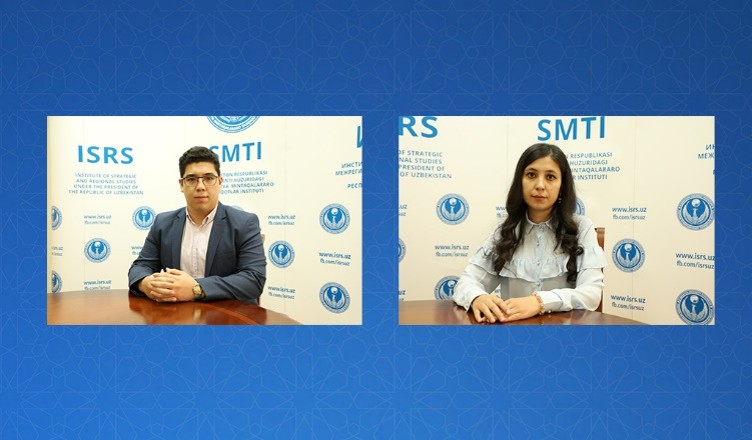
Uzbekistan and Azerbaijan: Turning Political Alignment into Economic Growth
Over the past few years, Uzbekistan and Azerbaijan have moved from strategic partnership to a fully fledged alliance. Two distinct dimensions now stand out in the way they engage with one another. On the one hand, the institutional foundation of their cooperation is firmly in place; on the other, its economic momentum is only beginning to build. In our view, the balance between the development of political and diplomatic machinery and the practical substance of economic cooperation is what will define the next chapter in Uzbek–Azerbaijani relations.
The institutional architecture
The framework of bilateral ties built by Tashkent and Baku rests largely on top-down coordination: the agenda is set at the level of the heads of state, while intergovernmental, ministerial and business mechanisms deliver it. It is President Shavkat Mirziyoyev of Uzbekistan and President Ilham Aliyev of Azerbaijan who set the principal vectors of cooperation and its tempo, and who appreciably shorten the time needed to sign off on individual decisions.
This has gradually produced an extensive system of engagement mechanisms. The Supreme Interstate Council was established in 2023 and held its first session in 2024; the same year saw the signing of the Treaty on Allied Relations. In July 2026, Tashkent hosted the fifteenth meeting of the Intergovernmental Commission. The Uzbek–Azerbaijani Business Council has been operating since 2020, three Forums of Regions have been convened, and eleven cities have entered into sister-city arrangements. In the past three years alone there have been more than twenty high-level inter-parliamentary contacts, and in 2025 Khiva hosted the first inter-parliamentary forum.
Contact of this density is normally found between neighboring countries, or between states whose mutual trade runs at far higher levels. For Uzbekistan and Azerbaijan – separated by the Caspian and still trading comparatively little – the degree of institutionalization achieved looks all the more striking.
The practical effect is to lower political and administrative barriers, shorten approval timelines and make it easier for companies to enter the partner’s market. Yet an institutional framework does not in itself generate trade flows or investment demand. It creates favorable conditions for business activity, but it is no substitute for the economic incentives on which the further momentum of cooperation depends.
The next stage, therefore, is likely to be defined less by adding to the number of existing formats than by their capacity to convert the political relationship already achieved into concrete economic results.
The economic dimension: a question of scale
Political dialogue between the two countries is still running well ahead of the underlying economic indicators, as the statistics make plain. Bilateral trade came to $307 million in 2025, an increase of roughly 15 percent. Uzbek exports grew by 8 percent to $227 million, while imports from Azerbaijan rose by 39 percent to $80 million. The Uzbek export basket widened by 116 product lines.
These figures take on a rather different meaning, however, when set against Uzbekistan’s total foreign trade turnover, which exceeded $81 billion in 2025[1]. Azerbaijan accounted for less than 0.4 percent of it. That number should not be read as a verdict on the quality of the bilateral relationship. What it shows, rather, is how hard it is to translate political alignment into economic ties of real scale – a difficulty rooted in several objective structural constraints.
These include the absence of a shared border and the resulting need for multimodal shipping across the Caspian; a partial overlap in export baskets (textiles, fruit and vegetables, selected chemical products); and similar approaches to diversifying economic ties, which leave the two sides competing on third markets more often than complementing one another.
From this follows a thoroughly practical conclusion. Simply scaling up conventional trade is unlikely to bring the two countries to the $1 billion mark set by their presidents[2]. Growth will have to be sought through investment and industrial cooperation, where trade flows arise from shared production chains.
Both countries appreciate how important it is to put such systematic work in place, and in recent years the center of gravity of the agenda has shifted noticeably from trade toward investment. The Azerbaijan–Uzbekistan Investment Company (AUIC), created in 2023 with charter capital of $500 million, is already involved in fifteen projects worth some $360 million, according to Uzbekistan’s Ministry of Investment, Industry and Trade[3]. The wider pipeline is considerably larger, taking in more than twenty projects worth around $6 billion, with a further twenty-five worth almost $1.5 billion in preparation[4].
How far investment cooperation reaches beyond declared intentions is best judged from what is happening at specific production sites. The most visible example is the joint vehicle assembly operation run by Uzavtosanoat and Azermash at the Hajigabul industrial park, which has already turned out more than 11,000 Chevrolet cars and Isuzu buses[5]. The project is now moving into its next phase: a full-cycle plant with investment of more than $84 million. Textile and sericulture clusters are developing in parallel, alongside agro-industrial and logistics projects.
The significance of such ventures is not measured by output alone. Their principal value lies in forging durable production links between the two countries.
Joint manufacturing generates steady demand for mutual deliveries of components, raw materials and equipment, which in effect embeds bilateral trade within a single production chain.
Ties of this kind tend to be less sensitive to swings in the market, since they rest not on one-off deals but on the long-term needs of production. Another consideration matters just as much. Localizing production in Azerbaijan, provided the relevant rules of origin are met, potentially opens the door to third-country markets with which Baku holds preferential trade arrangements.
In that sense, joint ventures can be seen not merely as a means of serving the two national markets, but as a possible platform for promoting products together beyond Uzbekistan and Azerbaijan. That effect does not materialize automatically, however: it calls for dedicated work on the trade, customs and legal mechanisms involved.
What will shape further growth?
The institutional architecture now in place, together with the results already achieved in economic cooperation, creates considerable scope for taking the relationship further. Realizing that potential, though, will depend on the two sides’ ability to overcome a number of structural constraints.
Foremost among them are the competition between similar products on third markets noted above and the volatility of Caspian logistics, which reflects the condition of the ferry fleet and the seasonality of shipping. A further brake comes from the difficulty of making direct payments between the two countries’ banks and of insuring cargo, both of which add to the cost and duration of foreign trade transactions.
Against this backdrop, a natural question arises: what could accelerate the pace of cooperation?
One of the most practical steps would be mutual recognition of certificates and laboratory test results, above all for agricultural produce, which would cut both the time and the cost of bringing goods to the partner’s market.
In the financial sphere, there is a strong case for broadening correspondent banking relations and settlement in national currencies, by way of direct payments between banks and convenient currency conversion arrangements. This would reduce reliance on intermediaries and make settlement of trade and investment operations more predictable.
Transport deserves attention in its own right. Expanding the capacity of the Caspian routes, harmonizing tariffs and shipping schedules, and developing digital cargo tracking would all help lower costs for business.
Uzbek–Azerbaijani relations have thus reached the point at which the political capital accumulated over recent years is gradually acquiring economic and practical substance. In this sense it can be said with confidence that the two countries have laid a solid foundation for moving into new areas and deeper forms of allied partnership.
Miraziz Mirumarov, Leading Research Fellow,
Institute for Strategic and Interregional Studies under the President of the Republic of Uzbekistan
Iroda Imamova, Leading Research Fellow,
Institute for Strategic and Interregional Studies under the President of the Republic of Uzbekistan
[1]https://stat.uz/ru/press-tsentr/novosti-goskomstata/66431-2025-jilda-zbekistonning-tash-i-savdo-ajlanmasi-81-mlrd-dollardan-oshdi-3
[2]https://president.uz/ru/lists/view/8287
[3]https://surl.li/rgudkn
[4]https://surl.li/wbqoju
[5]https://economiczones.gov.az/post/hsp-de-avtomobil-istehsali-artir-az
📅 24.08.2026
Uzbekistan news
Central Asia Is Shaping Its Own Model of Regional Cooperation
Initiatives of Uzbekistan aimed at Economic Results for the Countries of Central Asia and Azerbaijan
Regular dialogue is the Foundation for addressing common water-related challenges in Central Asia
Uzbekistan and Turkmenistan: A New Stage in the Development of Their Strategic Partnership
11th Tashkent International Biennale of Contemporary Art to be held in the capital of Uzbekistan on October 12–16th
OTS Member States - A Crucial Link in the Eurasian Space
Uzbekistan plays an active role in Economic Integration within the framework of the Organization of Turkic States
CICA opens new horizons for financial cooperation
Aquatherm Tashkent 2026 to Showcase Latest Technologies for Construction and Utility Infrastructure
Uzbekistan is securing its place in the Global Hub for Technological Outsourcing
Digital Cooperation among the Turkic States Towards a Unified Technological Ecosystem
Uzbekistan and Azerbaijan are creating a Hub for Startups, Investors and Talent
UZBEKISTAN AND THE UN: FROM NATIONAL INITIATIVES TO THE GLOBAL AGENDA
The 5th Samarkand Forum on Human Rights to take place on September 28–29th
Uzbekistan's key trading partners participate in CICA
Speech by President Shavkat Mirziyoyev at the solemn ceremony dedicated to the thirty-fifth anniversary of the independence of the Republic of Uzbekistan
Uzbekistan Firmly Establishes Itself as a Stable and Predictable Partner for Long-Term International Business
Changing economic priorities of Uzbekistan reshape its engagement with the CIS
Inaugural Central Asia – Republic of Korea Summit at the highest level opens in Seoul
Uzbekistan and Korea: Advancing Green Energy and New Technologies
Uzbekistan and the Republic of Korea in the Emerging Framework for Cooperation with Central Asia
Tashkent brings together leaders and key deals in Polymer Market of Central Asia
The 1st Republic of Korea–Central Asia Summit: Why This Moment Matters
Uzbekistan – Serbia: A New Geography of Industrial Cooperation
The President of Uzbekistan’s Visit to Serbia: A New Stage in Economic Partnership Between Central Asia and the Balkans
Uzbekistan and the Republic of Korea: From Investment Partnership to Technological Cooperation
Regional Approaches to SDG Delivery: What Can Central Asia Offer?
Uzbekistan Opens a Balkan Gateway to Europe
The SCO Bishkek Summit: The Economic Agenda of a New Stage of Cooperation
Tourism: A new dimension of Uzbekistan-Kyrgyzstan partnership

-
 Ministry of Foreign Affairs of the Republic of Uzbekistan
 -
 Diplomatic Service of the Ministry of Foreign Affairs
 -
 State Committee for Tourism Development
 -
Ministry of Investments and Foreign Trade of the Republic of Uzbekistan
-
 invest.gov.uz
 -

-

-

-

-

-

-


of Uzbekistan in the Republic
of Latvia
When using the information, a link to www.uzembassy.lv
must be provided.
All rights reserved
Address
Address: Riga c., LV-1010. 11-11 Elizabetes Str., Latvia
Phone: 37167322424
Fax: 37167322306
Email: embassy@uzbekistan.lv
Useful links
HomeIssuance of biometric passport for departure abroad
Certificate to return to Uzbekistan
Withdrawal of citizenship
Loss of citizenship