Phone
Consular Issues
Phone
Uzbekistan news
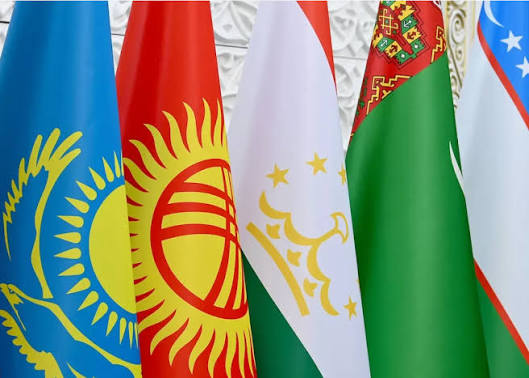
Regional Approaches to SDG Delivery: What Can Central Asia Offer?
Ahead of the 81st session of the U.N. General Assembly and the 2026 SDG Moment, regional mechanisms for implementing the Sustainable Development Goals are gaining new relevance.
Jakhongir Isaev
The 81st session of the U.N. General Assembly opens on Sept. 8, while world leaders will gather for the SDG Moment on Sept. 18. These events will once again focus attention on how to accelerate progress toward the Sustainable Development Goals in the limited time remaining before 2030.
The U.N.’s 2026 Sustainable Development Goals Report shows that of 139 targets with sufficient trend data, only 36% are on track or making moderate progress. The report emphasizes the need for more investment, technology, data and international cooperation. At the same time, many of the most difficult development challenges are regional, while the main delivery mechanisms remain largely national.
Water basins, electricity grids, transport corridors, air pollution, climate risks and labor markets do not stop at national borders. National plans therefore increasingly need to be complemented by regional coordination, shared data, financing instruments and accountability mechanisms.
Central Asia is beginning to accumulate practical experience in this direction. It would be misleading to present the region as a finished model: serious water, infrastructure and institutional challenges remain. Yet several initiatives advanced in 2026 indicate how a regional layer of SDG implementation can take shape.
In April, the U.N. General Assembly adopted Resolution 80/260 on strengthening regional cooperation and economic integration for sustainable development in Central Asia. Supported by the five Central Asian states and 66 co-sponsors, the resolution calls for closer coordination among countries and for U.N. agencies, funds and programs to align their work around regional priorities.
The practical value of this approach is that country programs run by international organizations can be linked around common cross-border outcomes. Water efficiency, clean electricity trade or better transport connectivity can become measurable regional missions around which national reforms and development-partner resources are coordinated.
Energy is already moving in that direction. In January, the World Bank approved the first phase of the Regional Electricity Market Interconnectivity and Trade program. The 10-year initiative aims to establish Central Asia’s first regional electricity market, expand transmission capacity and enable larger-scale renewable-energy integration.
Water cooperation provides another important example. The World Bank estimates that limited coordination among national water systems costs Central Asia more than $4.5 billion a year. In July, it approved a regional project through the International Fund for Saving the Aral Sea to strengthen transboundary water management, digitize water accounting and prepare joint infrastructure investments. Around 40 million people are expected to benefit directly or indirectly.
Regional cooperation inevitably requires countries to reconcile different interests — between upstream and downstream states, electricity exporters and importers, transit economies and landlocked countries. For that reason, an effective model also needs mechanisms for benefit-sharing, dispute resolution and transparent monitoring.
Central Asia’s emerging experience suggests four practical lessons for the wider SDG system. First, regional cooperation should focus on specific and measurable missions. Second, multilateral development banks could expand regional financing instruments that reward joint delivery. Third, common standards and interoperable data platforms should be treated as part of regional public infrastructure. Fourth, the U.N. development system can align more of its country-level support around common regional results when dealing with transboundary challenges.
Such an approach does not weaken national sovereignty. On the contrary, it gives governments additional tools to address problems that cannot be solved effectively by one country alone. Regional cooperation also does not replace global cooperation; it serves as an important bridge between global goals and national implementation.
The 2026 SDG Moment emphasizes scaling solutions that have demonstrated results. The mechanisms now emerging in Central Asia are relevant from this perspective because they point to the need to scale not only individual projects, but also the institutions that connect countries, budgets, data and accountability.
In the next phase of the SDGs, greater attention should therefore be given to strengthening practical delivery mechanisms. For many cross-border challenges, regional cooperation can be one of the most effective levels at which this work is organized.
Jakhongir Isaev is Head of Department at the NGO Center for Sustainable Development. He writes on sustainable development, international cooperation and regional policy.
📅 05.09.2026
Uzbekistan news
CICA Member States Account for More Than 50% of Uzbekistan’s Foreign Trade Turnover
Uzbekistan and the United States: The Economics of Mutual Interest
NEW OPPORTUNITIES IN HIGHER EDUCATION IN THE TURKIC STATES: A COMMON SPACE, SHARED GOALS
Peace and Trust in Asia - essential conditions for sustainable development
CICA amid a Crisis of Trust: Uzbekistan’s Role in Strengthening Cooperation in Asia
Uzbekistan promotes initiatives in Central Asia that unlock new opportunities for cooperation
Strengthening Transport Connectivity in Asia through the Development of the Trans-Caspian International Transport Corridor
Uzbekistan promotes Initiatives in Central Asia unlocking new opportunities for cooperation
Political mutual trust in the Central Asian region is transforming into economic capital
Uzbekistan attracts specialists from 16 countries to the anniversary international exhibition “Mining, Metallurgy and Metalworking – MiningMetals Uzbekistan 2026”
Uzbekistan has moved its economic cooperation with the Turkic states into a practical dimension
Akramjon Nematov: Central Asia is increasingly emerging as an independent centre for shaping its own economic and technological agenda
Central Asia Is Shaping Its Own Model of Regional Cooperation
Initiatives of Uzbekistan aimed at Economic Results for the Countries of Central Asia and Azerbaijan
Regular dialogue is the Foundation for addressing common water-related challenges in Central Asia
Uzbekistan and Turkmenistan: A New Stage in the Development of Their Strategic Partnership
11th Tashkent International Biennale of Contemporary Art to be held in the capital of Uzbekistan on October 12–16th
OTS Member States - A Crucial Link in the Eurasian Space
Uzbekistan plays an active role in Economic Integration within the framework of the Organization of Turkic States
CICA opens new horizons for financial cooperation
Aquatherm Tashkent 2026 to Showcase Latest Technologies for Construction and Utility Infrastructure
Uzbekistan is securing its place in the Global Hub for Technological Outsourcing
Digital Cooperation among the Turkic States Towards a Unified Technological Ecosystem
Uzbekistan and Azerbaijan are creating a Hub for Startups, Investors and Talent
UZBEKISTAN AND THE UN: FROM NATIONAL INITIATIVES TO THE GLOBAL AGENDA
The 5th Samarkand Forum on Human Rights to take place on September 28–29th
Uzbekistan's key trading partners participate in CICA
Speech by President Shavkat Mirziyoyev at the solemn ceremony dedicated to the thirty-fifth anniversary of the independence of the Republic of Uzbekistan
Uzbekistan Firmly Establishes Itself as a Stable and Predictable Partner for Long-Term International Business
Changing economic priorities of Uzbekistan reshape its engagement with the CIS

-
 Ministry of Foreign Affairs of the Republic of Uzbekistan
-
 Diplomatic Service of the Ministry of Foreign Affairs
-
 State Committee for Tourism Development
-
Ministry of Investments and Foreign Trade of the Republic of Uzbekistan
-
 invest.gov.uz
-

-

-

-
-

-

-

of Uzbekistan in the Republic
of Latvia
When using the information, a link to www.uzembassy.lv
must be provided.
All rights reserved
Address
Address: Riga c., LV-1010. 11-11 Elizabetes Str., Latvia
Phone: 37167322424
Fax: 37167322306
Email: embassy@uzbekistan.lv
Useful links
HomeIssuance of biometric passport for departure abroad
Certificate to return to Uzbekistan
Withdrawal of citizenship
Loss of citizenship