Phone
Consular Issues
Phone
Uzbekistan news
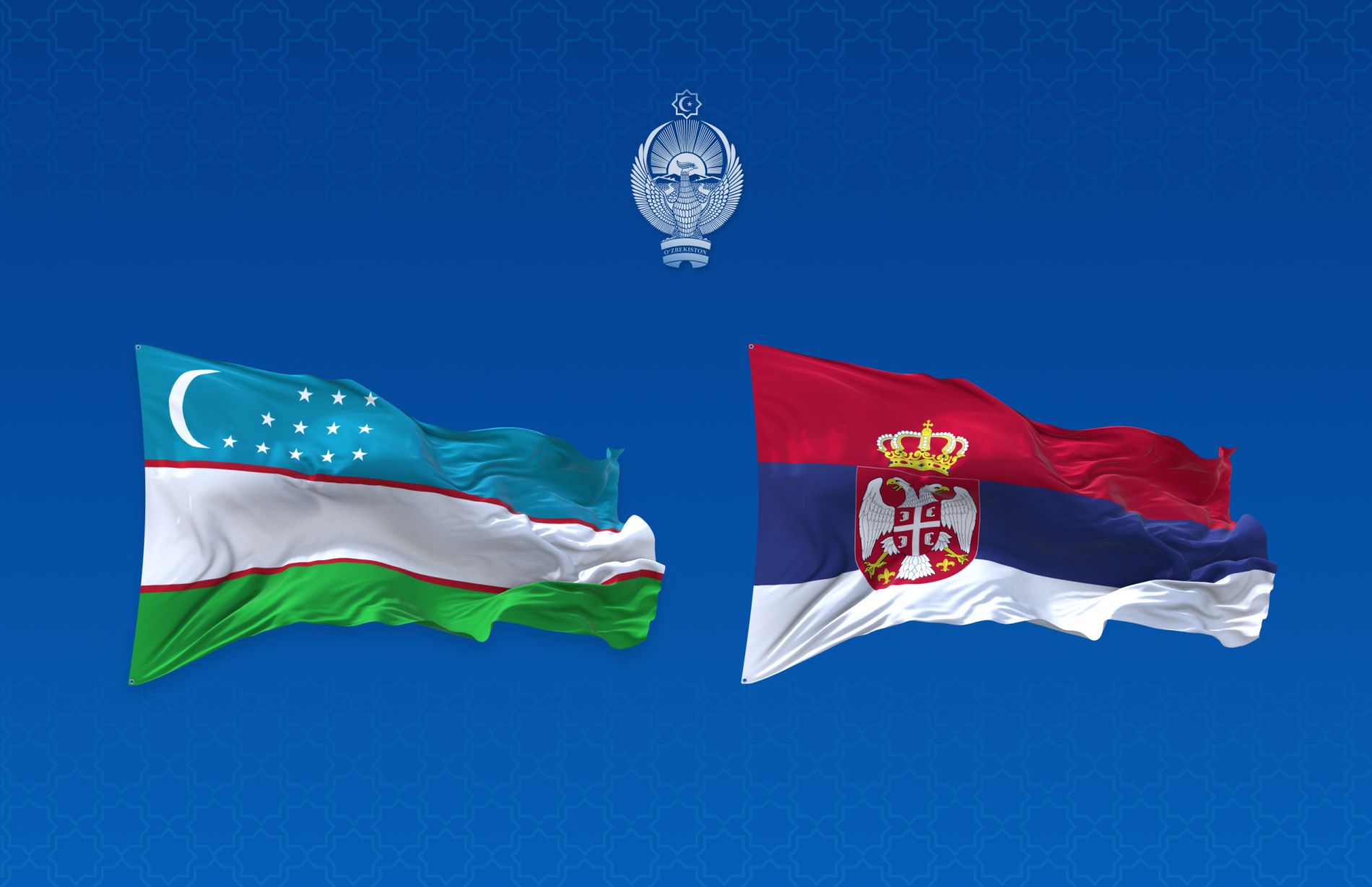
The President of Uzbekistan’s Visit to Serbia: A New Stage in Economic Partnership Between Central Asia and the Balkans
The globalization of today’s economy, together with the current geopolitical and geo-economic situation in the world, is shaping economic cooperation between states not only on the basis of geographical proximity, but also through the convergence of mutual interests.
Uzbekistan’s independent and balanced foreign policy is contributing to a steady annual increase in the number of its partner countries. While preserving cooperation with its immediate neighbours, this multifaceted foreign policy primarily serves to strengthen mutually beneficial relations with countries in different regions of the world. In particular, Uzbekistan’s relations with the Balkan states have developed across various fields in recent years. Cooperation with Serbia deserves special mention in this regard.
Diplomatic relations between Uzbekistan and Serbia were established on 18 January 1995. Since then, cooperation between the two countries has developed steadily at various levels. Although the pace of bilateral cooperation was relatively modest in certain years, Uzbekistan’s increasingly proactive foreign policy and its reforms aimed at diversifying international relations have significantly strengthened Uzbek–Serbian relations in recent years.
Over the past three to four years, mutually beneficial cooperation and political and economic dialogue between official Tashkent and Belgrade have reached a qualitatively new level. Exchanges between the two heads of state have consequently become important milestones in bilateral relations. In particular, the meeting between President of Uzbekistan Shavkat Mirziyoyev and President of Serbia Aleksandar Vučić, held on 20 August 2023 on the sidelines of the World Athletics Championships in Budapest, gave fresh impetus to cooperation between the two countries. The two leaders held their next meeting in Beijing on 3 September 2025. These meetings reaffirmed the parties’ interest in further expanding cooperation, particularly in trade, investment, industry, mechanical engineering, pharmaceuticals, agriculture, information technology, artificial intelligence, tourism, education and transport, as well as in intensifying interstate dialogue.
The fundamental principles of Uzbekistan’s foreign policy include, first and foremost, adherence to international law and the Charter of the United Nations, respect for state sovereignty and the inviolability of borders, friendship and mutually beneficial cooperation, non-interference in internal affairs, and the peaceful settlement of international disputes. From this perspective, the foreign ministries of the two countries are also conducting consultations on an equal footing and implementing measures aimed at advancing bilateral cooperation.
In August 2017, the Political Director of the Serbian Ministry of Foreign Affairs and the President’s Special Envoy for Kosovo, Zoran Vujić, visited Tashkent. During the visit, prospects for political dialogue and cooperation with international organizations such as the United Nations, the OSCE and UNESCO were discussed with his participation.
In 2021, political consultations were held in Tashkent with the participation of Serbian Ministry of Foreign Affairs State Secretary Nemanja Starović. On 9 October 2025, the second round of political consultations between the foreign ministries of Uzbekistan and Serbia was held by videoconference.
The signing in 2022 of the Protocol on Cooperation and Interministerial Consultations between the two countries’ foreign ministries marked the beginning of a new period in Uzbek–Serbian relations. The document established a legal basis for the parties’ strategic plans to hold regular consultations, broaden cultural and humanitarian dialogue, and strengthen political cooperation in order to further develop relations between the two states.
In September 2025, the foreign ministers of the two countries met on the sidelines of the United Nations General Assembly in New York. These engagements represented an important step towards establishing a new architecture of dialogue at various levels between Tashkent and Belgrade. As a result of these efforts, Uzbekistan appointed its first ambassador to Serbia in 2025, marking another important milestone in the further development of bilateral relations.
Although trade and economic cooperation between Uzbekistan and Serbia currently remains modest in scale, it is important to emphasize that the area holds considerable potential. Through Serbia, Uzbekistan has the capacity to expand its relations with other Balkan countries, including Croatia, Albania, North Macedonia, Montenegro and Slovenia.
A number of measures are being developed to increase Uzbekistan’s trade with the Balkan states and to prepare extensive cooperation programmes in mechanical engineering, pharmaceuticals, agriculture, the chemical industry, information technology and digitalization, the agro-industrial sector, tourism and many other important industries.
The geopolitical and geo-economic instability witnessed worldwide in recent years has also prompted Uzbekistan to further develop international transport corridors. Uzbekistan, which has direct access to every Central Asian country, is recognized as being favourably located for expanding links between China, India, Europe and other countries. In order to capitalize on these opportunities, the country is seeking to open new transport corridors along the Central Asia–Balkans route. For Uzbekistan, the comprehensive development of trade and economic relations with the Balkan states within the framework of the Trans-Caspian Corridor is of strategic importance.
There are currently around ten enterprises with Serbian capital operating in Uzbekistan, including two joint ventures, while the remainder operate as individually owned business entities. Although bilateral trade amounts to approximately USD 12 million per year, there is substantial untapped potential for developing economic, investment and trade relations.
An examination of the priority areas, agreements and contracts identified during official negotiations and business forums held between the two countries in 2023–2026 shows that imports of industrial equipment, machinery and mechanisms from Serbia are of particular importance to Uzbekistan. Key priorities include introducing Serbian technologies into Uzbekistan, establishing joint ventures, launching the production of automotive components in the country, localizing selected manufacturing industries, and turning Uzbekistan into a production base serving not only the Central Asian market but also European markets.
For Serbia, investment projects in Uzbekistan’s agriculture, food industry, food-processing equipment, digitalization, artificial intelligence, pharmaceuticals, textiles and automotive sectors are particularly relevant. These include introducing European technologies into Uzbekistan, applying European know-how and experience across sectors and industries, and contributing to regional development. This would enable the two countries to further advance industrial cooperation and implement promising joint projects in light industry, textiles, pharmaceuticals, automotive manufacturing and agriculture.
In conclusion, although political agreements between the two countries are important, the first essential factor in translating them into tangible economic results is the launch of transport corridors, while the second essential factor is creating broad opportunities for business. To make effective use of these factors, the following steps should be taken:
First, the transport corridor between the two countries should become more than merely a “freight route”; it should provide Uzbekistan with access to European global value chains through the Balkans.
Second, alongside increasing the volume of mutual trade, serious attention should be paid to its quality. Priority should be given to exports of high value-added goods rather than raw materials, semi-finished goods or basic products.
Third, mechanisms to promote investment between the two countries should be developed. Attracting Serbian capital and technologies to Uzbekistan’s economy, while expanding the presence of Uzbek businesses in Balkan markets, would generate significant benefits for both economies.
Fourth, joint production should be introduced through the establishment of industrial cooperation between the two countries. Rather than manufacturing a product in one country and exporting it to the market of the other, combining the resources and capabilities of both states to enter third-country markets would be more economically advantageous.
Fifth, transport and logistics integration between the two countries should be established. In the future, such integration would not only reduce transport costs but also facilitate the development of new transit routes, thereby expanding trade opportunities.
Sixth, efforts to develop human capital and introduce technologies into production should be intensified. In this context, economic cooperation would extend beyond the exchange of goods and further strengthen ties among specialists, researchers, engineers and entrepreneurs.
In summary, the new economic bridge between Uzbekistan and Serbia can serve as an important pillar of economic growth for the countries of Central Asia and the Balkans. As a result, Uzbekistan will gain opportunities to develop international transport corridors, improve the efficiency of transport and logistics processes, reduce cargo delivery times by two to three times, establish a dry port, and enhance its international trade and transit potential.
Nodirbek Rasulov,
Doctor of Economics, Professor,
Project Manager at the Institute for Macroeconomic and Regional Studies
📅 05.09.2026
Uzbekistan news
CICA Member States Account for More Than 50% of Uzbekistan’s Foreign Trade Turnover
Uzbekistan and the United States: The Economics of Mutual Interest
NEW OPPORTUNITIES IN HIGHER EDUCATION IN THE TURKIC STATES: A COMMON SPACE, SHARED GOALS
Peace and Trust in Asia - essential conditions for sustainable development
CICA amid a Crisis of Trust: Uzbekistan’s Role in Strengthening Cooperation in Asia
Uzbekistan promotes initiatives in Central Asia that unlock new opportunities for cooperation
Strengthening Transport Connectivity in Asia through the Development of the Trans-Caspian International Transport Corridor
Uzbekistan promotes Initiatives in Central Asia unlocking new opportunities for cooperation
Political mutual trust in the Central Asian region is transforming into economic capital
Uzbekistan attracts specialists from 16 countries to the anniversary international exhibition “Mining, Metallurgy and Metalworking – MiningMetals Uzbekistan 2026”
Uzbekistan has moved its economic cooperation with the Turkic states into a practical dimension
Akramjon Nematov: Central Asia is increasingly emerging as an independent centre for shaping its own economic and technological agenda
Central Asia Is Shaping Its Own Model of Regional Cooperation
Initiatives of Uzbekistan aimed at Economic Results for the Countries of Central Asia and Azerbaijan
Regular dialogue is the Foundation for addressing common water-related challenges in Central Asia
Uzbekistan and Turkmenistan: A New Stage in the Development of Their Strategic Partnership
11th Tashkent International Biennale of Contemporary Art to be held in the capital of Uzbekistan on October 12–16th
OTS Member States - A Crucial Link in the Eurasian Space
Uzbekistan plays an active role in Economic Integration within the framework of the Organization of Turkic States
CICA opens new horizons for financial cooperation
Aquatherm Tashkent 2026 to Showcase Latest Technologies for Construction and Utility Infrastructure
Uzbekistan is securing its place in the Global Hub for Technological Outsourcing
Digital Cooperation among the Turkic States Towards a Unified Technological Ecosystem
Uzbekistan and Azerbaijan are creating a Hub for Startups, Investors and Talent
UZBEKISTAN AND THE UN: FROM NATIONAL INITIATIVES TO THE GLOBAL AGENDA
The 5th Samarkand Forum on Human Rights to take place on September 28–29th
Uzbekistan's key trading partners participate in CICA
Speech by President Shavkat Mirziyoyev at the solemn ceremony dedicated to the thirty-fifth anniversary of the independence of the Republic of Uzbekistan
Uzbekistan Firmly Establishes Itself as a Stable and Predictable Partner for Long-Term International Business
Changing economic priorities of Uzbekistan reshape its engagement with the CIS

-
 Ministry of Foreign Affairs of the Republic of Uzbekistan
 -
 Diplomatic Service of the Ministry of Foreign Affairs
 -
 State Committee for Tourism Development
 -
Ministry of Investments and Foreign Trade of the Republic of Uzbekistan
-
 invest.gov.uz
 -
-

-

-

-

-

-

of Uzbekistan in the Republic
of Latvia
When using the information, a link to www.uzembassy.lv
must be provided.
All rights reserved
Address
Address: Riga c., LV-1010. 11-11 Elizabetes Str., Latvia
Phone: 37167322424
Fax: 37167322306
Email: embassy@uzbekistan.lv
Useful links
HomeIssuance of biometric passport for departure abroad
Certificate to return to Uzbekistan
Withdrawal of citizenship
Loss of citizenship