Phone
Consular Issues
Phone
Uzbekistan news
Inaugural Central Asia – Republic of Korea Summit at the highest level opens in Seoul
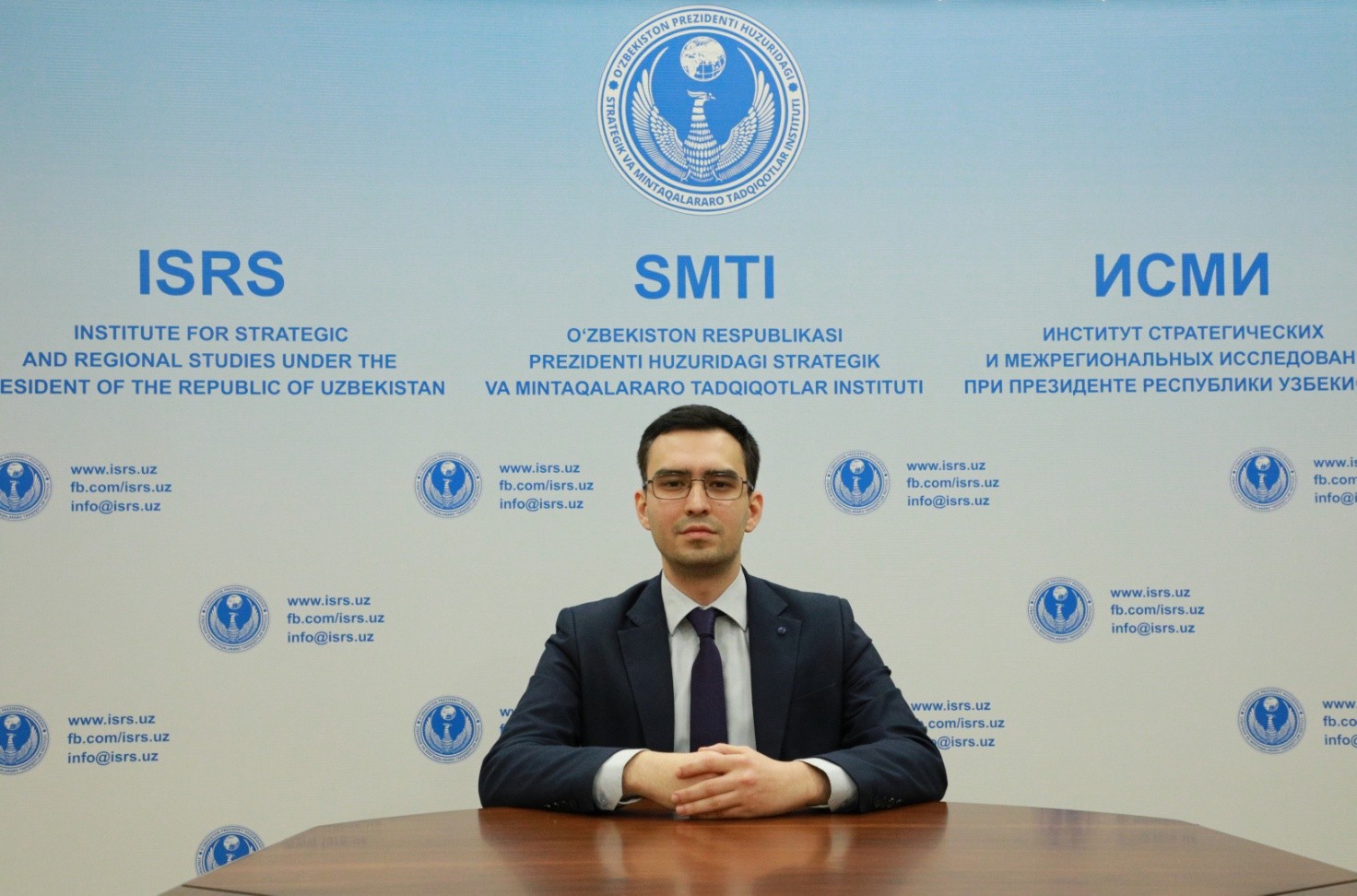
Ahead of the upcoming “Central Asia–Republic of Korea” Summit, which will be held for the first time in a Heads-of-State format in the coming days, Bekzod Normatov, Leading Research Fellow at the Institute for Strategic and Regional Studies under the President of the Republic of Uzbekistan (ISRS), noted in a commentary for Dunyo that the new format opens up opportunities to take regional cooperation to a qualitatively new level.
According to his assessment, of particular significance are the development of technological partnership, localization of manufacturing, deep processing of raw materials, implementation of regional projects and the training of engineering personnel.
The inaugural “Central Asia – Republic of Korea” Summit should be viewed as a significant milestone in the institutionalization of relations between the region and one of its most technologically advanced and proven partners.
To date, a multi-level system of contacts encompassing political, economic, parliamentary, business and humanitarian spheres has been established. In particular, “Republic of Korea – Central Asia” Cooperation Forum was established in 2007, followed by the creation of the Permanent Secretariat of the Forum in 2017. The Economic Council has been operational since 2020, the meeting format for parliamentary speakers was established in 2023 and the inaugural Think Tank Forum was convened in 2024.
The very fact of transitioning from long-standing cooperation at the ministerial level to the format of heads of state demonstrates that former mechanisms no longer fully correspond to the scale of accumulated interaction and new objectives. South Korean side also directly attributes the summit to the growing strategic significance of Central Asia and the intention to elevate cooperation to a new level in the spheres of trade, investment, energy, critical minerals and supply chain resilience.
“In my view, it is of fundamental importance that today the objective interests of the two sides are becoming increasingly complementary. The Republic of Korea has advanced technologies, capital and expertise, while Central Asia offers significant resource potential, expanding markets and opportunities for access to new high-tech markets”, expert noted.
The expert emphasized that cooperation in critical minerals could become one of the most promising areas. The region possesses substantial reserves of critical minerals, while the Republic of Korea has advanced technologies for their processing and industrial application.
Establishment of a regular mechanism for meetings of the ministers of industry within the “C5+K” format is already under discussion, while bilateral efforts with Uzbekistan focus particularly on artificial intelligence in industry, investments and concrete projects.
At the same time, the expert believes that it is crucial here not to reduce the new format predominantly to the supply of raw materials from Central Asia to South Korea. For the states of the region, a model where cooperation encompasses the entire production chain – from geological exploration and extraction to the deep processing of raw materials and the manufacturing of components and finished goods – would be far more promising.
Localization of manufacturing, technology transfer, training of engineers, and joint entry into third markets are capable of making this partnership long-term and truly mutually beneficial.
Second important emphasis is the regional nature of the projects. Today, practically all Central Asian nations are interested in industrial modernization, the development of transport connectivity, digitalization, as well as increasing water and energy efficiency. Therefore, it is preferable to utilize the “Central Asia – Korea” format not merely as the sum of five bilateral tracks, but as a mechanism for implementing projects that unite multiple states of the region. This could pertain to cross-border production chains, digital logistics, energy infrastructure, water-saving technologies and personnel training.
Technological partnership appears to be an exceptionally promising direction. Korea possesses strong competencies in electronics, automotive manufacturing, battery technologies, artificial intelligence, power engineering, medicine, water resource management and the digitalization of industry.
Central Asia, for its part, offers a growing market, a favourable demographic profile, significant resource potential and an increasingly developed industrial base. The combination of these advantages can forge a completely new quality of economic cooperation.
ISRS expert specifically highlighted the issue of resilience. The current international situation demonstrates how vulnerable global transport, energy, and production chains have become. Therefore, Central Asia is interested not merely in attracting investment, but in creating its own internal capacities – alternative routes, localized manufacturing, technological competencies, and qualified personnel. The Republic of Korea could become one of the key partners in fostering such resilience.
In practical terms, expert notes that it would be advisable to focus on several key areas: formulating a joint portfolio of projects for the deep processing of critical minerals; establishing a mechanism for the preparation and financing of regional projects; developing cooperation in the field of artificial intelligence and the digitalization of industry; launching joint programs on water-saving technologies and significantly expanding the training of engineering and technical personnel.
In this sense, the primary outcome of the upcoming summit should be measured not by the number of signed documents, but by whether it succeeds in transitioning relations from predominantly trade and investment toward joint manufacturing, technology, and human capital.
For Uzbekistan, this format holds particular significance. Our relations with the Republic of Korea already bear the character of a special strategic partnership and possess a substantial practical foundation. Therefore, Tashkent can act as one of the initiators to ensure that successful bilateral experience gradually acquires a regional dimension.
Ultimately, the promising formula for cooperation appears quite clear: the resources, markets and strategic geographic position of Central Asia, combined with the technology, capital and expertise of the Republic of Korea, should be transformed into high-value-added products jointly produced within our region.
“Such an approach will make it possible to infuse the “Central Asia – Republic of Korea” format with concrete substance and enhance its practical returns for the nations of the region”, the expert concluded.
Dunyo IA
📅 15.09.2026
Uzbekistan news
UNESCO Executive Board unanimously approves the initiative of Uzbekistan to protect cultural heritage
Uzbekistan — OTS: A new scale of cooperative ties
Uzbekistan sees the Organisation of Turkic States as a Platform for new economic opportunities
Economic cooperation – a key direction for the development of Organization of Turkic States
Tashkent to host 22nd International Exhibition “Transport and Logistics - TransLogistica Uzbekistan” on November 10–12th, 2026
CICA Member States Account for More Than 50% of Uzbekistan’s Foreign Trade Turnover
Uzbekistan and the United States: The Economics of Mutual Interest
NEW OPPORTUNITIES IN HIGHER EDUCATION IN THE TURKIC STATES: A COMMON SPACE, SHARED GOALS
Peace and Trust in Asia - essential conditions for sustainable development
CICA amid a Crisis of Trust: Uzbekistan’s Role in Strengthening Cooperation in Asia
Uzbekistan promotes initiatives in Central Asia that unlock new opportunities for cooperation
Strengthening Transport Connectivity in Asia through the Development of the Trans-Caspian International Transport Corridor
Uzbekistan promotes Initiatives in Central Asia unlocking new opportunities for cooperation
Political mutual trust in the Central Asian region is transforming into economic capital
Uzbekistan attracts specialists from 16 countries to the anniversary international exhibition “Mining, Metallurgy and Metalworking – MiningMetals Uzbekistan 2026”
Uzbekistan has moved its economic cooperation with the Turkic states into a practical dimension
Akramjon Nematov: Central Asia is increasingly emerging as an independent centre for shaping its own economic and technological agenda
Central Asia Is Shaping Its Own Model of Regional Cooperation
Initiatives of Uzbekistan aimed at Economic Results for the Countries of Central Asia and Azerbaijan
Regular dialogue is the Foundation for addressing common water-related challenges in Central Asia
Uzbekistan and Turkmenistan: A New Stage in the Development of Their Strategic Partnership
11th Tashkent International Biennale of Contemporary Art to be held in the capital of Uzbekistan on October 12–16th
OTS Member States - A Crucial Link in the Eurasian Space
Uzbekistan plays an active role in Economic Integration within the framework of the Organization of Turkic States
CICA opens new horizons for financial cooperation
Aquatherm Tashkent 2026 to Showcase Latest Technologies for Construction and Utility Infrastructure
Uzbekistan is securing its place in the Global Hub for Technological Outsourcing
Digital Cooperation among the Turkic States Towards a Unified Technological Ecosystem
Uzbekistan and Azerbaijan are creating a Hub for Startups, Investors and Talent
UZBEKISTAN AND THE UN: FROM NATIONAL INITIATIVES TO THE GLOBAL AGENDA

-
 Ministry of Foreign Affairs of the Republic of Uzbekistan
-
 Diplomatic Service of the Ministry of Foreign Affairs
-
 State Committee for Tourism Development
-
Ministry of Investments and Foreign Trade of the Republic of Uzbekistan
-
 invest.gov.uz
-
-

-

-
-
-

-

of Uzbekistan in the Republic
of Latvia
When using the information, a link to www.uzembassy.lv
must be provided.
All rights reserved
Address
Address: Riga c., LV-1010. 11-11 Elizabetes Str., Latvia
Phone: 37167322424
Fax: 37167322306
Email: embassy@uzbekistan.lv
Useful links
HomeIssuance of biometric passport for departure abroad
Certificate to return to Uzbekistan
Withdrawal of citizenship
Loss of citizenship