Phone
Consular Issues
Phone
Uzbekistan news
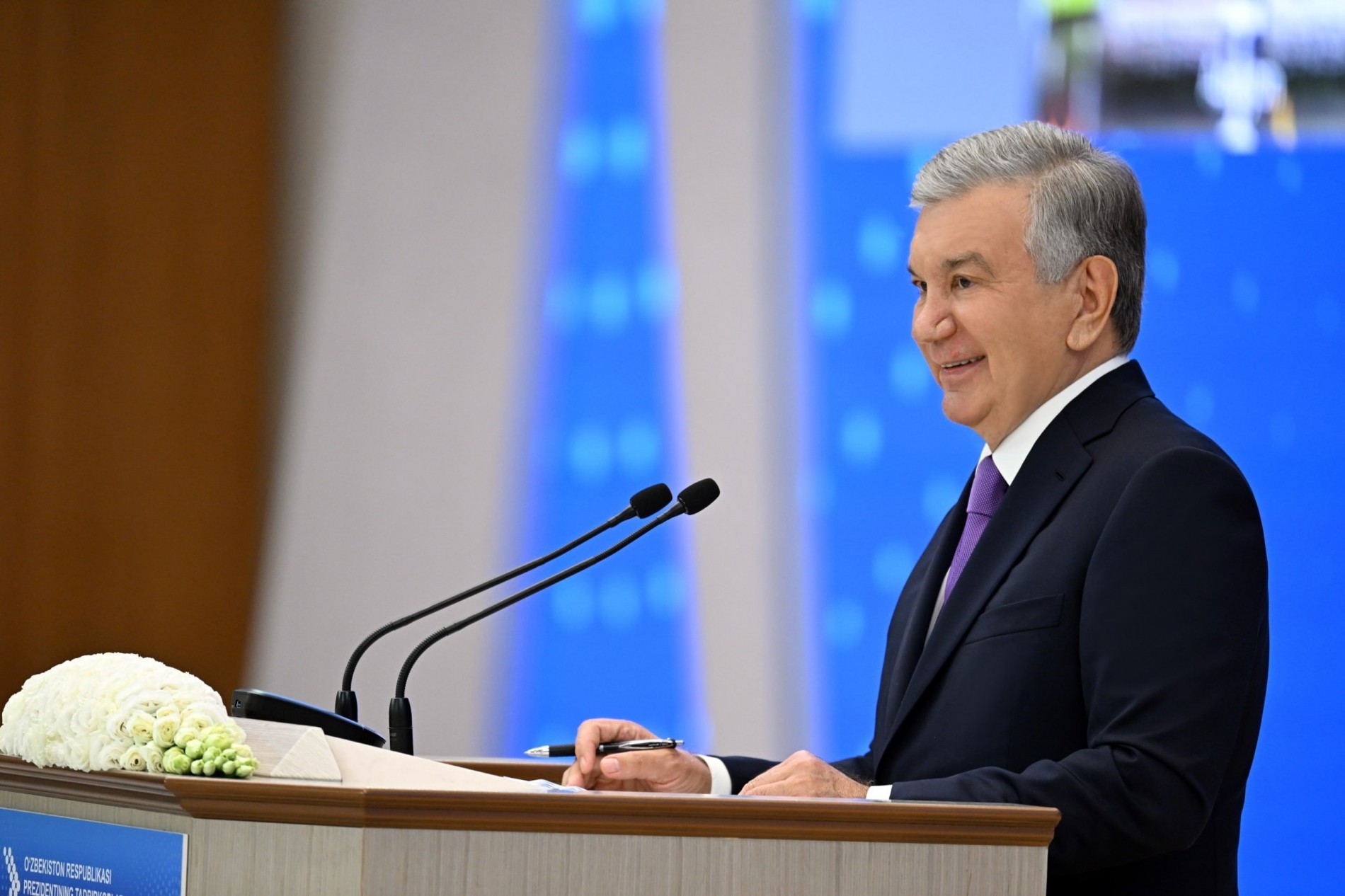
Uzbekistan Firmly Establishes Itself as a Stable and Predictable Partner for Long-Term International Business
The initiatives announced by President of Uzbekistan Shavkat Mirziyoyev during the Open Dialogue with entrepreneurs in Khiva, Khorezm Region continue to generate a strong response and heightened interest among representatives of the international business community, foreign investors, and transnational corporations.
The scale and depth of the announced reforms are being viewed by the global market as a clear sign of the country’s readiness to guarantee maximum capital security, ensure legal predictability, and create the most favorable conditions for doing business in the region.
The Open Dialogue sent a clear signal to the international business community. The meeting in the Khorezm Region not only summarized the large-scale transformation of the business environment in recent years, but also reaffirmed the country’s strategic course toward deep integration into global value chains, the promotion of exports, and the uncompromising protection of investors’ rights.
In recent years, the country has demonstrated impressive economic growth. The number of registered business entities has nearly doubled and exceeded 530,000, while 2.4 million permanent jobs have been created in the private sector, and export volumes have reached a historic high. However, the main message of the Khiva Dialogue is addressed to international partners and is focused on the future: Uzbekistan is building a highly predictable, secure, and favorable ecosystem for investment capital.
For foreign investors and joint ventures, opportunities for institutional support and access to financing are being significantly expanded.
The State Fund for Entrepreneurship Support has been reoriented toward supporting projects in the services sector and medium-sized businesses, while an additional 100 million dollars has been allocated to guarantee credit lines.
As part of the state program supporting high-growth companies, a system of grants and preferential financing of up to 10 billion sums has been introduced. This creates a strong platform for launching and developing high-tech and innovative startups with foreign capital participation.
In addition, in order to encourage joint ventures to enter global markets, the state will cover up to 50 percent of companies’ expenses for placing their products on major international electronic trading platforms.
A central part of the Dialogue was strengthening the inviolability of private property and ensuring absolute stability of tax legislation.
In order to reduce administrative pressure, a “single window” principle for assessing tax risks is being introduced. In Uzbekistan, duplicative inspections by regulatory authorities are being abolished, while the procedure for analyzing tax gaps is being adapted to international standards with the direct participation of the business community.
At the same time, penalties for administrative and criminal offences have been toughened for any unlawful interference by government bodies in the activities of business entities.
Uzbekistan is consistently implementing sustainable development standards and green growth principles, opening up broad prospects for institutional and green investors.
For enterprises investing in energy-efficient technologies and solar power generation, a package of tax deductions, accelerated depreciation mechanisms, and special tariff preferences has been introduced.
As part of the adaptation to international environmental standards and the requirements of the European carbon regulation mechanism, the country is launching a national certification system for “green” products, which will ensure the unhindered access of domestically produced goods to highly competitive global markets.
The holding of the Dialogue in Khiva underscores the state’s strategic priority of decentralizing the economy and ensuring the comprehensive development of the regions.
In the Khorezm Region, a special legal regime is being established for pharmaceutical, textile, and IT clusters, with direct integration into international transport and logistics corridors connecting Central Asia with the markets of the Middle East, South Asia, and Europe.
In special economic zones, the principle of full infrastructure readiness is being introduced. All engineering and utility networks are to be provided on a turnkey basis by the state before the arrival of the management company or investor.
The outcomes of the Open Dialogue in Khiva confirm Uzbekistan’s transition from a series of individual reforms to the establishment of strong institutional guarantees.
For international investors and transnational companies, this means a systematic reduction in country risks, direct state support at all stages of project implementation, and reliable access to the dynamic Central Asian market with its young and highly qualified human capital.
Today, Uzbekistan is firmly establishing itself as a stable and predictable jurisdictional hub for long-term international business.
Sadriddin Suyarov
Dunyo IA
📅 23.09.2026
Uzbekistan news
Uzbekistan Firmly Establishes Itself as a Stable and Predictable Partner for Long-Term International Business
Changing economic priorities of Uzbekistan reshape its engagement with the CIS
Inaugural Central Asia – Republic of Korea Summit at the highest level opens in Seoul
Uzbekistan and Korea: Advancing Green Energy and New Technologies
Uzbekistan and the Republic of Korea in the Emerging Framework for Cooperation with Central Asia
Tashkent brings together leaders and key deals in Polymer Market of Central Asia
The 1st Republic of Korea–Central Asia Summit: Why This Moment Matters
Uzbekistan – Serbia: A New Geography of Industrial Cooperation
The President of Uzbekistan’s Visit to Serbia: A New Stage in Economic Partnership Between Central Asia and the Balkans
Uzbekistan and the Republic of Korea: From Investment Partnership to Technological Cooperation
Regional Approaches to SDG Delivery: What Can Central Asia Offer?
Uzbekistan Opens a Balkan Gateway to Europe
The SCO Bishkek Summit: The Economic Agenda of a New Stage of Cooperation
Tourism: A new dimension of Uzbekistan-Kyrgyzstan partnership
Uzbekistan’s Role in the SCO: Economy, Security and Regional Cooperation
Economic Cooperation of Uzbekistan within the SCO at a New Stage of Development
Uzbekistan and Serbia: From Labour Mobility to a Strategic Partnership in Human Capital
Prospects for Uzbekistan–Serbia Cooperation in the ICT Sector
Prospects for Cooperation between the Republic of Uzbekistan and the Republic of Korea within the Framework of the Central Asia–Republic of Korea Cooperation Forum
THE SCO’S NEW FINANCIAL ARCHITECTURE: FROM COORDINATION TO PRACTICAL DEVELOPMENT MECHANISMS
INFORMATION NOTE ON COOPERATION WITH SERBIA
On September 8–10th, Tashkent to gather International Textile Industry Professionals
The Seoul Summit: Uzbekistan in the New Industrial Architecture of C5+1
New Opportunities to Expand Cooperation Between Uzbekistan and Serbia
Uzbekistan and Azerbaijan: Turning Political Alignment into Economic Growth
BRIGHT PROSPECTS FOR MUTUALLY BENEFICIAL PARTNERSHIP
Transport and Logistics Connectivity of the SCO Amid Geopolitical Turbulence: New Opportunities for the Regions
Business in Uzbekistan are moving from digitalization to technological modernization
Uzbekistan and Serbia expand prospects for cooperation in ecology and environmental protection
SCO AND WATER DIPLOMACY: IN PURSUIT OF COMMON INTERESTS

-
 Ministry of Foreign Affairs of the Republic of Uzbekistan
 -
 Diplomatic Service of the Ministry of Foreign Affairs
 -
 State Committee for Tourism Development
 -
Ministry of Investments and Foreign Trade of the Republic of Uzbekistan
-
 invest.gov.uz
 -
-

-

-
-
-

-

of Uzbekistan in the Republic
of Latvia
When using the information, a link to www.uzembassy.lv
must be provided.
All rights reserved
Address
Address: Riga c., LV-1010. 11-11 Elizabetes Str., Latvia
Phone: 37167322424
Fax: 37167322306
Email: embassy@uzbekistan.lv
Useful links
HomeIssuance of biometric passport for departure abroad
Certificate to return to Uzbekistan
Withdrawal of citizenship
Loss of citizenship